James (Jim) Beaton
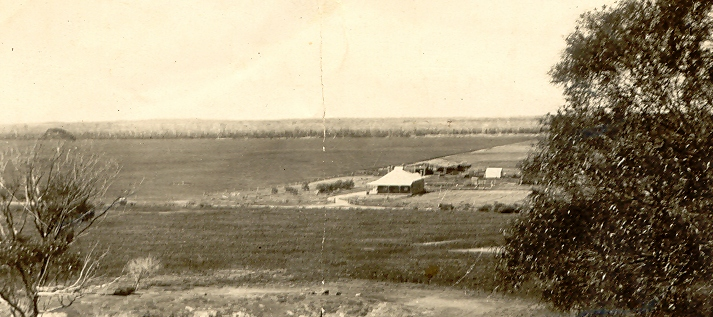
JAMES BEATON JAMES (Jim) BEATON was born on 17 th of January 1877 at Copmanhurst N.S.W. the eighth child and fifth son of Sandy and Euphemia Beaton. Jim was in his fourth year when the family moved to Adelaide and fifteen years old when he accompanied his mother, his older sisters Ann, Mary Isabella (Belle),Margaret (Meg), younger brother Donald and younger sister Helen (Nell) on their journey on the S.S.Polynesian to Western Australia in 1892. On arrival in Fremantle they travelled by coastal ship to Geraldton and then by road to ‘Beatonsfield’ Yandanooka , to join Sandy and his brothers, Findlay (Fin), Charles, John (Jack) and Kenneth (Ken). The family was finally reunited. Jim’s name was never on the Thundelarra deeds, but he certainly worked at Beatonsfield and Thundelarra for several years before taking a horse, £25.0.0 and his father’s good wishes and moving on. In 1908 Ken, took up virgin land at Erikin and also another block of 1000 acres across the road for Jim and selected 500 acres, adjoining on the east side, for William Strachan who was the cook at Thundelarra. At this time Jim was engaged to be married until a widow with two children moved into the very near vicinity. The widow, Winifred Farrell (nee Coombe) had arrived from Scotland, with her husband (Sidney), son, Ernest and daughter, Elsie in Fremantle on the S.S.Bremen on 8 th November 1908. They arrived with a very varied selection of goods, tools and equipment to take up land, establish a home and care for their children, but after only four months here, on 14th March 1909, the husband, George Sidney Farrell passed away from typhoid fever. Winnie travelled to Erikin, met Jim and as they say ‘the rest is history.’ Ern and Elsie were only 8 and 6 years old respectively at the time of the marriage and thereafter took the Beaton name. Over the years the property was developed and the original hessian house replaced with a substantial house built closer to Ken Beaton’s own house. Jim cleared, built, farmed and prospered there and the family grew with the addition of another six children, five girls and a boy. As Ern grew older he took on more responsibility and worked alongside the farmhands. His parents and siblings understood Ern wanted his own land and he applied twice before successfully being granted a 1,000 acre virgin block in the Yilgarn in 1923 when he was 20 years old. Jim had been spending more time on socialising than working and the general management on the farm began to suffer. In 1925 the Erikin farm was sold and Jim bought a farm at Kellerberrin, this was closer to the town and hotel and was also badly affected by the plague of rabbits. The family only lasted two years on this property and moved to Perth where they rented a house in South Perth for two months (1927). While there Jim had creditors from Kellerberrin knocking on the door and was eventually declared bankrupt. Jim and Winnie took a job as married couple on a farm in Cunderdin, but this only lasted over the seeding season, they then moved to stay with Ern at Garrett, and Jim took over the second block Ern had been granted in Elsie’s name. Jim and Stuart (14 years old) worked to clear, fence the land and plant a crop, but once again the drink affected Jim’s working abilities. He ran up accounts for materials (fencing etc) and this time they were in Elsie’s name, and he was still drinking. Eventually he had to leave, and as Ern and Nell got off the train from Kalgoorlie after their wedding in February 1929, Jim was waiting to get on the train. He returned to Thundelarra away from the drink ! Through the help of Charles Latham, a friend of Thundelarra days, Jim was granted a Group Settlement block in Nannup in 1931 and the family was re-united there. The ups and downs of their family life are remembered by four of their daughters, Marion, Mary, Isobel and Margaret in their personal recollections in the following pages.
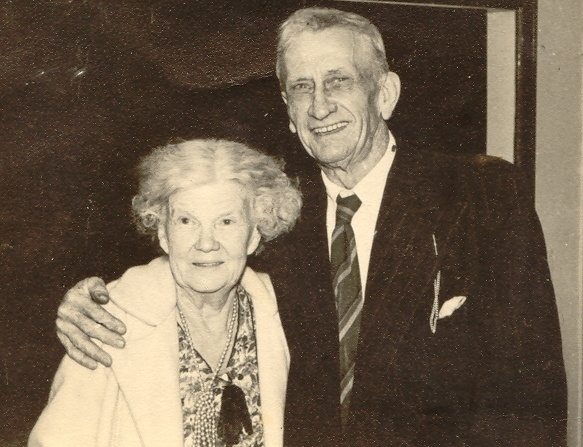
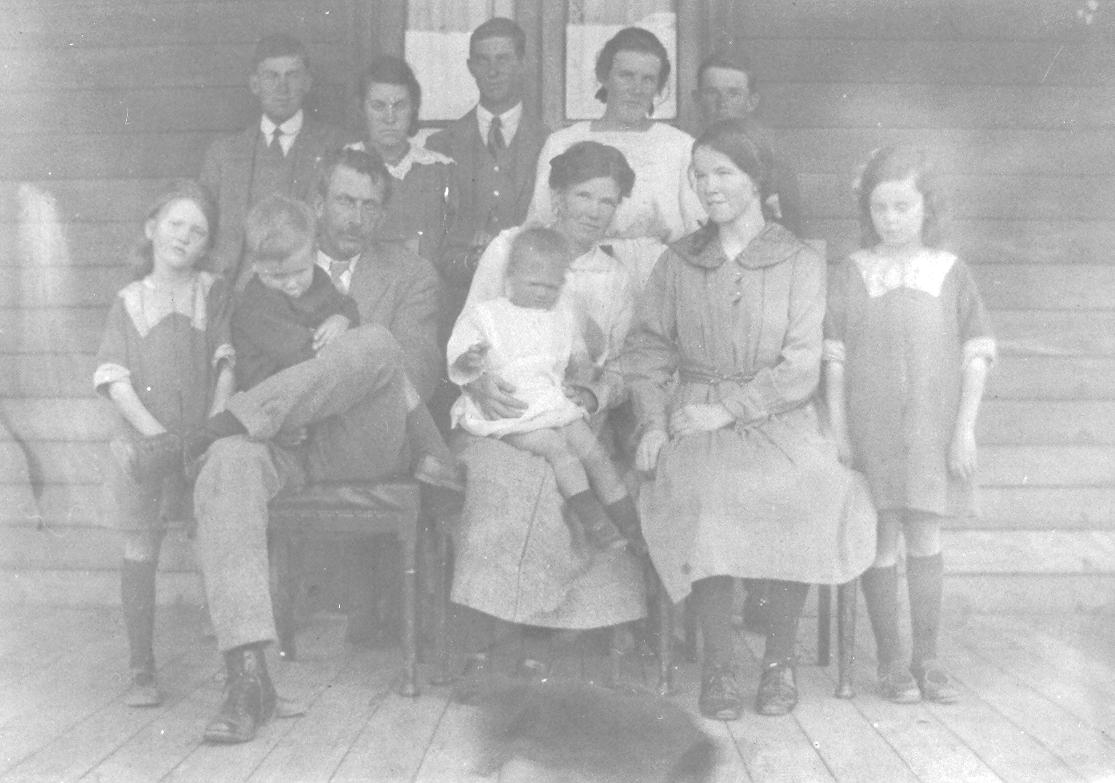
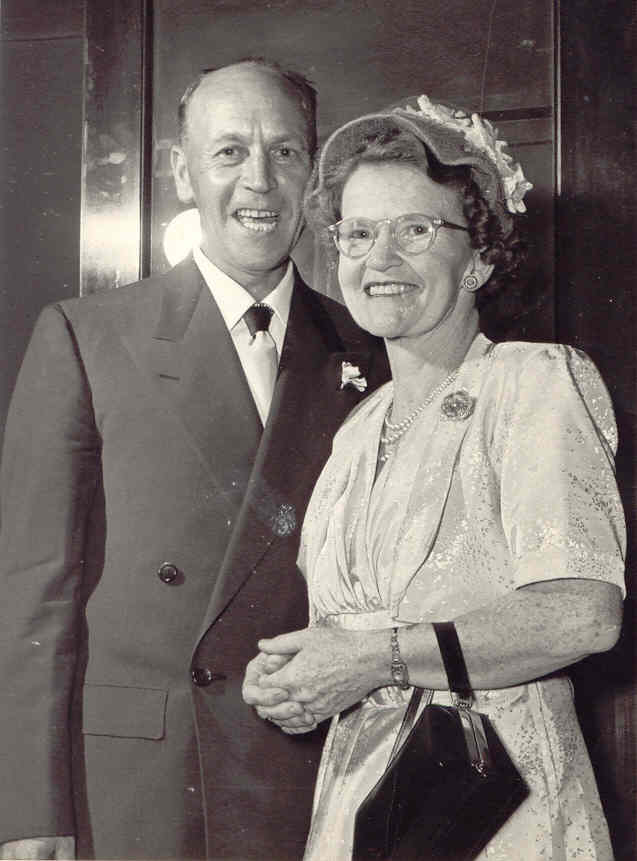
Standing back row L to R: Ken, Dot,Thompson, Emmy Haase, Ern.
Front: Marion, Jim nursing Stuart, Winnie nursing Mary, Elsie and Connie.
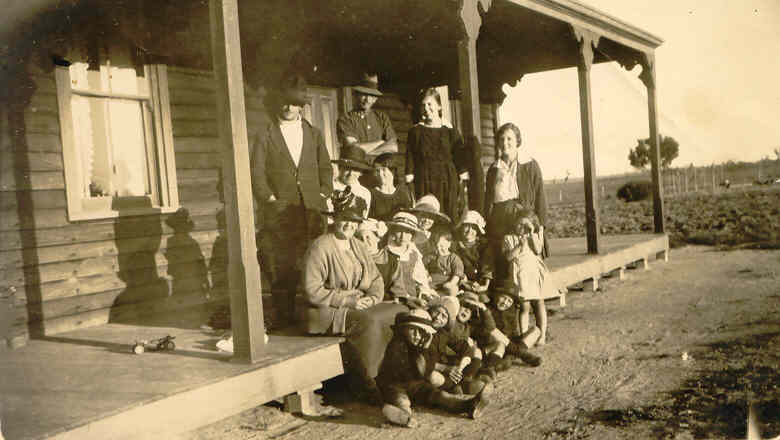
Standing L to R: Cliff Wildy, Jim Beaton, Beatty Donald, Hilda Hedges.
Kneeling in Middle: Mrs Wildy, Elsie.
Seated: Ethel Beaton, Marion, Joan, Winnie holding Isobel, Connie, Mary.
On ground, Nigel, Bobby Brearley, Stuart and Frank Wildy.
197
The Dolly Pot Stories
The “DOLLY POT” was a column in THE WESTERN MAIL between 1936 and 1942. Jim had several stories printed in this column over those years. Jim’s non -deplume was Sedge Moore.
Western Mail, Highways & Byways , 28th January 1937. “
200
Old Jack
OLD JACK” Dear “Nom -Com, -Mention of Brumby, by “Spinifex” revives the memories of many of the early day characters with whom I came in contact. One of these was “OLD JACK”. Jack was the proud owner of two half -caste children, Young Jack and Sarah. No doubt many of the old brigade of the early 90’s (disappearing very fast, alas) will remember the family. Those were the days when the late Sam Phillips, of the Grange, was looked upon as the guide, philosopher and friend of the old bush hands of the wayback Midland and Murchison country. The Mecca of these, after many months of shepherding, water drawing or hut-keeping was the late respected Billy Linthorne’s hostelry at Mingenew. The railway to Cue not being then in existence, much of the carting for the Murchison fields as far as Peak Hill and Lawlers went to Mingenew. Thus this thriving Midland town was a happy hunting ground for Old Jack and his family. Two greater artists in th eir line than Young Jack and Sarah it would be hard to find, unless it was the proud father.
I look back to one night about ’93 or ’94, when I found myself in Linthorne’s, where presently I ran into Jack. “Hello Jack, why the thoughtful countenance ? Are you looking for another wife ?”I said. “Oh no,” he said, “I’m looking after that shepherd there. You can see Old Tom is sticking to him like a leech.” “Well,” I said, “What’s wrong with that? I suppose he is just as good a chaperon as you are.” “You see, it’s like this,” said Old Jack. “That shepherd has only just come in and is blowing his cheque, and when he gets full to the eyes, Old Tom will go through him and it’s a damn shame.” However I left him to his worthy occupation and did not see him until the following morning when I queried, “Well Jack, did Old Tom go through the shepherd ?” Voicing a happy gurgling sort of chuckle, while fingering his stubbly, grey whiskers, Old Jack with a merry twinkle in his hard old eyes, replied, “No, no, they both got full and I went through the two of them.” SEDGE MOORE, Nannup. REFLECTIONS How often do we ponder, as we’re getting On the many opportunities that we’ve missed; On the chances that were taken in the daily grind and strife By those others, whom Dame Fortune softly kissed.
It was not only money, where we failed to take a chance, For after all, there’s something else to gain: Not the dreadful, callous scheming through the fortune hunter’s dance That often ends in bitterness and pain.
For some that took the chances and reached the topmost rung, Where money was the only thing to count, Have missed that joyous feeling that for ages bards have sung, Of gladsome youth and faith and love, that ever seems to mount.
A chance to help a brother who is feeling down and out, If only by a little word of praise, May mean that he will rise again and give despair the rout, And be contented, happy, all his days.
When you’re id’ling in the city as the people surge along, And you think of Lawson’s “Faces in the Street,” And you see the ones despairing among the restless throng As they trudge along, on hopeless weary feet.
There’s a chance to make life better, in a sweeter, brighter way; If we’d only think a little less of self, And give a thought to others to help them every day On the road that leads to happiness and health.
To help along your neighbour, to love and help your wife, To live your life as God has meant you to, To take the chance of helping to make a happy life Is what we each and everyone should do.
SEDGE MOORE, Nannup
The following story was reprinted in “ Dollypot ”a book of a collection of stories from the column. Edited by Peter Bridge and printed by Hesperian Press.
200
Personality Parade
PERSONALITY PARADE There were three mining men, one station man, one policeman, and one duck. This bird is now, like the reply given to the “Innocents Abroad,” when viewing a painting of Columbus and one of them inquired “Is he dead?’ “Mon Dieu ! for hundreds of years,” said the guide, in perfect amazement. Although this duck had not been quite so long defunct, it is very dead. But to me it will ever be, in memory, very much alive, and this was the way of it. An official at Rothesay in the early nineteen hundreds was a biggish man with greying whiskers. He was a blatant type, with the loud voice, and he exuded confidence and self-assurance at every step. Some fifty or sixty miles from Rothesay there was another thriving little mining camp, where the centre of attraction was the Baron Rothschild mine managed by Percy Swinburne, a son of a very old Northumbrian family. This son of a baronet was quite English of the English, but with all his slight mannerisms he was a white man. When asked if he was any relation to Algernon Swinburne the poet he replied: “Oh, yes. He is a cousin of maine. He is a very clevah fellow. Very clevah, but very mad !” In between these two centres lay Field’s Find, at this time managed by George Clark. I fancy he was a Queenslander, but I’m not sure. Anyway, he was a dinkum Aussie and a darn good fellow. A quiet, genial cuss with a glint of the devil in his eyes and rath er fond of a good nip of Heilan’ nectar. The Rothesay man and Swinburne were going to Yalgoo, to be sworn in as J’s.P. Rothesay was the first to arrive at the station where I was doing a hunger strike (compulsory) for a bit of mutton or any other kind of m eat. The sheep were some 25 miles away at the time (all shepherding those days). The main topic of conversation so far as Rothesay was concerned was,”If you get a turkey will you keep it until I return in a couple of days and give it to me ?” Having made it quite clear that if I was not meat hungry on his return and also had a turkey he could have it. I said, “I understand that Swinburne is going in today also?” “Yes,” was the sneering reply, in the most sneering of intonations, “the ….. fool.” The next to arrive was Percy, the manager of the Baron. Having yarned for a while on various topics, he prepared to continue his journey. I remarked in a casual way, “Rothesay went along about an hour or so ago.” man when a few days later the policeman friend, Jim Mercer, arrived on the scene. He was stationed at Rothesay, and after getting himself comfortably settled for the night and our pipes were going free, he said : “Did you or one of the boys shoot a duck and give it to Rothesay ?” I admitted the fact and asked shy. “Well,” said Jim,”he came home and seeing me held the duck up and asked me what I thought of it. I asked where he got it and he said on the lakes. He said he shot it at ninety yards.” “Are you aware this is the close season for ducks ?” Jim asked. Then Rothesay said he knew it was, but that, as a
matter of fact, one of the young ………. shot it, and “I told him that as it was the close season and to save trouble he had better give it to me, which he did.” “Oh, did he ? Bai jahve, he is blawsted swse,” was the reply and he was on his way. Came Clark, and immediately produced a bottle of Scotch and we spent quite a pleasant half hour or so. We did not talk much (you know how it is) but we were active withal. When I told him that the other two had gone in to be sworn in as J’s.P. he was quite tickled. “Just fancy a big lousy swine like him being a dispenser of the laws of the land ! I would like to see them both on the bench together and to hear the argument. Can’t you fancy Swinburne, in his way saying ‘Yes, bai jahve, ‘pon me honner, doncher know,’ the while you realised his sound common sense judgment.” Sounds funny that, when you realise he was a friend of Dr Jim of South African fame and was also a participant in the raid. However, the bottle for some reason or other not having quite as much in it as we thought and being quite empty, the third manager went on his way also. Up to this I had quite enjoyed myself and had forgotten I was still looking for bardies in lieu of mutton (wonderful stuff that Highland brew). A couple of days later I heard a “quack, quack” on the pool that faced the homestead so picking up a sporting Martini I made my way thence with visions of grilled teal in front of me. Luckily, as I thought, I fluked a large wood duck, the big brown fellow, and was just congratulating myself when I heard the rumble of a turn -out. Peering over the rim of the pool I beheld my noble Rothesay driving straight up to the pool, so I stood up. “Hey,” he said, ”I see you’ve shot a duck.” “Yes,” I replied,”but not a turkey.” “Oh, well,”said he,”it’s all one to me as long as it’s game. Do you mind giving it to me ?” “Well,” I said,how far are you going tonight ?” “Field’s Find,” he replied. “Any meat with you ?” “Yes, he said,” A leg of mutton.” “Righto, you take the duck and give me the mutton. In this instance I’m game.” “Certainly, “he said, just like a gentleman. So we got the duck and proceeded to the house.”Have a cigar ?”said his nibs. I took the weed and went inside, expecting him to extract his bit of sheep. As it did not eventuate I went outside only to see him, the mutton and the duck on their way to Rothesay via Field’s Find. The duck is dead, but lives again. The man. Well, I hope he is alive and is sadly in need of a bit of meat - and cannot get it. I never saw him again, but if ever I had an urge to chase anyone it was the same Percy Swinburne very shortly after went back to England and thence to Africa again. No doubt he was in the Great War and perhaps paid the great price. If so, I know he died like a gentleman. George Clark was swallowed up in the usual hurly burly of this li fe and I know not whither he went but if alive all good wishes to him. Jim Mercer, the last I knew of him, he was stationed in Albany. He was a fine character and I hope he sees this, for he will remember. SEDGE MOORE,
201
Teamster's Tales
TEAMSTER’S TALES Dear “Non-Com”, - One cannot leave Old Jack, of whom I wrote some little time ago, without some reference to the younger brigade, young Jack and Sarah. These two half -castes were generally alluded to by the fond parent as “my children.” If they were ever children in the accepted manner in which we read the word, it was before they were able to walk and talk. With them it was a case of “the quickness of the hand deceives the eye.” In those far -off days there would be as many as twenty teams assembled at the first camp out from Mingenew, which generally speaking, was Nanakine station, some 20 odd miles from Mingenew. Here after having attended to the horses (and what a lovely lot of nags they were, generally, mostly imported from the East) and having also attended to the inner man, there would be the usual gathering around one particular fire. Amongst the teamster owners and hard battlers were the late Charlie Rodan, the Groper King, the Higgs brothers, the Millers, the late Sam Norton of Wiluna, Larry Flood, the Fogarty boys, the late Finlay Beaton and the Morrissey boys - all were on the road in some form of carting. These names are prominent in my memory because the descendants of some of them are still battling, although in different forms, and some of them are well known and respected in outback areas today.You can imagine what it meant to gather around the camp fire and “listen in” to the various speakers. They were from every part of the globe and all eagerly expectant of the future. Men like the late Charlie Rodan - God rest his soul. He pulled my leg many a time and it was a pleasure to listen to him - a man of vast and varied experience.. Most of the othe rs were of the same stamp, full of energy, big, strong, genial and generous men. And into this camp comes Old Jack and his family, known to each and everyone of them, he automatically joins in the conversation, while young Jack and Sarah fade into the surrounding gloom and amongst the wagons. Very shortly there is a commotion amongst the teams and presently Larry Flood comes up to the fire dragging young Jack by the scruff of the neck, the while Sarah was telling him what a lovely face he (Larry) had. Tossing the son and heir towards Old Jack, Larry indignantly says: - “Why the hell don’t you teach your kids honesty ?” Without a seeming pause for thought Old Jack replies the while the “children” fade into the night: “So I do. So I do. But roguery comes natural to them.” SEDGE MOORE, Nannup.
202
The Call of the Wild
THE CALL OF THE WILD Dear “Martingale,” - Jet black and of kelpie type. Just a mong, hence his name,” Tripe”. Broad of forehead with a fine muzzle and those soft brown eyes that generally speaking can be described as expressive. The soft drizzling rain had ceased and the clouds travelled on. Not even the croaking of the frogs was to be heard. Bright stars, and the flickering shadows thrown by the new moon amongst the tall timber of the hilly South - West. With a startling suddenness the excited staccato barking of the kelpie broke the deadly stillness, immediately followed by the savage howl of a dingo. I was immediately reminded of the American poem on wolves. “All happened to be still, a cry like a yell of hounds from hell came over a neighbouring hill.” This was followed by another howl in a different direction while the kelpie was getting further away from the house. In an incredibly short time it seemed as though there were wild dogs howling from all points of the compass. Suddenly silence again, that s eemed all the more intense from the suddenness with which it descended. The dog came running inside and in his way was telling me all about it, while I was telling him he would be wise to take no notice. Then came a soft appealing cry from one of the dingoes, and the kelpie trotted off, with a quiet whimpering sound. By this t ime the dingoes were much nearer and giving voice in quite a different manner to the usual wild and savage cry. High above them all came a louder and different sort of howl, that started high up and graduated down through several notes to end on a low, soft plaintive wail. The house dog was answering. How many countless years had the old savage instinct lain dormant, waiting the time and place and opportunity to spring to eager pulsing life ? What thoughts went racing through the canine brain, the while he answered the enticing whimpering call of the nomads of the bush ? Something strong and impelling. The old and ancient urge to mingle with his wild mates. In the morning he had gone. Poor old boy. How much better for you it would have been to have been satisfied with the placid life of the house dog, petted and admired by all. Did you find your mission in life when you joined that roving band of outlaws, against whom is every man’s hand ? The alluring softness of those calls, coming closer and closer, and sounding sweet to your new found dogginess, were only to entice you from y our human protectors. Having gained your canine confidence to such an extent that you proudly trotted off, admiring and seemingly admired into some deep, dark recess of the mysterious hills, the soft muzzling of the wild slut, turns to bites and snarls. Swiftly the leader follo wed by the whole pack, turns and rends you, and in an incredibly short space of time there is nothing to be seen but a torn, mangled and bloody heap. Did you think at all of those who in that moment were thinking of you and waiting your return ? Did one feeling tinge of regret sweep across your mind as you realised, in your dog’s way, that those soft, crooning yet savage invitations were to mean to you tragedy, stark and pitiless, when you answered the Call of the Wild. SEDGE MOORE, Nannup.
202
Blue Ribbon — Invasion
BLUE RIBBON Invasion Dear “Martingale,” - Away back in 1904 I was pulling out from a lower Murchison station, with all the world ahead and the rosy dreams of youth ever present. Thoughts of what could be done, what should be done, and how it should be done, were ever present i n my mind. I did not dream of becoming a commercial magnate, or a man of note in the artistic, journalistic or other such path in life. my dreams were always backed by those glories of Mother Earth, and what I would attain by the systematic wooing of bounteous Nature. Dreaming thus I jogged along to Wydgee station, owned by the late Robert Broad, there to erect its first windmill, but as things were not ready I left without doing so. While at Wydgee one of the station blacks came along, and holding out a small furry animal, asked the boss,”What name this feller? Me seeum this one before ?” It was my first sight of a rabbit in Western Australia. Did my thoughts roll on over the years ahead to see the desolation wrought, the hearts broken, the homes ruined and left as they stood, the while the saddened settler sought fresh fields and pastures new, as I gazed on this advance scout of a vast invasion. I fear not. But follow me through those years and view the rabbit as the vast horde marches onward. The years rolled on, and with them came the unrolling of countless thousands of rolls of wire -netting and hundreds and hundreds of miles of miles of fencing, with the e xpenditure of countless thousands of pounds in an effort to stem the tide of furry destroyers. From then on, wherever I journeyed, I found the rabbit in ever-increasing numbers. The natural feed growing scarcer, the trees were ringbarked by the rabbits in their efforts to obtain a little moisture. Following my youthful dreams I fenced a part of Mother Earth to gather the moss a rolling stone never collects. Nature was kind and rabbits unknown, and following my dreams of success, I married and became a family man. Then it seemed that overnight a warren was formed and rabbits seemed to appear as if by magic. Mother Earth still gave of her best; bounteous rain and wonderful sunshine gave magnificent growth - and once again the rabbit reaped a rich harvest. The years rolled on and I had gathered no moss, while the land stank in the nostrils - of rabbits. Back over the trail of my youthful dreams, and over the same roads I had blazed of old Nature seemed very unkind indeed. Drought and poverty, dead sheep and starving cattle, despondent human beings who cussed the land - but no rabbits. Following on I find myself once again amongst green fields of waving corn and although nature had not been as kind as of old, the hardy settler, profiting by bitter and heart -breaking experience, has unrolled and erected miles of netting fences, and the rabbit has travelled on to fresh fields and pastures new. The urge is in me and once again I am chopping down in readiness for a burn, this time in the lovely South-West, amongst beautiful green hills, running creeks and wonderful timber. Here nature seems in her kindliest mood. Clover springs abundantly from the rich, red soil and “All nature seems aglow.” Just a few short years and the beautiful hillsides and valleys are appearing sere and yellow. Desolation has again appeared, following in the track of the rabbit ! Here there is no netting, the onslaught of the menace too sudden, while there are hundreds o f thousands of acres of green hills and valleys carrying succulent feed for rabbits, for every month of the twelve in a year. A rabbits’ paradise. The hardy settler, who visualised a prosperous old age amongst his family, who has watched his holding blossom forth abundantly, his stock grow fat and sleek, has once again, in sadness, seen them grow thin and weak, until at last with a few feeble kicks, after a brave struggle for existence, they lie still forever. In sadness, bitterness and pain, the settler, having given of his best, without the wherewithal to buy netting, without sympathy from the powers that be, minus hope, money or any future, tops the last hill, and looks back at what was once his dream - and home. Here to live in peace and plenty, and who knows, perhaps die there. Not his but the rabbits’ Valhalla. Dame Nature, with a frown on her sad old face, looks on while the once warm, beautiful earth grows sour. The poison of the rabbit has eaten into its soul, and its clovers and sweet -smelling grasses are dead. Once again, as of old, it is merely growing moss. The future holds - who knows ? This I know, brave hearts, willing hands, sympathetic treatment, and much money, will be required to save the wonderful South-West from the “Invasion.”
SEDGE MOORE, Nannup.
203
Journey's End
JOURNEY’S END Dear “Martingale,” -The shearing was over and the last bale pressed in 1930. Fresh fields and pastures new, I thought. Yalgoo was just the same old dreary looking hole. Money was scarce, and tucker dear - it always is dear when one reaches the “hard-up” stage. The ”pubs” did not appeal - until I heard someone say “Hello ‘Sedge’, have one ?” Well you know the kind of shade they have up that way (shades of Hell) and having recognised the stout fella, Jack Neville, of Yalgoo, I said,”Yes.” After the time honoured, ”Here’s tae ye” and the usual yarn, I found myself the following morning en route for Field’s Find with the genial Jack. A good run to Thundelarra station and there I parted with the good Samaritan. Eventually, I found myself astride a good old stock horse and bound for God knows where. I did not dream of the wonderful land of running brooks and rivers flowing placidly; but more of these anon - Come with me and follow the trail, Through the far-flung dusty plain, Old Digger, the prad, is fat and strong and can easily stay the pace although the way is long and the track hot and dry. Let us away to Ningham station where Tom Ban Smith now commands the large holding round Mt. Singleton. Memories of the cattle days and the mad rush through the dense mulga come thick on me here - Light hearted and gay the cattle away And the thunder of hooves behind.
Leaving the pastoral country behind with its salt-bush and scrub, we sighted the farming areas of Wubin, turned down the rabbit-proof fence and through Kalannie, Kulja and in to Beacon. Here we met an old friend, Tom Cherson, one -time member for Cue -Day Da wn. Following the railway to Mullewa and thence across the Midlands to Mingenew. Wonderful stock country this is, where some of the best sheep and cattle are fattened. On to Yandanooka, the soldier settlement, one of the State’s best wheat districts. How the face of the country changes. Where now you see those vast stretches of cleared land, the herds of the late Sam Phillips were wont to roam and I, myself, shepherded sheep as a boy. Meeting here an old friend, my thoughts were turned to the Sou’-West. So down the Midland and along the coastal plains to Brunswick Junction. Through Dardanup and the orchards of Donnybrook to Balingup, and down the beautiful scenic Blackwood River into Nannup nestling on its banks. The long long trail has ended, and as I fondled old Digger’s head, I asked, “Are you tired old chap ?” and, as he nibbled a piece of bread, he seemed to say, ”Are you?” This was the start of a new life in a new part of the world for me. Fresh fields and pastures new ! I have found them and they satisfy the wander lust. And Digger, that game old horse, is now in his eighteenth year and I know he ,too, is glad it is “Journey’s End.”
SEDGE MOORE, Nannup
204
Over the Plates
OVER THE PLATES The Vision Splendid February 18th, 1937
Dear “Non-Com”-Recent illustrations in the Press showing the Big Bell tempt me to a short description of that beautiful rain and the “vision splendid” shown in the wonderful cloud effects as they gradually rolled away to the south. After nearly three years of extremely dry conditions, so dry that the hardy mulga had begun to show the effects of the want of moisture, the flood gates were at last opened. Preceded by an east to north wind for some days and a final banking up of clouds on January 5 th, the welcome patter of raindrops was to be heard in the early evening, gradually increasing until, by midnight, there was a steady downpour that lasted until about 2.30 p.m. on the 6 th, when there was a lightening of the clouds. Later in the night steady rain again started and continued, gradually thinning out, until by about 10a.m. on the 7 th the sun made a fitful appearance. From then onwards the heavy black clouds were travelling to the south, with varying changes in their appearance, until about 6p.m. they appeared low down on the southern horizon as a range of snow -capped hills, rising, in places to sharp peaks reminiscent of the pictures one sees of the Swiss Alps. The apparently rugged outline was toned down by the beautiful soft look of snow that, thrown into relief by the darker shade clouds, gave the impression of deep valleys, the whole giving a really magnificent imitation of snow-capped ranges viewed at a distance. With the earthy tang in my nostrils that only comes from newly rain-soaked earth, that vision splendid entered my mind.
If only that were a real range and those beautiful peaks were genuine snow and the whole were rising majestically in the centre of our beautiful Australia,what a transformation there would be. Today, just three weks later, I walked through the bush for a few miles and saw the effect of the rain. Green stuff coming away in every direction. The bush, from having that dirty drab brown appearance, is now turning into that deep green that denotes health and strength. New life is given to most things when nature is kind. If only more rain would follow now, and a normal winter in addition, this Murchison would be starting the rehabilitation that only two or three good seasons will complete. It is pitiful to see the living skeletons of sheep trying to walk about in a drought-stricken land. Hungry, thirsty, and dying on their feet; suffering the tortures of the damned; nothing to eat; too weak to travel to water, even the instinct to live blott ed out by bodily suffering - and then the rain. Too late, alas ! They try to rise on tottering legs, only to fall and fall again, until, after perhaps days of torture, they are still forever. Having seen that wonderful range, formed of clouds and perfect in every detail, one’s imagination runs riot. Lofty ranges, deep valleys, rushing torrents and placid streams, where shady pools abound; where the dumb animals of the earth are in contentment and thirst and starvation are unknown. Do you wonder at my “vision splendid” ? SEDGE MOORE, Nannup.
204
Shepherding
Western Mail, Highways and Byways.
SHEPHERDING 16th July, 1936 To Those Who Blazed The Track.
Dear “Non-Com” - Have you at any time throughout your varied, and perhaps chequered career done any shepherding ? The question applies particularly to weaner lambs. If you have you will appreciate just what little devils they are to keep together - ie.,in one large mob. If you have not, I would like to inform you that this particular class of woolly has a very exasperating habit, immediately they are separated from their maternal standbys, of wandering around in seemingly aimless rambles, but which, nevertheless, have a definite object, namely, to get back to the spot where they last saw and were looked after by Ma Woolly. Having so far advanced your mutton education, I shall proceed with the yarn. Some years ogo I engaged a young fellow from the Big Smoke to look after a mob of weaners. He having proved himself quite a capable hand with the refractory flock, and another old identity of the Lower Murchison arriving on the scene, I decided to transfer the young chap to a job of water drawing for cattle ( no fences or windmills in those days ). The old identity was one of the typical old shepherds of those days - that is, the nineties. Being English, he spoke of the flock as the old English shepherd usually does - such as the right wing, left wing, etc, also of folding them. The young chap interrupted him by the remark, as he tapped him on the shoulder : “Look here, old chap, before you’ve been with these sheep a week you’ll know that every little blighter of them has got wings and that they never fold them either.” SEDGE MOORE, Cue. 4th November, 1937. Passing on the Highway are the men who blazed the track And grappled with nature, grim and hard as hell. They fought the big fight fairly, no thought of turning back, And played the game with God - and man as well. They blazed the trail, both near and far, Through dangers thick and rife Till they reached the end of earth’s last bar In a straight-out battler’s life. Their mark is left in the well-cleared land, In the glare of the city’s light. In the endless track of the far outback, Where they tested Nature’s might. Some there are who reached their goal And some who seemed accurst They carried their packs on aching backs, Through flood and fire and thirst. But every man on the Highway Has put his mark on the slate. Though bent and grey and withered He has helped to make a State. Let us keep them off the By-way, Try to keep the memory green Of those who rest in the Golden West In the graves that few have seen, They gave their best to help the rest, Who later followed on. So the best to those still battling, And peace to those who’ve gone. SEDGE MOORE, Nannup.
TEAMSTER’S TALES. Western Mail, Highways and Byways, 8th March,, 1937. Dear “Non -Com,”-“Nomad’s” reference to my “Teamster’s Tales” (W.M. 3/6/37) interested me very much. I must point out to “Nomad” that he is in error when stating that his stepbrother was in occupancy of Nanakine at the time of the incidents of my tales were occurring. My own family were at this time renting the station from the old Geraldton firm of Wainwright and Co. I do not remember who was in charge before our advent, but the place was sold to a man named Edwards while we were there “Nomad’s” brother was probably prior to our advent. I knew McKenzie quite well. In fact, he was well known to my father and brothers on the Nullagine, I think about ’88 or ’89. My personal contact with him was very much later, he at that time being in partnership with Elles in a Yalgoo pubbery long since defunct. I only met Monty once. I seem to have a hazy recollection of my eldest brother doing some work in connection with a boiler with the Nor’ -West team and fancy it was the same “Nomad” mentions. I shall look quite forward to further articles from Nomad, not only in regard to Old Jack and the children, but also on the various types with whom we came in contact and their stirring deeds. Can’t you hear Old Jack, “Nomad”, when he and Sarah were having one of their heart -to-heart talks. “Listen to that, Harry, listen to that. She calls me a - - old - and me her own father too. So help me, it’s something awful.” Someone was inquiring for Sammy Gray a little while ago. I
remember him quite well as he was sheperding for us on and off, for years. If you remember my first article to you, “Non -Com,”on sheperding and the old and new type of shepherd, well, the old chap I mentioned then was Sammy Gray. He certainly was a whale on the wheel- barrow, but was very poor in the bush. Scene: Drafting yards, a mob of sheep being drafted, three men and a dog, “Grip”. One of the men was Sammy Gray. Sometimes when drafting sheep you will get quite a good steady unbroken run through the race and your mind is apt to stray to other scenes. If young it’s a sheila, perhaps; if middle-aged a bottle of the best; and if old you wonder why the hell you are in amongst the dust and smell and sweat. The unbroken run was on. Dug was thinking of the first and old Sammy , no doubt of the latter. The dog was in the shade of Dug. Suddenly there was a low whistle from the man on the drafting gate. Dug turned excitedly to call to Grip to get around them, but unconciously the order went to the first object seen, and that was Sammy. At the “Get around them, Sammy”, given in the tone that was to have been “Get around them, grip”, to see the old chap’s legs trying to outdo Postle’s was quite funny. Poor old chap. He had some good points and although he has known the grand secret for many, many years I hope his failings were looked on very lightly. SEDGE MOORE , Nannup.
205
Teamsters' Tales
TEAMSTERS’ TALES Western Mail, Highways and Byways 27th May, 1937. Dear “Non-Com”, In those cheery old teamster days and nights of long ago we very often had a descendant of Ananias around the camp fire. If not a direct descendant of the old liar, he, they, or it, as the case may have been, were darn good imitations, judging by the tales told. Take Larry for instance. In his description of his initiation into the wonders of the bush and its wild animals, in a rich Irish brogue he became quite eloquent. In the words of Brete Harte: “His language to me from the bunk, Miss, was painful and easy and free.” “Ye see,”he said, “It’s not meself was lookin’ for anny of thim damn things I’d never heard about, but so quick and aisy found.” “Come off it Larry, what do you mean ?” I asked. “Well,” he said,” no sooner was I after landin’ from the boat, than I’m givin a job on a farm, and the first day I’m there the farmer ses, “Take this axe ses he and go over there and chop some heads off some of thim blackboys. They make good kindling when the’re dead, ses he.” “Lookit here ses I, I’m not after laving the ould sod to be choppin’ the heads of any bhoys, black or white, and you can do yer dirty job yersilf, ses I. Wid that he gives a loud laugh and, “Sure Larry,”he ses,”it’s thim trees over there formst ye that we’re after callin’ black boys, and not the real thing at all, at all.” “Well, annyhow, away I went and hadn’t gone very far when I seen a little green and yellow bundle of feathers hopping around on the ground. I looked at the bright eyes and the crooked beak of it and thinks I, I’ll put my hat on it. Just as I’m going to drop me lid the damn thing cocks its head sideways and looking up at me ses “Hello.” “Standing up straight and apologising like I ses, “Well, I’ll go to the divil if I didn’t think you was a bird till ye spoke.” “But,wirra, the fright I was to get that day” “I was wearin’ glasses to kape the flies and the glare out of me eyes. I lay down in the shade and was thinking of ould Dublin, and wid one thing and another I must have gone to slape. How long I’d have stopped there the Blessed Virgin knows. Widout anny warnin’ I suddenly got a terrific poke in me eye and bits of glass was splintering all over me mug. Opening me eyes, I seen a big pair of splay feet, and a thick lookin beak on a long neck, covered all over wid
rustling feathers, and that’s all I saw for thin. Without stopping to look again I ran like hell until I lost me wind. Stoppin’ to get a bellyful more I found I was still carryin’ me axe. Well I’d no sooner got me breath than I hears a thump, thump, thump, and ses I to myself, ses I, ‘Now God be good to Larry, for that’s wan of thim boomers they spake about.” “Stanin’ up and looking to where I heard the thump, I saw it spring at me from where it was. But thanks be, its rudder was crooked, or weak or something for it only landed half way ; but by thin I was the other half way for the camp. But I could hear it ge ttin’ nearer wid every spring of the baste, and thinks I, I’ll climb the fust tree I see. I just clambered up one and got the first limb whin the boomer reached the bottom. There was I heavin’ great gobs of air into and out of me, and shakin’ so that I was after nearly fallin’ out of the tree. And here’s that ugly damn baste grindin’ the teeth of it and slaverin’ all over the ugly damn mouth of it while the paws was chatterin’ together. Sure, thinks I, if it wad only turn its back a bit, I might slide down and give him a crack wid the little axe. Just thin he stood on the two hind legs of it, and restin’ on its tail piece looks at the house and speaks a sort of ‘wah.’ “I slithered down and hangin’ by me legs and wan arm of me, I lets drive, but it just moves its head, and the ax is after slippin’ out of me hand and drops to the ground. Back I climb to the limb when who should I see comin’ up to the boomer, but the necked spaleen wid the crinkly feathers what pecked the eye of me. Sure it’s the wailin’ of the banshee I am beginnin’ to hear. So I lets a mounrful howl out of me and along comes the farmer, and puts his arm around the boomer while he strokes the long neck of the other. “And what the hell are ye doin’ up there ? ses he.” “Ye told me the blackboy was a tree ses I and I’m lookin’ for it, ses I.” “Well, ye’d better be looking fer the road,” ses he, “for the missus is after worryin’ about her pets’ ses he.” “Many’s the parrot I’ve seen and heard and the same of the amu and many’s the bit of booma I’ve stuffed in my gob since thin,” ses Larry. SEDGE MOORE, Nannup.
206
Never the Twain Shall Meet
“Never the Twain Shall Meet.” Western Mail, Highway & Byway. 28th December, 1939. Dear ”Non-Com,”- The Cadjibutt Banshee sure has a keen sense of humour. His last (W.M. 23/11/39) gave quite a lot of pleasure to this household generally. I have replied to him in the following. I fancy the Banshee, being the man he is, will get a quiet grin from it. SEDGE MOORE, Nannup. This is the tale of a roamer The Cadjibutt Banshee, Who lifts his lid to a dead marine And shies at the sight of tea. From North to South, From East to West Where never the twain shall meet He roams the high and by-way On light fantastic feet. Roll up the old Matilda And, hey for the track again I’m sick of the north and the spinifex And the dry and dusty plain. Away, away to the city With it’s wonderful coloured lights Where the pubs are close and the liquor good And there’s dreamy moonlit nights. So rolling up and thinking thus The Banshee started out Until there came a country pub And he struck a six quid shout, Feeling around the corners Of the pockets of his pants His thoughts went back to the lonely track Where he viewed the work of ants. He saw again those wond’rous spires, While in deep and thoughtful mood. There came a vision of a dusky belle By a skinny warrior wooed. “No good to me,” said the gay Banshee “When I mix with a skirt for a lark, I’ll be full to the chin with beer and gin, Down south near old King’s Park.” So he gave the shell of his story, The white, and some of the yolk, And a thousand miles between the parts Of his various kind of folk. You can see a lot, through a glass of beer, “Too right,”said the Cadjibutt, “I saw a goblet crystal clear And a flamin’ betel nut.” In fact you never see these things When you are out and around about, Till comes a metholated nabob To raise a six quid shout.
Do we only see these visions In a room that’s full of cheer, Through, the murmur of soft voices When the drink is mostly beer ? East is East, and West is West And both the Bards are dead, So the Banshee swore a mighty oath As he held his aching head, “I’ll drink no more, I’m sick of the stuff I’m heading straight down south.” So he rolled up old Matilda With a bitter taste in his mouth. In time he reached suburbia, With only a quid a week To mix it with the young folk So quiet, “naice,” and meek. No faded touched up bar girls these With a witty language flow Different, quiet in every way From those he used to know. Slim and svelte and earnest They honestly tried to mix But the poor old wayback roamer Was in a fearful fix. Not for him the sweet toned organ, Not for him “Oh Promise Me.” Or the maiden softly blushing At the Cadjibutt Banshee. Sadly, and in sorrow, although he saw it out His thoughts went back to the old bush track And a lovely six quid shout. The East is East and the West is West It’s the same both North and South. So he rolled up old Matilda With a belching sort of mouth. “I’ll go right back to the Kimberley dome Where they’re boring for oil; alas They will think they’ve struck a gusher I’m so full of wowser gas.” The old world order changeth In every kind of game. Different ways, different work For the Bills of bullocky fame So cheer up, dear old Banshee Mayhap you will change your duds. Who knows ? A blushing maid, a home And you - down growing spuds ! SEDGE MOORE, Nannup.
207
Jim Beaton — Photographs
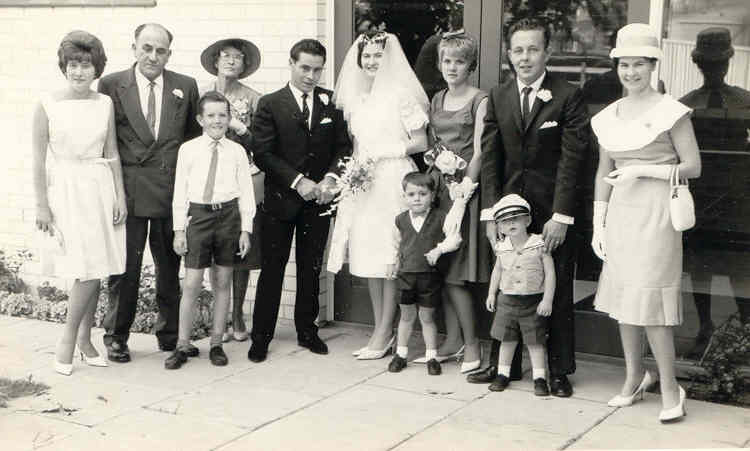
L to R : Rose, Jack, John, Marion, Phil, Ann and Owen McEvoy, Marie, Ross, Ian and Elizabeth John. 14th December, 1963.
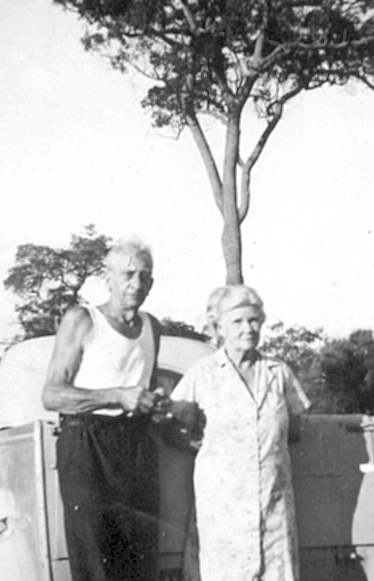
Jim — Written by Marion
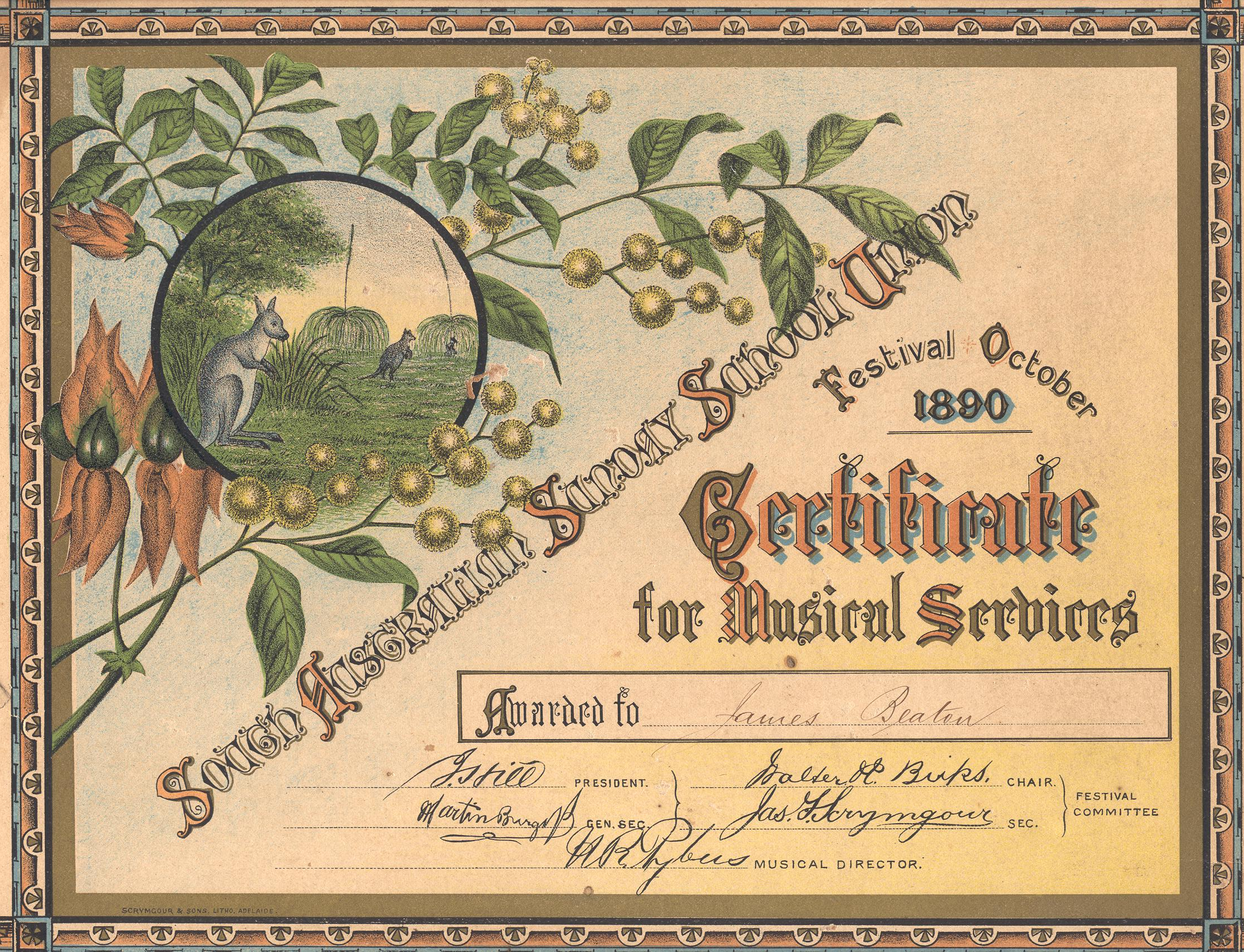
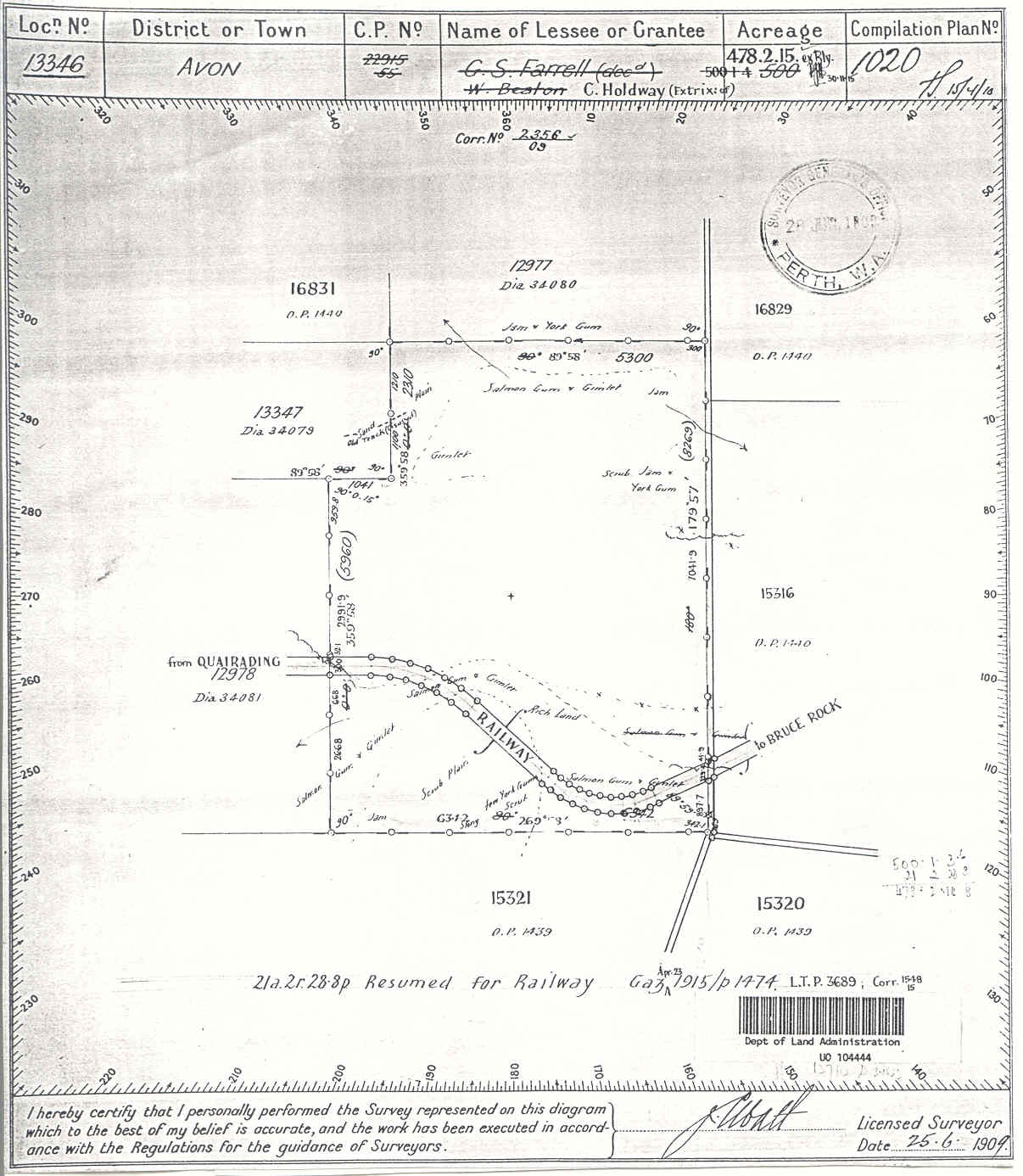
“JIM” Jim Beaton: my father. Written by Marion. He was the third youngest of 10 children, 6 of those being boys. They were as follows Ann, Finlay Charlie, Belle, Jack, Meg, Ken, Jim, Don and Helen. Born in 1878 Jim in company of his mother, sisters and younger brother Don, came to Western Australia from Adelaide, to join his father and older brothers Finlay, Charlie, Jack and Ken who were working a gold mining claim at Nullagine. This was in the 1890’s. Their father had taken up a farm at Yandanooka, where accommodation was built for the women folk. Sandy also acquired the sheep station of Thundelarra, out of Yalgoo. The farm at Yandanooka, although no longer in the hands of any family members still carries the name of “Beatonsfield” today. I have no farm figures to rely on, and only anecdotal memories, so I don’t know how well Thundelarra was stocked, but there was stock, we know from stories of outcamps and shepherding. Outcamps , where as a young man, Jim would be shaking in his shoes when male, black, natives would come to the camp asking for tobacco, which reminds me- Their father “Sandy” as he was mostly known, was a pipe smoker from way back, and as time went by, and the older boys became young adults, they carefully and surreptitiously acquired pipes and tobacco of their own, and quite unbeknownst to their elders , had their own private little “Smoke-ohs”. One day the old man said to Ken, “You fellows smoking?” Ken resigned himself to the blast and said, ”Yes”. “Well lend me some of your tobacco,” said Sandy, ”till the stores come, because I’ve run out.” Relief all around. The boundary of Thundelarra Station marked the perimeter of the mining settlement of Field’s Find. Whether that was in operation when Sandy acquired the property, I don’t know, although I think it was, but it was certainly a going concern while they lived there, and we have been told that the miners bought their meat from Thundelarra, so the young Beatons would have been fully in touch with all that was going on there. As at any gold mining settlement at the turn of the Century, there were, at Field’s Find in relative size to the settlement, all the attractions of the larger centres of the day. Music, alcohol, bright lights, women and young company of both sexes, all of which were apparently appreciated and enjoyed by our hero, Jim. Which of the family worked the farm at Yandanooka, and which Thundelarra and for how long, I don’t know. I remember stories of early shearing years, of floods on Thundelarra, and photos of those same floods at the shearing sheds. Also stories of Jim working for a time at a mine at Wiluna, but I can put no dates or length of times to those stories. Although these young men, my father and his brothers, spent their young adult lives in such outback spots, they had already been fortunate enough to have had early schooling in the city of Adelaide. Jim even had an impressive Sunday School Certificate for 1888. He would have been ten years old at the time. We still have that certificate. I remember from his stories that they were certainly poor, as far as money was concerned. He would never eat grape jam, because he said it always reminded him of the days of his childhood when his mother, in the heat, would bring home these bags of grapes to be made into jam, because that’s all they could afford. During the 1890’s there was a Depression, in Australia anyway, so what employment, if any - there was for teenagers or whether my father found any in Adelaide, I have no idea. There must have been some money somehow, because he had at least an acquaintance with Melbourne, possibly Sydney as well. He had had experience of theatrical presentations of the day and I can well remember his stories of taking girls out boating on the river. Whether the Yarra or the Torrens , I’m not sure. And, as he was a gentleman who always retained an ”eye for the ladies”, I guess he cut quite a dash. They were all fine looking chaps, as young fellows. Upright, manly, mustachioed, etc, as was the model of the day. The opening up of the wheatbelt began, I think in 1908 and Jim would have been about 30 years old. His brother Ken selected two blocks, one for himself and one for Jim, adjoining but for a community road between them, in the district of Bruce Rock. Jim had become engaged to be married. I forget her name, but her photograph remained among family records, for many years. I have no idea where they met or where she lived. The photograph was a good one, studio, and quite large, showing a nice-looking young lady, in the Edwardian fashion of the day. Hair piled on top of her head, and wearing a lacy, high-necked white blouse. When Jim met my mother he realised he could not continue with his engagement. So he had perforce to write to his fiancee and ask her to release him. He knew well of course, all those towns of the Murchison - Cue, Yalgoo, Daydawn, Magnet, Mullewa and on down the line. Whether he had worked at any of them I don’t know. If only I had asked him all those questions. Ah, well………
208
Winnie — Written by Marion
“WINNIE” Winifred Coombe -Farrell-Beaton: my mother. Written by Marion. Winnie emigrated from England in 1908, with her husband, Sidney and two young children Ernest and Elsie. Ernest 6 years and Elsie 4. The young couple took up a selection on land close to what became Shackleton. Presumably they accommodated themselves in tents. When Sid became ill, I am not sure, but the fact is, that he contracted Typhoid Fever, which was rife at the time, and early in 1909 he died. They had been in Australia for 3 months. They were at that time staying at “The Coffee Palace”, in Perth, which establishment was owned and operated by a Mr & Mrs Foreman, who became lifelong friends. They were there when Sid actually died. Winnie was now 29 , widowed with two children. They had emigrated to Western Australia at a time of great new expectations in the Agricultural field and had brought with them a comprehensive and common sense range of artifacts and equipment. Sid’s Wedding Certificate lists him as ‘Iron and Metal Merchants Foreman’, and at that time he was 21. For a young man of 21 to be a factory or ironworks foreman, at that time marks him as something above the average, in character and expertise. This backg round also would have greatly assisted his knowledge and choice of implements and appliances to bring to Australia. There were the blacksmiths’ tools of trade. The large bellows, the large anvil, the different hammers, tongs and scrapers, I cannot think of all the tools to do with heavy metal working. There was also a farm dray, with the name Farrell S.G. on the side. Also among the metal tools, a set of boot lasts ,from small childrens sizes to ladies to adult male. In furniture there was a double bed, metal, but not terribly fancy, as were some at that time. A tall, very commodious beautiful chest of drawers, a washstand of either red cedar or oregon pine. A large table of the same pine or red cedar, a soft reddish colour, and a smaller kitchen table of pine. Six upright chairs, of light varnished wood, with cane seats. Also a high chair for a baby and an oil cloth covered couch. There were camp stretchers, which were probably used for the two older children. Also there was a piano and a sewing machine. There was no heavy polished furniture. There were lots of good heavy metal pots, pans and kettles. Plenty of cutlery, and an ample supply of china, all of good quality, some very fragile, but all useful. Also quite a lot of enamel kitchenware. There were, I remember, I think 4, standard lamps. Metal standards of fairly intricate design, having sconces for the metal bowls of the lamps, and the lamps themselves with pretty glass shades. Some hand lamps of course, some of which had very decorative bowls, and pretty shades.. There were also quite a number of lovely vases, and a ‘dressing table’ set of matching pieces, with candlesticks, perfume bottles, pin tray and jewel box. They had brought dark red velvet curtains and white lace ones. The red curtains were used as door hangings in the old first house, and the lace ones went on through all the years of my childhood and beyond. In fact their whole selection bespoke common sense, foresight, and utility looking forward toward elegance. They had brought wall mirrors, quite ornate, fire screens, and oil paintings, to be hung on the walls when they had wall on which to hang them. Winnie also had quite a number of good rings, some bracelets and some earrings. During the years spent in tents the oil paintings and the fire screens became so affected by mould that they were of course discarded. As Winnie then found herself, a young widow, suddenly bereft, in such a primitive spot, and entirely on her own resources, her mind straight away thought of returning home. Thoughts of returning home however were soon put out of mind by the meeting with nearby settlers Ken and Jim Beaton. Ken was already committed to his childhood sweetheart, but Jim was badly smitten. Who could turn away from a helpless comely widow with two small children ? So very soon, their futures were aligned, and they were married. Home of course was still England. The pictures and impressions Winnie created over the years for us, her children, of the life and associations she had left behind, in England were nostalgic but not of extreme homesickness or longing for anyone in particular. We gained the understanding that the relationship with her mother, was far from ‘sweetness and light’, but she had a strong bond of affection, with and for, her father, who we gathered, was a social cut above her mother, and a well educated man. However he had a weakness for alcohol. Just how bad that was, we don’t know, but apparently his wife had perforce to earn money to at least assist to support them. As a cook, we understood. So Winnie was the child minder of her young brother Harold, of whom she was extremely fond. She was 12 years the elder. They were the only two children. I received a couple of letters from my Grandfather, Winnie’s father, when I was about 18 years old. If only I had kept it up. He used to take Winnie to the Art Galleries, museums and libraries and really did instil in her an appreciation and love of general knowledge, which never left her, and she continued to add to it all her life. When she was 12 years old, Winnie left school, but how old she was when she began paid work, I’m not sure, but the employment she gained was in the ‘workroom’, where girls were curling ostrich feathers for high fashion industry.
The West Australian Newspaper November 7th, 1908 NDL NORDDEUTSCHER LLOYD I G MAIL (HOMEWARD) Reydlitz 8,000 A.Ahlborn Nov 10 Bremen 11,570 C.vonBorell Dec 8 For Eastern States Bremen, November 9 ROUND-THE-WORLD and ROUND-AUSTRALIA TOURS A Special Feature Few of the travelling public are aware of the facilities now afforded by the Norddeutscher Lloyd in the matter of Round-Trip Tickets, a new system in connection with which has recently been inaugurated. Moreover some branch lines, connecting Australia with various portions of Asia and touching en-route at some of the most picturesque portions of the South Sea Islands and Indian Archipelagoes have lately been placed on the regular time-table, this offering special inducements to Australian tourists and a few months’ holiday now suffices for a comprehensive tour through some of the most interesting lands of the Far East. The system will be found particularly advantageous by Round-The-World travellers who are offered a variety of routes to choose from. A Round Trip Passage may be booked from any of the ports touched at by steamers of the company terminating at the same port. The ticket is available for two years, any combination quoted on application. General Agents for W.A. L.RATAZZI and CO. Fremantle and Perth, CORNER OF William St. and St. Georges Terrace.
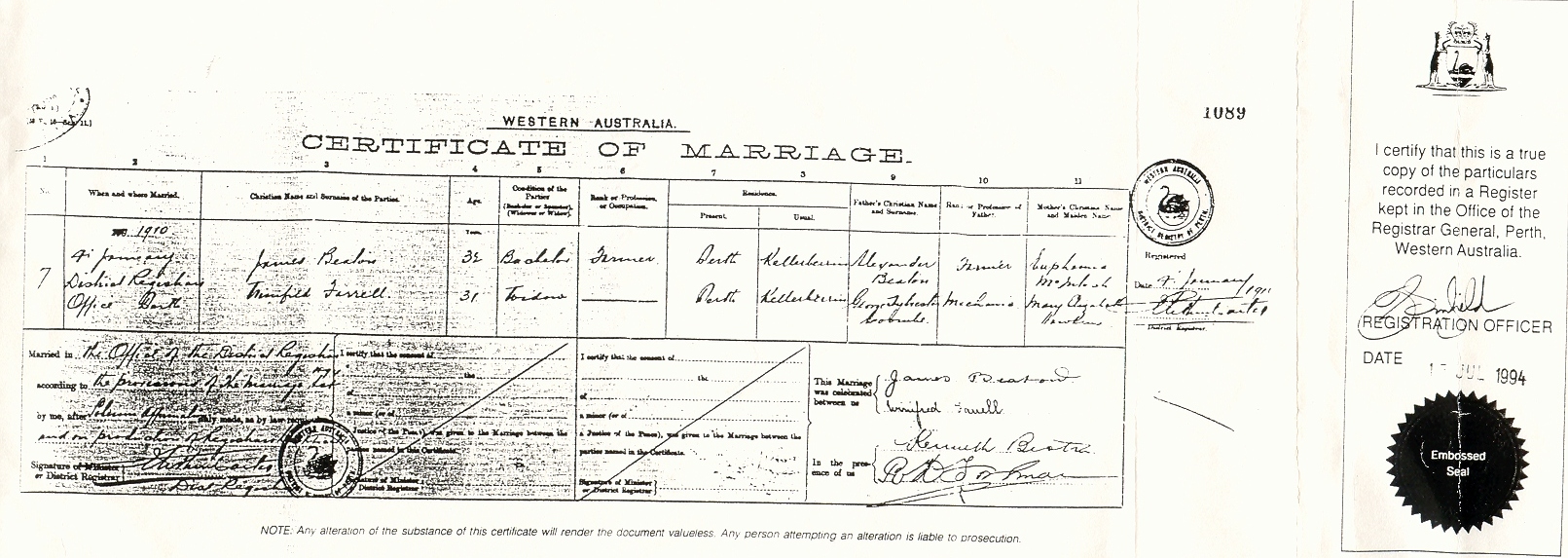
James born on 17th of January 1877 at Copmanhurst N.S.W.
Married: Winnifred Farrell (nee Coombes)
On the 4th of January 1910. at Kellerberrin
Children: Sidney Ernest (Farrell) Beaton, 28th November 1902, Edinborough, Scotland Elsie Emma (Farrell) Beaton 8th October 1904, Glasgow, Scotland
Constance Euphemia 6th October 1910 , Kellerberrin Hospital.
Marion Ethel 3rd December 1912,at home on the farm.
Stuart James 5th October 1915,Maylands,CntrlAve, Nse Short.
Mary Winifred 23rd October 1917 ,Maylands,Cntrl Ave,
Isobel Ann 1st of January 1921,Maylands, Mrs Foreman’s
Margaret Lillian 27th August 1923,Cottesloe Maternity Hospital.
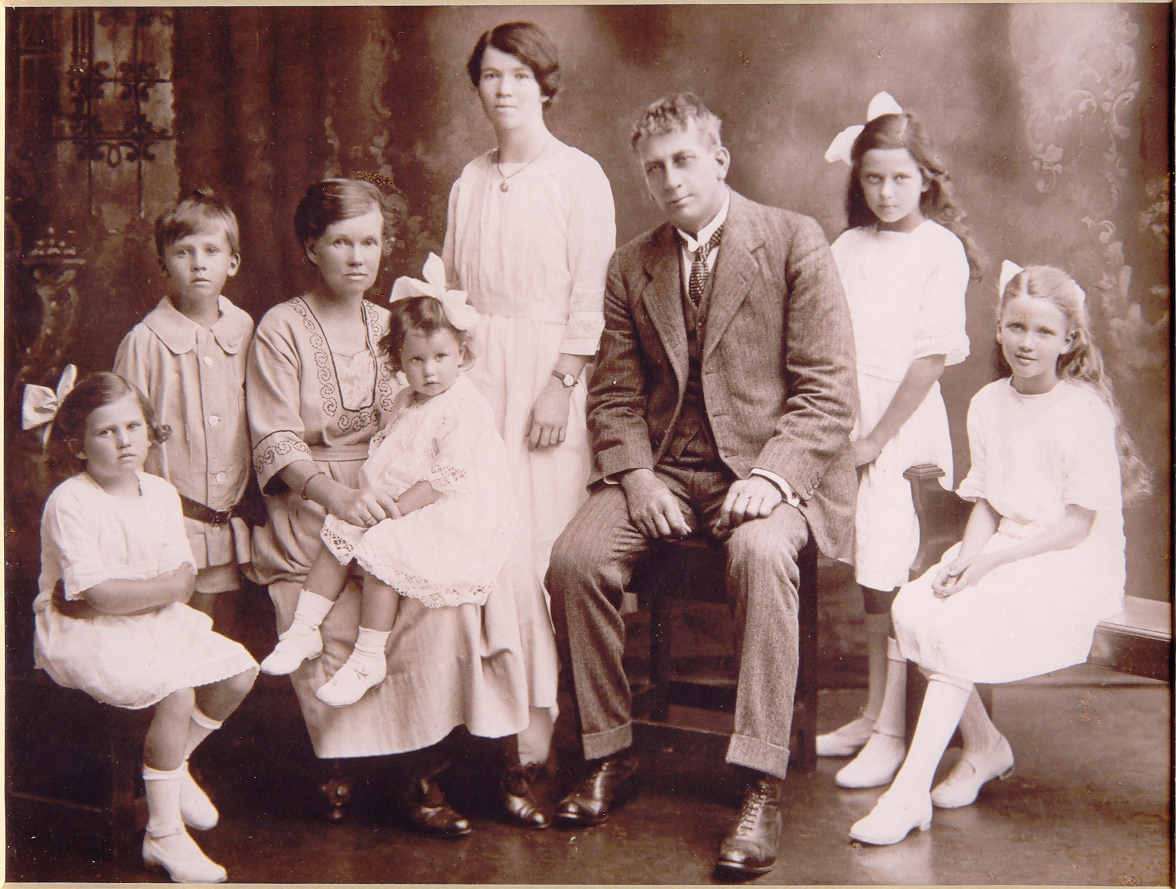
Left to Right : Mary, Stuart, Winnie holding Isobel, Elsie Jim, Connie and Marion.
209
Sidney Ernest Farrell-Beaton
Sidney Ernest Farrell - Beaton Sidney Ernest (Farrell) Beaton born 28th November 1902, Edinborough, Scotland and journeyed to Australia in 1908 with his parents, Sid and Winnie Farrell and his sister Elsie. Only six years of age at the death of his father, there followed more changes with his mother’s marriage to Jim Beaton. The family grew over the years, Ern acquired skills from Jim (acknowledged in his later years) which stood him in good stead in his chosen field which was always to obtain his own farming land. Over time there were family disagreements, acquisition of land, marriage, family, accumulation of more land and businesses and commitment to his local community. His son Ken, committed the story of Ern’s lifelong endeavours to paper in 1996 in, “Recollections of a Yilgarn Farmer”. Information and photographs from this publication have been incorporated in a display at the West Australian Museum in a display called “Land and It’s People.” The Farrell connection was always talked about among the family but Ern and Elsie used the name Beaton from the time of Winnie’s marriage. All documents were made out to Beaton but when being married Ern and Nell were married under Farrell - Beaton and all the children were registered under Farrell - Beaton. In later years when needing passports, the sons found out, which necessitated changing their names by deed poll to legalise documents they had drawn up over the years unknowingly. Ern’s grandsons are now the only Beatons left with agricultural land holdings, including among them his original 1,000 acre block at Garrett in the Yilgarn Shire.
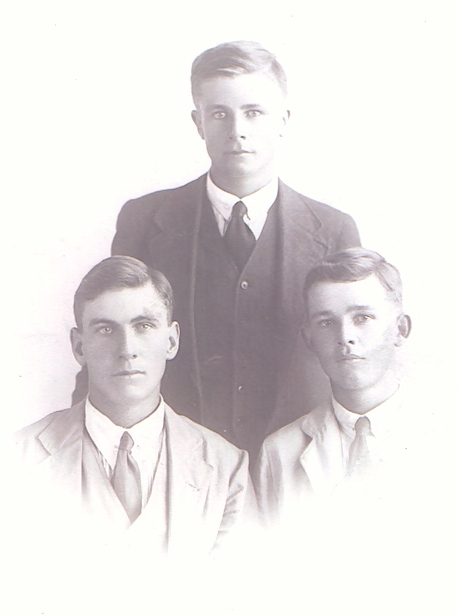
Standing : Stan Dadd.
Seated: Left:
Ken Thompson, Ern.
c 1922.
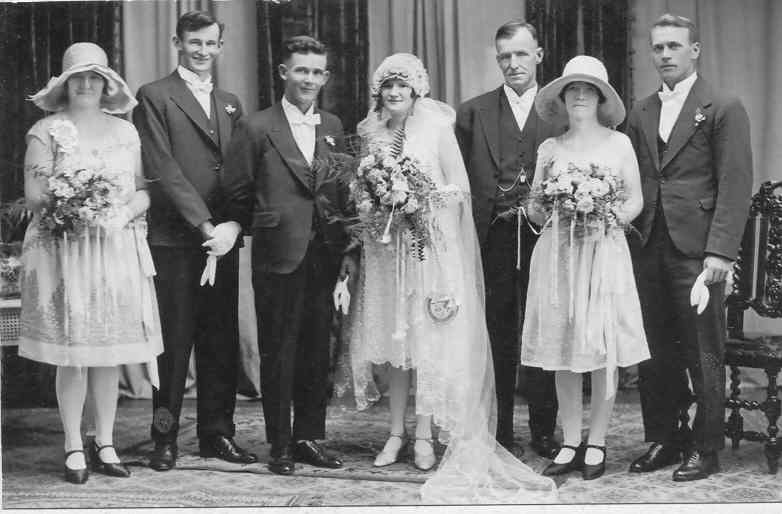
L to R: Mary , Bill Scougall,Ern and Nell Beaton, Mr Scougall, Elsie Beaton and Bill Webb.
Boulder Feb, 1929.
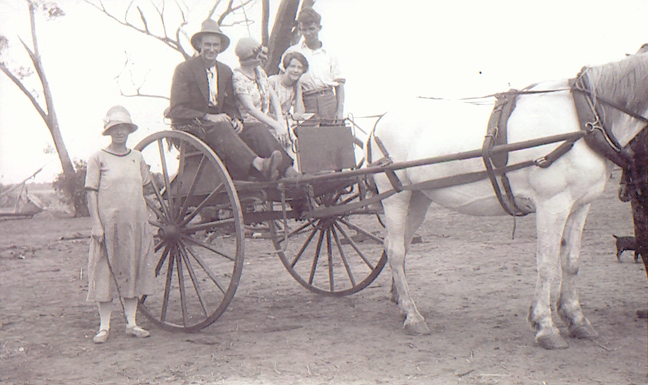
L to R : Winnie, Bill Scougall, Nell, Marion and Ern.
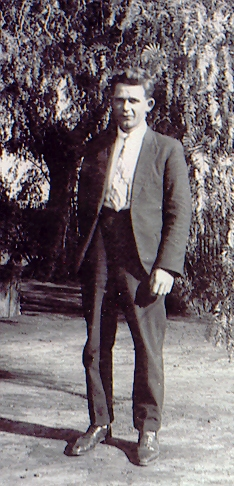
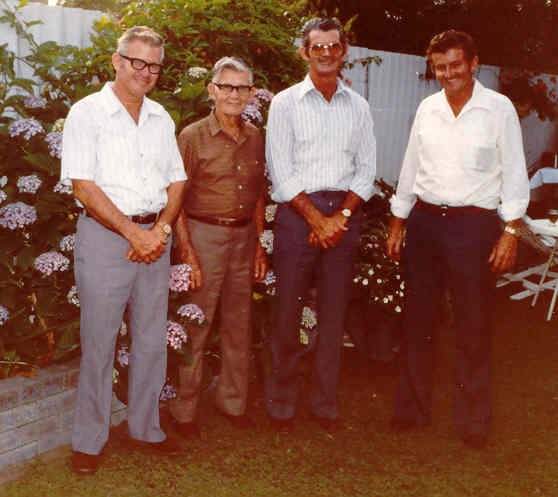
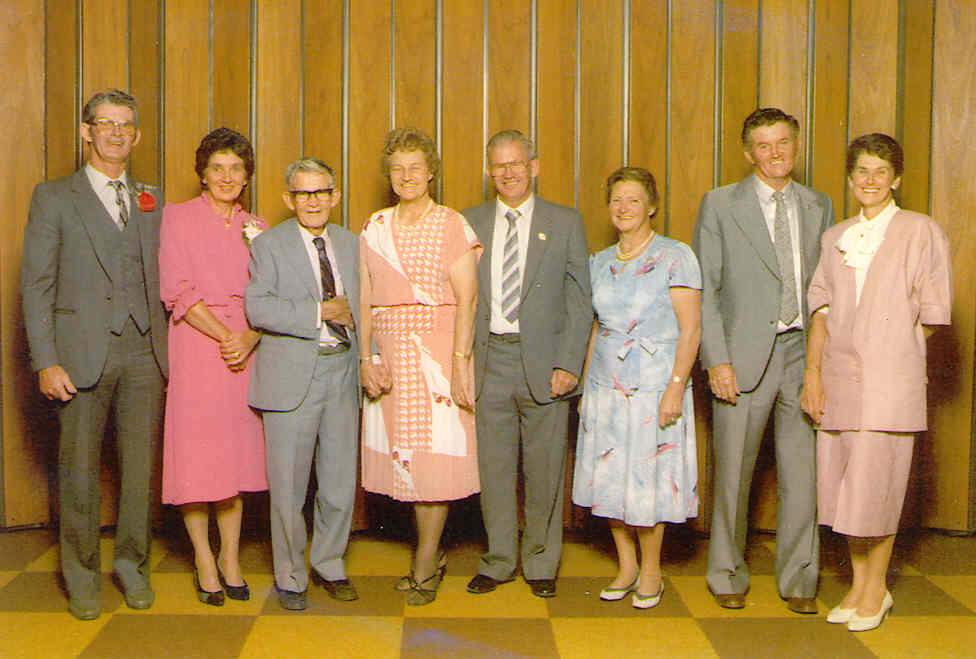
L to R : Stan, Agnes, Ern, Lil, Bill, Nancy, Ken and Olwen Beaton.
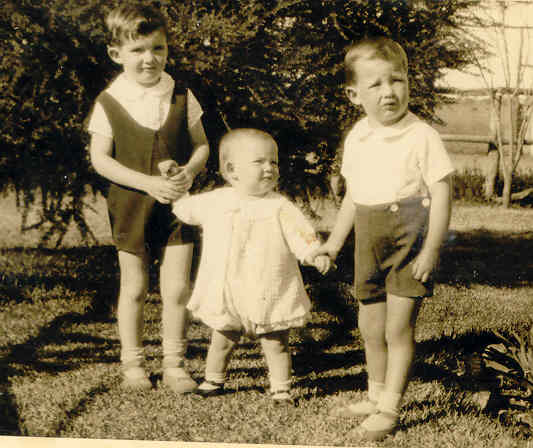
Sidney Ernest Farrell - Beaton born 28th November 1902 in Edinborough, Scotland Married: Helen (Nell) Scougall born 28th March, 1903 at Boulder. On : 20th February, 1929 at the Methodist Church Boulder W.A. Children: Kenneth Murray born 2nd December, 1929 at Southern Cross. William Ernest born 28th January, 1931 at Southern Cross. Stanley Northcliffe born 21st July, 1933 at Southern Cross. Donald Charles born 28th December, 1935 at Southern Cross. Donald was born with a disability and resided in Perth for some years. Don died on 4th January, 1961 and is buried at Karrakatta. Nell died in Perth on the 16th July, 1976 at Charles Gairdner Hosp. Re-married: Lillian McClelland in January 1981 Ern died : Perth on 24/8/1989 and both Ern and Nell’s ashes are at Karrakatta.
Kenneth Murray born 2nd December, 1929 Married Olwen Lois Newell (b 25th March, 1933) 8th April, 1953, Perth. Children : Margaret Anne born 31st May, 1954 at Southern Cross. Terence John born 12th February, 1956 at Southern Cross. Christine Patricia born 29th July, 1959 at Southern Cross. Ken died on the 8th November, 1996. Buried AT Southern Cross Cemetery. Margaret Anne Married: Phillip Rafferty (b 6th November), on 27th April 1974, Southern Cross. Children: Emma born 12th November, 1976, Southern Cross. Marcus born 15th March, 1978, Southern Cross. Married 26th October, 2002 to Paula Guadagnin.(b 13th March 1979) Terence John Married Maureen Gayle Teale (b 9th April, 1957) Children: Tristan David born 6th January,1981,Southern Cross. Kieran John born 9th March, 1983, Southern Cross. Caitlin Shannon born 27th May,1985,Southern Cross. Dale Lindsay born 30th May, 1988, Southern Cross. Jenna Danae born 9th March, 1990, Southern Cross. Christine Patricia (Tina) Married : Peter Van der Ende (b 23rd June, 1959) Children: Lauren Kate born 11th March, 1990 Dean Michael born 27th September, 1991
William Ernest born 28th January, 1931
Married : Nancy Lauris Kahler (nee Holmes) (b 29/10/1923)
On 28/12/1957 in Bunbury.
Stanley Northcliffe born 21st July, 1933
Married: Agnes Joan Winchcombe (b 11/11/1933 Southern Cross)
On :12th November, 1955 at Catholic Church , Southern Cross.
Agnes died on 29th December, 1989, buried Southern Cross Cemetery.
Children: Graeme Edward born 4th June, 1957 at Southern Cross
David John born 22nd August, 1958 at Southern Cross.
Leanne Joy born 22st January, 1963 at Southern Cross.
Elizabeth Jane born 3rd November, 1966 at Southern Cross.
Graeme Edward
Married: Natalie Gaye Coward (b 23rd November, 1965)
On: 26th April, 1986 at Catholic Church, Southern Cross.
Children: Matthew Edward,1st May, 1990,Armadale Hospital.
Hannah Maree, 8th February, 1993, Merredin Hosp.
Leanne Joy
Married: Justin Leeder (27th September, 1963)
On : 19th July, 1986 at Catholic Church, Southern Cross.
Children: Astrid Kate 14/9/1988 at Southern Cross Hospital.
Tomas Vivian 1/2/1990 St John’s Hospital, Subiaco.
Harrison David 22/11/1993 at Merredin Hospital.
Elizabeth Jane
Married : Ronald Walter Goodhill (20th September, 196 )
On 11th October, 1986 at Catholic Church, Southern Cross.
Children: Sam Walter 31/7/1990, St John’s Hosp, Subiaco.
Kate Elizabeth 18/6/1993,St John’s Hosp, Subiaco.
Elsie Emma Webb (nee Farrell – Beaton)
212
Elsie Emma Farrell
Elsie Emma Farrell was born in Glasgow, Scotland on 8th October 1904. Her parents, Winifred and George Sidney Farrell travelled to Australia in 1908 to take up land in the Bruce Rock area of Western Australia. At that time Elsie was four years old, her brother Ernest six years old. Their father died four months after arriving in Australia, before the family could be settled on their new property. Winnie re-married, to Jim Beaton, and over the years another six children were born. Elsie, as she grew, became her mother’s mainstay, helping with the younger children and in the house. Elsie was 18 by the time the Yarding School opened so she never attended school but the home was well stocked with books. All the children read, wrote, played card games, sewed, knitted and played the piano. They had ‘home help’ in the house. These girls, close to Elsie’s in age became her friends. The first teacher at Yarding School, Hilda Hedges, boarded with the family. She too became a good friend. As young adults, Elsie and her brother Ernie were used to being part of the social scene in the Erikin and Bruce Rock district. They went out and about to parties and district gatherings. Held in high regard by her stepfather, for Elsie’s 21 st birthday, Jim Beaton arranged a trip to Moree in N.S.W. Jim’s sister and her husband, Belle and Charles Crane, had returned there after the death of their eldest son in WW1. They settled on a grazing property 60 miles from Moree. While on this holiday Elsie met a young Englishman, William (Bill) Webb who was tutoring Belle’s youngest son Finlay. Bill Webb had come out to Australia at the end of 1924, as a 17 year old looking for adventure. On returning to Erikin, Elsie found the life at home changing. Ern had left to take up his own block of land at Southern Cross. Within approx two years Jim sold the Erikin property, purchased a property at Kellerberrin, sold that property, moved to Cunderdin, moved to Perth and while there Jim was declared bankrupt. The family moved to Southern Cross to join Ern in 1927. While the family was in Perth Elsie found work as a housemaid in a position that the family remembers as being distressing to her. An accomplished seamstress, Elsie at one time had a small dressmaking shop in Southern Cross and also worked for a time as a waitress at the Club Hotel. Meanwhile, Bill Webb, together with his friend Alex Johnstone, had followed Elsie back to W.A. Elsie had a position at Nukarni looking after the young daughter of Charlie and Grace Browne, well known identities of Nukarni. Elsie and the Browne family became very good friends, a friendship which lasted a lifetime. Elsie and Bill Webb married in 1931 at Northam. For a time they farmed land at Southern Cross. During this time their two children were born. In 1936 after increasing difficulties caused by the Great Depression they walked off the land and went to Perth. Bill found work at Boans Store, then the major department store in Perth. He was to remain with the firm for many years, apart from a six year absence when he served in WW2. He and Elsie bought a house in Rivervale. The house was built by Jim Keightley, who had also built Ernie’s house at Garrett near Southern Cross in 1929. Together Elsie and Bill created a very happy family environment for themselves and their children, Stanley and Laura. Bill Webb died suddenly, at home, in May 1975. Elsie continued to live in their Rivervale home until she was no longer able to care for herself. She died in February 1989, at Craigwood Nursing Home aged 84. A devoted wife and mother, Elsie had that rare ability to relate to anyone, regardless of age, to always find the good in everything. She was loved and respected, and still is, by all who knew her. Her wisdom, her friendship, are remembered by many to this day. A truly remarkable lady.
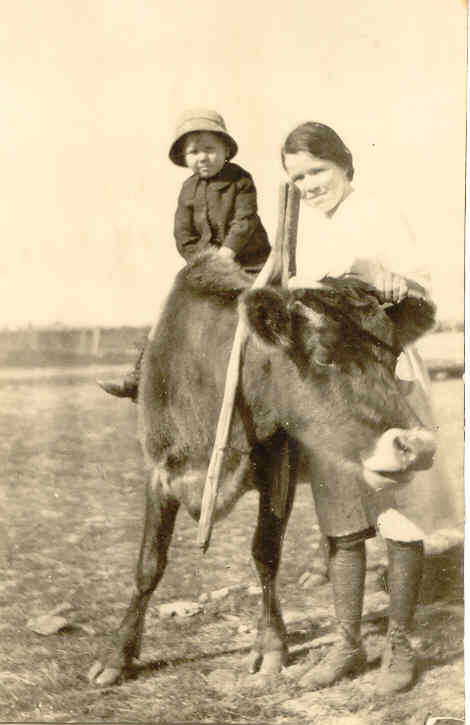
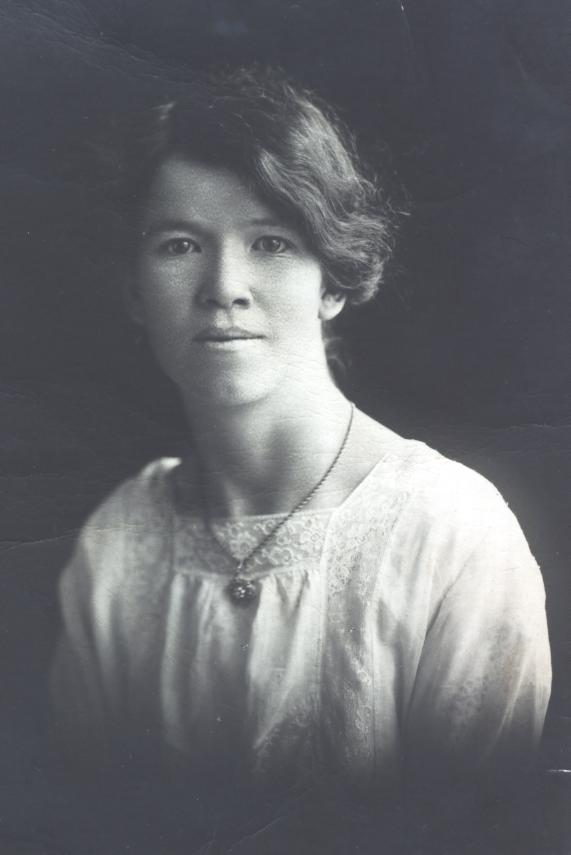
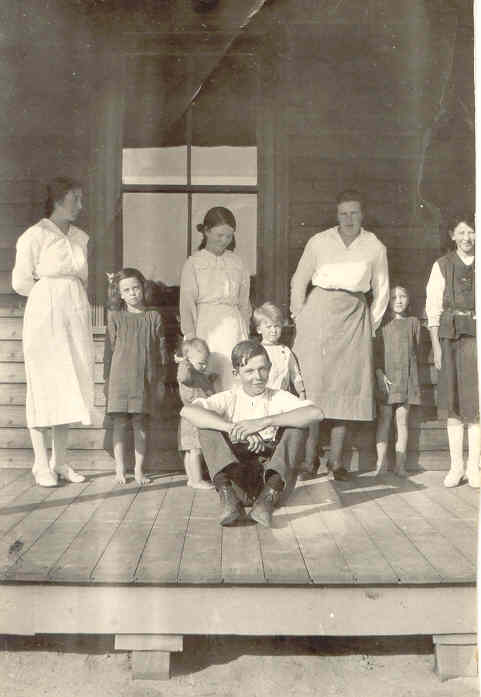
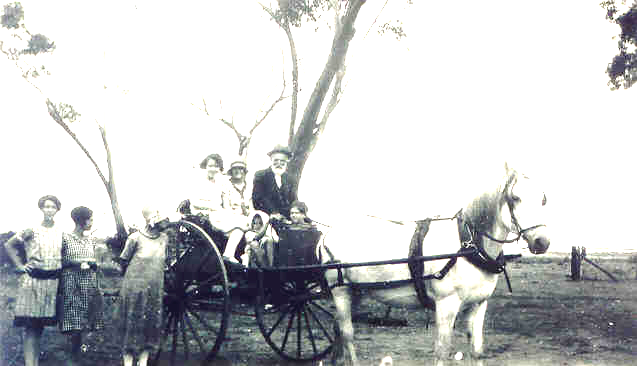
L to R : Maggie Stone, Connie, Mary, Elsie, Stuart, Emmy Haase, Marion, ? , Ern is seated in front.
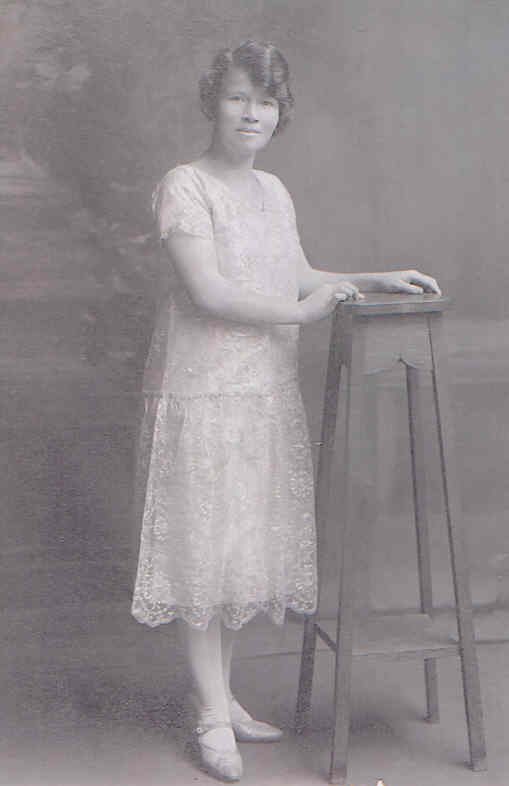
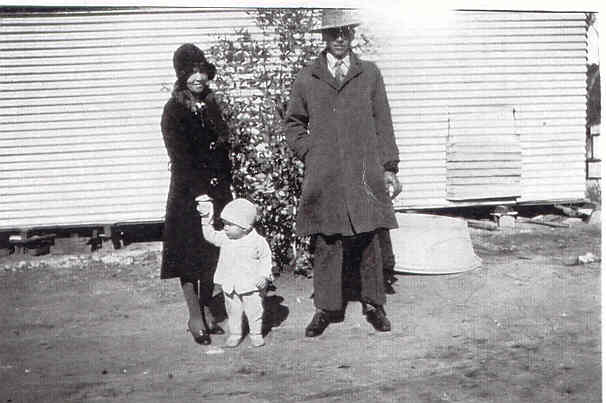
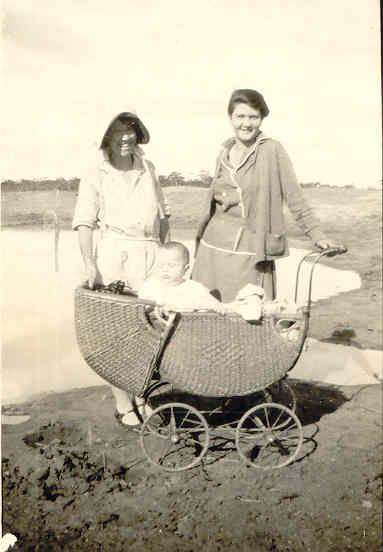
On the verandah at Ulambie, c 1919. L to R : Maggie Stone, Connie, Mary, Elsie, Stuart, Emmy Haase, Marion, ? , Ern is seated in front. Elsie Farrell-Beaton. c 1925. Bill Webb. N.S.W. 1925. Elsie, Stan and Bill Webb.Corinthia. c1932. Elsie,Marion and Stan.Corinthia. 1932. Southern Cross c1929 L to R : Marion, Connie, Winnie, Elsie, Nell, Uncle Jim Scougall. Seated in front of sulky : Isobel, Margaret and Mary.
Elsie Emma born 8th October 1904 at Glasgow, Scotland. Married: William Webb (born London,England) Children: Stanley 25th February, 1932, Perth, Registered Southern Cross. Laura 3rd February, 1934 at Corinthia, Registered Southern Cross. Stanley Married: Margot Shaw (b 23rd December, 1934 Perth) On 27th December, 1958 at Wembley. Children: Cheryl born on 4th November, 1959 in Sydney N.S.W. Laura born on 9th October, 1961 in Sydney N.S.W. Yvonne born on 16th March, 1963 in Sydney N.S.W.
Laura Married : Keith McGrath (b 28th November, 1935,Perth)
On :3rd March, 1956 in Perth.
Children: David Keith McGrath born 13th June, 1957 in Perth
Ross Paul McGrath born 24th August, 1959 in Perth
Greg Ian McGrath born 17th May, 1963 in Wau , P.N.G.
Greg died on 30th May, 1987 in a road accident
Peter John Webb b. 31st May, 1968, Port Moresby , P.N.G.
David Keith McGrath
Married: Anne Granville Edge in 1985 Div.
September,2002
Ross Paul McGrath
Married: Anneluus Hiemstra
(b 21st March, 1954 Haarlem, Holland)
Children:- Rafik Didler born 15th January, 1982 in Holland.
Married : Shanie Munroe ( born U.S.A.)
Children : Selimah Dawn 7th August, 1993 in Broome W.A.
Peter John Webb
Married: Tina Van Coons
On: 13th August, 2000.
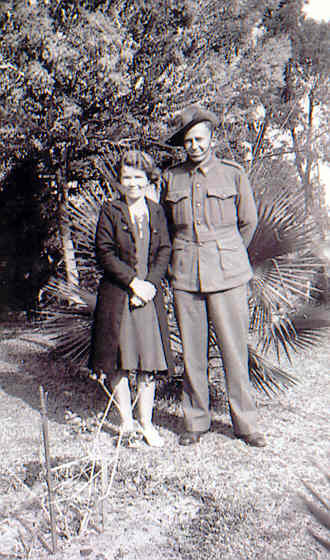
Stuart in his army uniform before transferring to the Air Force.
215
Constance Euphemia Day
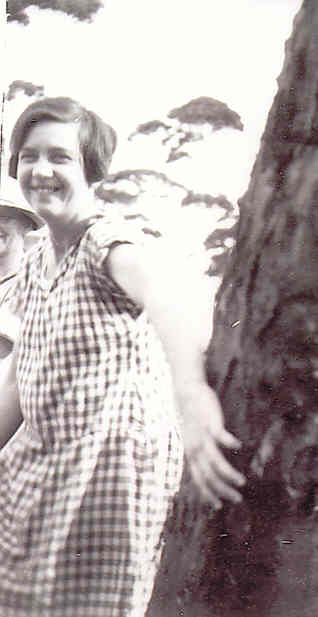
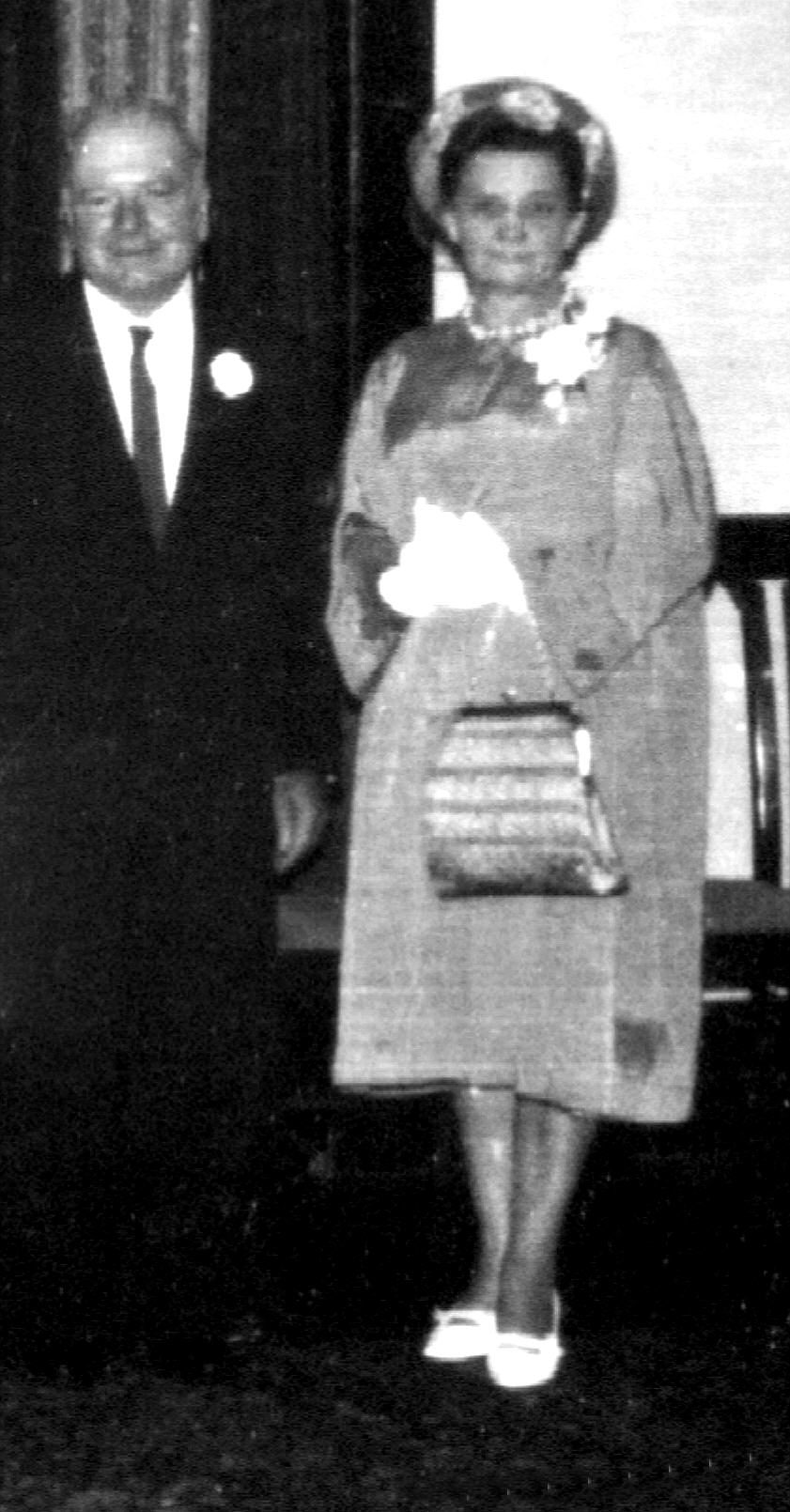
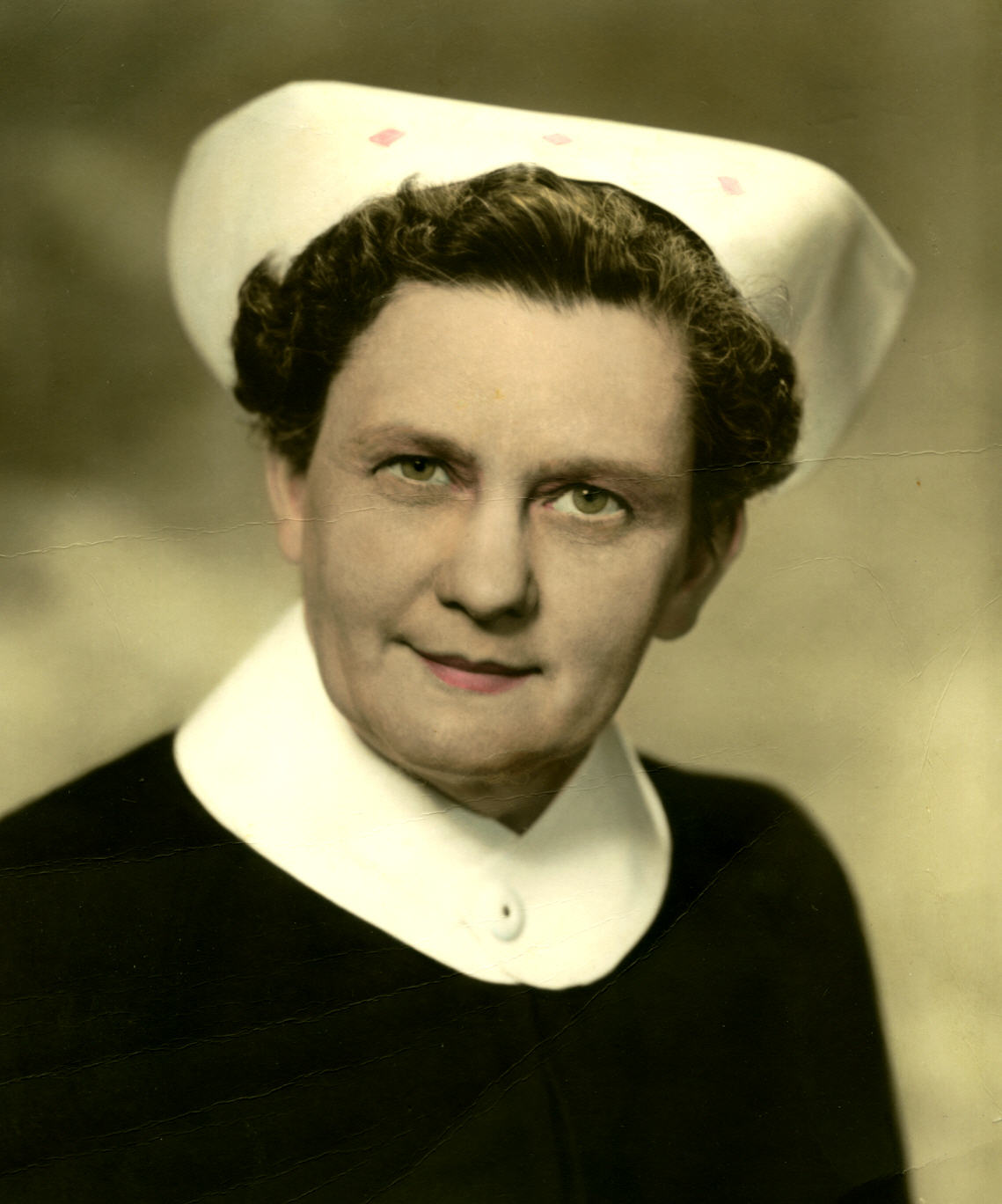
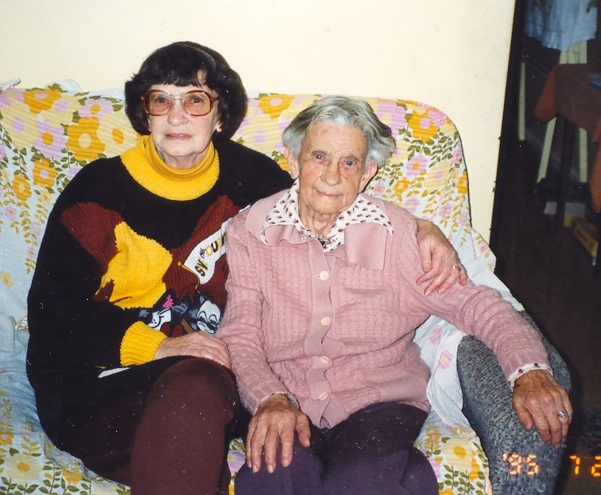
Constance Euphemia Day (nee Beaton - Herbert ) Constance (Connie) Euphemia Beaton was born on the 6th of October 1910 to James and Winifred Beaton. Their first child, Connie grew into an introspective child, never particularly close to her brothers and sisters or the wider circle of family friends or cousins. Connie was a talented pianist and at a time when she hoped to widen her education and expertise, the financial hardships of the family brought these hopes to an end. Something never forgiven. She had to go out to work, first as household help and later as a governess, at one time in the Meekatharra district, where she met William (Bill) Thomas Herbert. They married in Meekatharra in 1934 and moved to Perth where their son Ian Douglas Herbert was born in 1935. The marriage dissolved and Connie later married Jack Day. Connie trained in the nursing profession in South Australia and moved around the country nursing in the N.T. and Victoria. In the 1960’s was the Matron of a hospital in Victoria. Mary and Margaret were both in Victoria at this time and saw her there. The family lost touch until 1994 when while searching for Beaton relations, Connie’s son Ian regained contact with the remaining family members. Connie’s son Ian and both her grandchildren John and Catherine obtained University degrees so perhaps her wish for a better education for herself was realised through her descendants. Her sisters Margaret, Marion and Mary regained contact personally and by mail and phone. Connie passed away on 14th March, 2001.
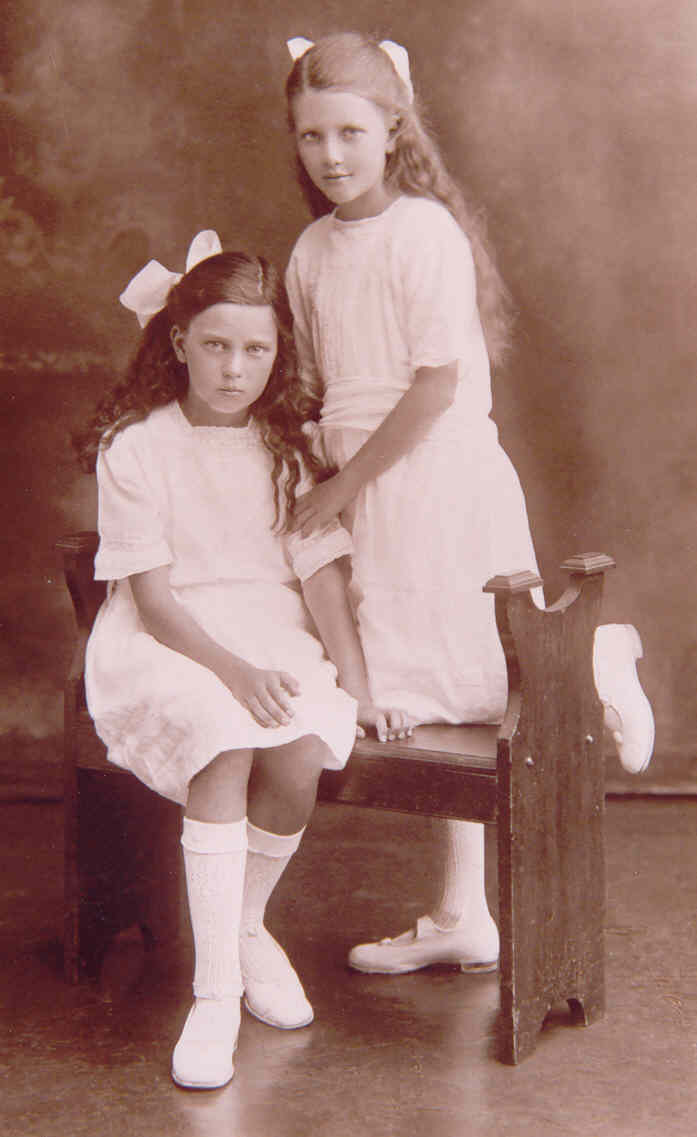
L to R : Marion, Connie, Winnie, Elsie, Nell, Uncle Jim Scougall.
Seated in front of sulky : Isobel, Margaret and Mary.
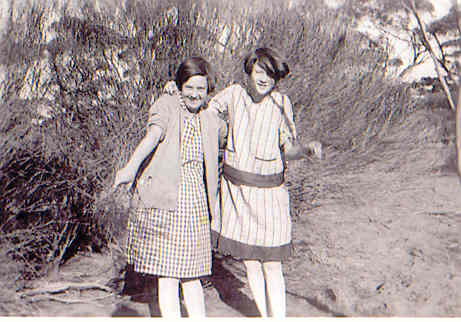
Southern Cross c 1929.
The Pastor delivered the following address at
The Necropolis, Springvale, Victoria.
Connie had organised for her ashes to be scattered in the rose garden.
Constance Day was born in Kellerberrin, Western Australia, in 1910 as the eldest of six children including Marion, Isobel, Mary, Margaret and brother Stuart. It was a difficult early life. Eventually Connie worked in Meekatharra where she met and married Bill Herbert. Their first house was known as the “tea house” because it was made of Bushel’s tea chests. They later moved to Perth where bill worked as a Telegraphist. A son, Ian Herbert, was born in 1935. Unfortunately the marriage did not last and Bill and Connie divorced, with Ian subsequently being looked after by Bill. Connie married a second time - to Jack Day a market gardener from Perth. She later moved to South Australia and in spite of the lack of opportunities for education in her early years she studied for and graduated as a trained nurse. She then worked as a nurse in South Australia, the Northern Territory and finally in Victoria where she retired and settled in Mordialloc. Connie became well known to the Mordialloc community including the children and staff of a local Kindergarten where she at times assisted the staff. A large birthday card prepared by the children was prominently displayed in her house. Connie also learned to play the piano. Ian suspects that she must have had some natural ability which has now skipped a generation and appeared in her grandchildren. Grandson John plays piano and trumpet. In fact he met his now wife while playing the trump et in the Willoughby Symphony Orchestra, an organisation of skilled amateur musicians. Grandaughter Katherine plays piano and flute and still plays regularly with her church group. There are now three great grandchildren. Ben and Anna, John’s children, and Emily, who is Catherine and Paul’s daughter. Catherine and Paul met at a Bible study course in England. Connie had pictures of all three great grandchildren with her at the Nursing home where she passed away.
Constance Euphemia was born on the 6th of October 1910
Married: William Thomas Herbert at Meekatharra in 1934
Children: Ian Douglas born 23rd December, 1935 Perth, W.A.
Re-married: Jack Day
Died: 14th March, 2001 at 90 years of age, in Victoria.
Ian Douglas born 23rd December, 1935.
Married : Marjorie Norah Brown in Sydney,
On : 7th March 1964.
Children: John Douglas born 11th May 1965 in Parkes, New South Wales.
Catherine Ann born 3rd March 1967 in Sydney, New South Wales.
John Douglas born 11th May 1965.
Married: Rachel Catford
On : 11th January 1989 in Sydney, New South Wales.
Children: Benjamin born 24th December in Sydney, N.S.W.
Anna Edwina born 7th December 1999 in Sydney, N.S.W.
Catherine Ann born 3rd March 1967
Married: Paul Wanganga
On : 23rd March 1996 in Orange, New South Wales.
Children :Emily Wairimu born 6th May 1998 in Sydney, N.S.W.
Michael Ndungu born 7th February 2002 in Sydney, N.S.W.
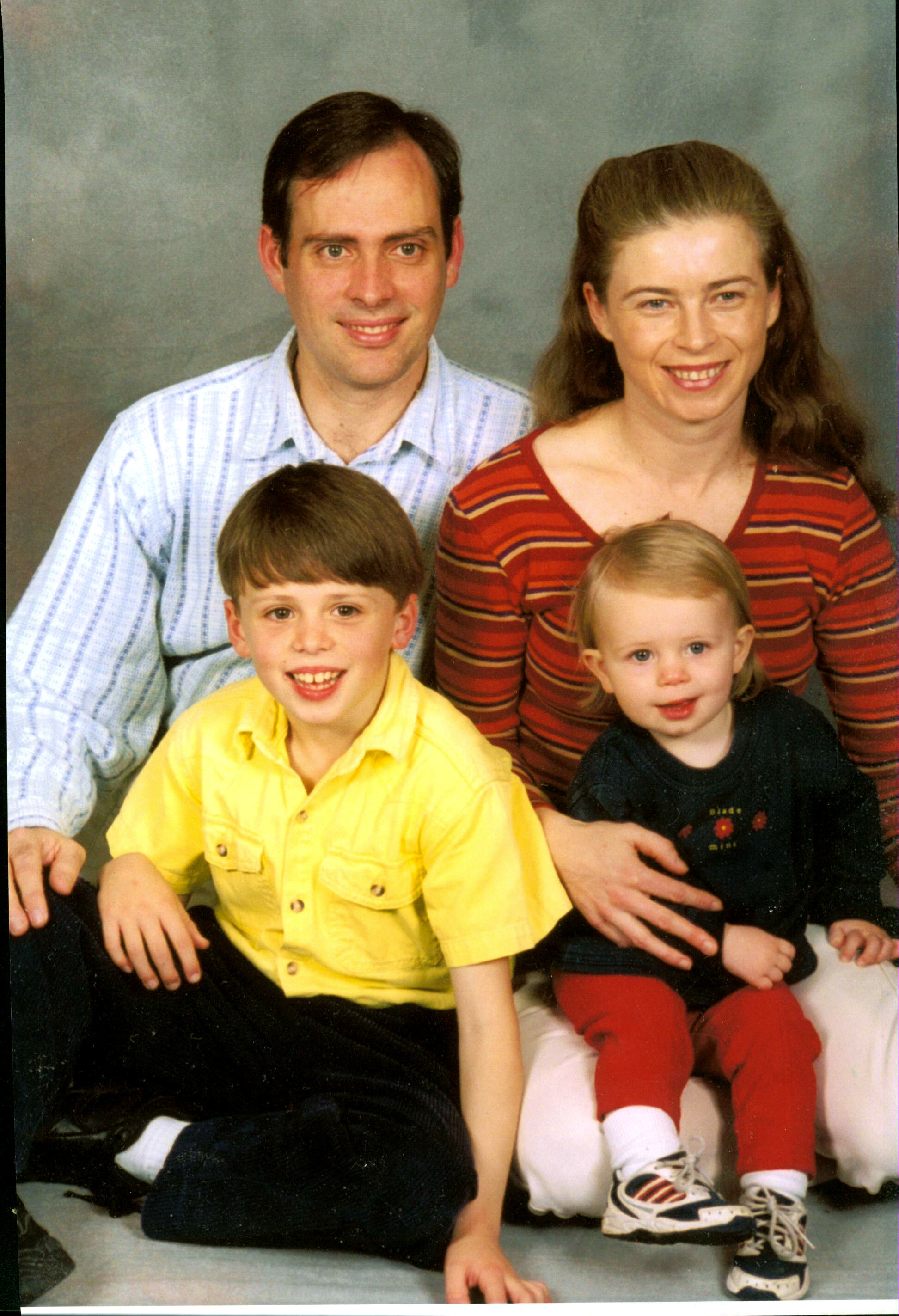
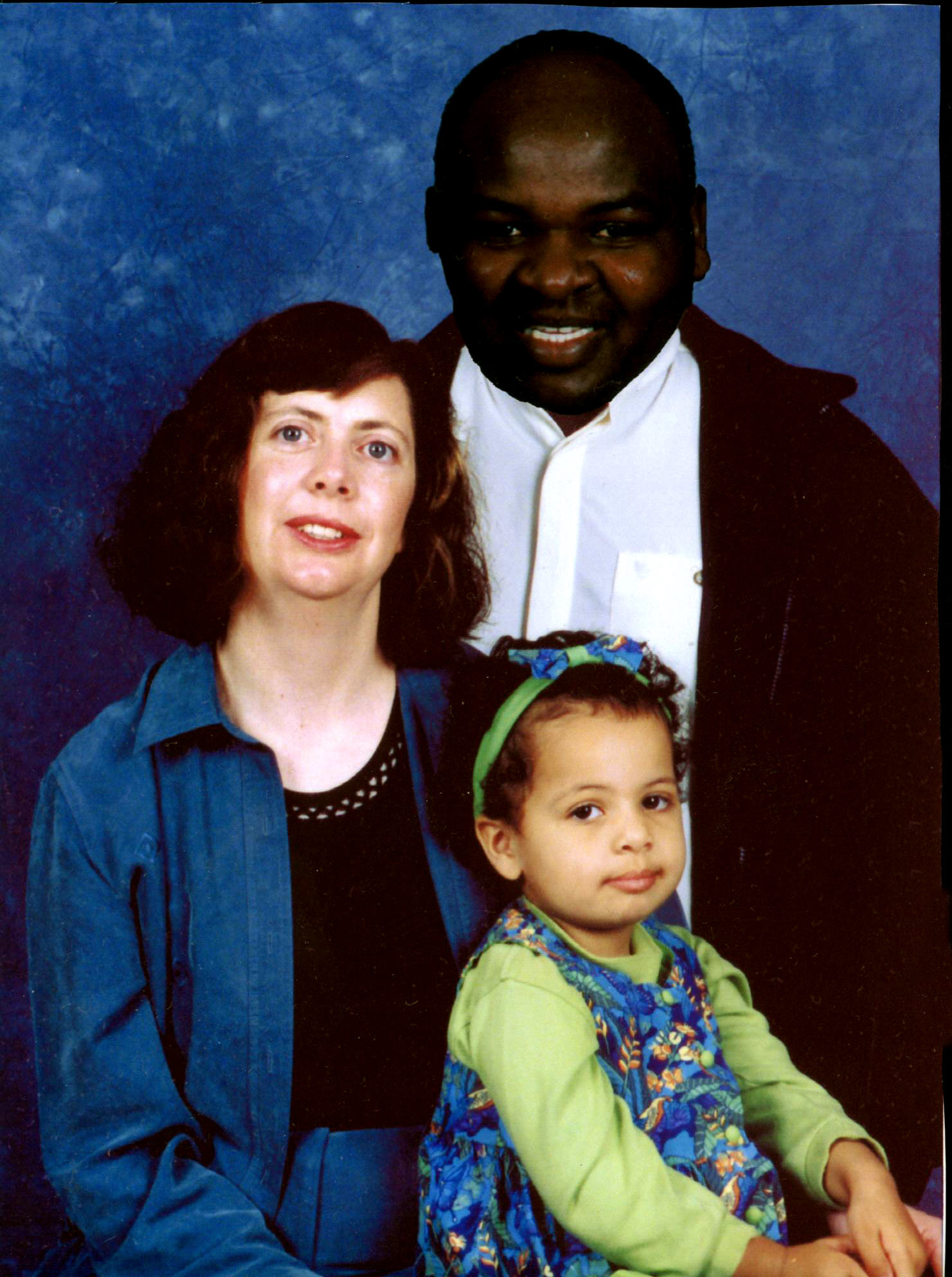
218
Marion Ethel Hill
Marion Ethel Hill (nee Beaton - Simpson)
Marion Ethel Beaton was born on 3rd of December 1912 at home on the farm, in the hessian house the family lived in for some years before the farmhouse was built. Marion remembers her childhood well and tells her own story on the following pages.
“ MARION” written by Marion Hill.1994 The magic names and evocative words! “Up on the Murchison”, Thundelarra, Yalgoo, Cue, Day Dawn, Field’s Find and on into Mingenew and Yandanooka. As a small child, listening to my father’s anecdotes of those places and times as he had known them in the days of his young manhood, they assumed to me the golden glow of fabled lands and places. And who wouldn’t be fascinated by the place name of Day Dawn? What mind pictures it brings, of that one particular dawn! When my father left those parts in 1904, the peak of the gold rush days was over , land was being opened for selection as mixed farming development in more Southern and Midland areas of Western Australia and he was able to obtain a block of land at Erikin in the Bruce Rock District. This was where my parents first met. My mother, freshly emigrated from England, newly widowed, through typhoid, and with two young children, was left on a nearby selection. So propinquity and mutual attraction having done their work, they two, my Mum and Dad, married in 1910, and that year had a daughter, Connie, and in 1912 myself. I have been told that when my father was appraised of the fact of a second daughter his response was, “Well, blow it all. I wish it had a spout on it.” I have only happy memories of real childhood. I was born in what was always referred to as “the old hessian house”, which was upright bush timber, lined and divided by hessian, and cement floored. When I was five years old a carpenter was hired to assist in building a comfortable jarrah home. It is that home and life there that I mainly remember of “Ulambie” of Erikin. Prominent in my memories and dearly loved by us , as kids, are the granite outcrops on my Uncle Ken Beatons’ farm, next door, which farm had been appropriately named “The Granites”, by his wife, my Aunt Ethel. How I loved those rocks! The many crannies, with all the little ferns, mosses, trigger flowers, banksia trees, and orchids. Cowslip, spider, donkey, enamel, wasp, and many more which seemed to grow in greater profusion there than on flatter ground. Also, the animal inhabitants; wallabies, goannas, bungarras, lizards and birds. Magpies, crows, martens, bee -eaters, mudlarks, willy-wagtails, mo-pokes and ground larks. And at hay making time, that wonderfully scented spring time of new mown hay standing in “stooks”, we would hear and see in its “spinning look” flight, the “wheeler” or skylark. I don’t know the look of this bird because I only ever saw it in flight but was given to understand that it was a small brown bird like a ground lark, but which gave voice while in flight as does the skylark of more northern climes. (C.A.L.M. tells me it is known as the Song Lark.) Of life itself on the farm: children came along with expected regularity, till we had Ern and Elsie, my mothers first two, who were Farrells from her first marriage, but were always known as Beaton, although no official adoption or name change was ever effected, then Connie, myself, Stuart, Mary, Isobel and Margaret. We were very comfortably housed and cared for. School was not available to us until I was nine years old, when a small one -room school was opened about a mile and a half away, and the young teacher came to board with us . Funnily enough, she happened to be a girl who was already known to my mother. Her name was Hilda Hedges. Before that, Ern had been sent to board with a family in Kellerberrin, and to attend school there. I can’t remember for how long . It may have been a couple of years, and for us younger ones, including Elsie, our Mother had made arrangements for us to rece ive Correspondence Lessons from the Education Dept. This would have been 1919 -20. Correspondence “Schooling” had only one teacher Clarence Eakins, a returned man from World War I. This was our introduction to formal lessons, but we had always been surrounded by books. My mother had brought with her, from England, many books, Dictionary, set of Encyclopedias, set of Dickens, assorted Classics, a set of Popular Educators, some Harmsworths Scientific something or other, and others I can’t think of. As time went by we acqu ired the series of Mary Grant Bruce, Ethel Turner and all those tried and true Australian Yarns. Also fairytales, Anderson, Grimms, and adventures galore. Stories of Coral Islands, Red Indians, the Sailing Ships, the Whalers, Alice in Wonderland, Peter Pan and “Treasure Island!!” Also we began taking the series of Arthur Mees Children’s Encyclopedia. Before we attended school, Connie and I could read anything that was put before us, and we had been introduced to many subjects all of which had doubtless left some small spot of influence or knowledge. Our home life was comfortable, my mother, elder sister Elsie, and a “girl to help in the house” attended to all domestic chores. My mother was a very good dressmaker who sewed for us, and made us good but “serviceable” clothes. No fancy frills. As we grew we were expected to make our own beds, peel potatoes, make a milk pudding, set the table and such like small domestic chores, perhaps feeding the lambs or calves by hand, and the “chooks” of course, and perhaps carry some water for the kitchen from a small soft- water soak nearby.
As well as that, when school began we used a horse drawn ‘sulky’ to go to and from, and it was my task to harness the horse, “Old Molly”, and I can still remember, even with woollen gloves on, my fingers would sting on picking up those metal hames on a frosty morning when the ground was white and crackling, and the frozen cape-weed broke underfoot, and I wouldn’t be able to straighten my fingers. My main companions were my brother Stuart and cousin Nigel from next door. Joan, Nigel’s sister, who was close in age to myself, was sent away to boarding school, but during the school holidays she would sometimes stay with us, and we would miss her all over again, when she had to return to school. The largest number of children ever at school, including us, was 12. We knew , and occasionally were in company of, children from other farms, but not often. So outdoor play was our entertainment, in cubbyhouses in the “little thicket” or on the “Little Rock” - of the “Granites”. At night after dinner, we would be among the adults, which could be Ern, Elsie, young lady help, teacher, Mum and Dad, young man or two helping or visiting, maybe a game of cards, or just reading or sewing, a great deal of which was done in the evenings, mending, darning, or “fancywork”. I look back on those evenings with fond nostalgia. The log fire, the soft light, and the company among ourselves. It really was like being in a little time capsule of our own. No ‘phone, no radio, no T.V. not even electricity. This was early to mid 20’s. Another job which belonged to Connie and myself was cleaning and filling the kerosene lamps. Filling the bowls with fresh oil, trimming the wicks, and cleaning soot off glass globes and chimneys. If you weren’t careful you could finish up black with soot. About 1922 we had a gas lamp system installed. I can still remember waking in the night on one particular occasion, at some quite late hour, when everything was very quiet, and looking into the main room, saw Dad sitting quietly reading in the lamplight, and getting a wonderful feeling of gentle security. One of those memories which somehow impress and stay. Beginning 1919 or 20 we took annual holidays for a couple of weeks in the summer, as a family. I remember staying a couple of times at a little family pub, “The Goldfields Club Hotel” at the corner of Pier and Wellington Sts, kept by Simpson and Hollingsworths. Jack Simpson was a middle -aged batchelor and Hollingsworths were a family of Mr and Mrs and three children. Then for at least two summers we stayed at Cassey’s Guest House at Como and one year at the newly erected Pagoda Guest House. We children used to spend most of our time in our bathers, and on the beach or in the water. We would sometimes go to a matinee, and would always attend a church service in St Georges Cathedral at least once during the holiday. A chore which always needed to be done by the men before bed, was to feed the horses. Those horses which at that time were in the stables ready for the next days activity of whatever; seeding, harvesting, ploughing, cultivating etc, as it was done in those days - and the mangers were filled for the night, and again early in the morning before work began. I loved the sound and scent of a team of horses munching chaff. Peculiar ? Not really. If you have experienced that warm scented atmosphere you will know just what I mean. One of the men who worked for us, at that time, had been a Petty Officer in the Royal Navy. Tall, fair, very upstanding, very “upper crust” accent. Could play the piano in a very entertaining way, and had presumably served his compulsory years after signing, before deciding to opt for a “freer” life. He was with us for probably a couple of years, and moved with us to the Kellerberrin farm, where he hurt his hip, somehow, and Dad insisted on taking him to the Doctor.
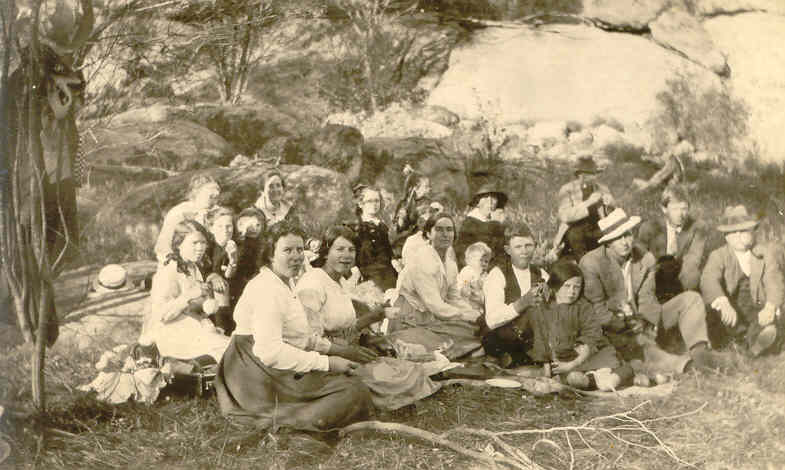
Elsie, young girl on left, Ern, Mary and Jim (with white hat) seated in front.
Dr.Leedman -(young then) where it was found that the poor man was suffering from syphilis. We were told later that Dad was ranting on about -“living in my house, around my kids, etc, etc,” and Dr Leedman said, “Leave the poor devil alone. He’s got enough to put up with, without that.” I don’t think Dr. Leedman and my father were the best of friends! When Stuart was about seven, perhaps a bit younger, he had a second bout of pneumonia, and was dangerously ill. Dad went for Dr.Leedman and Kellerberrin was 36 miles from us. At least he had the car by then. Dr.Leedman demurred at the idea of travelling so far at that hour anyway, so Dad said, “You’ll come with me, you bastard if I have to drag you there.” Dr.Leedman bristled up, “My mother...........” He was told, “I’m not talking about your mother. I’m using the word as one Australian to another, and you’re coming with me!!” Which of course he did, finding a blazing fire going in the bedroom, all outer doors closed, and child very hot. So out went the fire, doors and windows opened up, and medicine prescribed. The child recovered. As his sisters, we always thought he was made too much fuss of, of course! About 1922 I think, Connie and myself began taking piano lessons. The teacher, Cecil Leedman (cousin to Dr L) came to the house every week, and our mother ordered a current series of music books to be posted to us from Alberts. Ern and Elsie, as young adults, would visit on Sundays, other young adults of the district, and these visits would be returned in due course, always using the horse drawn “sulkies”. I am thinking of Thompsons, Tuckers, Langdons (Jean) and Keene’s for instance, and there was Stan Dadd and Bill Scougall. There were frequent dances held at Yarding or Shackleton halls. The district would turn up at these. Babies wrapped in rugs, would be placed to sleep under forms on the stage, and many’s the time I can remember sleeping on the floor of the sulky on the way home. I think it was in 1923 that my brother Ern took up land for himself at Southern Cross, where further development was taking place in regard to farming. Also my father now owning a car, this had made the townships of Bruce Rock and Kellerberrin very much more accessible to him, and he became so much less attentive to work on the farm. Ern, of course left us to work on his own property, and with his going, the purpose and activity of “Ulambie” diminished immediately. Unless the interest and drive is present, in the owner, no hired hands are able to sustain that standard. So it was. Money was being spent with no regeneration. Time was being spent away in the city, for no good reason. And a decision was made to sell the farm and move closer to the township of Kellerberrin. About nine miles out, I think it was. This farm also contained large outcrops of granite. Just as prolific, but never meant to me what “The Granites” at Erikin had done. There were two smaller blocks incorporated in this one farm. Also there were many many rabbits. And no comfortable home. We moved into a house as our old original one had been. Upright timber, hessian walls and lining, but very dark. There was another house on the other half of this farm. Four rooms, A wooden house with front verandah, which could be used as a sleepout, enclosed. Much lighter and brighter. So that was cleaned and we moved in there. Except for actual living space, and surroundings, life didn’t really change for us younger ones. We were closer to school and so walked there, instead of driving. We still had a couple of hired hands, and a “girl to help in the house”. Stuart and I had graduated to milking the two or three cows which were for household use. I quite forget how many sheep were run, either here or at “Ulambie”. Milk separating and making butter had also become our work, with Connie to help in regard to butter, but she was never an “outside” worker. She now had “inside” help to give, as Elsie had been sent on a holiday to Aunt Belle in N.S.W. Elsie was also given a dress ring. She had learned to drive, and so used the car, a “Columbia” to drive into the township, and to visit adjoining properties. Connie and myself continued with our piano lessons, this time with a musically qualified young lady on the next farm, and we also attended dancing lessons in Kellerberrin. Accounts with the local tradespeople and the city were continued, but on the farm, conditions were deteriorating. It was never the orderly, well built place of “Ulambie” at Erikin where we had, apart from our really nice home, good outbuildings, good stables, well built and large. Good cowyard with milking bails, and calf enclosure. A ‘chook’ yard of course. A really good blacksmiths shop, with huge bellows, anvil and forge. Also good haystacks, chaff shed, engine and cutter. But on this new place - new to us , that is - nothing was well built, but old and falling to pieces, no machinery under cover, and I don’t remember any chaff cutting or blacksmiths shop at all. There was a haystack of course, and hay in sheaves. These were the general conditions , but over and above all that there was my fathers straying or by now “strayed” interests, and the final straw of the RABBITS. We could walk out in the evening, look out over an open paddock, and the whole ground would be moving, the numbers were so great. This was lovely country, and had not become, at that time, so degraded as since. We still had an understory of shrubs and annual wildflowers, among the “jam” trees and wattles, but destruction was well under way. So in 1927 we left that farm, and stayed for 2 or 3 months by the river at South Perth. That year my father was declared bankrupt. So here we were, Mr and Mrs, with Elsie, Connie and myself, to be considered for going out to work. Elsie of course, had no trouble in finding employment, as she was a very good and proficient housekeeper. I’m sure she began her apprenticeship when our mot her went to Kellerberrin to have Connie, leaving Elsie and Ern with Dad. Connie wasn’t too bad either, at housework and plain cooking, so she went to a couple who kept the general store at Walgoolan. I can’t remember how long she was there. She was of a very quiet and introspective nature.
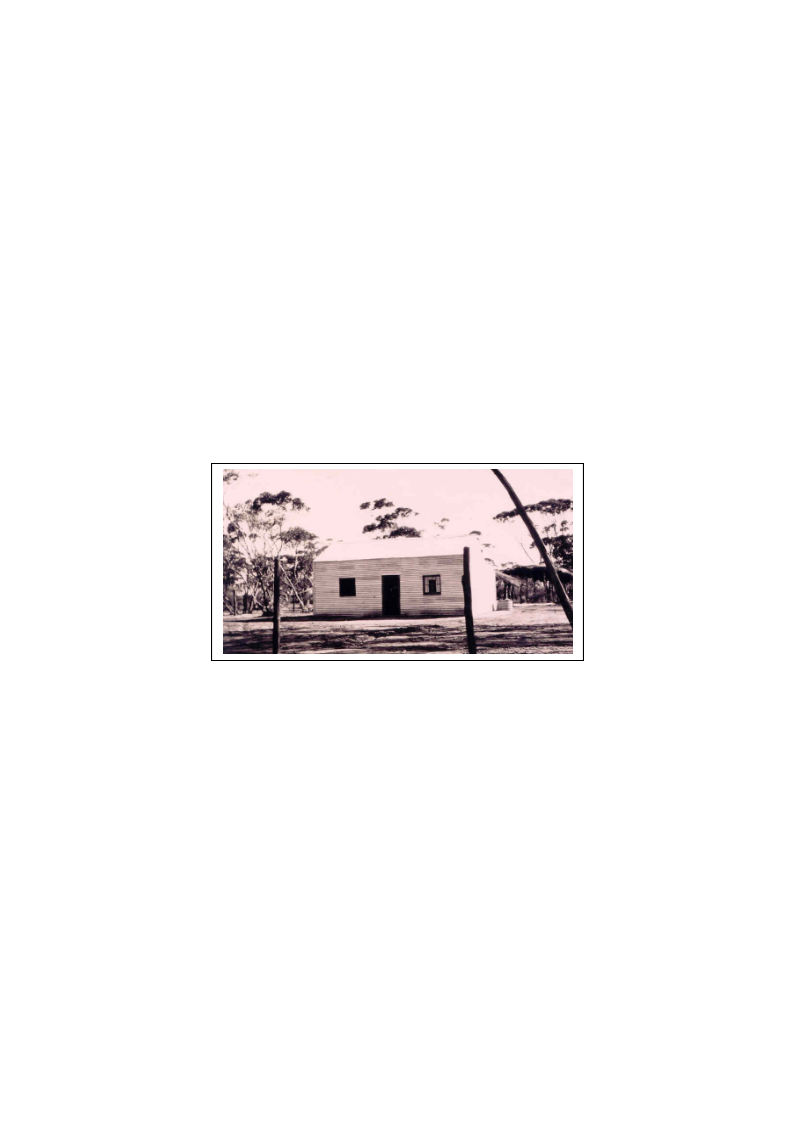
So with no money and no property, my father took a job for himself and wife as a married couple on a farm at Cunderdin. The farm was owned by a Goldfields man who knew nothing about farming, so needed someone with experience, which of course my father had. At that time he would have been in his middle 40’s. I went to work for the farmer’s wife in a minor sort of way. I don’t ever remember receiving any money. It was probably just, board and lodging, and to help my parents, one of whose obligations was to cook for and feed the other hired hand. I enjoyed the novelty of living under someone else’s roof, and they liked me. However it all didn’t last very long, there was a big disagreement between the employer and employee, so where would we go ? How the arrangement was arrived at we younger ones were not told - those were the days when children were “seen and not heard”. But the upshot was that we entrained for Southern Cross, and to Ern. I was at this time 14 years old. Ern had arranged for us to go to a house owned by a Mrs Lang, a well known lady, who had a house to rent next door to her own, and who also boarded the town solicitor. So we had a roof and walls wherein to unpack and spread ourselves out. To young people and children, novelty is an enjoyable thing, and we lived there in Southern Cross for some little while. Elsie had come to join us, and she began work at the Club Hotel, in house and dining room, with sometimes an hour or so for me, in the kitchen. Then Ern procured the necessary sheets of corrugated iron, and some windows and doors, and there was still in those days sufficient standing timber of salmon gum and gimlet for uprights and rafters. Jim, using these materials built a house for his family on Ern’s farm at Garratt, a small house of four rooms. Bedroom, and sitting room at the front, bedroom and kitchen at the back, with cement flooring, and outside at the back, a very large “bough shed”. Also out there in the shed, a good sized Coolgardie safe ,and hanging meat safe. So - full circle. Ern had left us - without Dad’s blessing – to set up his own farm, at which he was completely successful, and here we were as a family thrown on his mercy. 1927. A wonderful season, weatherwise. Probably price wise, too. But now we are on the threshold of the Stock Market Crash and the ensuing Great Depression. Ern had taken up two blocks. The one he settled on, at Garratt, and one at Corinthia. So it was arranged that the Corinthian one would be transferred into Elsie’s name, as our father, being bankrupt couldn’t hold property in his own name, and that he would develop and farm that block to get back some viability into his own life, as well as to support his wife and younger children. So, it was begun. Stuart, three years my junior, went to live with Dad in tents on that selection.To his joy, I might say. Ern of course was still living in tents, but quite comfortably. He had his own personal tent, a tent for his working man or men and a midway area as dining and general living space. The whole was enclosed and roofed over with well built bough shed. Probably there was a canvas fly roofing the living area, under the bough roof. Cooking of course was done outside in camp oven over camp fire. Once the house was built for us, on Ern’s farm, he and the men naturally came to the house for meals, and Ern’s washing and mending etc. was cared for. What the financial arrangements were, I have no idea. As work was done on the other property, fencing, clearing, seeding, harvesting, horses and equipment acquired, the Bank would advance money. But whatever cash was available to him my father would continue to spend on drink. So debts accrued. But in Elsie’s name. He may have stayed on the Corinthia block for two years. I don’t remember. I do remember that clearing was carried out by a team of Italian immigrants. That was an accepted practice at that time. I know that seeding was done and one crop harvested. Past th at I can’t remember, but I do know that local debts were obtruding into Elsie’s life, and there was nothing for Dad to do but GO!!! So someone took him to the railway station, with what money, I have no idea, and I have been told he made his way “carrying his swag”, back to “Thundelarra” and the haunts of his youth. Through an advertisement in the paper, I went to work for a family close to Northam. This was my first foray into the realms of “general help”. I was terribly homesick. Used to cry myself to sleep at night in this huge old powdery Kapok mattress on an old double bed, in some unused junky room. The old gentleman, and he was a gentle old man, said, “Better go home to your mother.” I think the next one was to the Hawkers at Wongan Hills. Elsie was already working in the district, so she was so kind as to speak up for me to another family. Lovely people, and they probably thought they were going to get someone as good as Elsie!! I was still not a fully proficient housekeeper. Washing and ironing. I was a good laundress, and even at ironing, with the flat irons. I could cook plain meals, and make good pastry. That’s about all I remember of my cooking skills. There were no fancy touches about farm meals then anyway, and no refrigeration. Housework included taking ashes from the wood stove and open fire- places, blackleading and polishing the stove and setting and lighting the fires. Floors were swept and washed. Any polishing was done by hand of course, no machines then. There was usually linoleum covering. I accompanied the family when they holidayed in Perth and we stayed at the Royal Hotel. The house Jim erected on Ern’s property at Garratt for Winnie and the children. Materials supplied by Ern.
My mother had shown me how to use the sewing machine, and had given me basic knowledge in dressmaking, so already I was beginning to make my own clothes. Dresses were becoming very simple, “sleeveless” was just emerging on the fashion scene, dropped waist or no waist, but perhaps a belt, so - what was difficult about that, and only knee length! Then I went to work at Mundaring for an elderly couple, Mr and Mrs Edgecombe, who, in a peripheral sort of way, I had known, when we were kids. Darlington’s one of the families of Shackleton, who we all knew of course, were somehow connected to the Edgecom be’s, and Florence Darlington, who I knew quite well, was their young relative. Again, I went there as general help. Once more, I have no real remembrance of how long I was there. It seems to me it was years. I know it was not. They were kindly folk. Mrs Edgecombe arranged that I should be christened and confirmed in the local Church of England at Mundaring. Actually that really did affect me quite a lot, and has stayed with me always. Also she made my white dress. She was a very good dressmaker, as most gentlewoman of her day had been, as in such a new country as Australia was in days of her youth, ladies had usually had to make for themselves, and their families or go without. Besides my confirmation dress Mrs Edgecombe made me a good frock of red woollen crepe, and a grey velour coat, with a fur collar and cuffs. I paid for the materials of course. Soon after, Mr Edgecombe died and I went home. My next employment was again through Elsie’s good offices. She was working for the Charlie Browns at Nukarni, and a girl was needed at Fred Brown’s, Charlie’s brother. Both Elsie and myself at Nukarni were part of all entertainments dances, tennis and hockey. Good friendly folk. Elsie became engaged while there, to her long -time correspondent, a young Englishman, Bill Webb, who was tutor to her cousin in the Aunt’s family she had stayed with in N.S.W. Ern had married and had had built a nice little new jarrah home for his new bride, Nell. This house was only a few hundred yards from the corrugated house which had become home for us and our mother. I cannot stress too much, what it meant to us younger ones, to have Ern’s place to come to. We took it as a matter of course then, because it was to us, all “part of the family”. But in those days, had he not extended that helping hand to his mother, half sisters and brother, I wonder how we would have fared! No social assistance in those days. I came back to Southern Cross after leaving Nukarni. Ern and Nell by now had their first born, Ken; their farm was prospering, and becoming busy. Everyone was very poor as far as money was concerned. We would grind wheat in a small grinder, and use the resulting coarse grain to make loaves of a sort with plum jam and very occasionally butter from the farm cow. While I worked I would give or send wha t money I had home for support and probably Connie did too. But apart from that what other financial assistance our mother had, I have no idea. About now, Elsie and her fiancee, Bill Webb, were married. In registry office ceremony, but I don’t remember where. They decided to settle on the Corinthian block which was still in Elsie’s name, and which was already carrying in that name, a debt to the bank. This was I think 1931. My mother had a letter from our father, who, when he left Southern Cross, about two years earlier, and had gone up to Thundelarra, had had perforce to give up drinking. No money, no grog. So - as sobriety set in, he was finally able to view the past years with an unclouded eye, and attempt to salvage his marriage. He was now in his fifties, and although he always liked to have a few drinks, he never again allowed his life to become ruled by alcohol and he lived to be 86 years. Through the good offices of folk he had known in better days, Governmental and otherwise, he had been assigned a block of land at Nannup.This development had been opened up by the government to offset and alleviate the effects of the closing of the Nannup Timber Mill which had resulted in a township of unemployed. The idea of this particular land scheme was towards establishing a dairy industry. So settlers were to be paid £2.0.0.p.w. ($4.00) depending on their continuing to improve their properties. I was at home at Southern Cross when my mother received this letter, with the request that she should join our Dad in this venture with all or any of the rest of us. That was Stuart, Mary, Isobel, Margaret and myself. So we were to entrain for Nannup and fresh fields. I had a certain amount of money from my last employment. I have no recollection of how much. I know this helped in some way, but our actual travel and freight costs were paid by some “official” looking W.A.G.R. forms which had been sent. Dad had journeyed down to Perth and then Nannup from Thundelarra on horseback. A long journey but taken at leisure, and on a good horse, Old Digger. Not old then, though many’s the ride I had on him myself in succeeding years . He lived to a good old age. So eventually we arrived at Nannup. To me, it was like a completely different land. Coming from the wide open, gentle, lightly timbered, wheatbelt, into heavy, heavy timber, thick understory of shrubs and bracken, running water and real hills, it seemed wonderful. Although we had enjoyed holidays by the riverside, we had not really been close to the countryside of the South West before.
Dad had arranged with our neighbours - a young
couple - on the block next door, to allow us the use
of several old mill workers huts which were on their
property.
So there was a small Metters stove and an open
fireplace as well. We still had of course, the piano, a
lot of books and the sewing machine, besides our
ordinary domestic furniture, two tables, chairs,
chests of drawers, and beds. Pots and pans, china,
cutlery and lamps but with every move, all these
things seemed to become less.
I can’t remember how long we had been there, when I decided to go back to Southern Cross, to Ern and Nell. Ern and Nell really needed the help anyway and I worked with and for them for two years, and I still know them as good, full, happy, and fruitful years. There was so much activity on that farm. Nell and Ern had two little boys now, Ken and Bill. There were “chooks”, turkeys, ducks, guinea fowl, and a few geese. Also pigs for pork. Of which we had plenty, and an occasional beast for the butcher, when we would have some beef. There were cows for milk and some cream, but we didn’t make butter in any considerable way. All these creatures were free ranging of course. There were no foxes or feral cats in those parts, in those days. Large haystacks were built, because except for one International truck, all was still horsepower. Chaff was cut. All bread was homemade of course. Wholemeal flour was ground on the farm, but white flour was bought as well. Stores were ordered in bulk from Bairds at intervals, and eggs were sold at a flat rate throughout the year, to one of the local hotels. The number of hired men would depend on the seasonal work. Could be two or three. Besides the farm production, Ern had entered into cartage contracting with the local farmers in regard to their grain to siding and super from rail to farms. Also he bought a wheat grader and pickler and visited the different farms carrying out this operation. About this time he also had a dam sunk on his property. Dams were being sunk all over the district to conserve whatever water became available, as except for the rain tanks at the houses, all water was carted from the standpipe at Garratt siding. Our laundry of course was done using the galvanised tubs, to wash, and the outside copper to boil the clothes. There was some starching and lots of ironing with the flat irons on the stove. Nell had been a tailoress, and her ironing was impeccable. Elsie, married now and living at Corinthia, had her first baby - a boy, Stan - and whenever I felt like it, I would ride over there, and stay for a day or two. While at Ern’s I went to Perth and applied to the Children’s Hospital to be enrolled on their waiting list as an entrant to their training course. In due course I was called upon to sit for an entrance examination, which I managed to pass, and then waited for the call to student nursing. So back I went to Nannup. And was received with open arms by the rest of the family. By this time, land had been cleared, fencing accomplished, and some cows obtained. Also a spring cart obtained. As I arrived back on the Nannup block, the scene was just like fairyland. After the clearing, the first burn had been carried out, of course, and as we know, our Australian seeds so often need that great heat, to assist their germination, and the flat pa ddock in front of the house, was truly beautiful. Against patches of blackened stumps and climbing up and among the denuded blackboys, were masses of feathery white clematis, twining among red coral vine and on the ground, carpets here and there, of the “i mpossible”, celestial blue of Leschenaultia, the natural, wonderful blue, of the large soft flowers which it was in it’s unspoilt bush state, and many fronds of young green bracken fern, unfurling. There was a house now too, which Dad and Stuart had built from bush timber. Uprights and rafters of course from natural growth of that size, but the weather boards for the outside timber walls they had split by hand from the larger timber trees. Clearing, of course had been done by axe, mattock and cross cut saw, and Old Digger was called into draught for “snigging” logs as well as hauling the cart when need be, but there was a weekly delivery of stores from the mill store in Nannup. This house too, was lined and divided with hessian. The intention was to eventually make all inside walls of rammed earth, and this was actually begun later on, in the walls of the back rooms and rear passage.
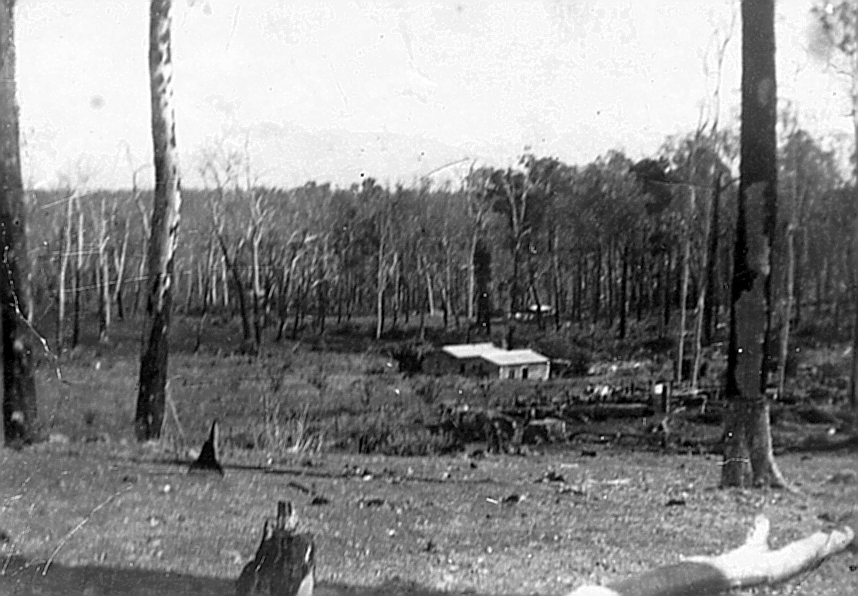
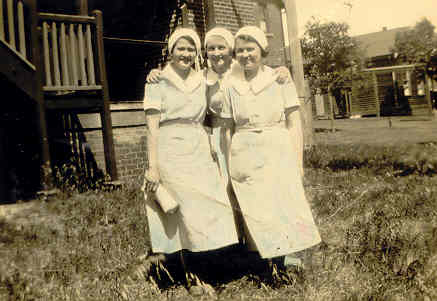
I hadn’t been home very long when we attended a small “local hop” in the one room schoolhouse, which had been established at Carlotta, and which Isobel and Margaret attended. There Dad introduced us to a young man, who was settled on a neighbouring allotment, Ken Simpson, who was to become my husband. So we became “engaged”, but without a ring, simply because there was just no money. However I still went ahead with the idea of nursing training, and duly began that at the Children’s Hospital. I had been there for 16 months (four months into my second year) when I contracted measles, and was sent home to convalesce. I didn’t return to nursing. I stayed at Nannup, we married in Bridgetown registry office, and settled in our “little shack”. This was a corrugated iron dwelling probably about 12’x 24’ divided in the centre, giving two rooms. Ken was from the city, as his Dad was at that time Public Service Commissioner, his preference was towards the young industry of dairying and fruit growing of the South West. As well as the virgin block of land Ken had been allocated, he also had acquired the already cleared and pastured land of the block next door.
I love the bush at any time, and I still remember many beauties of those days. The stark white trunks of the ring-barked trees, shining silver in the moonlight, the seasonal beauty of many wildflowers, the never -to-be forgotten scent of a whole swampful of brown boronia !! And in the autumn, the bellowing of young calves waiting to be fed, and in the still, early evening air, the sight and smell of woodsmoke from the newly lit kitchen stove. We were married in 1935, and Elizabeth was born in 1936. War was declared in 1939 and I remember well that day. Some desperately needy salesman had left with us ,against my preference, a radio set for a “trial period”. So because of that, I actually did hear “Old Bob” Menzies mournful announcement that we were at war with Germany. We were sending our cream to the Butter Factory, but prices were extremely low, and production far from high. The cows were becoming poorer and poorer, and pasture was not what was expected in amount and quality. What was unknown at that time, was how deficient in trace elements, were our soils. All seeding and manuring, was done by hand. Broadcasting, in fact, of clover, and of super. Ann was born in July 1940, and I left Liz with my family, and stayed with friends in Nannup while waiting to go into hospital, for the last week or two. By now there was practically no money coming from cream so Ken was working at that time on his Roads Board allocation of work. “Susso” work assistance for the unemployed. They camped out, close to wherever their work was at that particular time. Payment was at 7/3d a week. When Ann was a few months old, 5-6 months, we went up to Ern at Southern Cross to work for Ern and Nell, and for Ken to do extra study while waiting to be called up for Air Crew duty in the R.A.A.F. We were there for some months then rented rooms in West Perth. Ken would come home for leave, whenever possible , and so from newspaper adverts we obtained rent of a cottage on the riverfront at Applecross, which was a lovely spot, and ideal for the children. Margaret was working in Maylands, and used to come to stay, with her current boyfriend. Dad and Tops used to visit, and I had good neighbours. Ken was transferred from Pearce to Cunderdin, and came home whenever leave would allow. Stuart would also visit and stay when on leave. He transferred from Army to Air Force at this time. Norm and Ralph Simpson were also in the Air Force. Isobel came to stay from Big Bell, where she was working, bringing with her, also in Air Force uniform, her intended, Blue Nancarrow. Isobel was married very soon. I made her jacket and skirt, grey fitting blouse, embroidered with some red, navy skirt and little pill- box hat with some fur edging. They were married in St George’s Cathedral by old Dean More. Margaret and Doug were their witnesses and they were married by special licence because Blue was being posted to the Eastern States, as they all were. Ken and their intake were posted to Mt Gambier and I was to follow as soon as possible. We were still at Applecross when the bombing of Darwin took place. I can remember the headlines in the Daily News. For quite some little while, View of block at Nannup.
Ken and Elizabeth
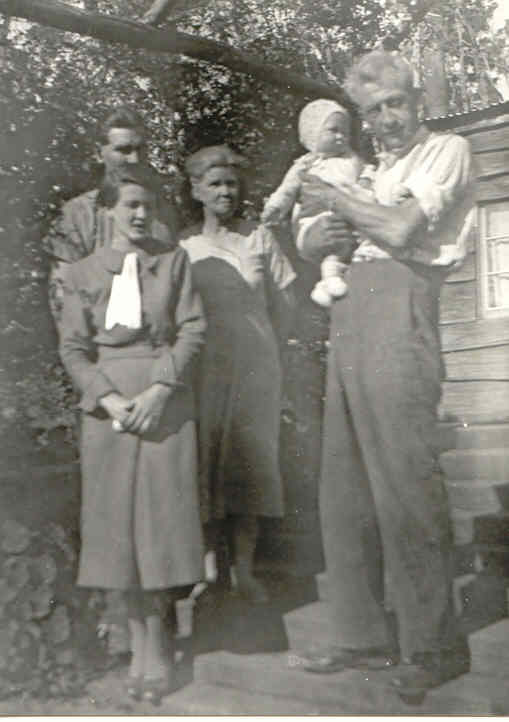
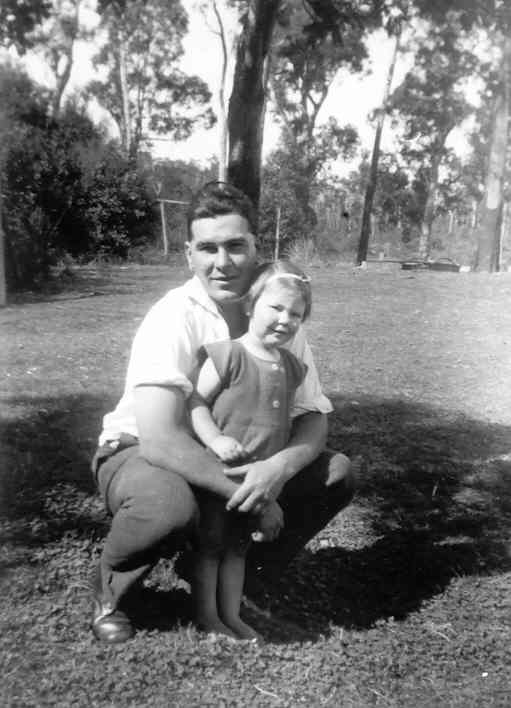
Americans in Catalinas were using the river right in front of where we lived, so we had a first class view of their comings and goings, and they always looked so graceful to me. Arrangements were now made for me and the girls to go and join Ken in Mt Gambier. Simpsons had relatives in Sth Aust, Dad was a Croweater anyway, by birth. So Ken had made himself known to the Beales. Through the good offices of Dad Simpson, the girls and I were able to be booked for travel on the last civilian train to be travelling to the Eastern States. Norm Simpson would come to stay, on leave, as he also had been posted to Mt Gambier. Elizabeth ha d begun school at Applecross, but we hadn’t really become integrated parts of any school programs or Social Activities. We often, the children and I, went for walks between the Mt Gambier Lakes, loving and admiring the different foliages, and autumn colours of all the trees and shrubs which had been planted there, and which were thriving in that climate and atmosphere. So d ifferent from the grey -green, brown-green bush from which I had come. Besides which, of course, there was, in it’s season, the magnificent Blue of the Blue Lake. Ballarat was Ken’s next posting so we moved again. Ken was then transferred to Nowra closer to the coast and in N.S.W. The children and I went to Pt Lonsdale to a cottage there close to the beach. We could see across the neck of Pt Phillip Bay and see Queenscliffe away to the left. One morning very early Ken and I took a walk on the beach and came on an albatross. A huge bird with bright orange beak. Blown in by storm I guess. It made no attempt to get away from us. Ken was home for a last leave before he was to go to New Guinea and I remember so well that last morning before he left for camp again. We had lit the open fire in the sitting room, and made our toast using the old long handled toasting fork over the red coals. Those crumbs on the handmade breadboard, I can still in minds eye see. After I received the official telegram that the plane had been lost into the sea - no explanation but there were a number of mishaps and losses to do with Beauforts at that time - off the coast, it was again time to decide to move Of course the Air Force search did go on, for how long of course I don’t know; but this was by no means an isolated instance. Stuart came to spend a couple of days with me and Margaret, too. Really kind, family behaviour of both of them. We stayed with Dad and Tops for some time, and the idea was broached for my returning to nursing training at Perth Hospital {no Royal then}. So while waiting for my “call up” words from the Hospital, I went to stay with my own parents who were at this time living and Dad was working, at Chandler, a gypsum extracting plant and township, out of Merredin, and it was arranged that when I did begin nursing Elizabeth would stay with my parents, and Ann would go to Mary and Frank Creech, who had no children of their own. When Chandler was about to close down, and it was necessary to think of alternative accommodation. I had some insurance money and deferred pay from Ken’s Civil Life and War Service so Dad came to Perth, and looked for a suitable small block of land. He set tled on a block of about 10 acres in Wattle Grove. There was already some bush sheds, but no solid house on it. Anyway they, Mum, Dad and Elizabeth went there to live, until we had a house built. Decent sized, open fireplaced front room, two decent sized bedrooms, kitchen, passage way, bathroom and back verandah . V.J. Day while I was still at Perth Hospital. Stuart came home and settled on the block.
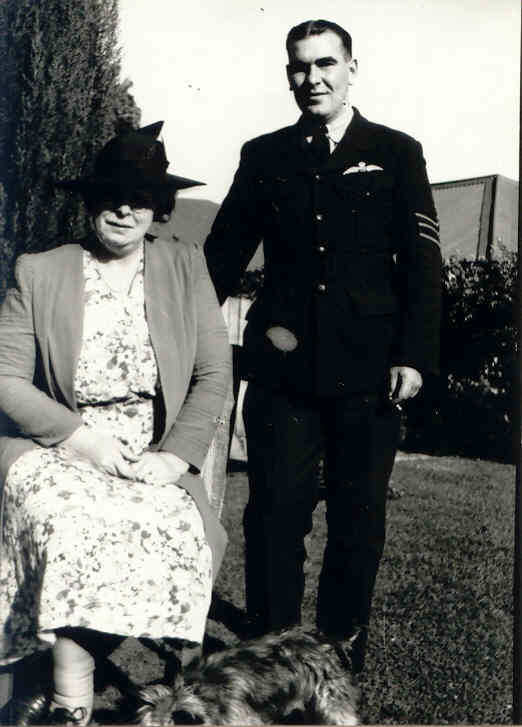
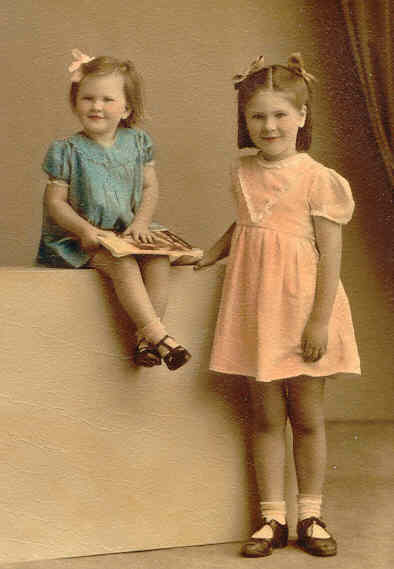
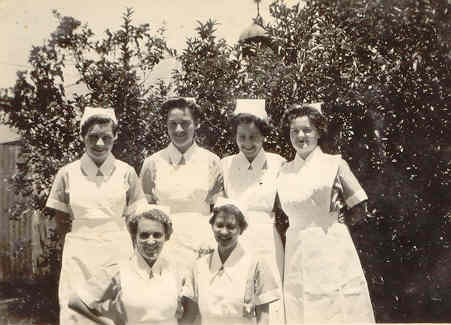
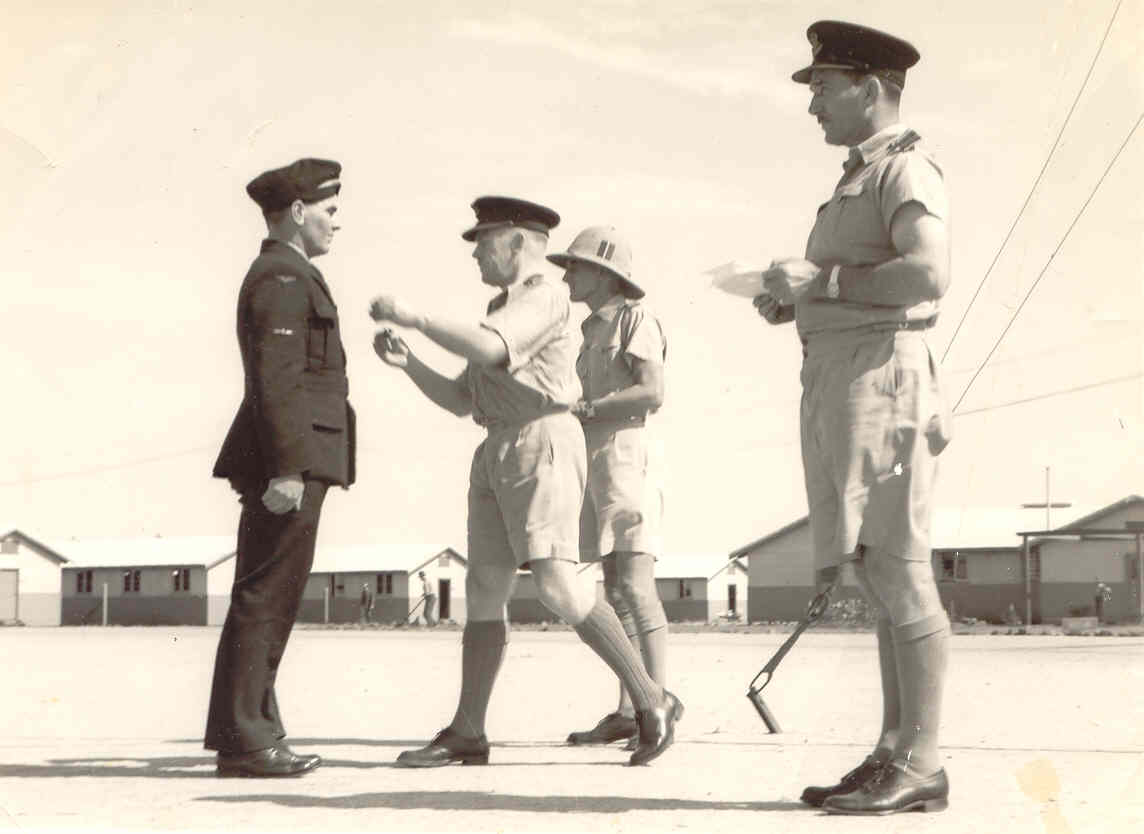
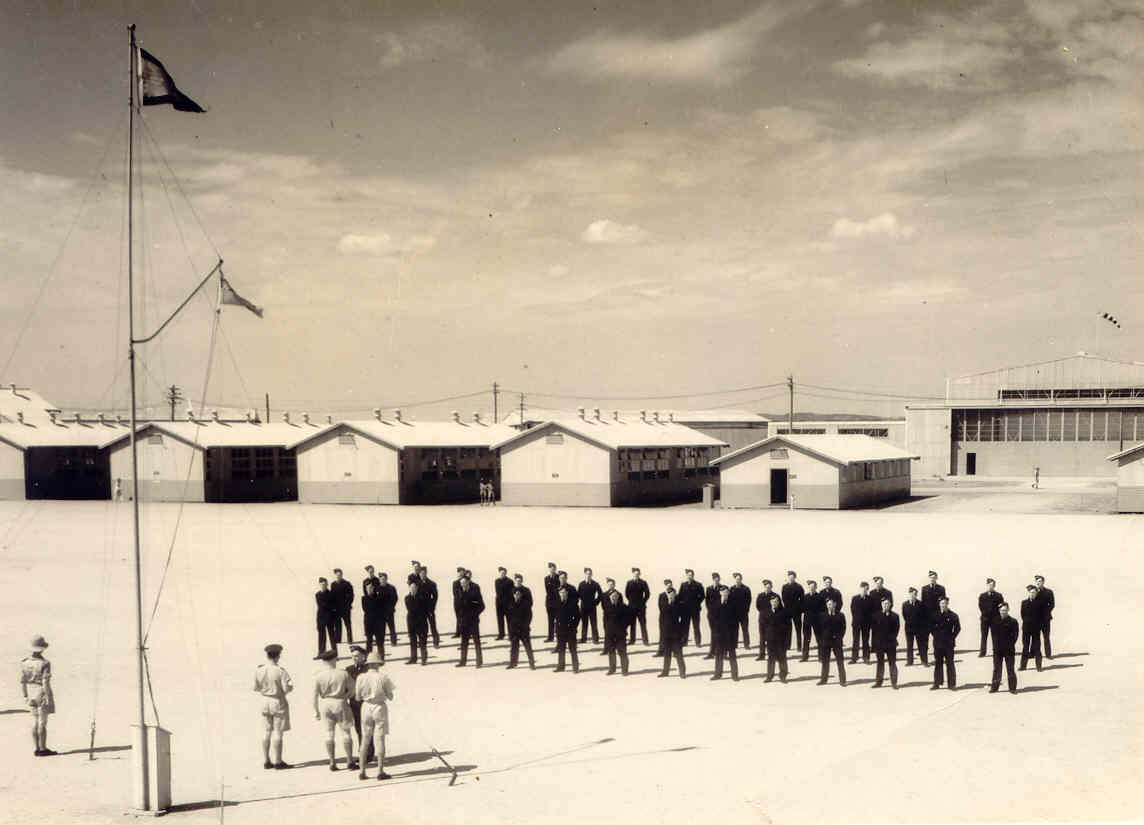
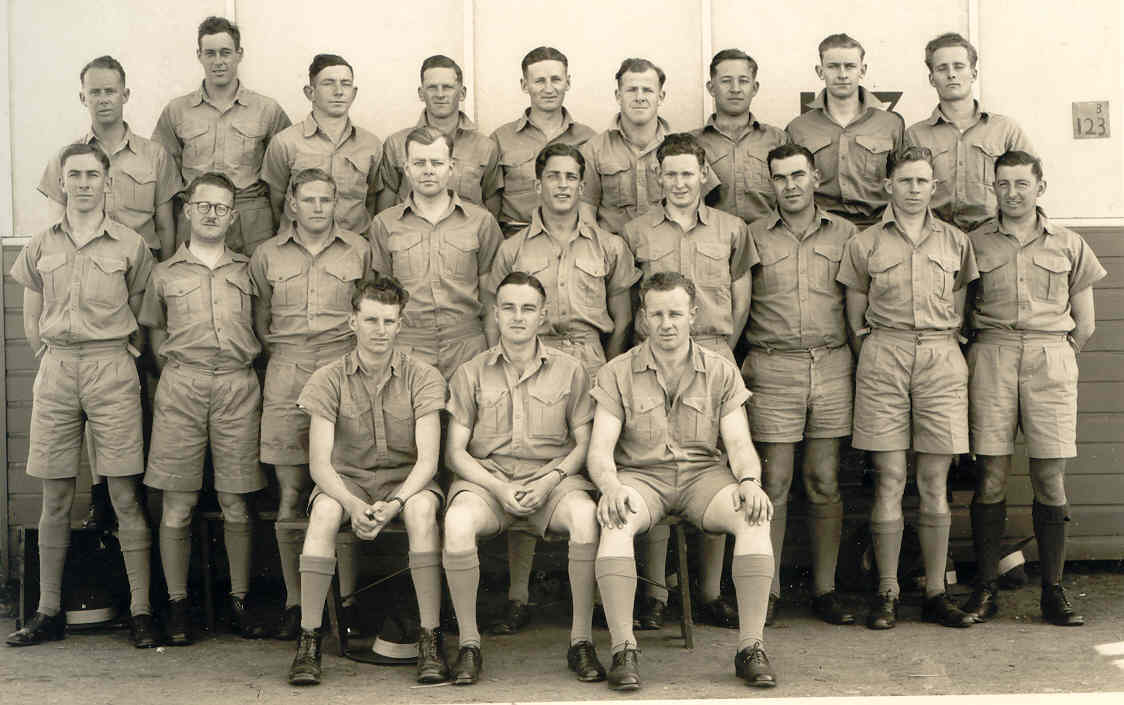
Ken third from right in middle row.
Ken 3rd from left in the middle row.
I met Jack at his mothers place, as I had visited her, on account of sister Margaret being married to her son Jim, and as they were still in the Eastern States, Marg and Rose hadn’t met. After a few meetings with Jack, and having had the usual question asked, and seeing in him, a steady serious, homely, and upright person, who seemed to me, I guess, looking back, like a rock in an unsettled landscape, I said Yes, with no doubts in mind. Once I married, I left the nursing which to most folk seemed idiotic. I had been there 2 years and 3 months. Only another 9 months to go, and I had loved the place and the work, but there was not the slightest doubt in my mind, as to whether I was doing the right thing. We were married at Perth Registry Office, with my parents and Bert Key, and met that evening with them, at Roses’ house, just for a tea and cake celebration. I was on night duty that night, so went back to the hospital. Now, also I took back my children!! Blue Nancarrow, Isobel’s husband, had gone back to Big Bell to work, and also Viv Bickford, Mary’s husband, so I suggested to Jack that he might seek employment up there as well, as I really love that red country, and wages would be higher for him. So we did that. Jack worked mainly in the plumbing team, which was quite good. Marie was born in October of that first year and the summer was extremely hot, no insulation in the little house we lived in and it was almost impossible to keep the baby cool enough. So we came back to Perth, and rented Lucy’s house in Bassendean. Jack wo rked, I think on some Road Board project, I remember he was picked up every morning by project transport. We left that house and went back to stay with the family at Wattle Grove. I was quite expectant with Rose. They were by this time building Housing Commission Houses at Big Bell, and with the certainty of being able to be assigned one of those, and of Jack being able to get work there again immediately, we returned, and stayed there until word became fairly definite that the mine was to close. Thus, all our three children Marie, Rose and John were born at Big Bell Hospital. We had our own doctor, and fully staffed little hospital, well equipped. Stuart had married by this time but misunderstanding had sprung up between him and myself in regard to the block at Wattle Grove. So he decided to sell it, pay me back, and buy into a Service Station, himself, and that is what he did. With that money, allied to a successful “draw” of Starr Bowkett Building Society, Jack and I decided to build, he doing the work of course, with some assistance from his brothers, on the block his mother had allocated to us at Scarborough. At that time, 1953 if my memory serves me right, when we left Big Bell to live at Scarborough, materials were still very hard to come by, as wartime shortages had still not been overcome, so many folk were doing just what we were doing. Building a shed on their blocks , to live in, and building their houses as and when they were able. In our instance it was the two back rooms which were built and lived in. There were bunk beds up the walls of the bedroom, and some sort of frame division across the room to give some privacy from one another. We had a shed outside as workshop and spare room for any overnighters. The bath, laundry troughs and copper were in a canvas lean -to at the side. I don’t remember how long we lived in this confined space, but it would have been 2 or 3 years at least. Building was carried out at weekends. On Saturdays Jack would work at the project until 4 p.m. then he and his brothers, friends or whoever, would wash and change and adjourn to the pub for 2 or 3 hours, then home for dinner. Sundays, work would resume, but there were always a few bottles to render the job more pleasant!! Little by little, year by year, I guess, the project continued, so it was never as though we went into a new house. It just sort of grew up around us, and we spread ourselves into it. Elizabeth by now was working and Ann was attending Perth Girls School in Perth. Looking back at those Scarborough years, 36 altogether, no one stands out against the others. Every one of those years was filled with happenings, and we, as a family, were all living different experiences, in different ways, at different levels. The children continued to go to school, to grow up, and to go to work, in different ways and different places. There was never any suggestion of their going on to “higher learning”, so whatever they have done in their lives, their own learning and expertise has been done entirely at their own initiative and effort.
When the children were no longer underfoot, I went back to some paid work.
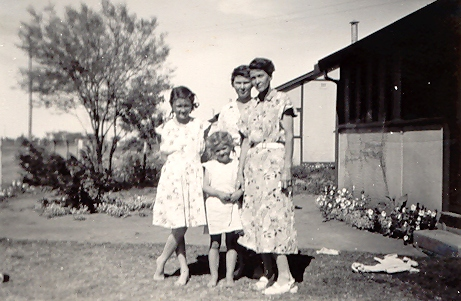
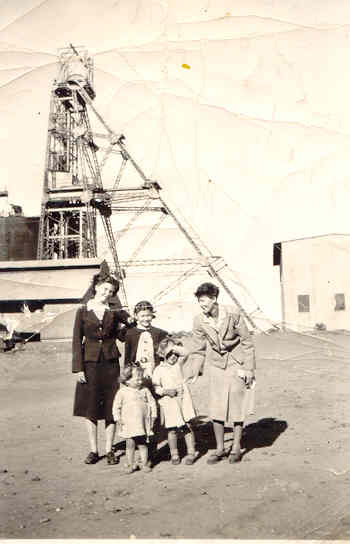
First at the War Veteran’s Home, then at Mt Henry and finally for 6 years at the Spastic Welfare Assoc. This gave us some more money and allowed Jack to buy, at long last his first BRAND NEW car, which incidentally gave us 15 years faithful service. In 1969 Jack, after having some years of throat discomfort, was diagnosed as having throat cancer, to the extent of needing a laryngectomy, which was soon carried out. He did not allow it to change his routines for very long, and was soon back at work, pub, and home, in the same old way. The family learned to understand his much altered speech, as his particular condition didn’t allow for any artificial sound resonance. I left work in 1977 and early the next year I began a China Painting Course at the nearby T.A.F.E. Centre. I also continued Oil Painting which I had been doing, self taught, for a long time. In 1981 Jack retired from paid work, and was accepted on age pension. Ann and her daughters were themselves thinking of moving. So it was eventually decided, that money would be pooled, and houses would be built in the same area- Quinns Rocks-. This was eventually accomplished. Jack’s health was gradually deteriorating. His heart was not the best, and his liver was slowly failing. We actually moved in here at the end of October 1989 and Jack was admitted to hospital in November. He died in the Cottage Hospice January 1990
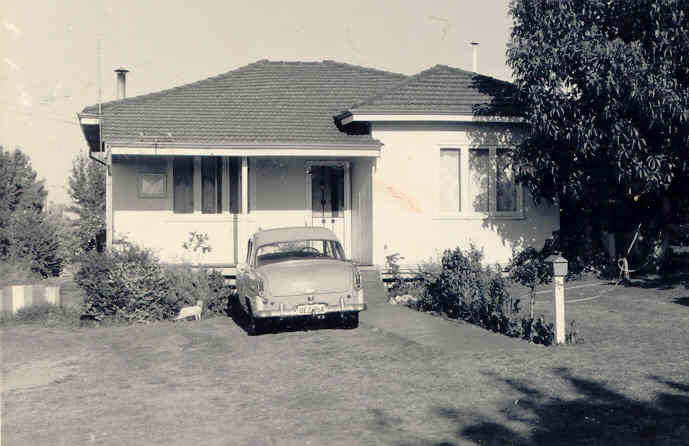
Home for 36 years.
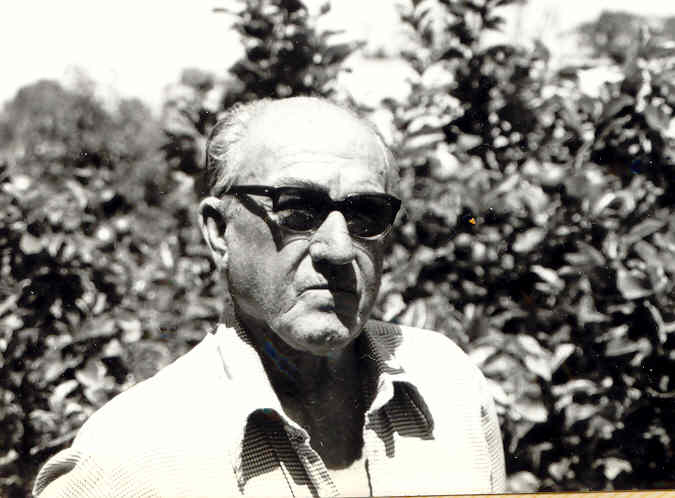
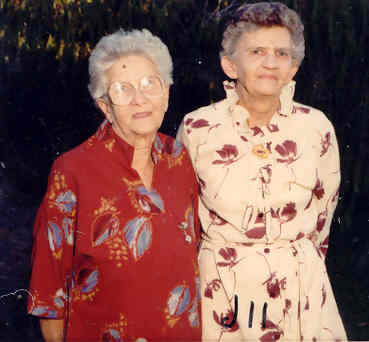
Book Marion Ethel born 3rd December, 1912 at Erikin. Married: Kenneth Milton Simpson on 8th of October 1935. Ken died on July 2nd 1943 , during World War 11, piloting a Beaufort Bomber off the N.S.W coast near Nowra . Children:Elizabeth Marion Simpson was born on 20th March 1936 in Nannup W.A. Ann Margaret Simpson was born on 17th July 1940 in Nannup W.A. Re-married: John (Jack) McDonald Hill on 7.1.1946 at the Perth Registry Office Children: Marie Joy Hill was born on 12th October 1946 at Big Bell ,W.A. Rose McDonald Hill was born on 28th April 1948 at Big Bell, W.A. John Charles Hill was born on 25th November 1952 at Big Bell, W.A. Jack died January, 1989.
Elizabeth Marion Simpson
Married: Roscoe Malcolm John.(12/2/1933)
On : 21st Jan.1961 Baptist Church, Doubleview.
Children: Ian James born 12th September, 1961 at Katanning.
David Kenneth born 23rd January, 1963 at Katanning.
Bronwyn Ann born 28th February, 1969 at Osb Pk Hospital.
Malcolm Charles born 3rd February, 1971 at King Edward Hospital, Subiaco.
Ross died on the 4th June, 2003.
Ian James born 12th September, 1961 at Katanning. Married: Alison Sarah Simpson (born 21/11/1963 Scotland) On : 15/8/1983 in Adelaide Children: Andrew James born 16th July, 1988 at Osborne Park Hospital. Kenneth Peter born 15th June, 1995 at Glengarry Hosp, Duncraig. David Kenneth born 23rd January, 1963 at Katanning. Married Susanne Janet Alco (b 30/12/1966) 26/2/1994 Gdns of Parl House,Perth. Children: Amy Renee born 6th May, 1995 at Glengarry Hosp, Duncraig. Glenn Mitchell born 21st November, 1996 Glengarry Hosp, Duncraig. Jason Graham born 25th February, 2000 Glengarry Hosp, Duncraig. Bronwyn Ann born 28th February, 1969 at Osborne Park Hospital. Married: Silvio Cinquina (born 23/8/1961. Harvey ) 29/11/1987 Cath Ch.Morley. Children: Matthew Silvio was born 18th April, 1988 at Osborne Park Hospital. Kyle James was born 28th March, 1990 at Kalgoorlie Reg. Hospital. Stacey Antionetta was born 1st October, 1991 , Kalgoorlie Reg. Hosp. Malcolm Charles born on 3rd February, 1971 at Osborne Park Hospital. Partner: Jennifer Donaldson Children: Alister Flynn born on 4th October, 2001.
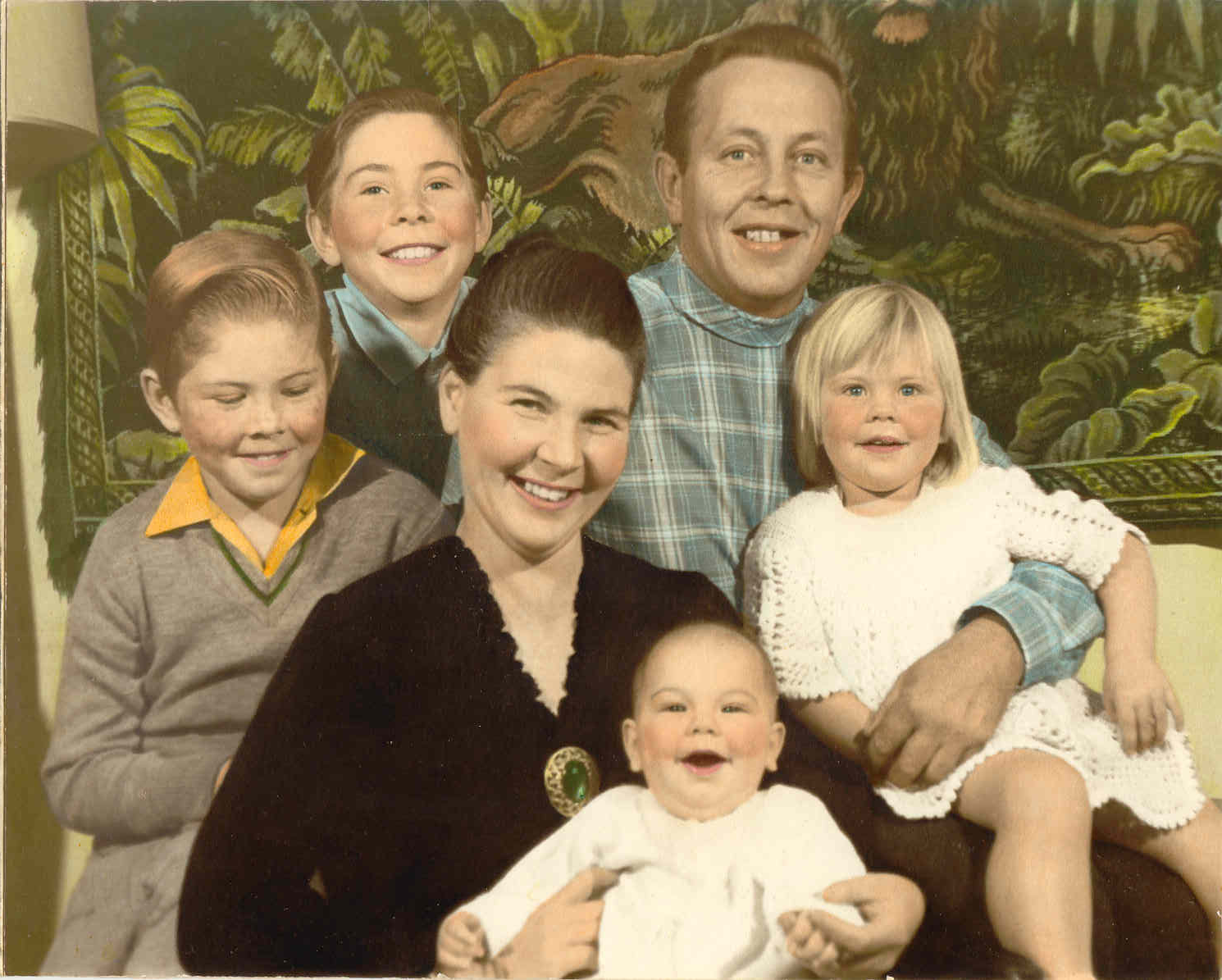
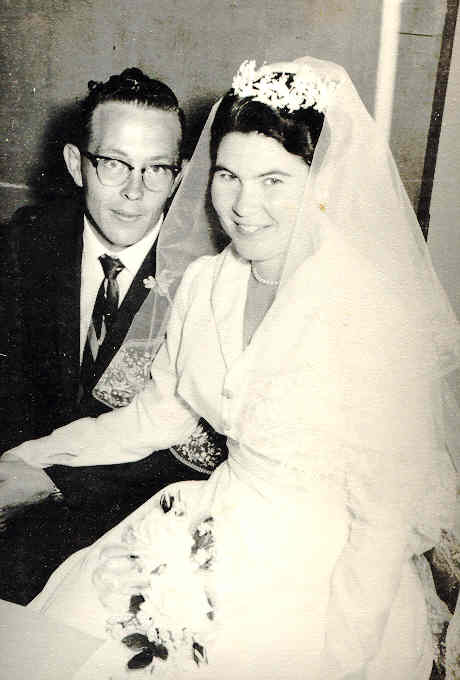
Ann Margaret Simpson Married: Phillip Owen McEvoy ( 23rd November, 1937 Liverpool, England) Married on 14th December, 1963 at Baptist Church, Doubleview, W.A. Phillip married previously and had one son. Owen John McEvoy born 14th September, 1959 in Adelaide. Phillip died on 2nd June, 1988 and is buried at Pinnaroo Gardens ,Whitfords. Children: Denise Ann born on 18/6/1965 at St Anne’s Hosp, Mt Lawley.W.A. Rhonda Joy born on 3/9/1967at Tom Price Hospital,Tom Price .W.A. . Denise Ann born on 18/6/1965 at St Anne’s Hospital , Mt Lawley.W.A. Married Kevin Desmond Kowald (born 3rd August, 1960 Katanning) On : 3rd February, 1990 in the Gardens of the Kallaroo Country Club,Hillary’s W.A. Children: Aislinn Kyra born 26th August/8/1994 at Glengarry Hosp. Duncraig. Tahlia Rhian born on 18/10/1996 at Glengarry Hospital Duncraig. Rhonda Joy born on 3/9/1967 at Tom Price Hospital, Tom Price .W.A. Married: Bruce John Reynolds (born 23rd November, 1963 Narrabri N.S.W.) On : 4th December, 1988 at Bridgeleigh Reception Centre, Mary St,Wanneroo. Children:Cassandra Jane b and d. 30th August,1996 at Glengarry Hosp, Duncrg. Buried with Phillip at Pinnnaroo Gardens, Whitfords. W.A. Mitchell Jay born 10th November, 1997 at Glengarry Hosp, Duncraig.
Marie Joy Hill Married: Colin Hammat on June, 1967 Baptist Church, Doubleview Children: Kenneth Wayne 20th November,967 King Ed Hosp,Subiaco. Carolyn Jane born on 22nd January, 1970 in Adelaide S.A. Colin and Marie had trucking businesses in both S.A. and W.A. Colin was stranded in Carnarvon while the roads were closed during a cyclone and decided to fly back to Perth. The plane with five passengers and the pilot was lost off the coast, near Exmouth, with both Colin and his brother-in-law on board. This was in late January 1971 and the plane was never recovered. Re-married: Brian Keating (born 15th June , 1932 Toodyay) 27th June, 1975 Church, Stirling Highway, Claremont.
Kenneth Wayne born on 20th November, 1967
Married Lynda Thorburn 18th January, 1998 Nedlands
Carolyn Jane born on 22nd January, 1970
Married : Shane Earnshaw 2002, Lomboc, Indonesia.
Children: Phoebe Jane 4th March, 2001 at Glengarry Hospital,
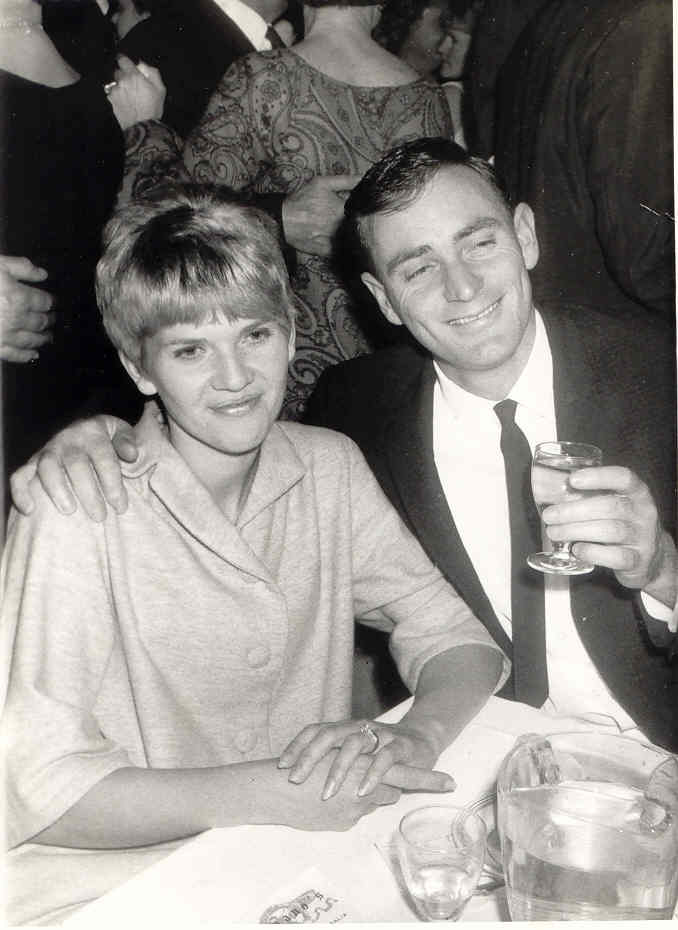
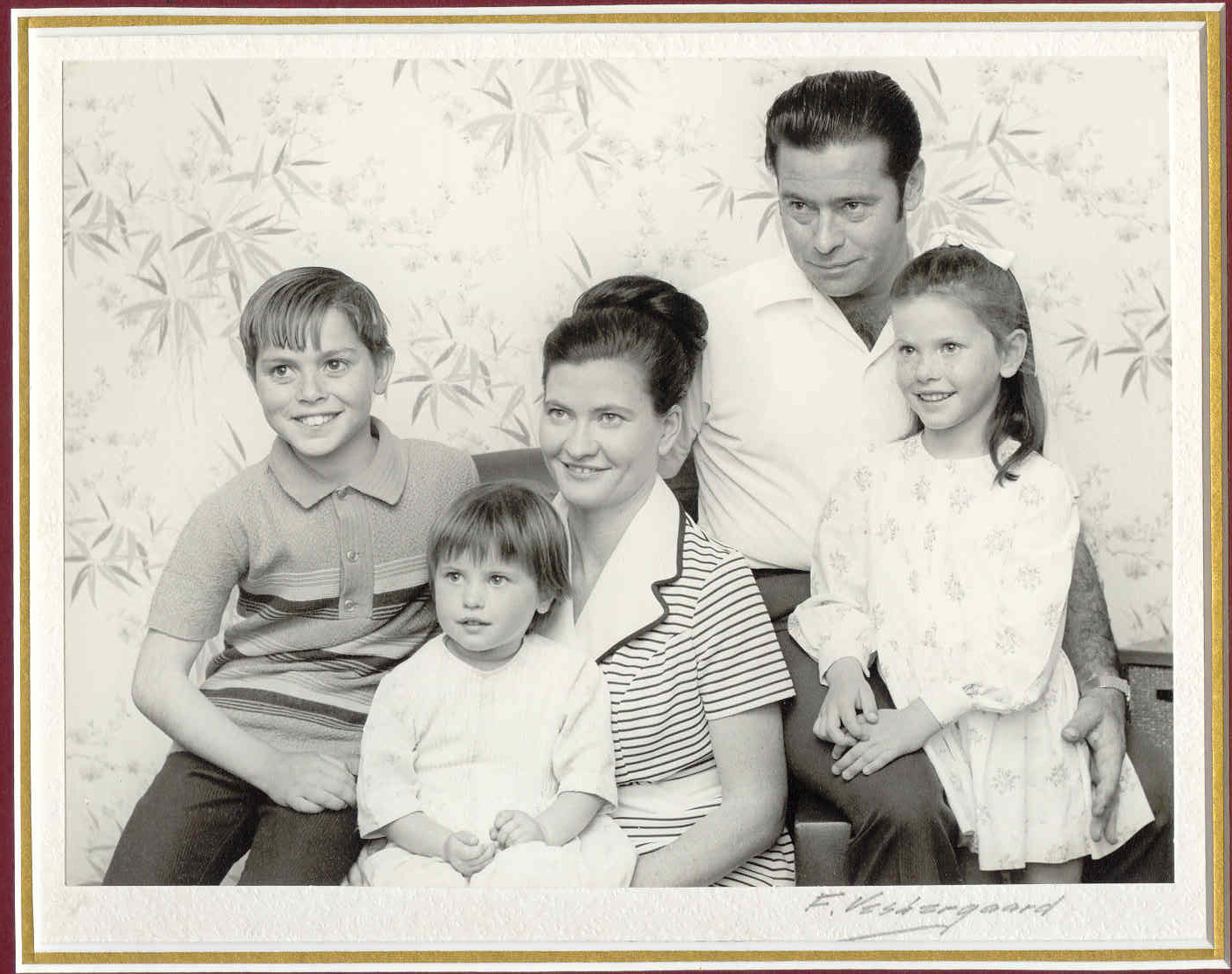
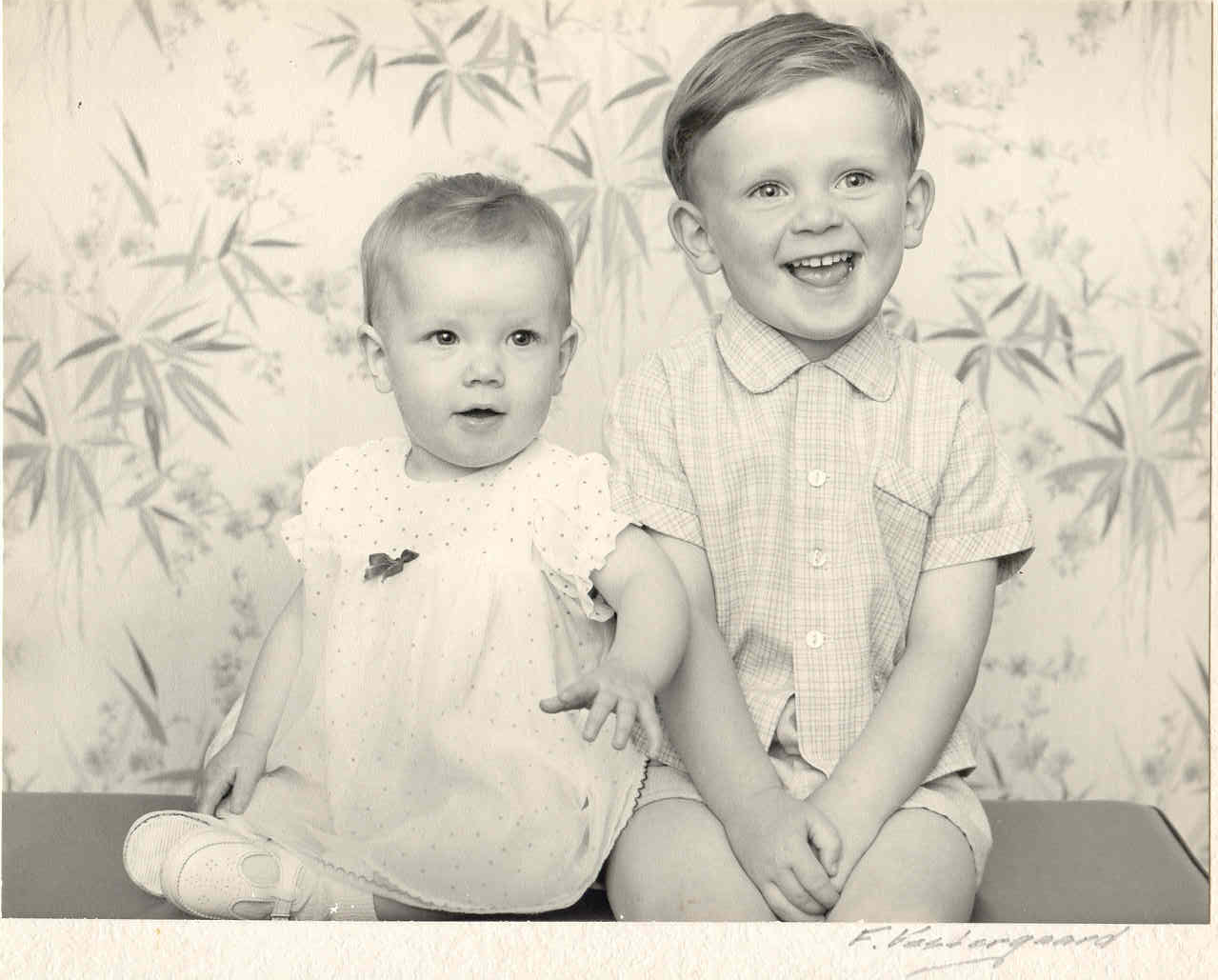
Marie and Colin.
Married: Kevin George Purkiss.( 8th March, 1947)
On : 12th November, 1966 at St Peter’s Church, Bedford
Children: Jeffrey Kenneth 10th March, 1967 King Ed Hosp, Subiaco.
Cheryl Marie born 4th June, 1968 at King Edward Hosp, Subiaco.
Mark Andrew born 1st March, 1971 at Swan Districts Hosp, Midland.
Jeffrey Kenneth born on 10th March, 1967
Married : Teresa Allen , 9th December, 1989 divorced.
Re-married : Judith Anderson (born 23/10/1969)
On : 21st November,1993 at Queens Gardens , East Perth.
Children: Amy Chiara born on 30th March, 1994 at Osborne Park Hospital
Died: At home on 6th September, 1994. Buried at Pinnaroo Gardens.
Amy was born with complicated heart defects and a cleft palate.
After successful heart surgery in Melbourne and the return home for
equally successful facial surgery, she passed away suddenly at home.
Zachary Thomas born 6th October, 1998 at Glengarry Hosp, Duncraig.
Cheryl Marie born on 4th June, 1968
Married: Andrew Bradley Sawyer (born 9/7/1966)
On : 31st December, 1993 at Houghton’s Winery, Middle Swan.
Children : Nathan on 14th December, 1999 at Glengarry Hosp, Duncraig.
. Emma Frances on 25th May, 2002 at Glengarry Hosp,Duncraig.
John Charles Hill born 25th November, 1952.
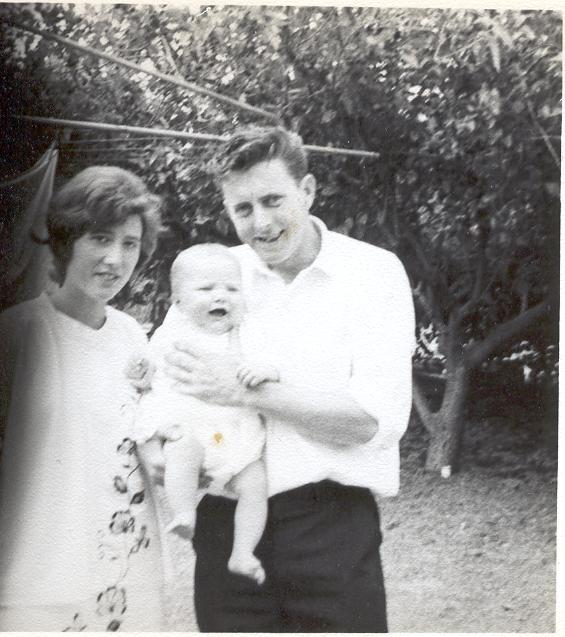
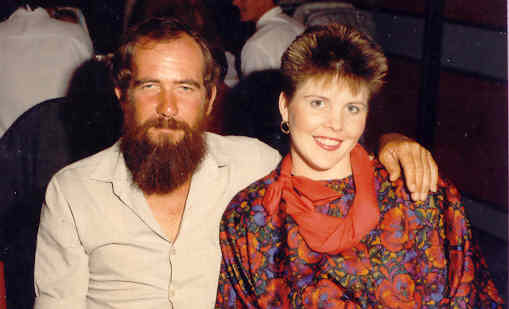
The Purkiss
Family
2002.
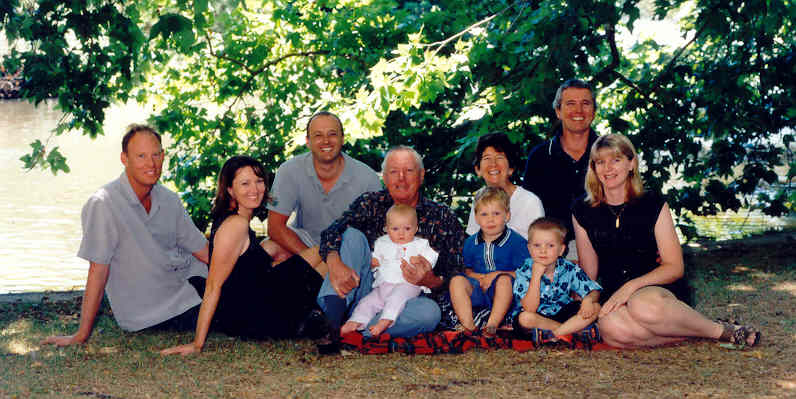
221
Stuart James Beaton
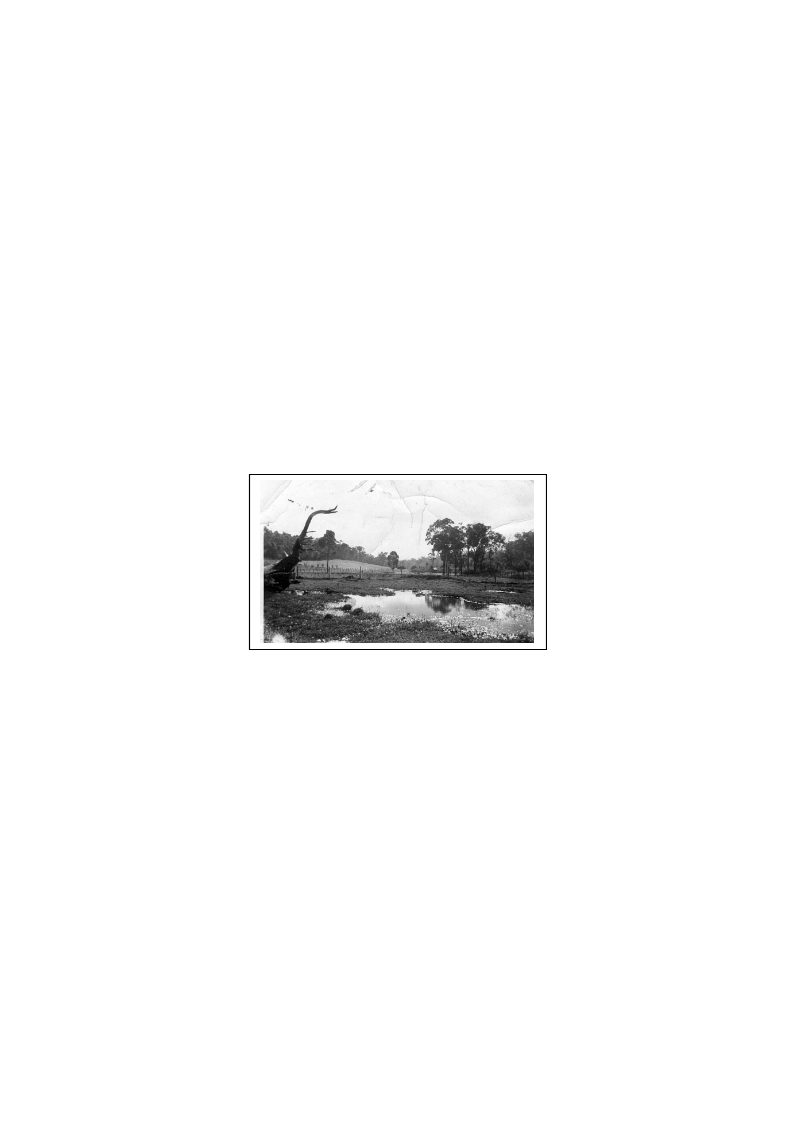
Stuart James Beaton Stuart James Beaton was born on 5th October 1915 at Nurse Short’s in Central Ave, Maylands. Stuart lived his early childhood on the farm at Erikin, and was one of the founding students of the Yarding School, Location 22235 when it opened on 19th of June 1922, along with his sisters and cousin Nigel. After the sale of the Erikin farm during 1925 Stuart moved with the family to Kellerberrin, Perth, Cunderdin and then to Southern Cross. While there Stuart went out to the Corinthia block with his father, Jim. They cleared land, fenced the land and planted and harvested a crop. They lived on their own in tents.A hard life for a boy of 12-14. 1933 saw Jim granted a Group Settlement block at Nannup. Stuart, 17 years old and his father 56, cleared the land, planted crops, and built the house. It was always a struggle, the nutrients were not in the soil to sustain the crops or the feed needed for the dairy cows. Cash money was needed to keep the farm going, Stuart stayed and worked the land. Jim and Winnie went to Big Bell, where Jim got a job as timekeeper on the mine. With the outbreak of World War 11 the struggle to make a living off the land was relinquished. Stuart joined the Army and then transferred to the Airforce. Jim and Winnie moved to Chandler after Big Bell closed down for the war years. After returning from service Stuart and Marion bought a block of land at Wattle Grove and Jim, Winnie and Stuart moved there and once again Stuart was busy clearing land and building a house for the family to live in. Stuart married May Hawkins and they had a son, Peter and daughter Janet. This house was the focus of the extended family life and always seemed to be overflowing. Stuart bought Marion out of her share of the property and then went into the Service Station across the road from what is now the Carousel Shopping Centre, Cannington, at that time there was a hotel on the corner. Stuart unfortunately followed the trend of his father and other relations and became an alcoholic. This sadly led to great trauma for his family and himself. After the collapse of the business Stuart worked at Wundowie finishing his service there as the Foreman of the Blasting Furnace. Jim and Winnie had always lived with Stuart and May but for a time in the late 50’s Jim lived with Marion and her family, returning to live with Stuart and May at Wundowie. In the 60’s Stuart became a Lands Inspector in Albany and the family lived there for some years. May and the children left Albany once Peter had completed his High School Education. Peter went on to University to complete his lifelong ambition to become a doctor of medicine. Stuart retired and moved into a unit overlooking the harbour. The effects of his addiction left him debilitated and a patient at Albany Hospital for some 10 years before his death in August 1992.
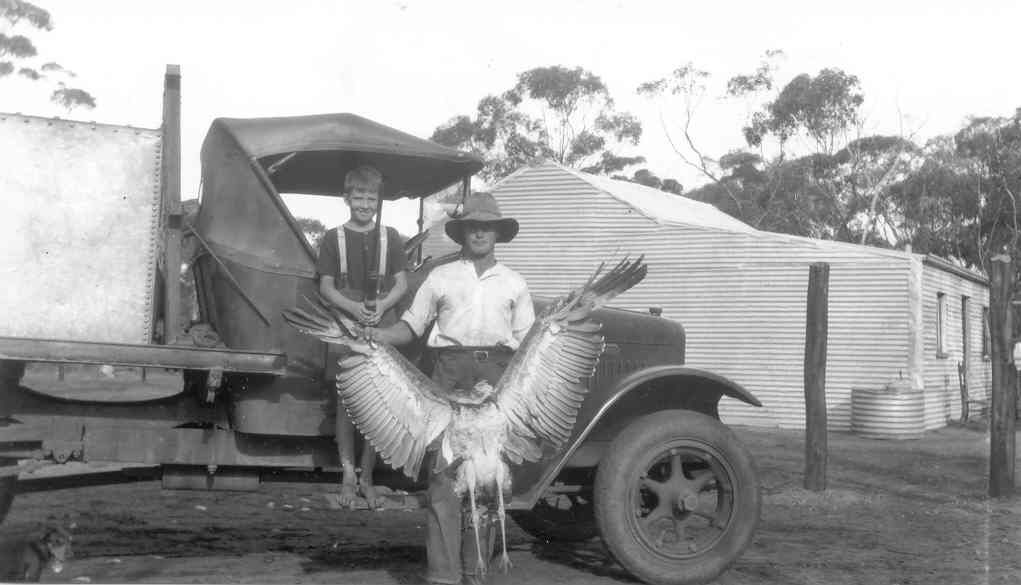
Stuart and Victor Lomax with a bush turkey. Garrett. c 1927
Service Records from the National Archives
Australian Military Forces - Attestation Form
Army No. WX 7650
BEATON Stuart James
General reinforcements
Reception Depot, Claremont.
W.A. 10th August 1940
Age : 24
Trade or occupation : Farmhand
Next of Kin: James Beaton , Nannup.
Religion: Agnostic
Colour of Hair: Brown Colour of Eyes: Grey
Record
Taken on Strength
Hospital Adm Subiaco Rubella
Hospital 11.10.40 Measles
Hospital Disc to duty
Rejoined Unit West Comd.
Transfer 3 D Bn Northam
Transferred to 2/4 M.G.Bn.
School M/O Comd School Guildford
Rejoined Unit
DISCHARGED Enlisted R.A.A.F
Date
10.8.40
27.9.40
11.10.40
17.10.40
27.10.40
28.10.40
27.11.40
5.12.40
21.12.40
11.7.41
Date
10.8.1940
9.10.1940
18.10.1940
24.10.1940
31.10.1940
14.11.1940
4.12.1940
21.12.1940
31.12.1940
11.7.1941
If Stuart had not transferred to the R.A.A.F. at this time he would have been with the 2/4th M.G.Bn. at the fall of Singapore and suffered the same deprivations as his cousin Peter Beaton.
Unit 41 SQD 21ST April 1945 Service Conduct Sheet 3.9.43 F.Sgt. AFA Sec 40: At approx 2300 hours 3.9.43 when asked to leave the Sergant’s Mess by the President acted in a manner unbecoming to an N.C.O. Severe reprimand. 6.9.43. 18/11/43 Remarks of C.O. A good pilot who proved reliable in performance of staff pilot duries. Popular with N.C.O.’s and men. Lacks somewhat in initiative but does a good job. Not recommended for a commission. 21/4/45 Assessing Officer 41 Sqd. This NCO is just an average pilot. On the ground, he is seldom able to be found, and only works when he is told to, and when he does work he is not the least bit interested and doesn’t care a damn. Movements. Detailed for temporary duty at Bowen, proceeded by air on 8/12/42 11 Sqdn. 47/42 awarded a severe reprimand by C.O. on 6/9/43 A.F.A. Sect. 40 - Proceeded to Melbourne by Rail 1500 hrs 3/4/44 Retd GRS 85/43 by rail 1830 hrs 6/4/44 - GRS 33/44 Proceeded on Temporary duty by air on 9.1.45 to Port Moresby Madang and returned Cairns 19.1.45, 41 Sqd 12/45 Participated in an Air Sea Rescue Flight over Coral Sea on 20/3/45 and returned Cairns 20.3.45 41 Sqd 15/45. Proceeded on temporary duty by air on 15.3.45 to Brisbane and returned Cairns 16.3.45 41 Sqd 15/45 Participated in an Air Sea Rescue Flight over Coral Sea on 22.3.45 and returned Cairns 22.3.45 41 Sqd 15/45 Proceeded on temporary duty by air on 25/4 to Madang and returned 26.4.45 41 Sqd 23/45 Proceeded on temporary duty by air on 15/5 to Madang and returned 17.5.45 41 Sqd 26/45 Proceeded on temporary duty by air on 2/6 to Madang and returned 3.6.45 41 Sqd 25/45 Proceeded on temporary duty to Lake Boga 19.12.45 40 Sqd 34/45 Proceeded on temporary duty to Lake Boga 22.2.46 40 Sqd 6/46
Royal Australian Air Force
Application for Enlistment as an Airman
Beaton Stuart James
Address: P.O.Box 53, Nannup
Trade desired to enlist:
Mechanic. Ten years experience as driver of machinery on farms.
Owner and driver of International truck. Tractor driver.
Occupation: Eight years as manager and owner of mixed farm.
Educational: Passed eighth standard State school.
Height : 5ft 9in. Weight 9 stone 4 lb.
Stuart’s first application was marked:-
Unsuitable type Education Standard very low.
Has applied for ground staff.
Attestation of No. 415110
Beaton Stuart James
Joined at No. 4 RAAF Recruiting Centre, Perth.W.A.
21st July, 1941.
Age : 25 years 9 months
Trade : Farming
Service: A.I.F. since 8/8/40.
Discharge on enlistment R.A.A.F.
Appointed to No.5 Initial Training School,
Pearce, W.A.
31/12/44
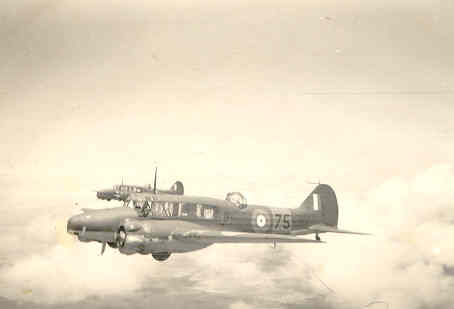
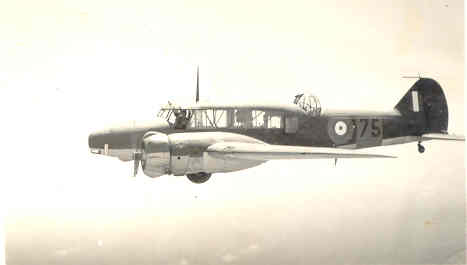
Day Capt 2nd Pilot Night Capt Night 2ndP Avro
Anson 65.35 3.35 48.4
Tiger Moth 2.00
Martin Mariner 17.00
Hours flown in last six months 136.50 hours
TOTAL FLYING HOURS
Tiger Moth 31.10 25.40
Avro Anson 245.10 37.10 161.35 6.20
Supermarine Seagull 24.55 9.25 1.25 3.55
Catalina 265.55 200.45
Grand total all flying hours 1040.35 hours
Statistics of Operational Tour
Vide A.B.O. 393/43
To General Reconnaissance School
R.A.A.F. Bairnsdale. Vic.
No. of Operational Sorties performed 21
No. of Operational hours flown 396 hrs 30 minutes
No. of other hours flown 38 hours 25 minutes
Approximate date of first sortie Dec 2nd 1942
Approximate date of last sortie June 20th 1943
2/10/44 to 2/4/45
Certified Employed on full flying duties at date of this
report
Total HOURS Flown 1115.40 hrs.
Transport hours flown 92.20 hrs.
Hours flown in last six months 115.40 hrs.
Postings
5 I.T.S.
21/7/1941
No 9 EFTS
18/9/1941
No 45 FTS Geraldton 17.11.41
G.R.S. Laverton 16.4.42
9 Squadron 6.7.42
S.T.S Rathmines 4.9.42
D.B.Townsville(Res.Pool) 5.11.
1 Reserve Pool 16.11
11 Squadron 12/11/42
3 O.T.U Rathmines 4.7.43
G.R.S. Bairnsdale 28.7.43
41 Squadron 8.12.44
40 Squadron 12.7.45
No 5 P.D. (DIS) 11.4.46
Rank
A.C.2 on Enlistment 21st July 1941
L.A.C. 13.9.41
Sgt (T) 2/4/42
Flt/Sgt 1.5.43
W/O (T) 1.5.44
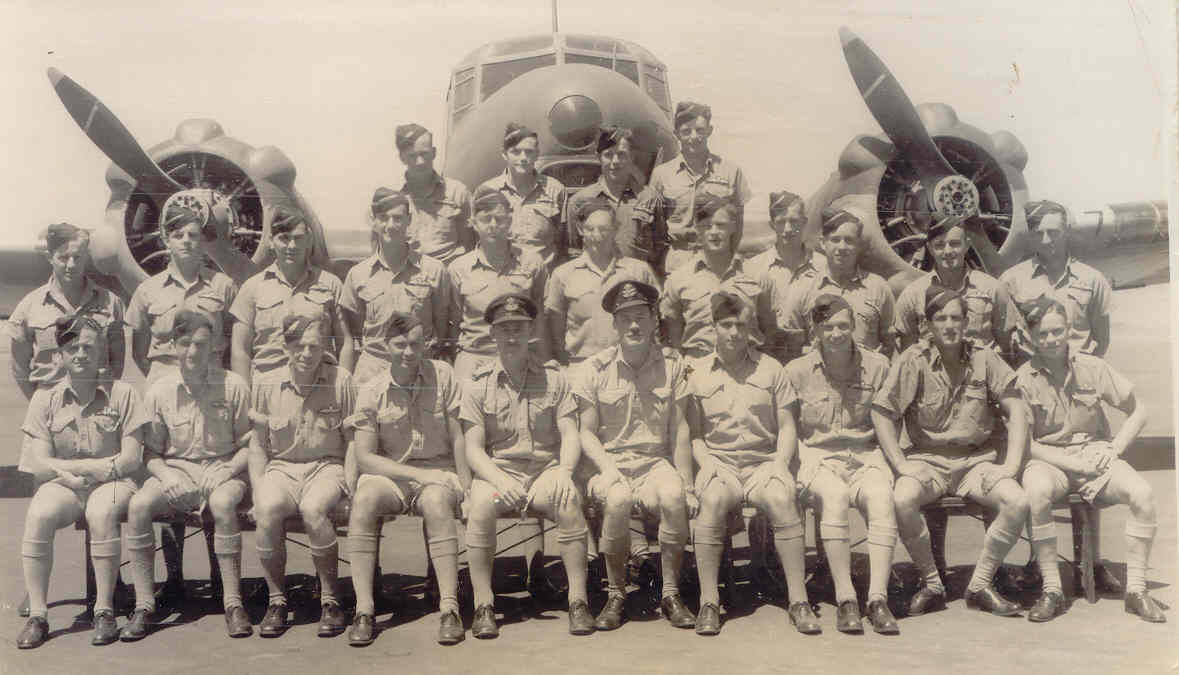
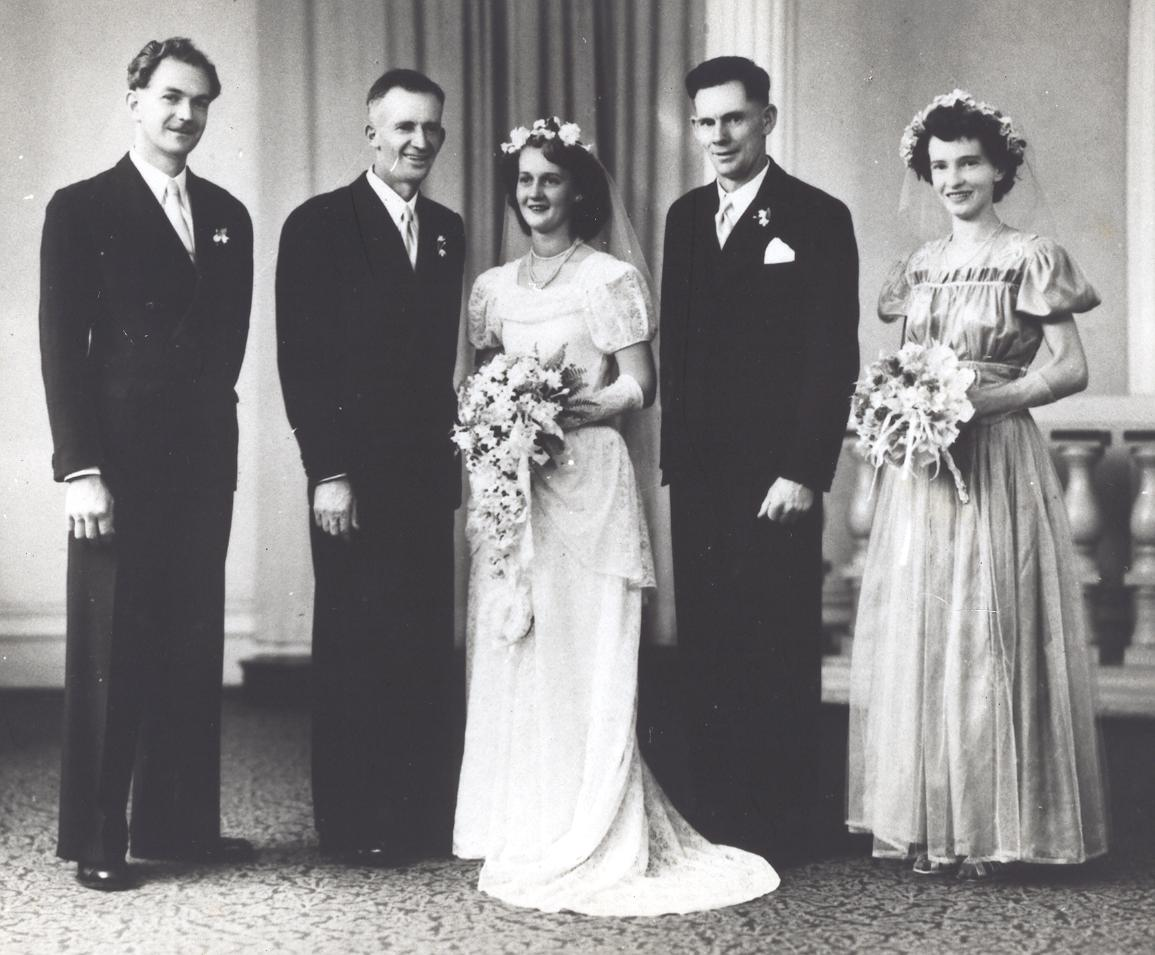
L to R: Jim Hill, Stuart, May, Bert Hawkins, Margaret.
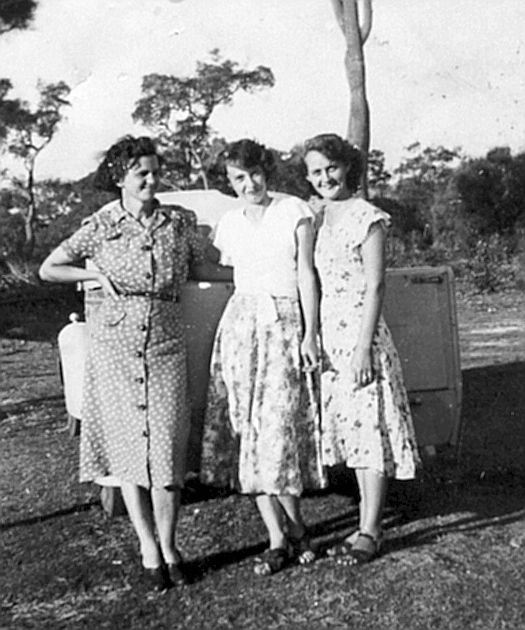
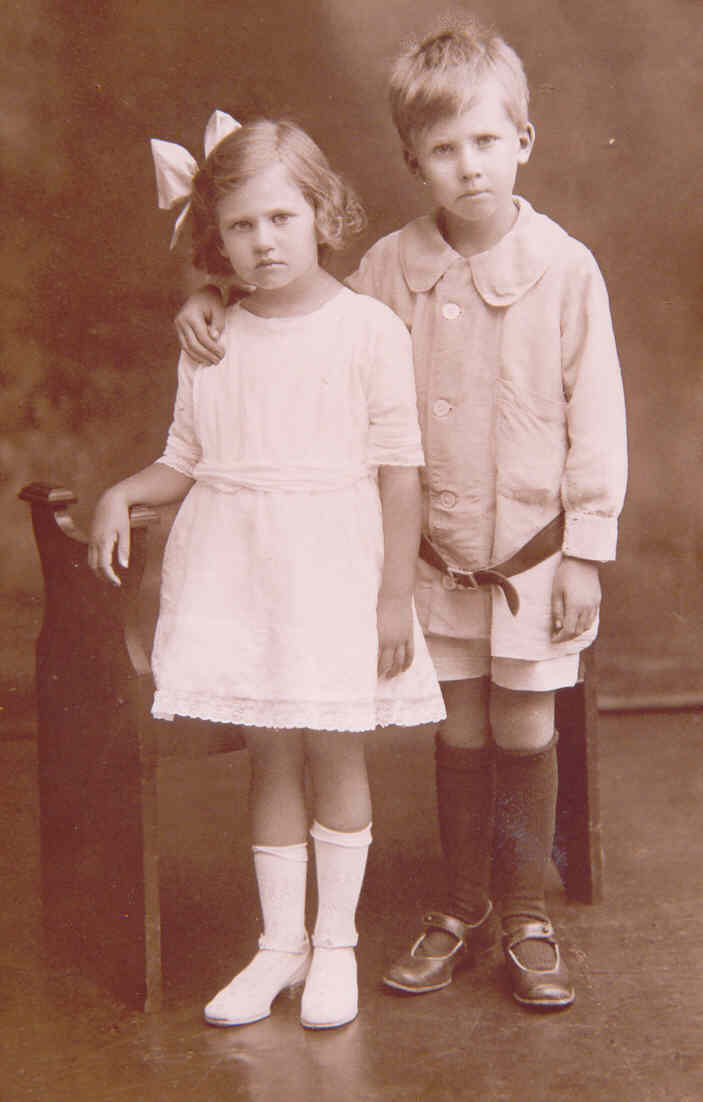
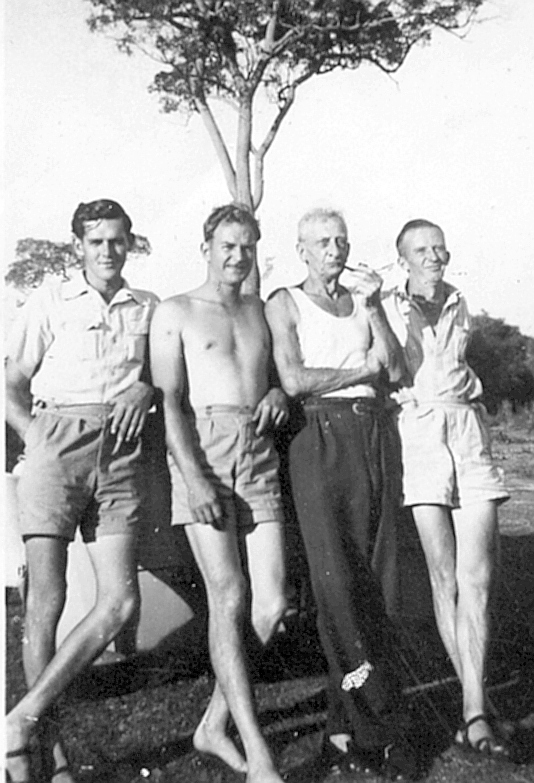
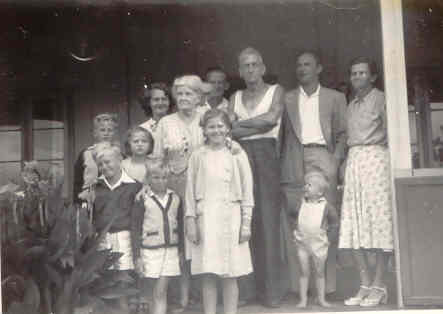
Stuart James born on 5th October 1915
Married: May Hawkins (born 1927)
Children: Peter born 11th December, 1953.
Janet born 10th December, 1956
Died: August 1992 and buried at Albany Cemetery.
Peter born 10th December, 1952
Partner: Toni
Children: Justin born 5th October, 1984.
Rowena born 16th December, 1986.
Janet born 11th December, 1956
Married: Terry Kyneston
Children: Michelle born on 29th April, 1980 in Perth.
Sarah born on 13th March, 1982 in Dampier
Claire born on 10th March, 1986 in Darwin,N.T.
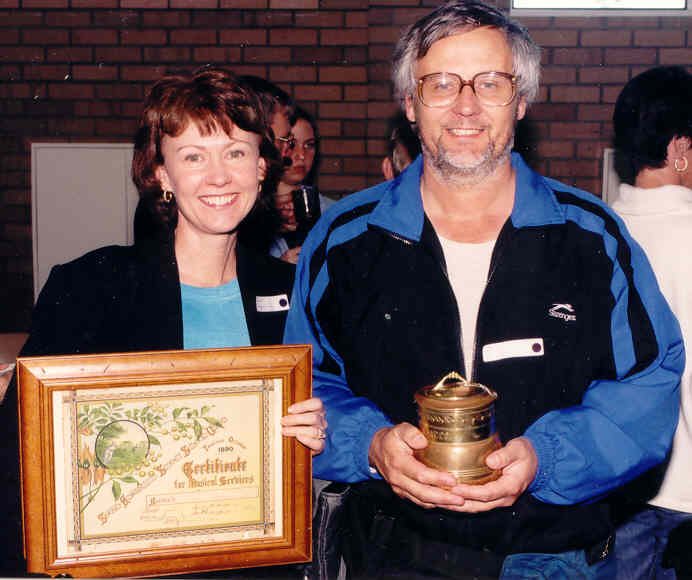
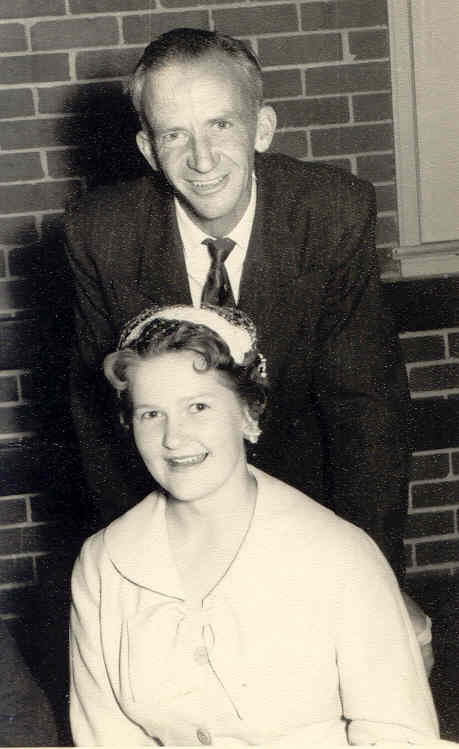
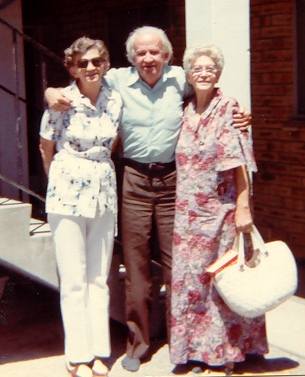
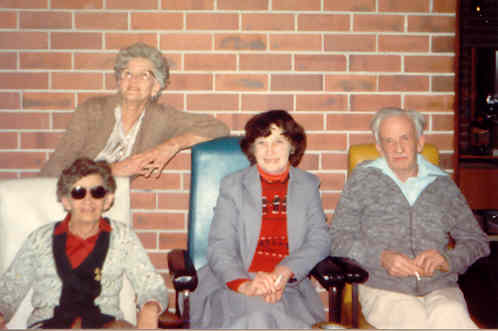
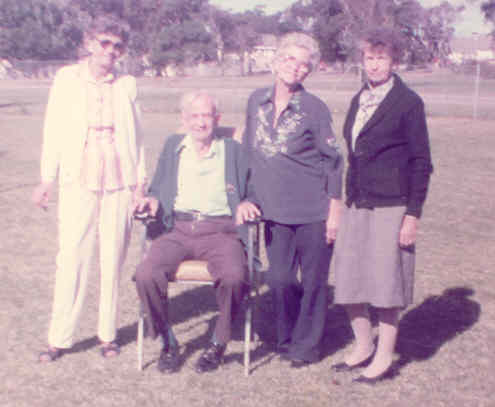
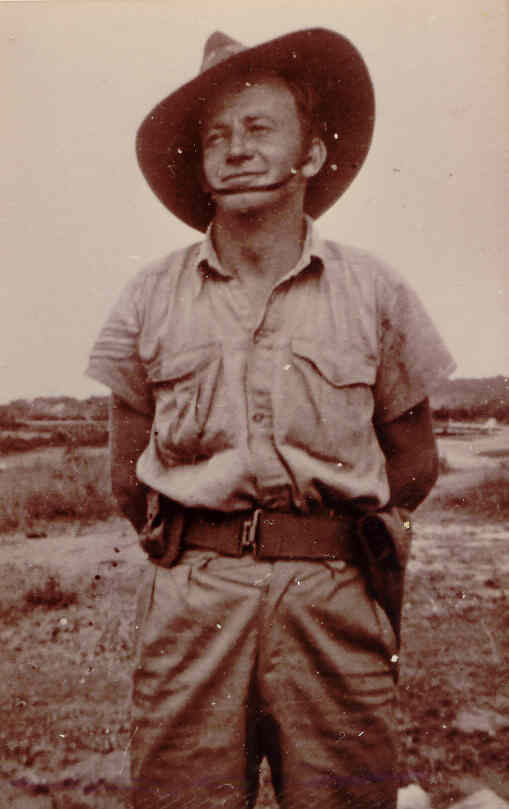
235
Mary Winifred Annetts — Nanna’s Story
Mary Winifred Annetts (nee Beaton – Bickford )
“Nanna’s Story” Excerpts from the life story of Mary Winifred Beaton in Commemmoration of her 80th birthday. 23 October 1997
I was born Mary Winifred Beaton on 23rd October 1917 in a private hospital in Central Avenue, Maylands. I was taken home to Ulambie (the Native name for Place of Rest)- the family farm at Erikin. It was sheep and wheat, the first home I remember (of course) which was a good life then, though the older ones had been through rough times. Mum (Winnie) was little; her hair was brown. She was a very intelligent woman. She’d had very little schooling, but she always used to say that you learn all the time through life, not just at school. She was an avid reader. She always had books - she instilled that into us. She was quite a woman really, looking back on it. It must have been terrible for her - losing her first husband as she did. (George Sidney (Sid) Farrell, emigrated in 1908 from Glasgow, Scotland to a virgin block at Erikin, WA, with Winifred and his two young children - Ern and Elsie - but died after contracting Typhoid Fever, four months after his arrival in Australia.) Apparently Mum thought the world of him. I remember she and I driving past Karrakatta Cemetery with Marg. And Jim - who were living in the Swanbourne Barracks - and she said, “I never go past there without thinking of poor old Sid in there”, and I said, “After all these years ?” and she said, “I never forgot him - I still dream about him”. Sid must have been quite a man, because apparently he had brought everything with him that they’d need. He even brought different sizes of shoes -boots for the kids, as they grew. They also brought all sorts of beautiful curtains and pictures, from India or somewhere. That was stowed away in a shed and gradually rotted. I remember her saying she was packing up to go back to England, when she met Dad (James “Jim” Beaton). But I don’t think she had much in England to go back to anyway. From the things she’d told us, her mother was a very hard woman and she never had a life. She always said her father (George Sylvester Coombe) was a very clever man, though he was an alcoholic. I know I did ask her why she came out here. She said people in England always emigrated. It was a toss up whether to come here or Canada. She was very much a city person - London and then Glasgow. When she got married they were quite well off. They must have been because she’d had servants in Scotland. How many or what, I don’t know. Mum was very good at dressmaking. She always made everything we wore. Even in the good days, she did. She just liked doing it - but in latter years, I suppose she had to. She was also a very good gardener. She always had a garden, wherever she was, but there wasn’t much she could grow. There were two things she always had growing - Mignonette and Californian Poppy. My earliest memories are of going to Yarding School, I don’t remember the first day, though. I was told later that I started at four years of age, to make up the numbers needed to build a school, ten I think, five who were Beatons - Connie, Marion, Stuart , myself and our cousin, Nigel. The teacher boarded with us. Hilda Hedges was the first one and we went to school in a horse and sulky driven by the teacher. I thought I was big time going to school with my school case, which contained a ruler - and my lunch, I presume. In the August, before my sixth birthday, Elsie came into the bedroom and said, ”Time to get up, you have a new baby sister.” I was quite excited about that. I remember Mum coming home from the hospital with her and sitting by the kitchen stove to nurse her. I stood beside her in case she dropped her - her ninth baby, mind you ! I used to get upset because I was never allowed to nurse her - I guess they thought I would drop her! I suppose Marg. was always my baby sister and we have remained pretty close all through the years. On my sixth birthday I got a big celluloid doll which I called Joyce, for some unknown reason. Stuart always said that’s why I called my daughter Joyce, but it wasn’t, as her father named her. I remember coming to Perth for our Summer holidays. I know we came by car sometimes but I remember train trips, too. We always stayed at Como, I suppose it was a guest house. I think their name was Casey. Also a shop. We kids always enjoyed the beach and water - in our neck- to- knee bathers. The beach in those days was just natural - with beach, reeds etc - nothing like today. Then the Pagoda was built and we stayed at the back of that in accommodation for guests. I used to look through the windows of the Pagoda when there were dances and watch the girls in their pretty dresses and thought I would do that one day. I never did. Things changed somewhat ! I remember Mum taking us to the city one day to buy hats. It was at Boans. She used to buy plain straw hats and trim them with net, lace, ribbon and artificial flowers, which were quite pretty.
Mary and Stuart
But I saw a red velvet hat with a gold pin for decoration - a small, close-fitting hat - and I would have given my soul for that hat. I thought my mother very mean. One day we went to have our family photos taken, which I still have today. I hated the dress I had to wear, which was a very pale pink with lace trimming and a wide sash which tied in a big bow at the back. I wanted to wear the white voile I had, but wasn’t allowed. My hair used to be curled with strips of rag - the hair curled around the strips and tied up - and I had to sleep in them overnight, which always gave me a sore scalp. So with everything, I was not a happy child ! Then Stuart and I had to have our photo taken together with his arm around my neck - that was the last straw, as far as I was concerned ! We lived at Erikin until I was seven, when Dad sold up and we moved to Kellerberrin, another wheat and sheep farm. The first house, I only remember as being very dark and not very nice. There was another one on the same property which was four rooms , weather-board and iron, I think. Dad enclosed the front verandah with lattice and lined it with hessian, where about six of us slept. As kids, we were quite happy there. There were large granite rocks at the back of the house which we kids enjoyed playing on. When it rained there were little pools of water on the rocks with flowers and little ferns. Of course there was school, called Glenluce , which we walked to. I can’t remember how far, not too far across the rocks and across the paddock. I had come to hate school by this time. The reading and writing I liked O.K. but, history and geography left me cold - I found it all very boring. I wasn’t interested in the outside world - it didn’t seem real to me at that age. I guess I felt secure in my own little world. At some stage, I had the job of rearing orphaned lambs. I used to feed them with a beer bottle and teat. In one instance, I had three. They used to run around in the paddocks and rocks and they always came to me when I called them. One evening they didn’t come when I called them so I left them. I hardly slept all night, feeling guilty. I got up early on a very cold frosty morning to look for them and found them nearly dead, lying all covered in frost. I felt so dreadful. I took them home and dried them and wrapped them up and put them in front of the wood stove and got warm milk down their necks. They survived - but I never did that again. We had one lamb we called Mike. As he grew up we all used to sit on him and ride around. The poor thing’s legs got quite bent ! Those sheep usually ended up as meat, but I could never eat it ! We used to go into town occasionally and were always given a florin, which would be about 20c or 25c in decimal currency. I used to always buy a couple of tiny kewpie dolls, no more than about an inch high - about two for a penny. We never really saw money and one day, early in the piece, I wanted to buy a packet of Columbines which were a few pennies and I asked Marion to pay for them because I didn’t have that sort of money. I didn’t understand the business of change. I saw my first movie in Kellerberrin - Felix the Cat and Charlie Chaplin in something or other. Dad went bankrupt there (1926) as his social life was more important than working the farm! From there we moved to Southern Cross, where Ern had a farm - again wheat and sheep. We lived in town until Ern built a place for us. I had correspondence lessons t here. I had a very nice teacher, whose name I can’t remember. She used to send me pieces of material to make dolls’ clothes. I made her a hanky once - with Mum’s help. She married and moved to Fiji. Elsie worked at the Club Hotel as a waitress and I used to go sometimes and help her clean silver and set tables - thought I was pretty smart too. One time there was a big do of some sort on and Mrs Kennedy (the owner) gave me 7/6 (75c). With this I bought some material - a pretty apricot silk-like material, which Mum made for me, trimmed with a beige lace insert in the bodice and a two- tiered skirt, the upper tier being scalloped. I thought it was beautiful. I also remember a dress Elsie made for me for my ninth birthday, while I was living in the town (Southern Cross). I know it was floral with a lace collar and a black velvet bow at the neck. Elsie was very important to me - I loved her dearly - as did all the family, I think. She was a very big part of my life - always. Then we moved out into the place Ern built for us on the farm. I think it was bush uprights and corrugated iron outer walls, four rooms - the partition walls were a material called Sisalcraft, which was a type of fibre and tar sort of mixture, and cement floors. I was nine when we moved there - still with correspondence lessons - just Isobel and I -Marg was too young. And life seemed to slip by. Elsie, Connie and Marion had gone off to work in country areas - I missed them all ! Ern and Nell were married some time during this time and eventually had Ken and then Bill. I used to spend a lot of time with Nell, helping and then taking the kids for walks etc which I enjoyed very much. Dad during this time, was back at the Beaton family station of Thundelarra. Dad had a horse which he rode from Thundelarra to Nannup - quite a feat when I think about it. (That horse didn’t like the South -West and would never cross a running stream) We moved again, not long after I turned thirteen, when land was opened up at Nannup in the South -West. It was a Government Scheme of some sort, I think, that Sir James Mitchell, the Premier of the day, who Dad knew, apparently organised, as Bankrupts were not allowed to own anything. We were paid 2 pounds ($4) a week - a sort of allowance from the Government, I suppose.
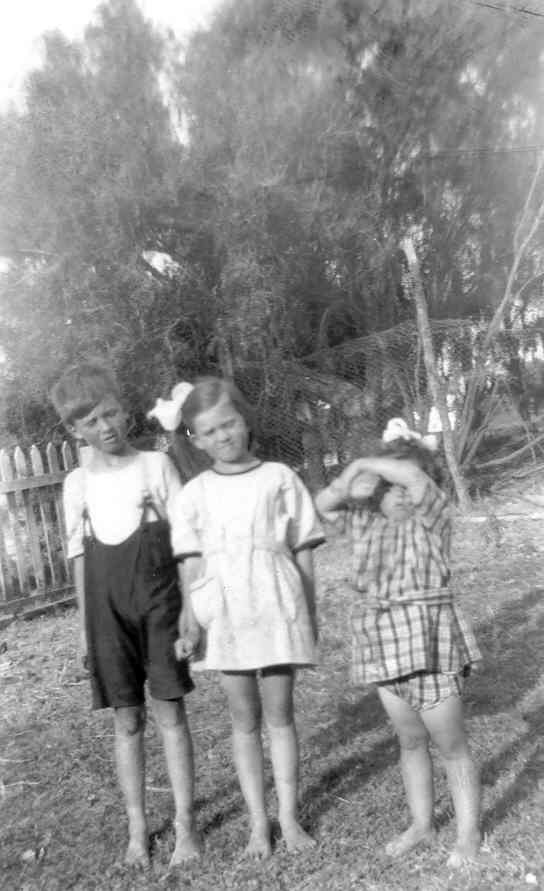
Anyway, in 1931, all us kids - four of us anyway, Stuart, Isobel, Marg. and I - as Elsie was married to Bill Webb, Connie was working as a governess on a station out of Meekatharra and Marion was back at Southern Cross with Ern and Nell), - went by train from Southern Cross and got out to this land that had been allotted to Dad. I can still remember we stayed overnight in town - Mrs Callaghan’s Boarding House. It was in the main street in Nannup there. She had a café and house next door for boarding. When we woke up in the morning, we thought the town was quite a pretty little place - beautiful really - coming as we had from the dry areas. The carrier took us out to the block. There were quite a few loggers’ huts - empty as the Mill at Nannup had closed. These were the years of The Great Depression. They were on the neighbouring property, not ours, so we all camped in them, and I mean camped - two or three in each hut with one as a kitchen and another as a store room. We were near running streams and we ran around picking wild flowers. The old railway line was there from the Mill. Stuart found a trolley thing that went on the line and we used to go for miles on it. Dad and Stuart gradually cleared some land and built a house on our property by felling Jarrah trees and splitting them into slabs and using them like weather -boards and iron for the roof. It must have been dreadfully hard work - Stuart must have been only fifteen or so at this stage and was only a little, skinny rat of a thing. They only had a crosscut saw, an axe, a shovel, a mattock, a sledge hammer and wedges to work with. Gradually, they got some floor boards. We didn’t have any windows. I mean we had window holes and we had hessian at the windows. By this time, the Government had given us a cow and took five shillings a week off the two pounds. Sometime later , Marg. got pretty sick; I think now, it must have been malnutrition. She would have been six or seven - it seemed to me, she was sick for months. She used to say to me , “Do you think I’ll die ?” I had no idea. I used to walk a few miles through the bush to an old established farm, which had fruit trees and get a tin of fruit for 2/- (20c). Mum said Marg. needed fruit and milk. I suppose she was right. Marg. and Isobel were having correspondence courses which we had all had for some time. Until I jacked up and wouldn’t do it any more ! So much for my education. The local school opened when I was about fourteen. It was at Carlotta, about two or three miles from our place. I refused to go, but Isobel and Marg did. It was boring and I could read and write and couldn’t see what else I needed. Although my maths was pitiful. I was about fourteen at this time and would have almost had to start again from the beginning. I used to go down and do house-keeping and washing for the teacher’s wife for two shillings or something. It wasn’t such a bad life really, didn’t know any better, I suppose. Mum and Dad were both very social - there were always people around, I mean weekly or fortnightly. Even in the hard times, they’d always bring a plate. Of course, everyone was in the same boat. There was always visiting. We had the piano which Mum, Dad and Marion could knock a tune out of, so there were always sing -alongs. And we had table-tennis and “Bobs” -another table cue and ball game, like billiards. And I always remember charades and concerts at home. I’m trying to remember what we used as a stage. I remember Isobel dressing up as a crinoline lady for something. I gave a recitation - I don’t remember the full poem, “My Shadow” it was called - “I have a little shadow, It goes in and out with me.” That’s all I can remember of it. We used to have dances at school - about once a month. I was about sixteen or so when I first started going to those. Different people would give a song or recitation or something, but I never did. So, all in all, it wasn’t too bad for us kids, you know. We didn’t really need anything else - no television, no papers, no nothing. At one stage we didn’t even have a clock. Dad didn’t do too bad a job of telling the time by the sun. I suppose he was right !! We managed to get through the day and night! I liked baking bread. I didn’t like cooking - I still don’t like cooking. There was never anything to make you interested in food, anyway. Of course we caught food to eat. We always used to say, ”If anything moved in the bush, we tried to eat it!” Rabbit ! I still can’t eat it. Stores used to come out once a week on the carrier truck. There’d be mail and stores. One time we had to get kerosene and we used to get great big bags of flour. Somehow or other, the kerosene splashed onto this big bag of flour and we had to eat it - there was nothing else. Every time you ate a piece of bread, you belched kerosene straight back. We still laugh about the kerosene episode! I also liked sewing - fancy work - and reading. We always had books. We always used to swap them around with the neighbours - I used to walk for miles, swapping books. One neighbour used to give me an English magazine which was all about the most awful mur der crimes in England, which I used to hide or Mum would burn them. She used to say, “If you read, read something worth reading.” But I used to lap them up ! The Bickfords were on a property a mile or two through the bush. I can’t remember how we first met them, there were no cars - it was shanks’ pony everywhere. There was the father, always known as “Jack” - his proper name was Arscot Nicholas (Ah[he]’s got [a] nickle arse !) and who can blame him for not using that ! And there were three sons - Viv, Lindsay and Sax. Their sister, Una, worked at Boans in Perth and their mother had divorced “Jack” years before - she had remarried and lived in Pemberton. So the years slipped by and Vivian Trenworth Bickford and I were married at 11a.m. on 7 th of September 1935 at the Methodist Church, Nannup. I wore a blue dress that Marion had made me, but there was no reception and no presents as nobody had any money. We went back to the Bickford farm. There was a nice little log cottage on the place - built by previous people. Viv’s father and brothers had moved on to other work by this time; “Jack” had gone to work in the timber mill, which had just reopened. He was a loco driver and used to haul the logs from the bush into the mill. I can’t remember where
Lindsay and Sax went to work. I was seventeen then, eighteen in the October. We stayed there , I can’t remember how long.We had quite a few cows by this time - a dozen or so - hand milking twice a day. The milk was separated and the cream sent to the butter factory. It was picked up by truck once or twice a week. of course, there was no money in that. I remember one month we got 12/- ($1.20). I never want to see another cow - milk in cartons suits me ! The timber mill (Kauri Timber Company) had opened again by this time and Viv got a job on the Mill, so we moved into the Mill town (Nannup). The houses were weatherboard lined with hessian and the company gave us wallpaper which we had to hang ourselves (I got quite expert at it). With wood stove and open fires and kerosene lamps, they were a fire hazard, but nothing ever happened so I suppose we were all careful. No bathroom or laundry - pan dunny- half a mile down the back yard, but we didn’t know any better - it was the way things were. Some years later I was told the company had had to improve, laying on water and electricity by order of the Health Department -someone was getting a bit of sense. Allan Vivian was born there on 16th May1937 and Daphne Joyce on 30th June 1941. By this time Mum and Dad had gone to Big Bell. Stuart stayed on the Nannup farm until he joined the Army and, after being at camp in Northam, decided to join the Air Force, fortunately. the Army fellows he had trained with were subsequently captured in Singapore. Marg who was about sixteen at the time, went to Perth to work. Connie and Bill were in Victoria Park. Isobel worked for Riverton Smith’s son as a nanny in the mill town of Nannup before moving to Big Bell where she worked in the mine mess and met “Blue” Nancarrow(her future husband). When Joyce was three months old, Dad got us a job on the Big Bell mine. It was the end of September when we went up there and Marg came with us. I remember the wildflowers - they were beautiful. By this time, Viv had got a couple of Engine Drivers’ Certificates. Big Bell housing wasn’t much better except we had electricity and water on tap. We were only there a few months - I think Joyce was about ten months old. By this time , of course the war w as at full steam and Viv joined the Air Force. So we moved to Perth. I remember we were at Elsie’s - either staying with her or visiting, when Darwin was bombed. I stayed with Elsie until a place in Forrest Street, North Perth, became available (with much difficulty). It had a wood stove and open fire, but fire wood was very scarce. I went to a wood yard in North Perth with Joyce in the pram and Allan trotting along. The chap took pity on me and put a few pieces in the pram - as much as would fit around Joyce and then brought me a load later. It was a little old place with open drains where Allan got Diphtheria and he and Joyce got Whooping Cough. Their father wouldn’t have them immunised, so after that all my kids got every needle possible. Anyway, after a while, the owners wanted to move back so I managed to get a dreadful semi -detached place in Newcastle Street - a shocking place, but a roof over our heads. We were there for a while and I saw a place advertised in the paper in Maylands. As I was a short walk to the city, I was able to walk to the Estate Agents in Barrack Street and was outside at five-o’clock in the morning and got the place. It was only the back of a vacant shop in Eighth Avenue, but it had a bathroom of sorts - just a bath- and a wash-house with a copper and troughs, which was quite a luxury to me ! We were there for a few years - Trevor (14 July 1944) and Laurie (16 June 1946) were born there. The war finished while we were there and men all started to come home. Viv sold Watkins Products for a time, but it wasn’t very profitable, so he got a job at Lyall’s Mill -a timber mill out of Collie. Another dreadful place, a typical timber mill house on a swamp with a raging creek almost at the back door. I couldn’t let Trevor or Laurie out of the house because of the creek and an uncovered well at the front of the house where a small boy had drowned years before.
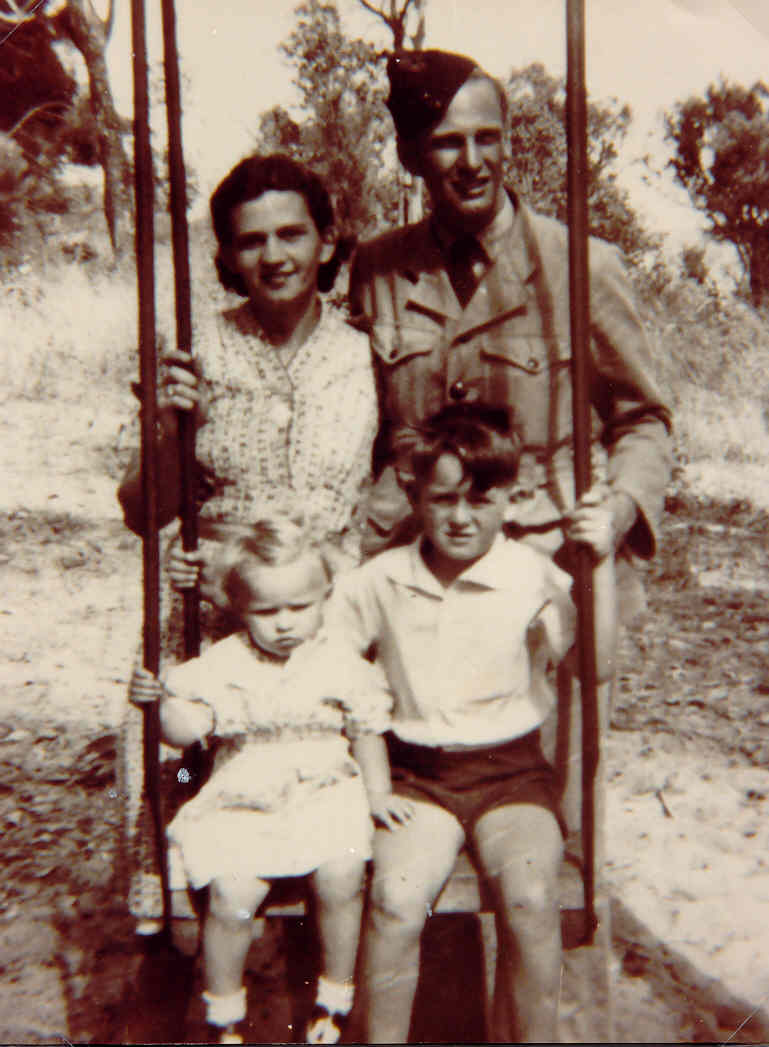
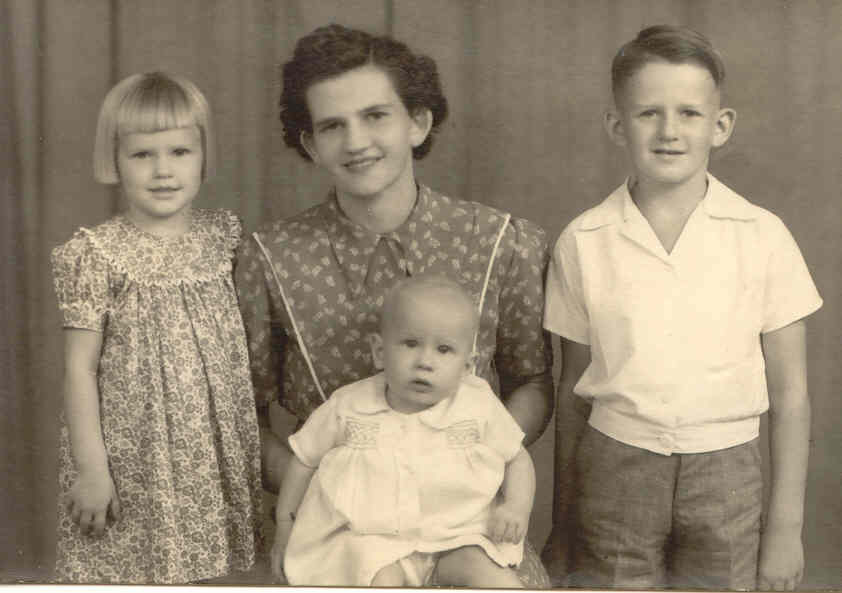
I had kidney problems all the time we were there. So we went back to Big Bell. Trevor and Laurie were like little animals who had been let out of their cages. It was early October when we got there and all the wild flowers were out - it was heaven after some of the places we had been in. We stayed there for a few years. I liked it there and would have stayed. We lived in all sorts of awful places until we were allotted a Housing Commission house which to me was a palace ! However , after a while, Viv and his ather decided they wanted to be farmers again and got a block at Denmark. So we dutifully tagged along. It was dreadful. It had been one of the old Group Settlement places. The house there had no doors or windows and no partition walls - only half- way anyway. No boards on the front verandah, no water, power or toilet - until the men built one. Ron was born on the 14 th June 1950. I was very ill and so was he. Matron kept him in hospital for a week after I went home two we eks later. Trying to look after five kids and two men (and 200x 1 day -old chickens! I managed to rear 90) was pretty horrific - primitive is not the word ! In the meantime, Allan, who was only fourteen, had held the fort with the other kids - their father did nothing. I’ve never forgotten what Allan did. It was Laurie’s birthday two days after Ron was born and Allan made him a chocolate cake for his birthday. He had no candles so used matches. Just as well Laurie was only four ! Things were getting bad by this time. Stuart and May were getting married, so my story was I was coming to Perth for their wedding, but I knew I wouldn’t be going back. What was I going to do? I had no money, no home and five kids. There was no supporting benefits like today. I stayed with my parents until May and Stuart came back from their honeymoon. It was hardly fair for them to start their married life with me and five kids. Phyl and Keith Milner ( “Blue” Nancarrow’s sister) had a Housing Commission house at Midvale and told me to stay with them until Marg and Jim got a little old place in Walter Road. Jim was in the Army and they were waiting for an Army house at Swanbourne Barracks, and when they left, I stayed there until the owners wanted to sell - it was on ten acres of land. I was served with an eviction order so went to the Housing Commission and they told me to go to court and one of their officers would be there to get me into something, which I did. So I was sent to Allawah Grove, South Guildford, which was an emergency housing place - just three rooms of asbestos with a shower recess, cold water, of course, community laundry, but a sewered toilet !!!! I was getting some money from the Child Welfare for Joyce, Trevor, Laurie and Ron - not for me - women weren’t considered very important. But they were very good really. A Miss Pollard used to look after me with blankets, school books and big tins of Actavite etc. Allan was working at the Midland Railways workshop, (having gained his apprenticeship in Metal Turning) at 35 shillings ($3.50) a week, poor kid, of which he gave me a pound ($2.00). I had met Ray (Raymond Douglas Annetts) some time previously through Phyl and Keith’s neighbours who were ex - Fairbridge as Ray was. Garry has asked why he took me and five kids on, but as I told him, Ray had no -one who belonged to him family-wise, although the Fairbridge kids stuck together as they were the only family they ever knew. And I was in desperate need of help. I had to feed and house five kids and it was absolutely beyond me to do it alone. So when Ray offered us a home it was the sensible thing to do. He was a good man really and it suited us both and I have never regretted it Then Garry was born on 28th August 1953. So we moved to where Ray had a property in Beechboro of 3 ½ acres and a house of sorts, but I was used to that. At least it had electricity, only bore water but that was O.K. Ray was working at the Timber Mill in Walter Road. I think Garry was about five when we sold that place.
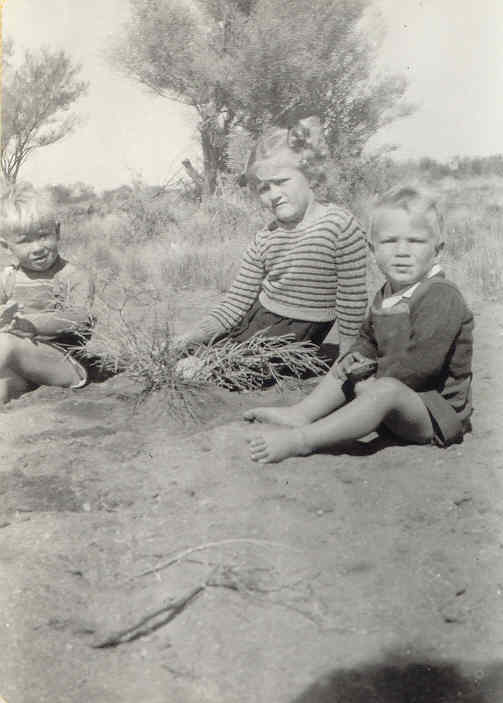
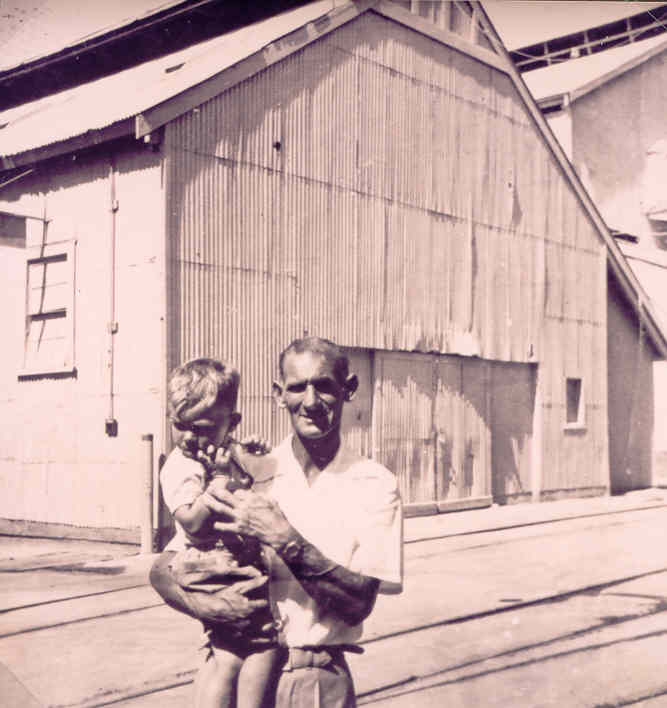
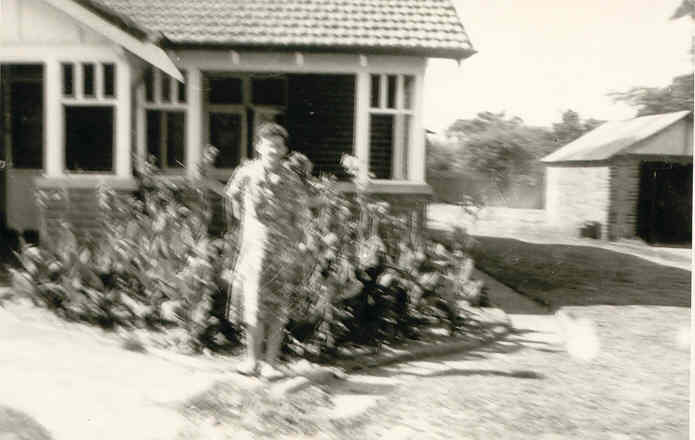
We tried to sub-divide it but were not allowed to as it was zoned as industrial - now look at it ! (What is now Morley Drive) We sold it for £1,600.0.0 ($3.200) and bought the Bassendean house, (2 Palmerston St) for three thousand pounds through the War Service Housing Plan that Ray was entitled to. Ray worked at Hadfield’s foundry. So I was near shops and trains - quite a luxury! As time went by , Allan got married and Joyce went to Melbourne….. And much later , Ray got very ill and had to go to a nursing home . After Ray died, it was getting a bit difficult for me to keep the place going. They were just starting to build units in this area. Jaquie saw these one day and I went to look at them and chose this one (5/210 Albert St). It took me a while to get used to it, but sometimes I have to give myself a talking to. I have electricity, sewerage, hot water, a washing machine, etc, etc. So here I will stay until my next move - either a Nursing Home or a coffin - who knows ?
October 1997.
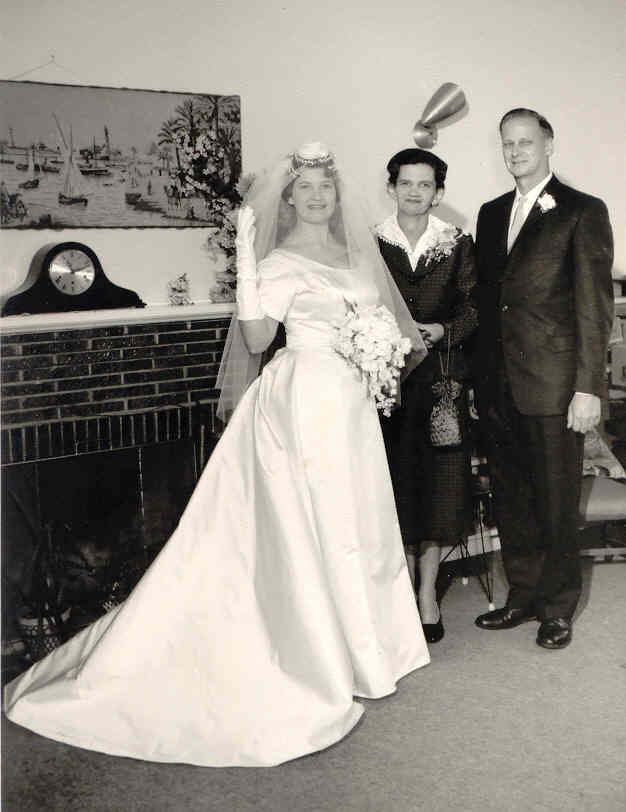
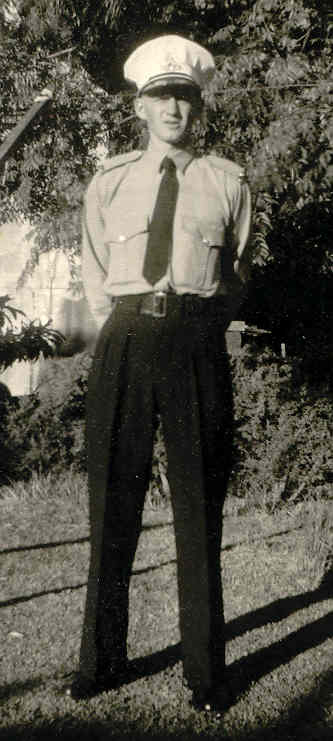
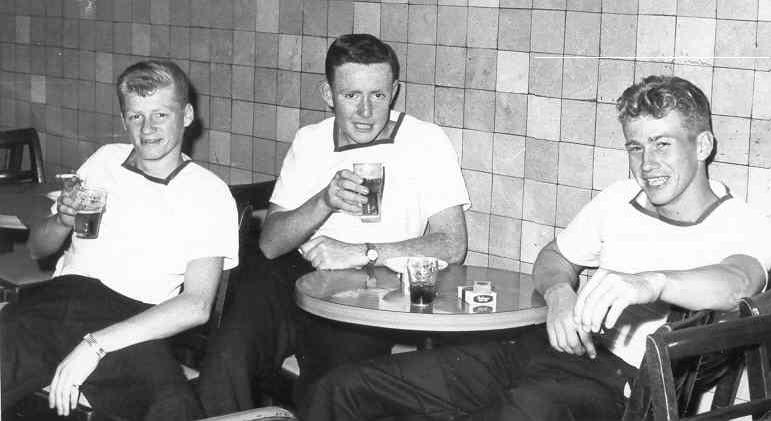
Navy days 1960’s
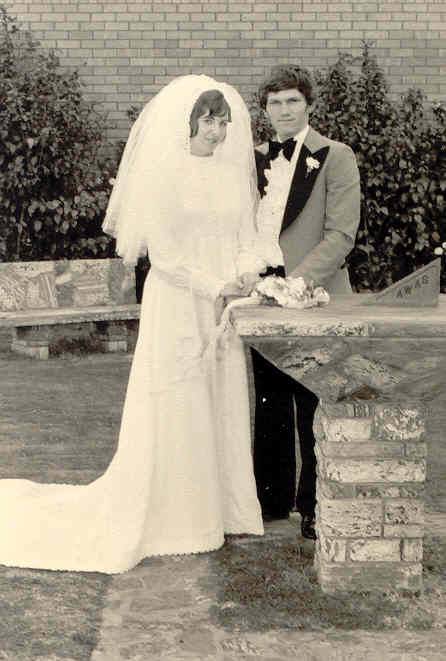
Mary Winifred born on 23rd October 1917 at Maylands.
Married: Vivian Trenworth Bickford born 7th May, 1912
On : 7th September, 1935 at 11a.m, at the Methodist Church , Nannup W.A.
Children: Allan Vivian born 16th May, 1937 at Nannup
Daphne Joyce born 30th June, 1941 at Nannup.
Trevor born 14th July, 1944
Lawrence born 14th June, 1946
Ronald born 16th June, 1950 at Denmark.
Partner : Raymond Douglas Annetts
Children : Garry James Annetts born on 28th August, 1953
Allan Vivian Bickford
Married: Jaqueline Young born 21st April, 1938
On : 27th September, 1958 at Anglican Church ,Victoria Park.W.A.
Children: Bradley Noel born on 22nd September, 1959
Leonie May born on 25th June, 1961
Sandra Ann born on 18th May, 1965
Bradley Noel born on 22nd September, 1959
Married Zainab Alpan on 19th December, 1978, the Mosque, Port Hedland W.A.
Children: Daniel Omar born 18th August, 1983 at Port Hedland
Hizam Mohammad born 21th December, 1986 at Port Hedland.
Khalisah Amalia born 10th August, 1992 at Port Hedland.
Syakir Akram (Sharky) born 2nd May, 1994 at Port Hedland.
Afiqah Safira born 16th December, 1999 at Port Hedland.
Leonie May born on 25th June, 1961
Married: Douglas Hart on 22nd March, 1991 at Bridgeleigh Centre, Wann.
Children: Kartia Lee born 22nd September, 1994 in Melbourne
Louisa Clare born 23rd March, 1997 in Melbourne.
Sandra Ann born on 18th May, 1965
Married Nick Eagle (b 28/1/1963) on 19th April, 1985 Div.
Children: Rhian Sarah born 15th January, 1988
Darryl Peter born 9th August, 1989
Re-married: Scott Carew-Gibson on 23rd September, 2001
Shannon Allana born 21st January, 1999
Daphne Joyce Bickford
Married: Donald Graham Reid born 31st January, 1933.
On 8th April, 1961 in Melbourne Victoria.
Children: Jane Donnelle born on 4th August, 1962 in Melbourne.
Allison Joy born on 18th December,1963 Rugby, Warwickshire, England.
Gregory Donald born on 4th January, 1971 in Hornsby, Sydney, N.S.W.
Jane Donnelle born on 4th August, 1962
Married: Greg Wear on 31st December, 1992. Div.
Re-married: Mark Hungerford 3rd March, 2001 in Sydney.
Allison Joy born on 18th December,1963
Married: David Pedler on 12th June, 1993
Children: Georgia on 9th May, 1996.
Gregory Donald
Trevor Bickford
Married: Shirley Flanagan on 11th November, 1970 in Broome.Div
Children: Melanie Lisa born on 5th August, 1975 in Broome.
Garry James Annetts born on 28th August, 1953
Married: Linda Ward born 31st July, 1954
On : 25th August, 1973 in Bassendean.
Children: Julie Lisa born on 28th September, 1979
Kate Louise born on 5th May, 1982
Julie Lisa born on 28th September, 1979
Married : Michael Cairnduff
On : 11th December, 1999
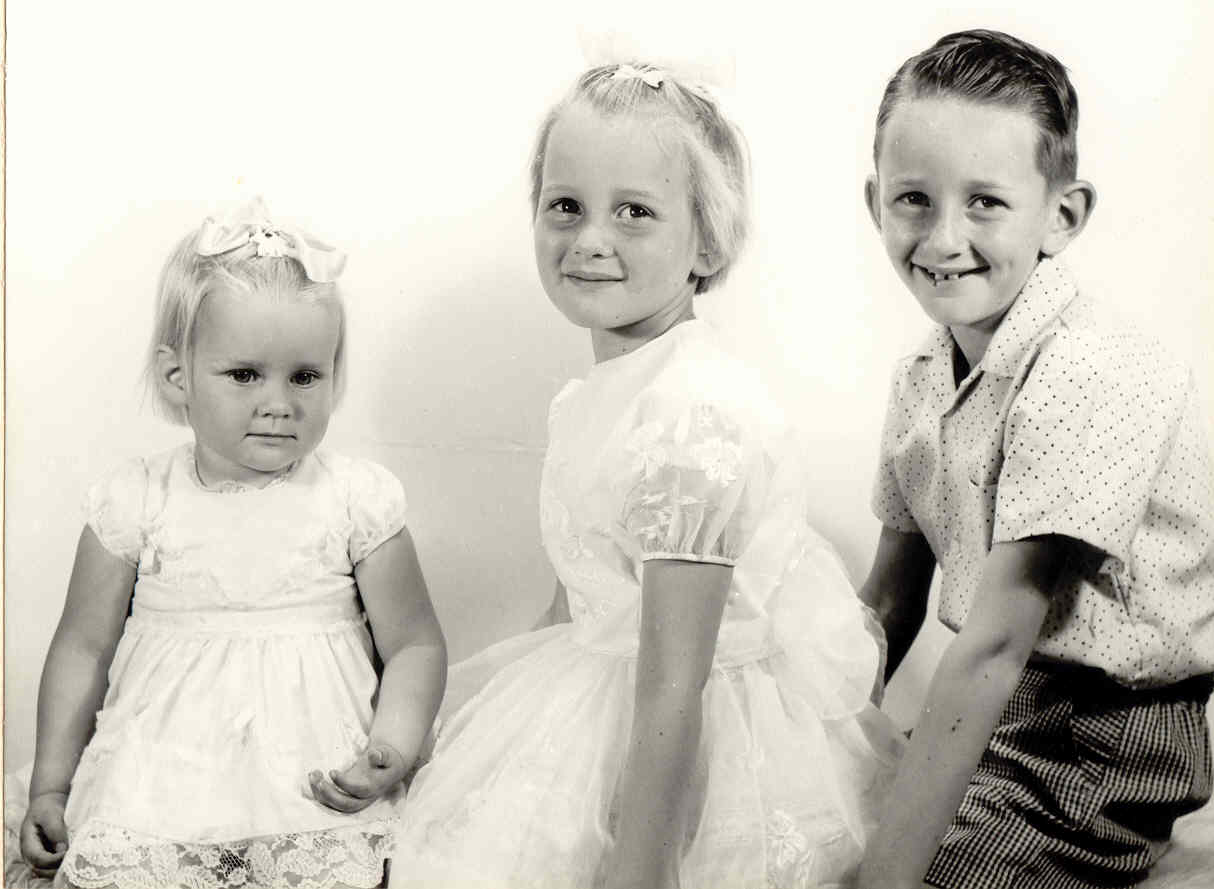
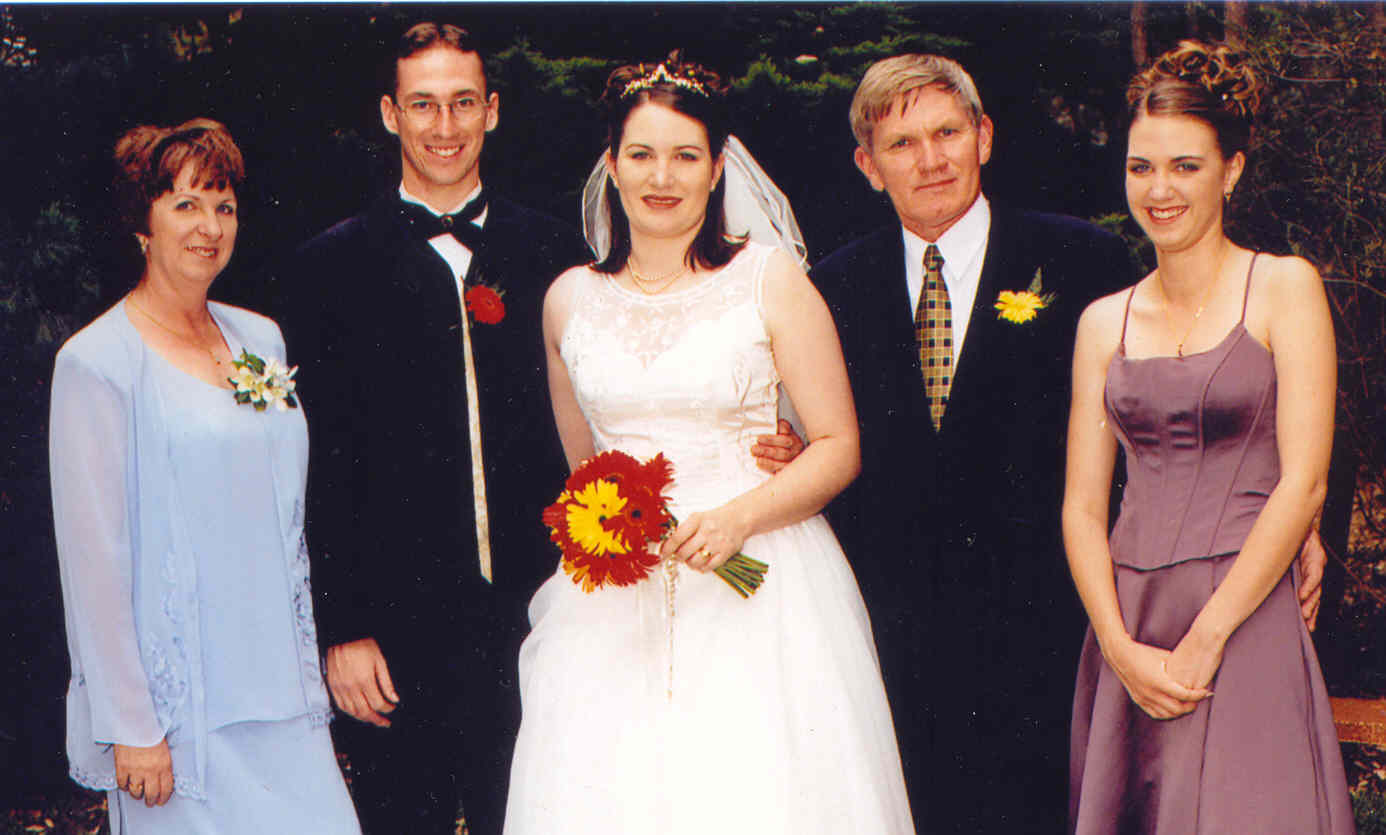
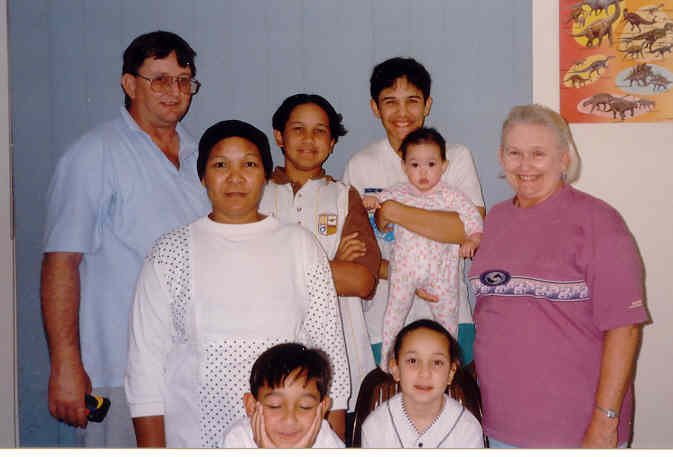
In front :Sharky and Khalisah.2000
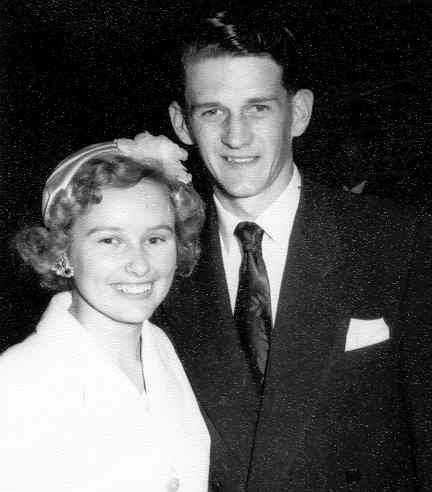
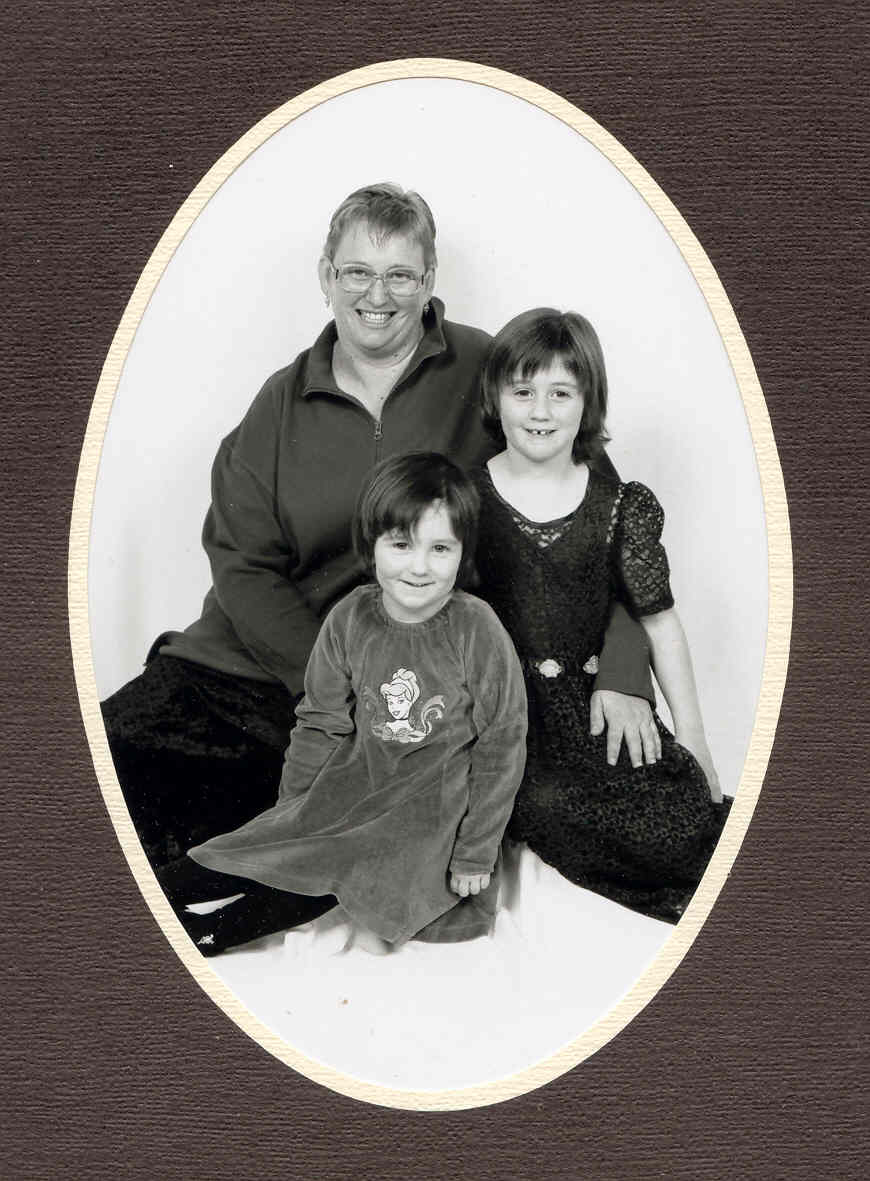
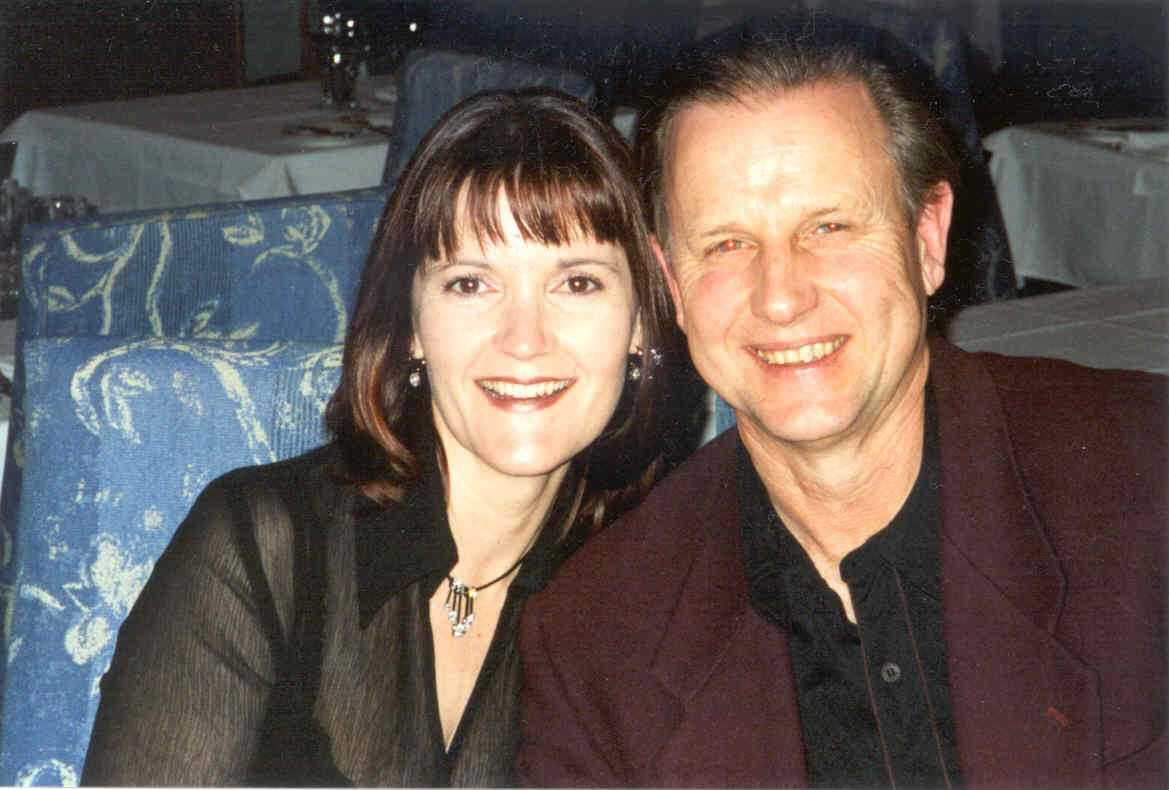
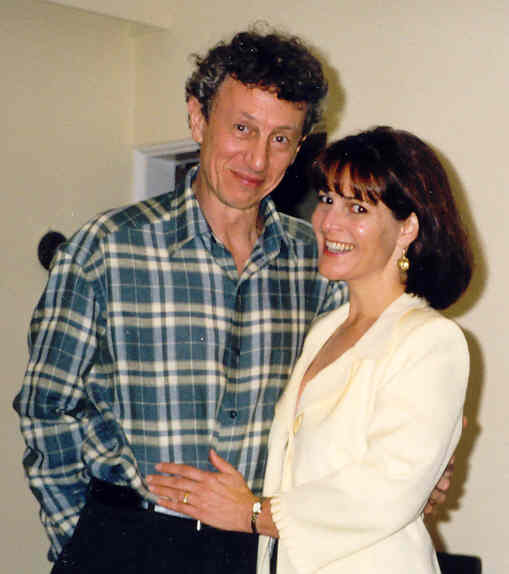
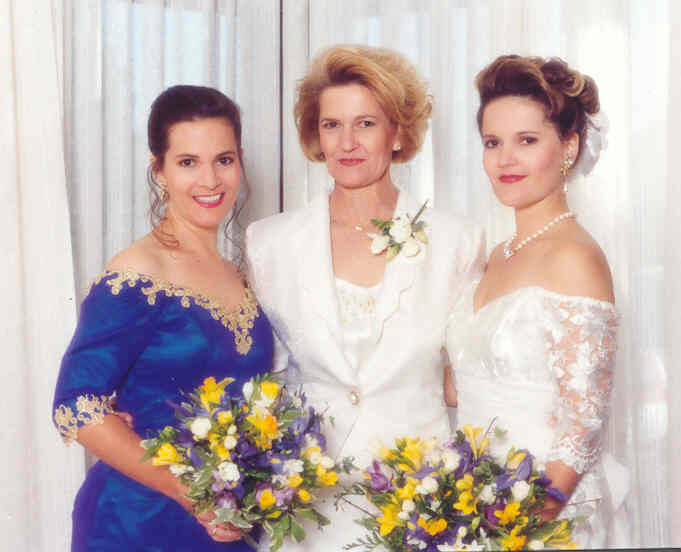
239
Isobel Ann Nancarrow — Isobel’s Story
Isobel Ann Nancarrow (nee Beaton) “Isobel’s Story” This family history will have to start with my earliest recollections. These accrued at Erikin, thirty-six miles from Bruce Rock where my father and mother had their farm. Wheat and sheep of course. The earliest things I remember consciously were these. Falling out of my parents’ bed between the bed and the wall, and waking there in the early morning. Being fascinated by the moving shadows on the ceiling as the centrally hung kerosene lamps moved in the air. Keeping the flies off my baby sister in her pram while her mosquito net was washed. She was - is - two years and eight months younger than I. Running over the paddocks in lace-up boots - very proud. Being sent away from the table at dinner for laughing or talking. Using the double bed for a trampoline. Having pink cats - white ones which warmed themselves in the ochred fireplaces. Bathing in a big tub in front of the kitchen fire. Eating the seed pods on the mallow plants. A flock of sheep at night turning their glowing eyes to the light as our very new car went by on it’s way to Perth (1925) Bursting into tears and saying I s’pose I’ll die, when I’m old as the hills! After one of our neighbours had been regaling my mother with some funereal tale. Mother disgusted with neighbour. Lying on a blanket at Yarding school house watching all the legs go by at a country dance. Watching Mr and Mrs Still do a Highland Fling at their home - they had the Erikin store - or was it Yarding ? She was a well-upholstered lady, he a neat, smallish Scot, I think - rather droopy moustache. Peter Dawson records - cylinders, of course. A large walking, talking doll my father bought me. The house full of people always. Visitors, men who worked on the farm, the girl who worked in the house, mother, father, half-sister, half-brother, five sisters and one brother. Many years on, family history begins to emerge. Mother was Winifred Coombe, one of only two surviving children out of six pregnancies her mother had. Her sibling was Harold, twenty years younger. My mother’s father came from America. Mother’s father was according to mother, a brilliant man, a librarian, but had a drink problem, which made life very difficult for her mother. My mother resembled her father physically, being small and fair. Her mother was bigger boned. Winifred Coombe was a pretty little golden haired doll and she married a man who was described to us by a life -long friend of hers as being one of Nature’s gentlemen. His name was Sidney Farrell, and he was a dealer in second hand goods. With their first child or two they were living in Glasgow ( by the way, my mother’s occupation before marriage was - ostrich feather curler !) when the older child, a boy called Leslie was smitten with what they called Croup and was more likely diptheria , and he died. Whether Ernest and Elsie, the other two children, were both on the scene by now I’m not sure. Anyway, Sidney and Winifred, well equipped with goods, including sets of encyclopedias, boot lasts, a piano, plenty of silverware, glass and furniture decided to make their home in Australia - Western Australia. They had land allotted to them, and after six weeks on the ocean in a steam ship early in the twentieth century saw them landing in the wide brown land from which they would never go again in this life. Initially they stayed at a Coffee Palace in or near the port, and were befriended by the fair, tall, handsome and dignified woman - Mrs Foreman - who ran it and was to remain Winnie’s lifetime friend. Soon she was to need that companion dearly. The waves of gold seekers and other fortune hunters coming into the state at that time brought undesirable factors with them. Typhoid was one. Sidney Farrell contracted it and died. Sidney of course had gone on to Erikin alone to start up and get ready for the family, when he got ill. He is buried at Karrakatta. What prompted Winnie to go on to Erikin, is not known to me, but anyway her land was close to that which had been allotted to my father and also that of his brother, so it was not surprising that James Beaton and the little widow with her lovely English complexion and golden hair, made a match of it. They lived in tents for a few years - I think “Ulambie” house (it means -a place of rest) was built in 1916 (approx). By this time there were three children - Constance Euphemia was born before the house was built, so was Marion probably. In due course Marion Ethel, Stuart James, Mary Winifred, Isobel Ann and Margaret Lillian all arrived. Some born one place some another, some with a doctor in attendance, some with a midwife only. Me, personally in a private house in Maylands. My father was one of ten children, four girls, six boys. His parents were Scots, and his father, Alexander Beaton, was reputedly a good judge of cattle and horses. I remember the girls - Ann, Belle, Meg and Nell. I remember them as my aunts too, but the uncles I didn’t really know. Ann never married, due to some sort of family pressure. Belle had a very hard life farming at, or near Broomehill, I think. Meg’s married name was Sinclair - I seem to remember a large comfortable two -storied house here in Perth. I met Maurice Brearley there, son of Norman Brearley. Nell married Len Brain and they farmed successfully at Yandanooka. Childless, she was a widow for many years and nursed her blind sister Ann a long time in a house in Mill Point Road,South Perth.
In 1925 , in the Autumn, the family moved to a farm at Glen Luce, 12 miles or so from Kellerberrin. Here I first remember seeing aborigines. I remember asking my mother who they were and why they came asking for things, and being told they were the people who lived in the country before we British came here. Young as I was, I was astonished to see people living a life totally different to our own. 1926 I began school. I was the eighth child, eight being necessary to keep the school open. The school teacher boarded at our place at first. I remember coming home from school with the teacher and my sister, Mary and we were chased by our Jersey bull, a temperamental beast, and had to take refuge in a small cave - very exciting. One time saw a large carpet snake drowsing on a sun-drenched rock with a large lump in his body - he was digesting a good-sized prey. Rain birds, curlews, plovers, all made a deep impression on me at this time. Then the looming crash of 1927 and the ensuing world depression began to take their toll of our lives. Bankruptcy engulfed my father, and there were no more leisurely buggy rides to and from the Lyons’ place to visit or the Bailey - Fords, or concert parti es with all the fathers dressed, fairies with glittery wings or fancy dress dances in Kellerberrin, or dancing lessons for the girls, or holidays like the one when the Pagoda first opened in Como and we all stayed there for a fortnight. Now was the beginning of the break-up of our family, had we known it. We left Glen Luce - The Valley of Light - in the summer of 1927, only about 18 months after arrival. I was six. Apart from holidays on the Swan, a visit to the Port of Fremantle to see friends leave for overseas on a large streamered steamer, and occasional picnics at Mundaring Weir and a tentative dabble in the incomprehensible ocean at Cottesloe, all of my few years were at almost ground level in the red-brown-gray-green ambience of the wheat belt. So wonderful to have a long last holiday in South Perth, on the river, before we went to Cunderdin. I’ve never forgotten that. Winnie and the five younger children - Marion on down - spent most of that year at Cunderdin where Winnie and Dad were married-couple for a farmer, whose name was Columbus. It was a wet winter and we girls -Marion gone to work somewhere- and Stuart too, had dreadful colds and kept getting wet because Winnie could not keep us in sight and give us school lessons and cook for the farm -hands all at once. So after the winter, Dad threw himself on the mercy of his stepson, Ernest ( whose father was Sid Farrell) and asked him to care for Mum and we three youngest girls. My half -brother had begun to farm out from Southern Cross in 1925. He and his friend, Bil l Scougall, from Boulder, took up land about the same time. They cut sandlewood to finance themselves to get a start. So in 1928, as summer began we found ourselves in Southern Cross township, sleeping and eating with a minimum of comfort in a house rented at a nominal figure from the middle -aged childless grass widow next door. Mrs Lang was married to a ne’r -do-well, and k ept herself by renting the spare house and lodging the local solicitor - also keeping pigeons for the table. She was particularly fond of me and would have adopted me if permitted. I was a pretty child with a sweet singing voice. I can remember confessing to her that I had a bad temper ! After a short stay in the Cross, we moved 12 miles out to Ern’s farm, where he had built a home for us - a bush timber frame, covered with some sort of bituminised fabric and roofed with corrugated iron. The floors were bare concrete. In short order Winnie acquired some day -old chicks and used every spare drop of used house -hold water to grow a vegie or two. She had learned a thing or two since the days when, fresh out from the Old Dart, she had not known which end up to plant the seedlings. We also had an enormous bough shed, where everyone lived in the warmer weather. Winnie cooked for the farm hands - I remember the Smith boys - two of them anyway, Jim and Les - working for Ern from time to time. Their mother and father were trying hard to farm a few miles away. They had three sons, Mr Smith had been in the British Indian Army and would carry it with him to the grave. Lydia, his wife, came from an Indian family which had been prosperous ice - makers in India. Brought up in a large household full of servants, when the family lost it’s business, the girls, untrained for anything, had no recourse but marriage. So, at sixteen, Lydia married Mr Smith and by coming to Western Australia to attempt a farming life with their sons, she graced our life un forgettably, with her dignity and charm and her gift for dramatic storytelling. No hint of beauty in nature passed her unnoticed. A genuine lady. Another one who remains in the memory was Daniel Devane. Fresh from Erin’s Isle - a big black handsome Irish with an incomprehensible brogue and terribly smelly feet. I cannot imagine what happened to my youngest sister’s passionate determination to marry him when she grew up ! We hardly saw my father during the 3 ½ years between 1928 and mid 1931. I remember one occasion when he came and he had grown a moustache for the first time since his early married years and Margaret didn’t know him. By 1931 Dad had managed to pull a few strings among top people in the state to try and make a new start, at about 56, in the South -West. Under the aegis’s of, or at least in part, Sir James Mitchell, a scheme was devised to open up land that had been cut over, quite a few years before, for jarrah.
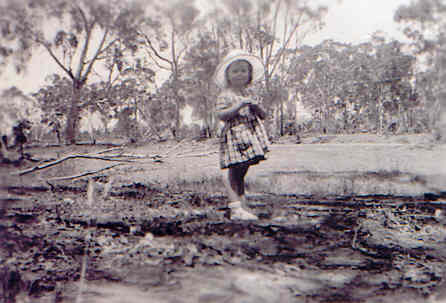
This particular tract was bordered on one side by a road running off the Leeuwin Road, which led south out of Nannup. Our road, Warren, branched off the Leeuwin Road at the top of Mt Leeuwin, and at the foot of Mt Leeuwin crossed Carlotta Brook which gave the district its name. It was reputed that Carlotta Brook was named after Carlotta Drake Brockman who was born on its’ banks. My mother, and we young ones, from Stuart on, went down to Nannup on a special government pass, and met my father down there. Dad having ridden a gelding called Digger, 800 miles down to Nannup from Thundelarra in the Murchison . We stayed a night or two at a guest house in Nannup - another widow, Mrs Callahan. Then out by truck into the July paradise (or so it seemed to my whe at-belt eyes ) of the South Western Australian bush. It seemed that everywhere was bright with leaf and bud, glistening with moisture and brilliant with bird-song. About 12 miles out, we turned off the road and went down a track to the deserted rail tracks left by the Kauri Timber Company when they left the operations in the area. Here there were abandoned huts, a number of them, which had housed the workers years before. The kitchen hut ( they were all sound ) had a good large stove. Wood was no problem. My father knew how to find water in the ground nearby, so we had a good soak, without having to go to the stream. These quarters were to serve us until we were allocated some undressed flooring and roofing iron for a house on our own 340 acre block next -door to the one where we were then living. Of course we had a ‘loo’ - it was a little shelter and a seat built over a large hole, which was regularly dressed with ashes and clean earth. There was peace all round, except for having to hunt the wild life for meat ( roo, etc), and trapping dingo to protect the live-stock we hoped soon to have. Once the house was floored, roofed and partly clad, we moved over there. The cladding was GREEN slabs of timber, the uprights were sawn timber, also the roof beams. The floor boards, after they were laid were dressed by a adze. There were six rooms I think. There was a huge living room with a No. 2 or 3 Metters Stove at one end, built into a mud-brick fireplace. The other end had a large open fireplace, also mud -brick built by my father of course. He built himself into it, and had to unbrick it somewhat to get out !There was a planned corridor down the centre of the house, but the interior walls were intended to be mud -brick and in seven years there was never time enough out from scratching a living to complete them. Of course our farming activities were controlled by bureaucrats and we were allowed £4.0.0 ($8.00)s a fortnight to live on until we could get on our feet. But, although we endured the bitter cold of winters, without proper clothes, and my mother turned her hand to every possible economy - even growing some vegetables for sale, all seemed to conspire against us. Rabbits ate the pasture. That drove the cows to eat the bracken, which flourished when the timber was laboriously cleared. The bracken packed up in the stomachs of the cows causing what is called ‘dry bible’. There were dead cows everywhere. Of course, from 1933 onwards, there was a classic bush school - it was just below the rise of Mt Leeuwin on the Leeuwin Road, so the final pinch of our (Margaret’s and my ) 2 ½ mile walk to school was up the hill. Often we would start an argument at the bo ttom, so we wouldn’t notice the climb. When it was very hot or very cold or very wet we would long for the rare cars that might give us a ride, or we would pretend we only had to go to a certain tree or bend in the road, in order to shorten the distance. By going along a certain track and an old timber line (railway) we could cut across the base line of the roads and come to McKitterick’s and Albert Oliver’s - dairy and orchard farmers. Here we could get a large cream can full of fruit quite cheaply. Heavy to carry. In all these travels and vicissitudes my mother managed to keep her decent furniture, glass -ware, silverware, crystal, books, piano, music - all the basic appurtenances of civilised British and Continental life which provided us as a family with an education of sorts in the absence of continuous schooling. 1934 saw my first year as a secondary school pupil. I obtained what was called an “entrance”. A year too old for a scholarship, the “entrance” exam provided a smaller money allowance, and I was expected to earn the rest of my expenses by helping the grass - widow who ran the boarding establishment with the aid of her widowed daughter and making morn ing and afternoon tea for the teachers. The bewildering arrangement became too much for me in my second year, especially as I wore charities cast offs and adult ones at that, and was too poor to go to a dentist or a doctor.
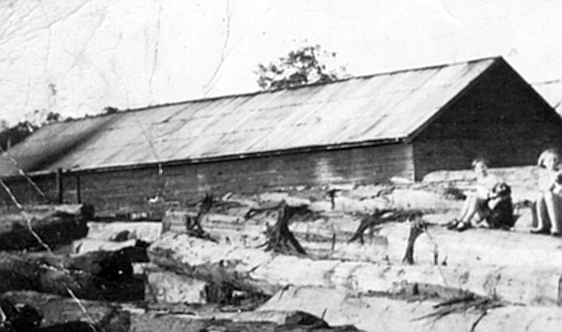
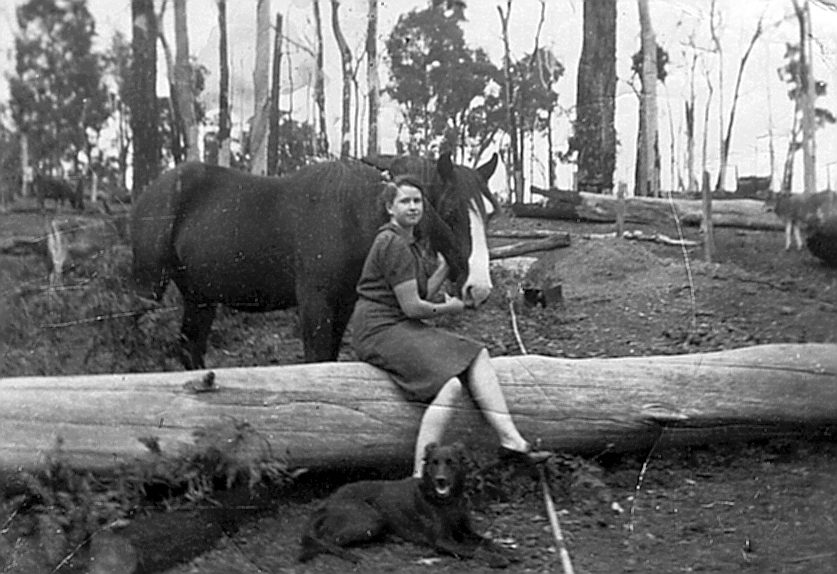
About two thirds of the way through the second year I ran away and went home. I don’t even remember how I got from Nannup out to Carlotta - by cream truck I suppose. I do remember the night we took the pigs home. By this time we had a spring cart, and two horses - old Digger, the gelding, who had been our only beast of burden for the first couple of years. The first “vehicle” he ever drew was a sled made of green timber and slabs - no wheels. This was to haul the odds and ends. Logs were “snigged” - hitched onto chain or rope and dragged into piles to be burned as clearing the ground progressed for pasture, crops and orchard of course. Digger was reluctant to haul anything for a start. He was a hard mouthed riding hack by upbringing and inclined to be somewhat skittish on the spring feed down South, so when he was required to draw a spring cart full of pigs, he objected by lying down between the shafts every little while. My brother drove the other horse and borrowed cart; I rode in the one which was somehow got home with it’s reluctant motive power under the guidance of a young man whose brother my sister Mary later married. The train came in at 8.40 p.m. the pigs were loa ded in another hour or so. Stuart followed us, and found me asleep in a chair, after he and Sax unloaded the animals, at daylight the next morning. It was one of the most exhausting nights of my life. 12 miles we went. There were wild horses running the area when we went down there, strays from the breeding programme to trade in remounts for the Indian Army. In spring the bush was a glory of flowers, and sweet with their warm scent. Tall bushes of purple hovea, golden wattle and pea- shaped flowers. Bushy saplings covered in scarlet Kennedya and delicate white clematis. And a profusion of orchids, Spider, Donkey, birds, hyacinth, enamel, lady, cowslip, all come readily to the mind’s eye. Trigger flowers, hibbertia, sundews, viscia hand leschanaultia, wild violet, wild olive creeper, swan river myrtle, bush rose, bottle brush, emu plum, zania palm -many more. 1935, 1936 - Mary married and her husband took work at the mill in the town. 1938 I went to work for a family in the town as general help in the house. Ten months later the father of the family suddenly died and the shock of being so close to death so unexpectedly, sent me back home again. By this time we were employing tw o youths from Fremantle. Of course my youngest sister and I became romantically involved with them.
War broke out. This was devastating. We had never envisioned it could happen again. Soon the two youths moved away again. Labour was suddenly unobtainable. Stuart, too, decided to join the services, and we last two girls, it was decided, would work in the city or some centre of activity. So it was the end of farming for us. Dad and Mother went back to Big Bell where Dad had already spent most of the last few years to try and help establish the farm financially. When he first went up there in the mid-thirties they lived in tents - Silver City ! I can remember mother going up there to stay with him for a period - more than once and asking her why her fore-arms were so wrinkled when she came back. I was yet to experience the blight of the Murchison sun ! 1940, 1941 - after a couple of attempts at settling for life as a suburban housemaid I decided to go to Big Bell to be with my mother and father. Arrived there in September 1940, and after a while got a job as pantrymaid and then waitress at the mine mess.
Isobel.
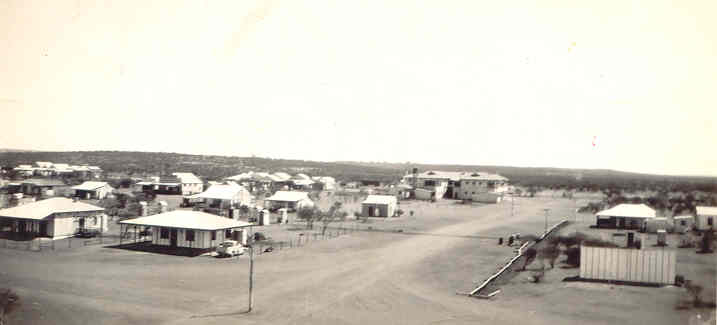
Met my husband to be there of course. He was on the Air Force Reserve, so when he was called for duty, we left together and were married in August 1941. All of we girls’ spouses were in the forces with the exception of Constance - She married twice, but was at that time between husbands I think. She had one child, a boy, but she was temperamentally unsuited for marriage and eventually became a nurse. We used to have get togethers at the little school and each one was expected to entertain the rest. My father would sing and play the accordion. Others gave the settlement away before things reached that pass with them, but in retrospect, I know it was my mother’s strength that kept us together as long as world conditions would allow it. One of our neighbours was a Mrs. Hall - she and her husband were childless - I think. I remember her visiting us and going off to sleep as she sat at the table. This happened more than once, and we asked Winnie why ? She said ‘She has the sleepy sickness.’ ‘You mean the sleeping sickness - mum, there are no tse -tse flies here !’ We thought this very amusing. ‘No,’ she quietly rebuked us, ‘ Sleepy sickness, there was a world- wave of it after the World War.’ She would not say World War 1 because remember, this was 1932. Now , after many years, information came out about a ‘ sleepy sickness ‘ that swept the world in the wake of World War 1 and the Spanish flu, and use of, and reasonable success with, the drug L-Dopa on those old patients still alive and suffering it’s sometimes drastic effects. The Nelson family lived not far away - about a mile closer to the school, on the same road. They had eight children. He was a veteran of World War One, with horrifying tales to tell of that conflict, which he entered at the age of sixteen. After a few years of exertion on his block, his health gave away completely and he died. This, of course, meant the break -up of his family as soon as war broke out again. Cousins of the Nelsons, the Hendersons, also attempted farming in the area for a time. These familie s were generally timber workers, who were most unsuitably being persuaded that with bureaucratic supervision, they could become mixed farmers. In almost every case, the result was failure. Of course the two McKitterick families, the ones who were there when we went there, had settled there long before. In fact until, I think about 1937, one couple had not been to the city since there was gas - lighting in Perth. One of their descendants has been the Licensee of a Toodyay hotel. The war years were like everybody else’s - happily for me, my spouse came through intact. Big Bell after that was boring - then the Snowy River .
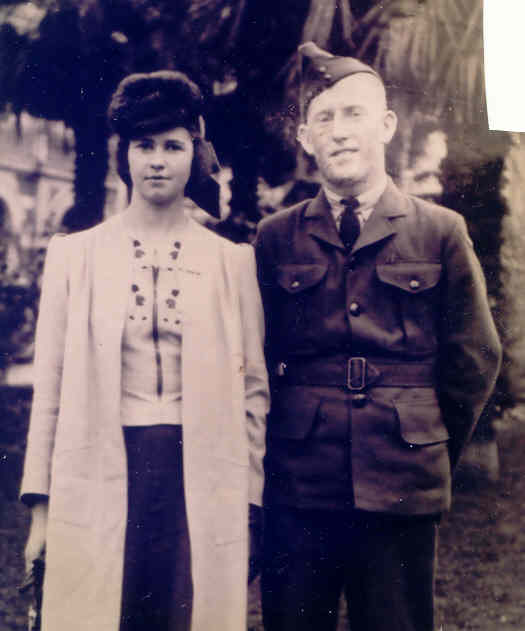
Isobel wore this outfit for her wedding.
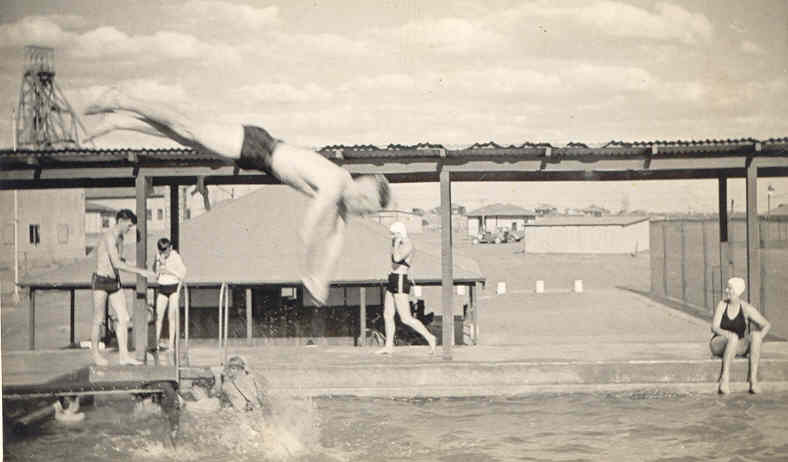
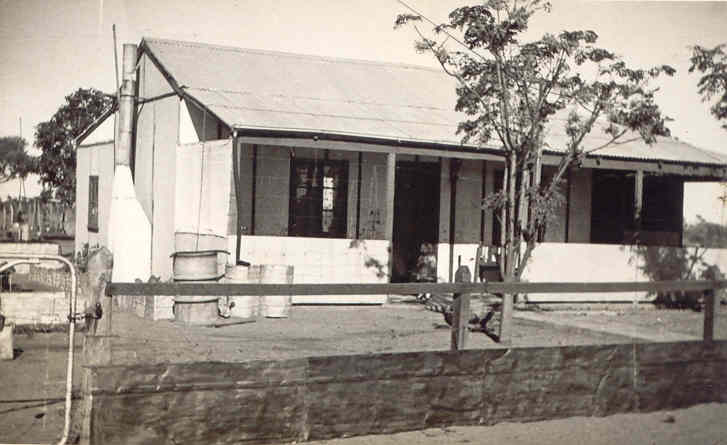
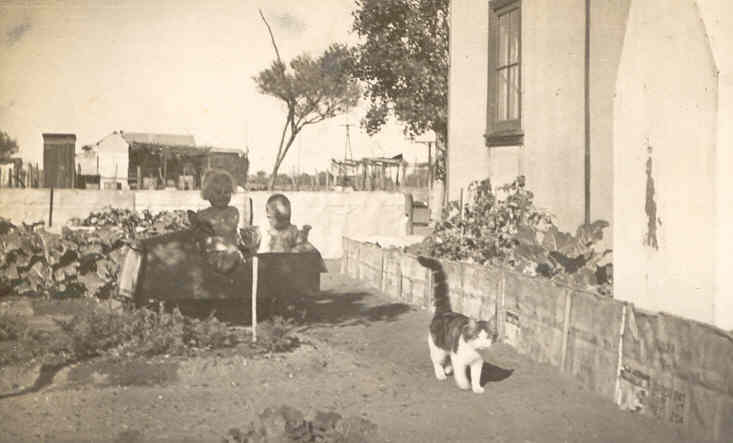
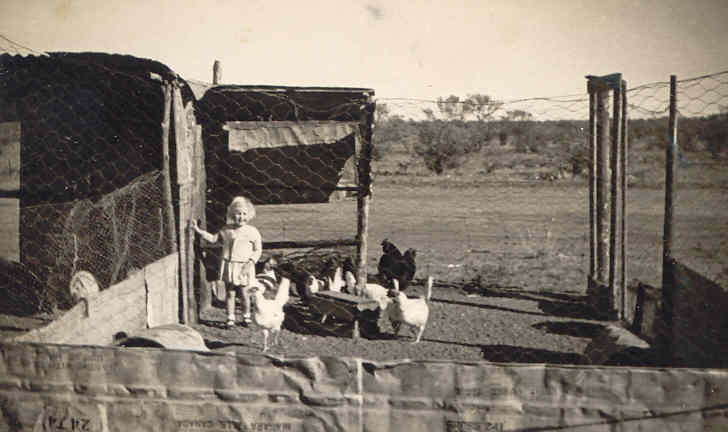
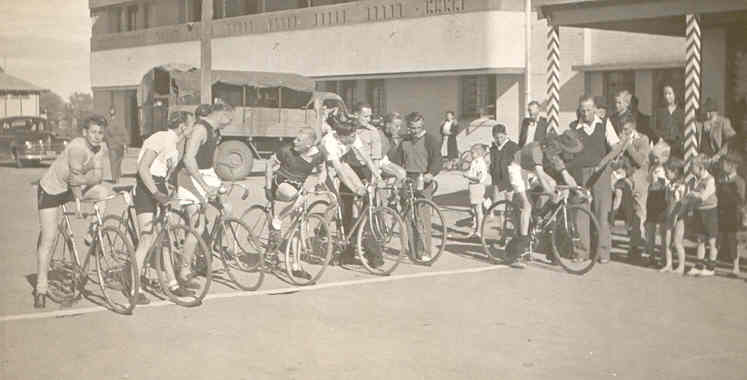
c1948
Blue is 4th from left.
He came 3rd in the race.
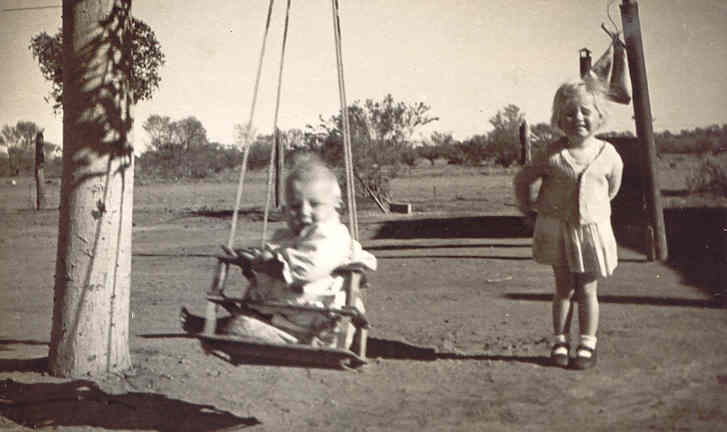
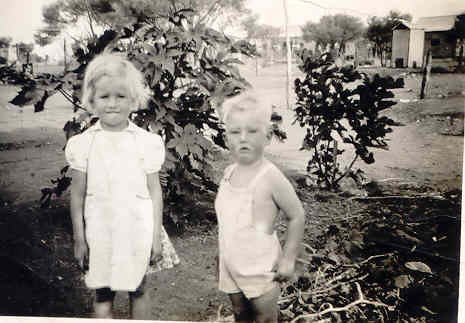
247
William (Blue) James Nancarrow
William (Blue) James Nancarrow born 26th March, 1918 in Bagot Road, Subiaco, came from a large family with connections to the Ridley, Clarkson, Sievwright, Booy, Amos, and Rodan families. At the time of Blue’s birth his father was employed by the W.A.Government Railways as the Porter at the Day Dawn Railway Station. Blue enlisted in the Reserves in January 1941 with Jim Price from Coodardy Station, Cue. Their Photos are hung in the Cue Shire Office with others who enlisted from the Shire. Blue was called up for service on 8th July, 1941, and did his “rookies “ at Pearce and then went on to service at Sale, Vic. in O.U.T. Unit and Bairnsdale Vic. before doing a five month course at Adelaide - School of Mines in North Terrace and Ascotvale Tech. After this course he was posted to Geraldton for 2 years followed by a year at Pearce in the Lathes Workshop. After de-mobbing he returned to Big Bell to do a further 12 months training which qualified him for a civilian ticket as a Qualified Turner. Blue met Isobel while she was working in the Confectionary shop at Big Bell. Blue is fond of telling the story of Isobel taking him home to meet the family and hearing Jim’s voice saying loudly, “I’d know that bloody voice anywhere!” Blue spent from 1938 until 1941 at Big Bell and returned on 1 st January, 1946 and didn’t leave until April 1954 by which time he was in charge of the Mill Fitting Crew. Blue competed in cycling races until 1950 and has photographs of competitors and events including the ‘Flying Arrow 25 Miler’ which was sponsored by a Subiaco Bike Shop and was the most notable race held in Big Bell. Another race he has fond memories and photographs of is the “Menzies to Kalgoorlie”. He and his mates loaded onto a ute and drove across country from Cue to Menzies. They followed the Station fences to find their way and arrived safely. After being entertained at a ball the night before the race, they then raced and that night were entertained at one of the Kalgoorlie Hotels with a dinner. Blue still has the Dinner program signed by all the cyclists including the top cyclists from the Eastern States who came over for that event. From Big Bell, Blue went to Cumming Smiths in Bassendean and from there in 1955 to the Snowy Mountains Scheme as a Supervisor until 1960 when the family returned to W.A. and Blue went to work for Manx Bricks and then for Vickers Hoskins (now ANI Perkins) for 20 years as the Machine Shop Foreman. At one period there were three Nancarrow brothers shift bosses working on the Snowy River Scheme. While with Vickers, Blue went around Australia installing machines. Some sites are listed below: Kwinana Refinery Kick off machinery at A.I.S. Ball mill at paint factory at Bunbury. Pellitiser factory at Dampier. Built bucket wheel reclaimers and stackers at Pt Hedland and Mt Newman.(Spent 5 months at Newman) Ship loader at Koolan Island Re-installed a winder at Mt Charlotte Mine, Kalgoorlie. Crusher at Morowa - Koolanooka Iron Ore.
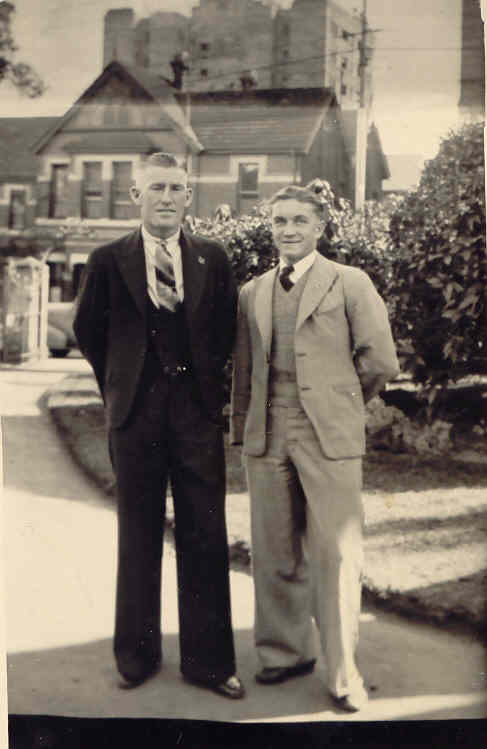
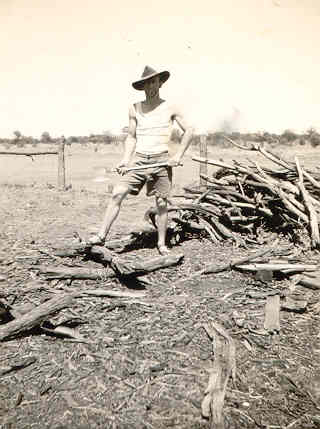
Winders - Widgiemooltha 2 Trommel Rotary kilns at Cockburn Cement at Kwinana. Built and installed an Illumina factory at Cockburn Cement, Kwinana. Built first Tyre making machine in W.A. Built and installed 100 ton cranes for Whyalla S.A. Remetalled the main bearings and pitman for the crusher at Ravensthorpe mine. Installed pellitising plant at Karratha.
Isobel and Blue bought their home in Bayswater in 1954 when they first left Big Bell and it has remained their home base all these years, although long since Richard and Sandra’s home. Blue retired in 1983 but since 1985 when he went to help Robin McKay in Toodyay and discovered another who had a love for engines, he has worked on Vintage Stationary Engines. Together, Blue and Robin have roamed W.A. from one end to another picking up discarded old engines and restoring them, then doing the return journey to show them at Country Shows and Exhibitions all over the state. A true labour of love.
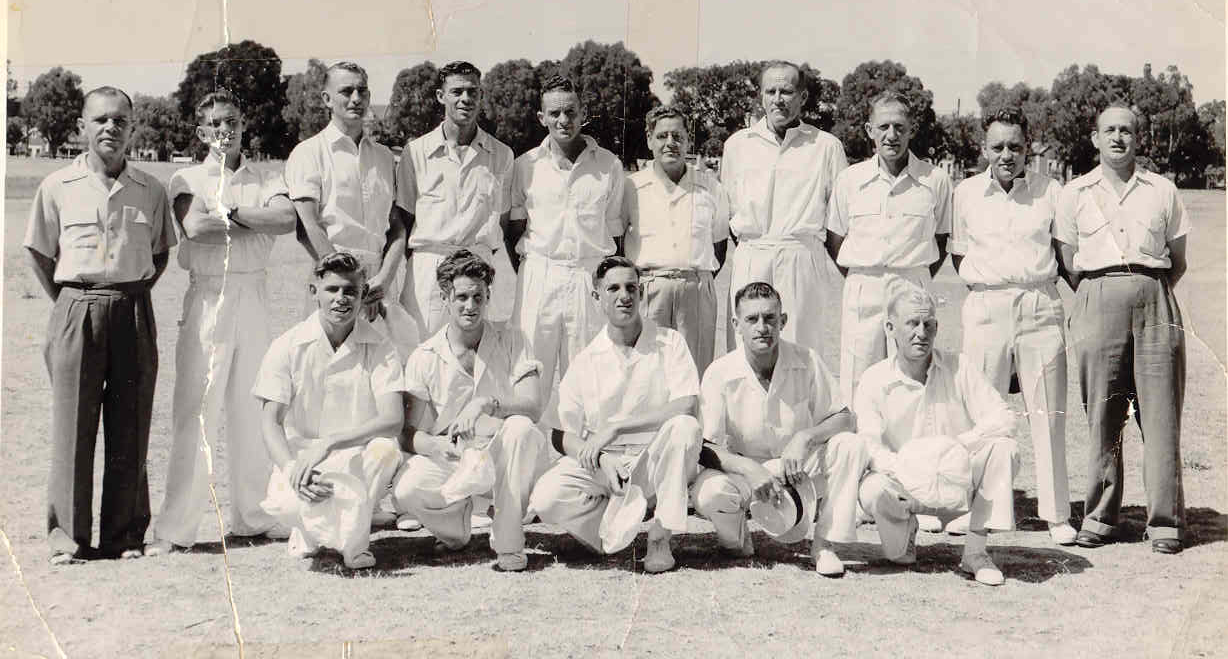
Blue Nancarrow is on the right in the front row.
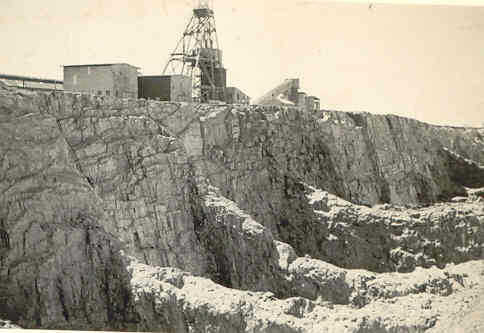
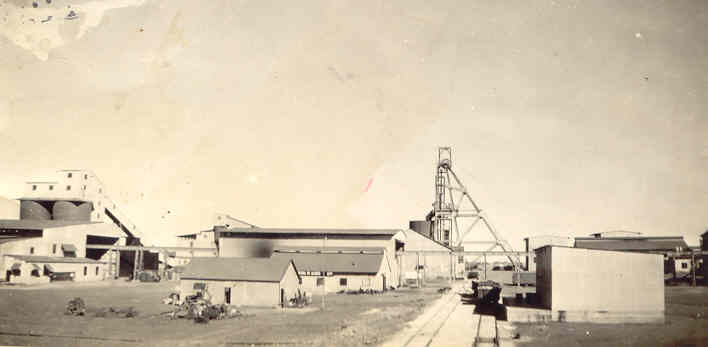
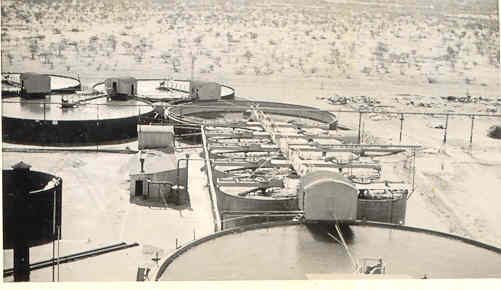
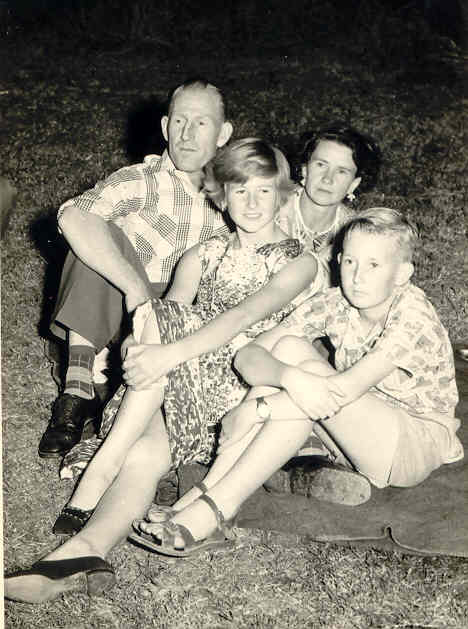
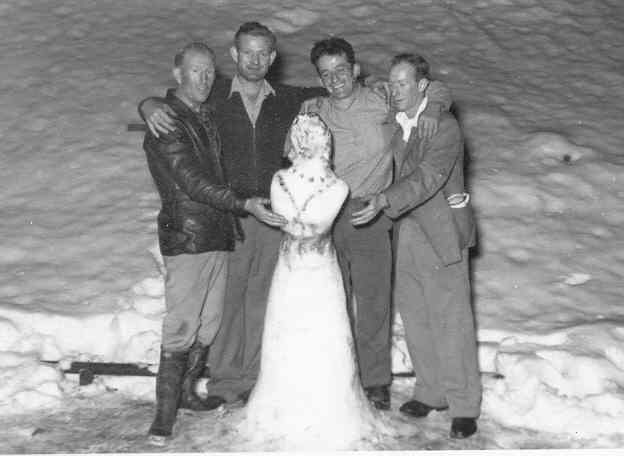
Blue on left, his brother Jack on right.
Before they started the stockpile.
Isobel Ann born 1st of January 1921 Maylands.
Married William (Blue) James Nancarrow born 26th March, 1918 at Subiaco.
On : 8th August, 1941 at St Georges Cathedral, St Georges Tce, Perth..
Children: Vivian Lesley born on 26/12/1943 at Geraldton
Richard Maxwell born on 11/12/1946 at Big Bell.
Vivian Lesley Married: Douglas Arthur Hope on 19th July, 1963 at Perth Registry Office. Children: Warren Douglas born on 3rd May, 1964 at K.E.M.H. Subiaco. Colin James born on 29th September, 1965 at K.E.M.H. Subiaco. Annette Patricia born on 26th August, 1967 at K.E.M.H. Subiaco.
Re-married: Robin (Bob) Purves Dewar on 19th July, 1985. Born Hydrabad, India. Died : 8th June, 2002 Warren Douglas Married: Lisa Skrypichayko born 8th March 1966 at Edmonton, Alberta, Canada. On : 22nd July, 1995 at Kalgoorlie, Colin James Married: Michelle Holt on June, 1985 Children: Krystal Felicity born on 25th November, 1985 Lyndon James born on 3rd February, 1987 Re-married: Pauline Duhart on 12th August, 1995 at Gretna Green, Scotland. Annette Patricia Married: Alistair Bennett (b 31st December, 1960) on 10th August, 1986 Children : Jade born on 12th February, 1985 Robert born on 26th February, 1987 Re-married: Gordon Butchart 3rd January, 1998 Died : 21st October, 2001 Richard Married: Sandra Joy Thoms on 28th December, 1968. Born 2nd April, 1949 at Subiaco Children: Sean Richard 26th January, 1970 at K.E.M.H. Subiaco.W.A. Anna Louise 9th June, 1972 at K.E.M.H. Subiaco.W.A. Neil James 4th August, 1978 at K.E.M.H. Subiaco.W.A. Anna Louise Children : Brooke Louise born on 27th August, 1989 at Osborne Park Hospital Married: Paul Van Garstern on 21st April, 2001 in Bali. Children : Tanika – Rose born 10th January 2003 , Adelaide.
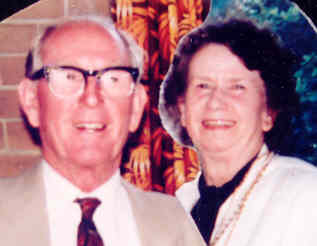
They have now been married 62 years.
253
Margaret Lillian Falkenbach
Margaret Lillian Falkenbach ( nee Beaton – Hill) I was born and named Margaret Lillian Beaton at Cottesloe, Perth on the 27th August, 1923, the youngest of six children, to Winifred and James Beaton. I guess at the time no-one knew I would be the youngest, but I have always averred that Mum took one look and said, “enough is enough in anyone’s language !” Big brother Ernie and my sister Elsie were half brother and sister and Mum lost a child, Leslie, in Scotland before she made her tragic migration to Australia. Tragic because, her first husband Sidney Farrell died about four months after they got here, during what was a typhoid epidemic in W.A. at that time. A family joke has always been that when she and the two little ones moved to the wheatbelt property Sid had bought, Dad (Jim Beaton) came looking for some horses that were lost and met Mum who was living in tents at Bruce Rock. We always said we have never known if he found the horses, but he found Mum, and look at the results. My earliest recollections are vague, disconnected, ephemeral, the long cylindrical buds of californian poppies, gently pulling the green sheath and releasing the glorious golden silken petals (what mum thought of this activity I really don’t know). Granite boulders with people sitting around, my sisters and brothers playing, me playing of course with Began, my playmate (a boy), who no-one else could see. Calling the children home from school, because I wanted someone to play with. Being dressed for a fancy dress ball, as a powder puff I think, a young woman in a party dress with “Swan’s Down” round the bottom, and Dad killing a snake and the blood getting on her dress ! I’m sure these early misty memories combine both Bruce Rock and Kellerberrin and I only remember Cunderdin as a place where I found the most magical place that had no vegetation except some flat growing little primeval plants that when closely examined were a beautiful red and green, very peculiar Looking back I realise it was likely to have been a salt lake. But I’ve never forgotten those strange exotic little plants. I suppose my first cohesive memories are Southern Cross, I don’t remember going there, I just remember being there, not much of the town itself, except crying bitterly when I wasn’t allowed to go and see Kingsford Smith and his plane with all the other kid s because I was too little, and protesting equally bitterly when on demanding a “drink of water” Elsie gave me a little bit in a cup and said I couldn’t have a full cup, because water was short, I think I spat the dummy and wouldn’t drink any ! Charming child ! Why do kids always want drinks of water ? Mary used to say if she met Judy in the middle of London, she would say “Aunty Mary, Auntie Mary, I wanna’ drink of water.” - but there “Aunty Mary” always spelled succour to everybody. Yes, well Southern Cross, a lady friend of Mums (Mrs Wildash ?) when she visited and I came in from playing I was told to say “How are you Mrs Wildash?” , “old dirty legs” , the last an aside at mum, however being either a dutiful child or a dumb one, I repeated the lot quite, I thought, politely. To this day I’m accused of being too literal -ah well ! I remember Mary’s beautiful orange dress with scalloped edges, and someone poking me (an adult of course) in the pot tummy and saying “so what’s this ?” I looked down at my plum stained “pinny” and answered “fruit stains”. Definitely a bright child - ! On Ernie’s farm I loved the wheat paddocks, I used to run and play among the wheat and revel in wonder and joy at the brilliant red poppies that appeared among the rows of wheat, they always seemed the miracles that just suddenly were THERE among the rows of wheat, nothing else to me anyway, but the tall waving wheat and the sudden brilliance of a poppy flower. We went walking to see an eagle’s nest, I think I was taken under protest but mum insisted so the others were forced to take me, we walked thro’ paddocks of stubble over what seemed to me to be endless miles, and the stubble of wheat just reached my calves and of course they became very sore, and I had to be carried, those kids must have hated me, however I saw the eagle’s nest, to me it was massive, over powering, majestic, awesome - I will never forget it, those kids did me a great service, personally I’d have left me to take my chances, altho’ mum might have raised the odd eyebrow if one of her brood had not appeared at the tea table, would have been one less to feed anyway ! We had a little boy stay with us at one time, God knows why, I guess a sick mum or whatever, his name was Ronnie, and in due course we kids were taking him home, the poor little kid was only tiny and at one stage sat down and announced, “Wonnie’s finished walkin’ ” the collected company had news for “Wonnie” but I often think of the poor little bugger. We used to play in the shed, I think a hay shed, and there was a particular wild cow, a “baldy cow” -no, I don’t know either ! She bailed us up in that shed for yonks, we all made dash at one stage when she gave up and went to the patch of bush near the road up closer to Ern and Nell’s house. We used to roam the bush and Stuart would shoot? or slingshot? A 28 parrot and we would boil it and eat it ! Don’t ask me how, you know the old recipe, put the parrot and the stone in the billy, boil till the stone is soft, throw out the parrot and eat the stone. There was a mother cat and some other cat who gave birth about the same time, and whose progeny would suckle either mother, regardless of species. Would all the world be so, - I don’t mean I ever had a burning desire to suckle another specie, one does speak metaphorically of course! Southern Cross to Carlotta, well ! Nannup - the next day to Carlotta, we stayed the night at Mrs Higgins boarding house, I couldn’t eat my tea, and I had been so intimidated by my siblings about how my spoilt days would be over when “Dad got hold of me” that altho’ I eyed off the big cake in the middle of the table greedily when Dad asked me if I wanted some I said “No, Thank you,” very timidly. I discovered that my father was a loving and patient parent, with good sense of humour and not the ogre who was going to beat me up as I’d been promised after all.
257
Mind you, his sense of humour didn’t extend to allowing me to have my breakfast before I fed the chooks. When I was asked I was told - “No, they lay eggs. You don’t !” and it probably wouldn’t have been wise to have entered into a biological discussion about it, even had I known at the time. Carlotta was so beautiful, a fairy land, a place where dreams are made, the long spears of fragrant black boy flowers, the brilliant red of zamia palm nuts, not often found but to Isobel and me, a further part of the magic as we roamed at will thro’ what must have been one of the last, last places of long ago Gondwanaland. Boronia, the scent leading us on and on until we had penetrated the depth of the swamp and smelled and picked our fill. The glorious scarlet swathes of kennedia growing over every tree, while the delicate white clematis hovered and entwined beside and among the fiery blooms, and the royal purple bush hovea and the golden wonder of the wattle all combined to make that place the wonder and the glory of my childhood. The red-tailed cockatoos flying inland - “there’s going to be a storm”. The eerie weird, lonel y, plaintive howl of dingoes as we sat around the fire and drank our cocoa - coffee and listened in awe to “the call of the wild.” Dad has written that story but no one has written the sequel - the story of our dog Tripe, a black kelpie who always accompanied Isobel and me on our bush roaming, Dad’s story ends tragically when Tripe listened to the “call of the wild” and left us when h e went to God knows what fate. So we mourned him we tortured ourselves with thoughts of his tragic end, poor unknowing puppy dog going so happily to his dreadful fate, we so mourned and said good bye to our dearly loved companion, not least Isobel and I, missing our friend who shared so many adventures. We were all sitting, reading of course, around the big black boy fire about six weeks after Tripe had left us for the unknown, when suddenly we heard a bark coming from the vicinity of the “40 acre paddock” and we all looked up and said , I think as one - “That’s Tripe!” Stuart had a special whistle - his own not manufactured - with which he always called Tripe and he went outside and whistled and behold in ran a beautiful, very healthy and overjoyed Tripe, he wagged, and he panted and he licked and he gr inned and spoke to us all, pretty well saying, “Well, how are you all, I’ve had a wonderful time, but gee, I’m glad to be back, sorry about not writing, but got too busy.” We cried, we laughed, we hugged, we petted but above all we wondered. But Tripe did n’t answer questions. Some two weeks later, Isobel and I went on one of our bush walks, over to “The Gully” to pick boronia, accompanied as always by Tripe, who had settled quite happily back into domesticity, we penetrated the thick, almost impenetrable swamp, lured on by the strong haunting scent of the boronia, Tripe ran ahead, we pushing steadily on, suddenly the jungle like growth in front of us parted amid a great bustle of crashing leaves and branches and Tripe stood before us, tail wagging vigorously and flashing a huge grin. Behind stood a beautiful pure bred dingo bitch and six equally beautiful little black pups! Half kelpie of course. The dingo didn’t stay. She yelped to her family, and I guess, said something to Tripe about the company he kept, and disappeared forever back to the wild. Tripe never went away again, but never before or since, have I seen such a look of intense pride and pleasure as Tripe wore that day, I’m sure he hoped he could bring us all together and have both his wonderful worlds, and I wish he could have too. Of course by this time, both Isobel and I were attending Carlotta School, three miles from our place, our hand hewn slab (Jarrah) house that Dad and Stuart built, with Digger’s (the old horse Dad rode from Thundelarra Station) assistance with some contraption called a “tree puller” pulling down the trees. The house had an iron roof, windows with no glass, indoor walls of bag or hessian and rather grandiosely rejoiced in the name “Barloweerie” which Dad said means “black topped hill”. Aboriginal of course - Isobel and I had correspondence school previous to this , taught either by Mum or some older sister, principally from my memory, Mary. Altho’ she swears she couldn’t have taught us anything, as usual. Of course she did, but doesn’t realise her own capacity. Our first teacher Mr Rintoul was quite a young man with a wife, Cecily, and I think they were newly married. Mr Rintoul thought Isobel was the only child in the school who deserved his attention, and she was of course, an intelligent and quite gifted girl. However, his preoccupation resulted in an utter contempt of me, one day all the kids - 30 of us - got sick and were laid out on the Schoolmasters front verandah - gastric tummies, later put down to a dead possum in the water tank - as each child rallied th ey were sent on their way home, till only Issy and I were left. Mr Rintoul then summoned the local agricultural Bank Inspector and asked him to drive us home, which he duly did. On arrival at school next day, as we entered the room Mr Rintoul asked how we were, I politely replied we were “Quite O.K. thank you Mr Rintoul,” he glanced at me momentarily and announced, “It was Isobel I was worried about Margaret, not you.” I retreated to my seat, having been effectively been put in my place. When I started school at Carlotta I was quite sick, and became a great deal sicker until I stayed in bed for a long time, I lost my voice (I did however find it again), and couldn’t get around at all, I think I must have been very sick indeed. It was full summer, and Mary used to walk three miles each way, every day, and carry buckets of fruit and milk for me. I think I stayed ill for about 6 - 8 weeks, I’m sure now it was malnutrition, but there is no doubt that Mary saved my life. I left Carlotta School when I was thirteen, in Grade 6. I just got sick of it. Isobel had gone to Bunbury High School, on some scholarship, but it was very hard on her, as there was literally no money to clothe or support her, and with
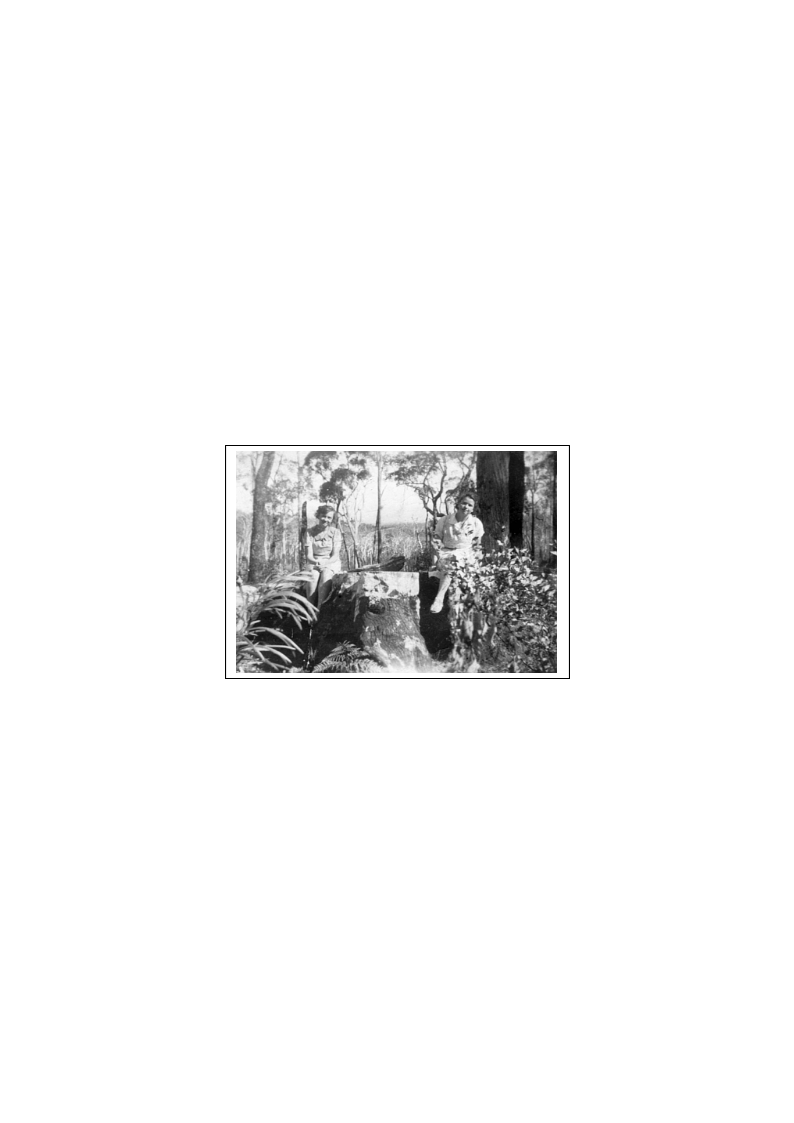
258
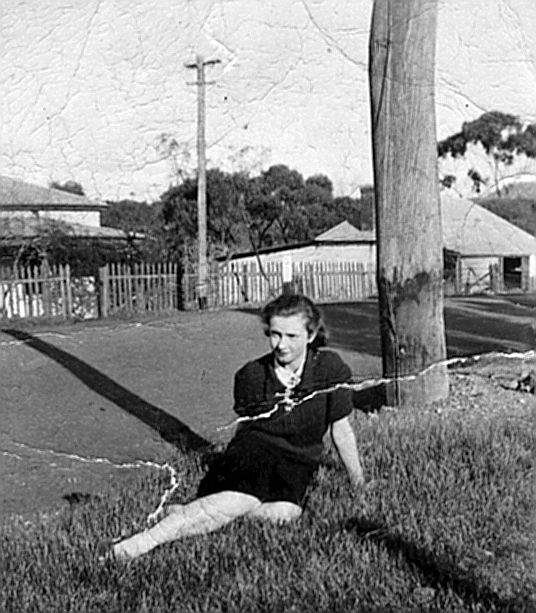
hindsight, it was almost cruel to send her, but Mr Rintoul persuaded Mum and Dad to send her, with shoes soled with old tyres and no pocket money and no clothes. I can imagine now how awful it must have been for her. I left Carlotta in 1940 or 41 - September I’m sure, Stuart was going to Perth (on business) God knows what, and Issy was going to get a job of some sort. I implored Mum and Dad to let me go too and stay with Connie for a week and was finally allowed to go. I knew I wasn’t coming back and I think Mum and Dad knew too, but I thought I’d got my way, and off I went. I got a job nursing in an “old people’s home”. At 17 I was doing 12 hour night shifts alone, the “matron” and her husband were both alcoholics and I nursed ? stayed with two people who died at night. One, I know unnecessarily, not even a very old person, who was supposedly recovering from surgery. Every time I called matron she told me to give her more medication, by morning the patient was dead. I packed my gear and told them I was going home, but I had got a job as a waitress/ housemaid at a pub in the Toodyay Pub. It was run by Miss Ting and her brother Gordon. We used to go to dances in Northam and surrounding places but I got fed up and went back to Perth. I took a job looking after a little girl in 8th Avenue, Maylands. Strangely enough Mary was living there when I returned to Perth in 1945. Mary’s husband Viv Bickford, had gone to work at Big Bell and I decided to go with her to stay with Mum and Dad. Stuart had joined the Army, transferred to Air Force just in time to miss out being sent to Singapore. Everyone had left Carlotta and Dad was back working at Big Bell mine. Marion was living in a small holiday home of someone’s at Applecross, which in those days was a way out suburb. Loads of bush, a few houses and pub are all I remember and a very limited bus service. Mary and her two little kids were there too, Allan and Joyce; Marion had her two little ones, Liz and Ann; so there we were. I had left Baxters and we all stayed there together. I have very fond memories of those days, also some very funny ones. You couldn’t buy Lactogen then (wartime) and as Joyce was “on” Lactogen I seem to remember that we all spent all our time in the city haunting chemist shops for Lactogen. Joyce was NOT, I repeat NOT, a quiet baby. I think we all would have just about given our eye teeth for an unlimited supply of Lactogen, my then boyfriend Doug Carter was a frequent visitor and he got a good introduction into searching for Lactogen too. He had a good sense of humour and we “girls” had a habit of saying to each other in mock sarcasm (because we were brought up not to mention bodily functions in public) when we were going outside to the “dunny” - “I’m just going to wash my hands!” One night Doug looked up - got up and said “Excuse me, I’m just going to rinse my feet!” At one stage Marion, Mary and I were all sleeping in a double bed on the verandah and I got so fed up with them fighting I got up and got in the middle to separate them. And it was not unusual to get out and get in the other side to find some room. So - to Big Bell with Mary and the little ones. The famous trip which gave rise to the family joke, after we’d been travelling what seemed forever (with two babies), at one stop Mary said, “Where are we ?” I got up and looked out and said, “Wagga - Wagga .” Mary replied, “ But I thought that was in the Eastern states.” I replied. “It probably is.” I loved Big Bell, worked at the local pub as waitress, lived with Mum and Dad, but just after the Japs attacked Pearl Harbour I went back to Perth, just itchy feet as always I spose - to the George Hotel. The old George Hotel as a “relief maid” meaning I “relieved” each person for their day off. Not the chefs of course, most days were actually in the dining room, very old world, well it was 1942 and we hadn’t entered the nuclear age. We wore black uniforms, little white aprons, white caps, black lisle stockings, black shoes (but they were very high heeled). We stood at the end of the dining room with folded serviettes over our arms, and approached our guests quickly but quietly and presented the menu as we said “Good evening “ or whatever time would be appropriate, and answered their every need, to be seen but not heard was the general idea, those were the days when guests stayed at places like that, farmers, school principals, lawyers, Dr’s, retired people, all very much almost the old Duchess of Duke St stuff. We “lived in” and I really liked the job. It was there I met my very dear friend, Shirley Collins. We roomed together (we got things organised so we could), and after some time I told an Air Force Sqadron Leader , who was one of the guests, what I was going to do. He said I must join the Air Force (of course) so Shirley and I sat for the exams. I passed. They told Shirley to try again, she did and duly passed. So we presented ourselves at Perth Railway Station at a given time and off we went. I had chosen to be a wireless telegraphist (Morse Code Operator). We were sent to the Showgrounds in Melbourne and began a six month training school to learn to operate a morse key and learn the signals. A lot of it code, there were 99 X signal where A certain signal denoted a clear message. I don’t remember any of them except typically, among a mob
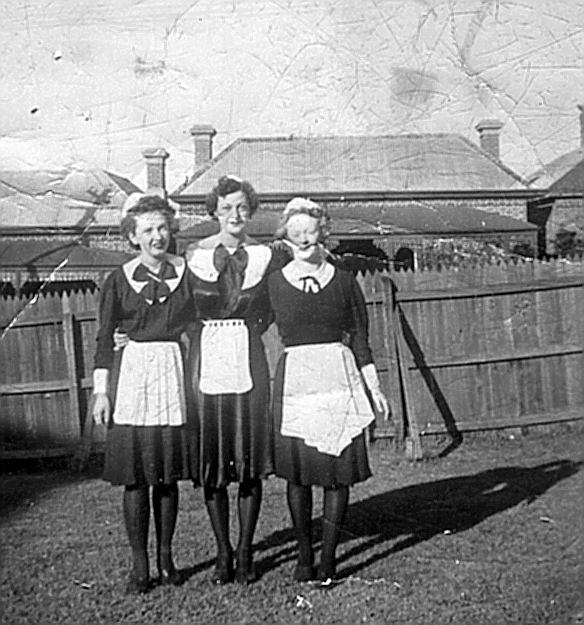
259
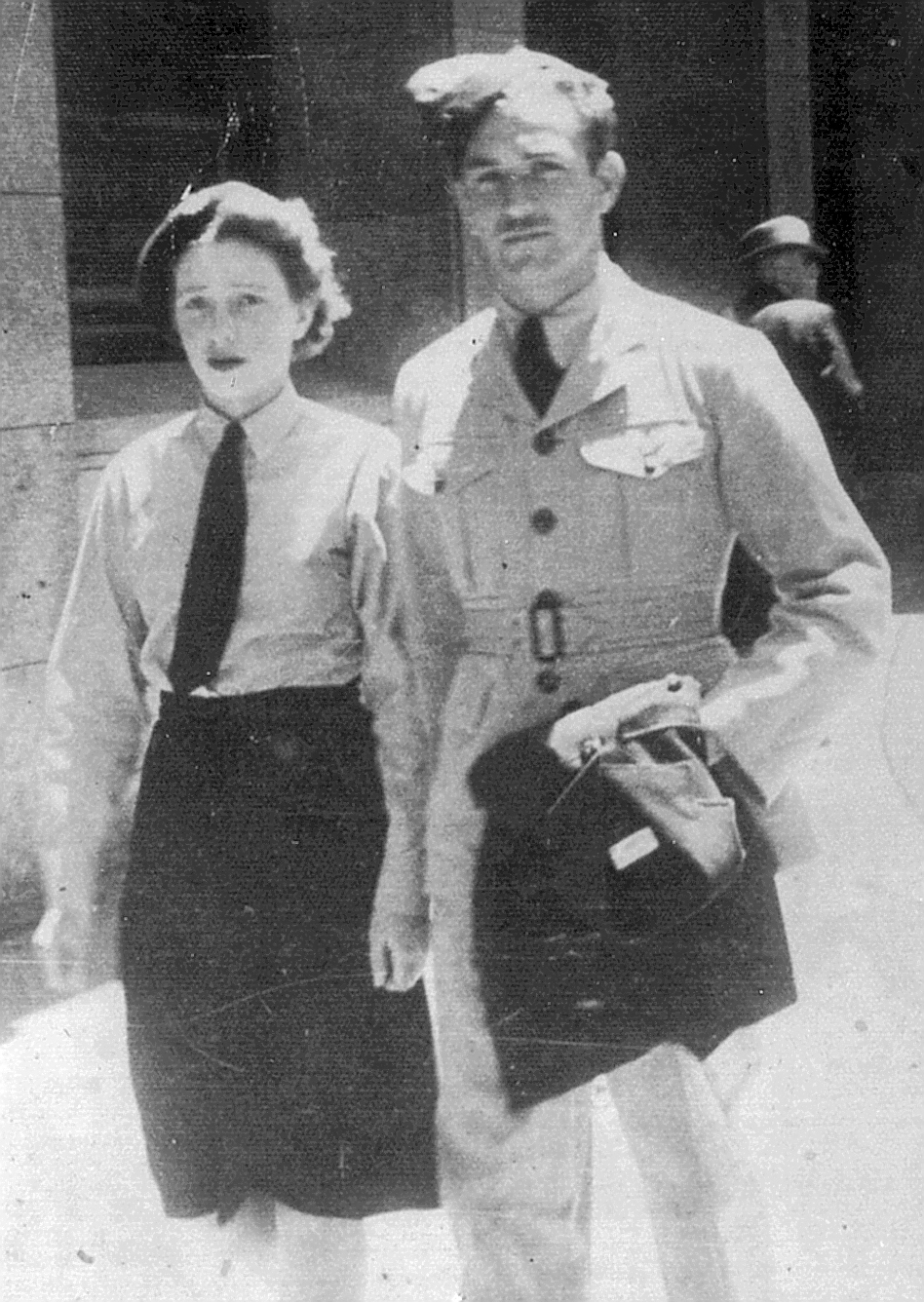
of young people, X 100 meant something unrepeatable. When you got fed up or someone was annoying you, you sent X 100 - “ - off !” and stopped sending. On the train, or rather outside the troop train before boarding our attention was attracted to a good looking young airman who was being yelled at by the Corporal in charge to “take your hands out of your pockets Hill !” and that was my first sight of Jim Hill. After we took off, Jim came and sat in our carriage and started talking and altho’ there was a strict policy of segregation on the train, nobody took any notice, after all there were six girls on that train and about 300 guys. I don’t know what hope they thought they had. The trip was fun really, but hot (late October) and one of my vivid memories is sitting in the middle of the Nullabor eating bully beef and biscuits and surrounded by dead rabbits. Anyway by the time we arrived in Melbourne, Jim and I were almost an item, but not quite. He in as a cook, and worked in the mess where we ate, every meal time after the first furore died down, Jim would appear at the kitchen door, in his “whites” - which he knew suited him very well - and all the girls ar ound me - there were about 500 in all, would gasp “There’s that good looking cook !” After he located me, he would wave, then retire to the nether regions again, having realised he’d impressed the whole mess! We decided to get married and sent the papers home to Mum and Dad for permission, which they signed, and oral history has it that Dad said, "Well thank God it's not a goddamn Yank, anyway!” Duly married on 3 rd April, 1943 at Christ Church, South Yarra, quite an up market Parish but our camp Padre was Russell Clark – Manning Clark’s brother - a really great bloke and extraordinarily good looking - wish I’d swapped - ! We had rented a terrace house in Carlton, occupied by an old lady and her little dog. The door opened directly on to Swanston St, opposite the Melbourne University. We were strictly forbidden to ever leave the front door open, as the little dog would get out into the very busy street. Some one did one day and puppy dog got out. He was rescued but we were kicked out on the spot and went to my friend Shirley’s and Danny (she had also married and left the W.A.A.F) I forgot to mention that some two weeks after my marriage I went on night leave - till midnight - from camp to our little house and when I was getting ready to return to camp Jim sat on me and wouldn’t let me go back. You see in those days we girls hadn’t taken an oath, but only signed on for the duration. It wasn’t binding, and at this time a lot of girls were applying for discharge. As they weren’t at all happy I didn’t go back but put in for a compassionate discharge. I immediately had M.P’s descending on me and telling me in no uncommon terms that I mus t return to my unit. I pointed out they had no hold on me and they reluctantly departed assuring me “I would hear more.” But they knew I was right of course. After “our kick out” we rented rooms from an old lady in Ascot Vale, as also did Shirley and Danny, the boys were of course still at Ascot Vale Showground. By this time Shirley and I were both pregnant, Danny was posted to Sydney and Shirley went too. We found a house also in Ascot Vale, and I was working in a factory in North Melbourne making gas caps for the forces. I used to just make the tram ride in time to get off and vomit - Melbourne, mid-winter, factory, concrete floors and walls and the forelady had a concrete heart, God I hated it. And God help the blokes who got the result of my industrial machine sewing, we weren’t allowed to run over any hems or edges because the gas would get thro’, they took me off that and put me on a button machine. I broke an average of 30 buttons and needle s a day, so they put me to pinning khaki sacks together. I remember how I loved the little gold pins, the only bright, pretty things around me. I forgot to tell how I got that job. Everywhere I went (man power offices) they found out about my “desertion” from the W.A.A.F. and in horror told me to report to my unit “immediately”. I got totally fed up with this and went out to the orderly room at Ascot Vale and protested volubly that the country was crying out for man power and here was I desperately seeking work and couldn’t get it. The whole room was extremely amused at my predicament, but gave me a written thing -ummy that proclaimed I could be employed. I left no longer ‘persona non gratia’. Shirley had her baby, Graeme, in Royal Women’s Hospital in November, and Glenn Stuart Hill was born 9a.m. also at the Royal Women’s Hospital on the 4th of January, 1944, but only just. Jim and I were down the street on Sunday night and I had eaten somewhat more than my fill of cherries, about 10p.m. that night I started to get some rather bad pains and Jim told me bluntly that I had eaten too many cherries. I accepted this quite happily - I told you I was dumb. As the night progressed the pain grew worse - and worse - AND WORSE - !!!! At about 8 a.m. the next morning I remembered that I had heard our land lady come in the night before and I screamed to Jim “Get Flora.” Flora came to the door, screamed on her part, “Get a taxi, quick she’s having the baby!” The taxi driver looked somewhat perturbed and I’ll bet the distance between Ascot Vale and the Women’s Hospital has never been covered so quickly before or since. Someone shoved me in a wheelchair and had the nerve to ask how many children I had had before ! Glenn was born ten minutes later - mother and child both quite well - but I hate cherries.
260
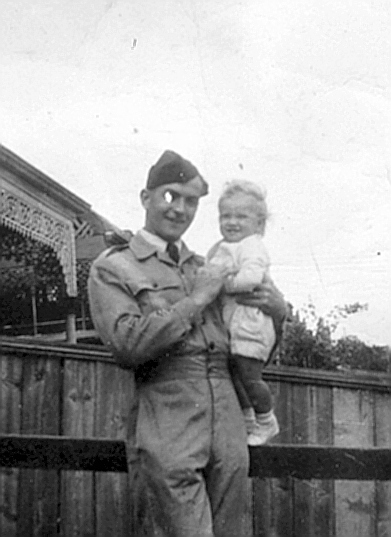
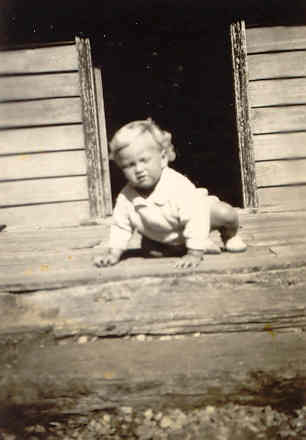
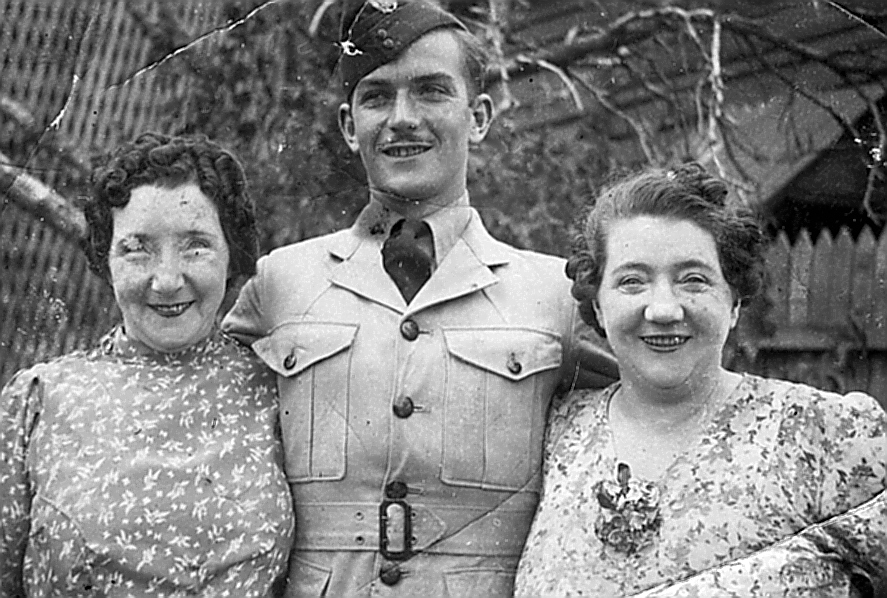
Jim was posted to a small radar unit and we rented a little holiday shack there. Tiny little fishing village on the Victorian Lakes, by water from Lakes Entrance, one of the most beautiful places I’ve ever seen, now of course a famous tourist spot. Glenn crawled and toddled and his best friend was a big draught horse who lived in the paddock next door. I spent some time hauling him out from under the horses feet, but I think they were just very good friends and I wonder if that’s where Glenn’s natural affinity with hoses comes from. His mother-in-law told me he reminds her of the “Horse Whisperer.” The little shack we lived in was across the road from the local mechanics Institute and Library and the postmaster got so sick of me coming down every day to get the key, he gave it to me and said “You’re the only one who ever uses it so keep it.” I read my way thro’ the entire library. I’ll always remember how wonderful it was to have my OWN library. Jim was posted to New Guinea (but never got past Penrith N.S.W.) the war was rapidly coming to a close so back to Melbourne. Stayed with the same land lady in Ascot Vale, Jim went to Penrith and I tried to get back West -! There was a bloke who was in charge of all civilian transport - interstate - and you had to have a very good reason to get a seat on a train or plane, and I might add planes were pretty scarce in the air in those days - , his chief aim in life appeared to be stopping me from going home, I was of course very pregnant with Sue by then. I trudged into town every day but he hated me I’m sure. I finally secured a seat on a plane, to pick up my ticket the next afternoon, I went home so jubilant and sat the next afternoon expectantly for about two hours, till I was called to the desk and told I’d been unloaded as my seat was needed for a more urge nt someone, or a V.I.P. or something. Home in tears, back to my friend the transport man, who was getting a bit sick of me then, and I managed to extract a booking from him on the Trans train. I actually got on it and back to Perth. Jim’s mother and Mary met me at Perth Station. The idea was I would stay with Nanna Rose till Jim came home. That was all very well, but we didn’t “click” too well. No rows of course, but we had very different ideas of life and bringing up children, and I was of course, her first daughter-in-law. And the first to take one of her “beautiful boys”. I was young, dogmatic and self opinionated , and it was my first child - so we politely lived together and hated every moment of it. One night Rose, Alec (about 14) and I were going to the pictures and as we walked down Central Avenue, Alec said “Gee, Margaret, you’re getting fat !” - I was about 9 ½ months pregnant - Rose sharply chided him, “You mustn’t say things like that to Margaret.” He airily remarked, “Well, I don’t care, I just wondered what Jim will say when he gets home!” I think even Nanna Rose laughed. One morning I was getting Alec some eggs for breakfast, and after he’d gone to school, Nanna quietly asked me not to give him eggs , as “ Well dear, at his age (quieter still) it’s not good you know, they get ideas.” So there you go, another aphrodisiac we all missed out on. Frankly I thought it might have been a good idea if Alec got some ideas, he didn’t have that many. Not long before Sue was born I moved in with Mary, because Rose was getting all fidgety about it all, in case of emergencies. I got up one morning at Mary’s with vague pains in the back and went to the loo the while gazing vaguely at a piece of newspaper lying on the floor telling me that “Doans Pills” would cure any back ache around at once and exhorting me not to suffer unnecessarily - I had news for them, woke Mary, got a taxi and went on my way to the house of horror (K.E.M.H.) Sue was born about 12.30 - she was a lovely baby and when Jim arrived home about a month later I was very proud to show him his daughter. We went back to live with Nanna Rose, but it didn’t last. We just didn’t hit it off. So back to Mary. I think Jim worked at Boans as a pastry cook at first, then to a small family pastry cooks in Cottesloe. We got a “flat”, a converted verandah in Cottesloe right across from the beach for which we paid 4 pounds a week, I think.
261
The moves and jobs became too numerous to remember, Muchea to run a sawmill mess, that big childrens home in Cottesloe as cook and laundress, anyway, thence to Big Bell where Mary, Marion and Isobel all were. We went as married couple to the Pub, Chef and waitress, then left and lived in the town while Jim worked in the mine. We opened a little cake shop but as usual more time was spent at the pub than at the work. Somewhere among all this we went back to live with Rose in Inglewood, the idea being I “house kept” because she was bedridden. Gerry, Alec some boarder whose name I can’t remember, Jim and myself. I do remember that this boarder chap wore a hearing aid and Sue said to me one day “Mummy, why does (whatever) take that thing out of his ear when I talk to him ?” - everyone else knew - I wonder where she inherited that! Also lived some time at Rose’s house in another part of Maylands, shared with two other couples. We went back to Perth from Big Bell, lived with Mum and Dad at Wattle Grove, back to Central Ave, shared with Ron and Noreen, Nanna, Gerry, Audrey and Frank. Finally we got a little old place out in Walter Road ,Morley Park and I wired Mary, who had left Viv and was staying with Phyl Milner in Midvale, (a new suburb the other side of Midland Junction. ) We all moved into this little old broken down place miles from everywhere - a school down the road a bit, a little shop and bus service every 12 hours I feel. Mary had what was euphemistically called “the sleep out”. One more hole in the wall and she would have been “sleeping out” under the gum trees, alongside the bus stop. Allan had the other end of the verandah with a wardrobe for a division, Jim and I the front bedroom, innumerable children “shared” the other room. There was a lounge room and kitchen and bathroom thro’ which the kids went in an assembly line basis every night. All trooped off to school next morning (except Allan, who was doing his apprenticeship at Midland Workshops) and I’m not sure about Joyce, Perth Girls I think ? Life was pretty tough but also a lot of fun. Stuart used to come out in the ute and we’d all pile in with blankets, mattresses, food, kids and descend on Mum, Dad and May at Wattle Grove for the weekend. Kids would run wild in the bush and be everlastingly presented with Mum’s “Water biscuits”. I don’t know how she made them and it wasn’t a recipe she handed on. If she had I think we would have all quietly disposed of it. Dad used to say, “My God, woman you haven’t been making those things again have you ?” We all felt the same. Sue told me in later years, they used to chuck them as soon as they were out of sight. If the Indian Pacific ever derails out in that area, you can bet it’s hit a fossilised patch of Mums “Water Biscuits”. One Christmas morning (we had all arrived the day before) , poor May (newly married and had her bed surrounded by kids on mattresses on the floor on Christmas Eve night. Next day May came struggling sleepily out of her room, rubbing her eyes, gazed blearily at the assembled company and announced “If one more bloody kid rattles one more piece of bloody cellophane in my bloody ear, I’m leaving home!” at which we totally collapsed ! Poor May got a rude introduction into our mob. She has the most wonderful sense of humour and became really another sister. One day we piled in the ute and went to Como with the kids. We put a quite good “ticking” covered mattress in the ute for comfort. Dad rode in the back with us and his pipe - somehow he managed to ignite the “good ticking mattress”. We stopped and put the fire out. We thought our Mums concern for her “good ticking mattress” was allayed for the time being as we progressed. We realised the thing was still smouldering, and has anyone ever tried to extinguish a fire in a kapok mattress ? By the time we reached Como Dad, Stuart and all of us (except Mum) decided the only answer was to throw it in the Swan and let it drift down to Camelot, there to either meet Lancelot or just further pollute the ocean, meanwhile Mum bemoaned her “good ticking mattress” and May de livered the eulogy - “there it goes, poor thing, no roof in it’s mouth !” I shall never forget the “good ticking mattress” - neither did Mum - nor did she let Dad forget. Another time Dad spotted a cobweb on the ceiling and grabbed the broom to remove it. As he turned he inadvertently caught the broom in Mum’s skirt and she reeled round and said “Jim, Jim, what are you doing ?” He replied, “I’m getting some cobwebs .” She indignantly retaliated, “Well, you wont find any up there.” We had some good times and some tough ones. We eventually were housed at Melville Park in converted Army Barracks, long buildings divided into sort of flats, two bedrooms, kitchen and a cold shower cubicle, right out in the bush then and not far from Fremantle. Looking back this was much earlier on. Anyway , Jim joined the regular Army, because it meant the Army would house us at “Seaward Village” the Army village at Swanbourne. The houses were prefabs from Scandanavia somewhere, very modern design and remember this was about 1950, no-one knew what a new house looked like and I had never had a house of my own anyway.
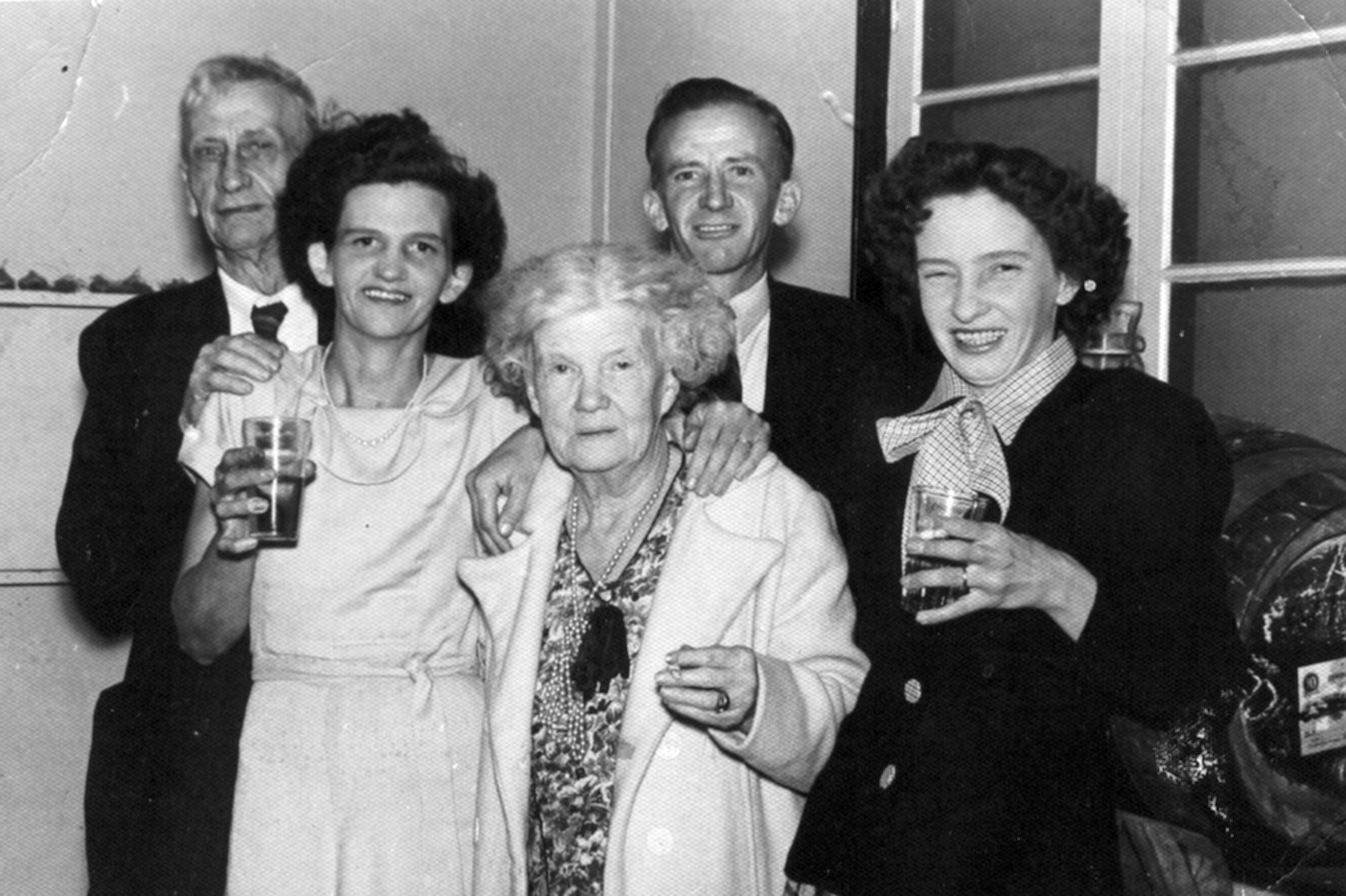
262
I loved it, electric stove that took three hours to heat a hot plate, electric copper that took another three hours to boil - but indoor dunny, bathroom, three bedrooms, large lounge and did it look pretty after it was all done. We spent about 2-3 years there. We were there when Mum died I know. Stuart came out and got me because it was all too much for him and May. He was working and Mum had already had a stroke and was bedridden and comatose mostly. I packed up the kids with beds and went with him and he resumed work, I remember he was on night shift and how scared I was, that she would die while he was not there. Stuart just said, “pull the sheet over her head and ring me up.” We didn’t have the phone on there, the nearest was a neighbour about a quarter of a mile away. As fate would have it some short time later when the Doctor called again to see her, he sent her to Royal Perth Hospital, - I quote - “to die in peace” . I’ll always remember watching her bare feet as the ambulance drove away. One of the neighbours boys came about 10.30 that night with a message to ring R.P.H. I tried to wake Stuart but he had crashed, worn out and also we had all been sitting round drinking, Mary and Ray were there, Mary wasn’t very well and she was having Garry, purforce I had to go, to take the message that Mum had died. I often think now, I am two years older than she was then. She was a good old girl was Winnie. The story of her life would have been worth reading. She had a great influence on my life, and I still look at her photo for support and wisdom. Jim was offered a job running a hamburger stall, called Bright Spot, by a bloke we had worked for at the Royal Show and decided to take it, so goodbye army house and Seaward Village and off to a Homeswest place at Pitt St, St James Park. Hated the house, i t was like a little match box. In among all this I had a series of nervous breakdowns, or one long one - ! Mary and Marion were always being landed with my kids. At one stage I got very nauseated and felt lousy. The Dr. couldn’t diagnose anything and I’ll always remember as he turned to go, he looked round to ask how my periods had been. On my replying that the last one had not been very profuse, he came and looked at me and said, “I think you’ve got yourself pregnant!” As I yelled and screamed, he nonchalantly shrugged and said, “Well, I didn’t do it .” Of course he was right, but Sue was over 10 years old and Glenn 12, so one can imagine some shock. The shock eventually subsided and we subsequently moved from St James to a small tea rooms in Subiaco with a “residence” behind it and rented rooms above, all occupied by working men who ate at our café. Good blokes too. You will, I hope, gather from all this that Jim changed jobs as often as other people changed their knickers. He was, at the same time cooking at K.E.M.H. so the kids and I copped some pretty hard yakka too. And I of course was very pregnant, at one stage I hired a woman to help and found out too late that she was a hopeless alcoholic. She used to sit in the café with a cup of whisky and finally tell me as I swept the floor “Y,y,y, m -ss -d a b, b, bit luv.” After her we got a young aboriginal girl (Kath), but she couldn’t work on Sundays as it was against her religion. Jim also used to make and sell cakes there and we built up a fair little trade, but as soon as we employed Kath nobody came and one of the ol d biddies told me, “I’m not eating anything after them black ‘ands have been near it.” We were there some months, during which of course Sharon Margaret was born, 25 th May, 1956, a beautiful baby. One day Sue and I went to the butchers, baby all dressed up in pram, purchased the meat, walked back to the café, put down the meat, went to do whatever, and suddenly turned to Sue and yelled, “Where’s the baby ?” We ran, galloped back up the street and retrieved our precious baby, who lay blissfully asleep. Well, it had been 11 years since I’d pushed a pram around ! 1956 and the Melbourne, Olympic Games, so we decided to go East again. Jim went first and got a job as a shearers cook and sent back the fares for the kids and me. We stayed in a van at Mary and Ray’s place in Beechboro till we had the money and off we went, never believing for one moment that I was going for good. I can still see Dad standing on Perth station, as the train pulled out, with tears streaming down his cheeks. Of course I never saw him again. We went straight to stay with my friend Lorna Evans at Queenscliff. Her husband Allan was in the regular army and he was stationed there. Before long we got a flat for ourselves and Jim started work as the Chef at the Ozone Hotel. The holiday season was ne arly on us, and Queenscliff is and was, a very popular resort. It was also very old when it comes to white Australian history. Shortly after I began work there too, and used to take Sharon with me in her pram, there was a fairly large staff, and during counter lunch hour everyone who ran past shouting their orders to Jim, would grab Sharon’s plate and shove a spoonful of whatever down her neck to shut her up. She seemed to thrive on it anyway. After awhile I realised I was again pregnant and Judith Lee Hill arrived on the 18 th April, 1958. I nearly lost her as I haemorrhaged badly and she swallowed a lot of blood, but I got my red -headed daughter, I’ve always loved red hair. The Ozone Hotel in Queenscliff seemed to sink deep into my psychic being. I still have recurring dreams about it. It was built in the 1800’s and something, had a lookout tower overlooking the Bay and lots of rooms down long passages
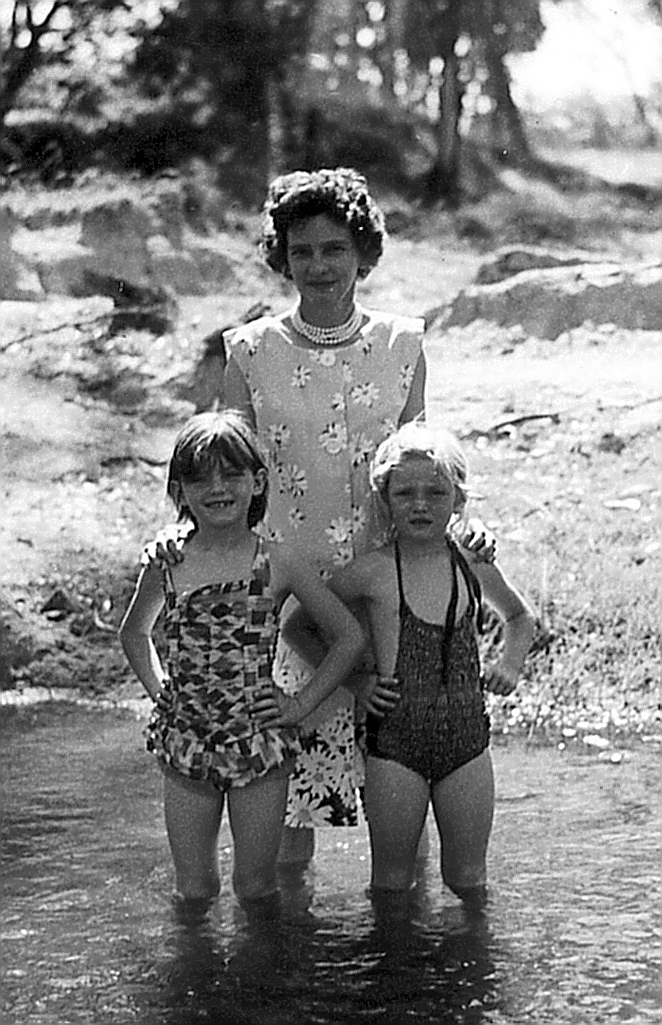
263
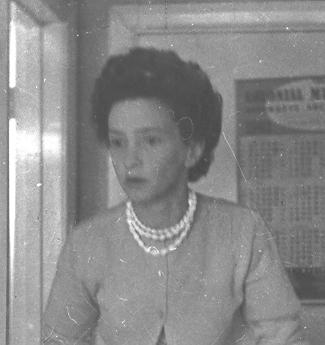
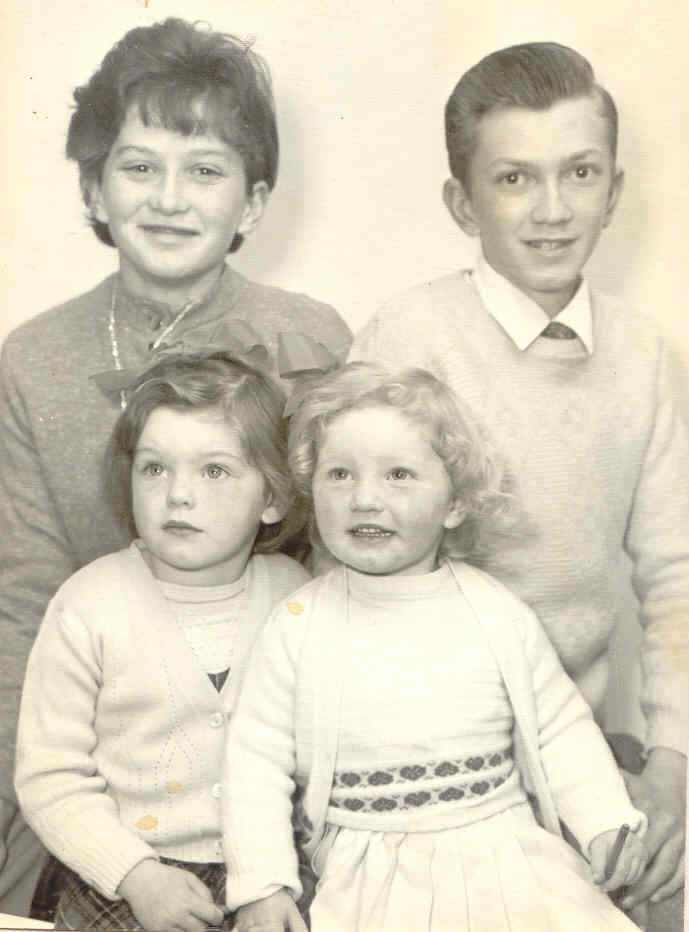
and unexpected corners. One wing was closed off , being considered too dangerous to use, and that seems to be the part I dream about. I believe the Ozone is one of the places to be still, only more so. I’d love to see it again. They filmed “On the Beach” there while we were there and I used to take Sharon in her pram to watch them sometimes. I was quite happy there, but eventually a decision was made for Jim to rejoin the Army. He did and we were sent to Puckapunyal, or rather Jim was, and we were housed in Seymour, the adjoining town. Glenn was in High School then of course. All the kids were at school except Jude.
After some time Jim’s violence, drunkenness and womanising became too much and with Lorna and Allan’s help, I moved kids, me and all the furniture to the bungalow behind Mary’s house. I had a job at the local railway refreshments room, so I could keep the kids. Glenn worked there before and after school and Sue was working in a local tearoom. Lorna took the two little girls. She already had 4 of her own, but she always called Sharon and Judy , “her girls.” I had met Eric Falkenbach by then, and we decided to go and buy a small corner shop business in Benalla, not that far up the highway. Sue met a young bloke there and married him and just as I turned 40 I was presented with a grandson. When Sue said ,”Go to Nanna” I had a quick look over my shoulder to see who and where “Nanna” was. Glenn went away to work as a Postal Clerk in Melbourne. The little shop wasn’t successful and I hated Benalla, a really, really, red neck town. We were there for eight years. We were broke by then and there was nothing there for the “girls” so off again to Albury - and here we still are. Glenn married a great girl from Queensland and has a son and daughter. He worked hard and is now a senior beaurocrat with the Tasmanian Govt. Sharon has now lived and worked in northern N.S.W. and has a very beautiful daughter. Judy was in charge of her floor at the State Library, until she and her husband decided to leave their jobs and go to Ireland to see Davy’s family. On return they also moved north to Nimbin where Sharon is. Judy has four very beautiful children - and she didn’t have any until she was over 30 - Sue hurt her spine badly while nursing, her marriage broke up and she was never well again. She moved up here but just got sicker and sicker, had three major operations for ulcers, they took out her spleen, her stomach and any other stray bits they could think of, she had a further op. On the 13th October, 1994 and we all went to visit her in the intensive care ward on the 15th for her 49th birthday. That was the last time we ever saw her conscious, the next day when I rang (early) they told me “No” she wasn’t alright, she had developed a “virulent” infection overnight. They kept on doing emergency op’s on the ward but three weeks later my dear eldest daughter was taken off life support - with our consent - and six minutes later her eyes opened and her struggle was over. 2.06 on the 5 th Novenber, 1994.
264
Well here I am, Eric is an invalid, he is now 81, I am now 77 and I guess the story that began in 1923 will soon reach it’s ending and that’s quite O.K. Que Sera Sera. Margaret Falkenbach. October , 2000
Margaret Lillian born on 27th August 1923, at Cottesloe Maternity Hospital. Married: James Hill. (died 10/4/1992) Children : Glenn Stuart born on 4th January, 1944 Susan born on 15th October, 1945 Sharon Margaret born on 25th May, 1956 Judith Lee born on 18th April, 1958 Remarried: Eric Falkenbach in December, 1960 Eric died January, 2003. Glenn Married: Bronwyn Parslow on 19th December, 1970 at Clayfield, Qld Children: Cameron born on 24th July, 1974 Megan born on 2nd September, 1976.
Megan born on 2nd September, 1976.
Children : Imogen Hill born 12th March, 2002. Hobart
Susan
Married: Robert McNamara on 11th April, 1964 divorced
Children: Mark born on 15th October, 1964
Lisa born on 29th July, 1969
Shannon born on 11th February, 1975
Died: 2.06p.m on the 5th November, 1994.
Mark born on 15th October, 1964
Partner: Jill Marshall, Cowra NSW
Children: Robert Neil McNamara 17th October ,1985
Married: Karen Barnes on 31st January, 1988 in Sydney.
Lisa born on 29th July, 1969
Children: Jordan Michael McNamara Franley
Born on 20th June,1988.
Sharon
Married Ted Hopkins on 6th April, 1973 in Albury N.S.W. Divorced.
Partner: Dave Dooley
Children: Nina Hill born on 13th March, 1987
Judith
Married: David Hill
Children: Laura Hill born on 8th August, 1988 Sydney.
James Hill born on 29th November 1991 Sydney
Meg Hill born on 8th May 1997 Lismore
Finn Turner–Hill born on 7th December 1999. Lismore.
265