Section 2
Land and Gold
SANDY BEATON (1829 – 1909)
AND HIS FAMILY
BY ANN MCEVOY
Contents
- Sandy
- Scotland
- Breakachy
- Australia
- Gold in New England
- Land Acquisitions by Sandy Beaton
- The Final Sale in N.S.W.
- The Cemetery Title
- Newspaper Searches
- Euphemia Beaton (nee McIntosh)
- The Family Bible
- Ken Beaton’s Letter to Euphemia
- South Australia, then on to Western Australia
- GOLD in Western Australia
- Yandanooka
- Thundelarra History
- The Will of Alexander Beaton
- The Beaton Family
- Family War Service for King and Country
Sandy
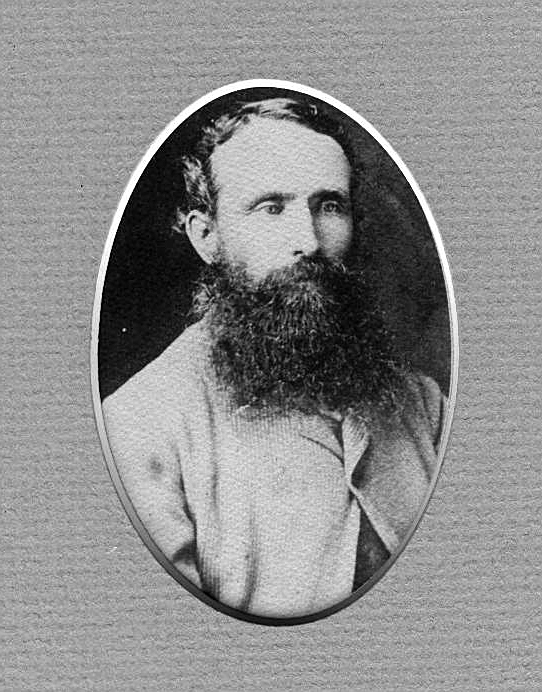
Alexander Beaton was born on the 17th of October 1829 in Strathconan, County of Inverness, Scotland, and died eighty years later on 14th November, 1909 in Mingenew, Western Australia.
This book contains a collection of records pertaining to his life, endeavours, and family.
SCOTLAND
The history of Scotland’s highlands has been well recorded by learned historians and we can only wonder at the effect of events over centuries and how it moulded the Scottish people.
As a race of people they have spread around the world and made innumerable contributions to all levels of social, industrial and cultural ways in whatever country they chose to settle.
The County of Inverness witnessed the devastation of the Battle of Culloden (the last pitched battle fought on British soil) on the 16th of April 1746 between the English troops for King George 11 and Bonny Prince Charles. After being soundly defeated Bonny Prince Charles fled to France never to return, but the highlands were left to the victors. This resulted in the brutal reduction of the highland clans, stripping of the chiefs’ powers, burning of cottages, ruination of crops, death and transportation.
With the destruction of the Clan system the ownership of land changed from being in trust for the Clan to a system of landowners pure and simple. The land became a resource to be exploited, therefore losing the value as an inheritance to be preserved for the benefit of the whole Clan.
There followed the clearing of crofters from the land, the movement of people during the industrial revolution and migration overseas.
During this time highlanders scattered far and wide. Relatively few Beatons remained resident in the County of Inverness, evidenced by the fact that there are surprisingly few Beatons listed in the 1851 census for that area.
Extracts from the Baptismal Register of the Parish of Kilmorack, County of Inverness, Scotland, show:-
26/6/1799 Duncan Beaton and his spouse, Ann McLeay at Strathconan,
Parish of Urray, had a child baptised, called Finlay.
15/7/1828 Finlay Beaton and his spouse Ann Matheson, at Strathconan,
Parish of Urray, had a child baptised, called Helen.
17/10/1829 Finlay Beaton and his spouse Ann Matheson,
at Strathconan, Parish of Urray, had a child baptised,
called Alexander (Sandy).
31/10/1837 Finlay Beaton and his spouse Ann Matheson, at Strathconan,
Parish of Urray, had a child baptised, called Duncan.
2/5/1839 Finlay Beaton and his spouse Ann Matheson, at Strathconan,
Parish of Urray, had a child baptised, called
Annabelle.
16/1/1844 Finlay Beaton and his spouse Ann Matheson, at Breachachy,
had a child baptised, called Donald.
The family is listed under the name Bethune on the International Genealogical Index records.
Evidence of a Clan Heritage
From the archives of leading authorities on Scottish History and Heraldry, document hereunder the Clan or family history pertaining solely to the surname Beaton.
Beaton/Bethune:
It would appear that most Beatons were originally Bethunes or MacBeths.
The name originates in Flanders. It came to Britain with the Norman Conquerors of 1066. The progenitor of the Scottish line was established in Angus by the 12th century and his descendant, Alexander, after supporting Bruce in the struggle for Independence, was killed at Dupplin, near Perth, in 1332. Alexander’s son married the heiress of Balfour in Fife where their descendants founded the various lines of the family which thereafter flourished in that county. The line provided a sequence of eminent churchmen/statesmen, among whom, was Cardinal Beaton who was murdered at St Andrews in 1546 in the aftermath of his purge of heretics.
Mary, a daughter of Bethune of Creich, was one of the ‘Queen’s Maries’ who accompanied Mary Queen of Scots during her domicile in France. A son of the Bethune Laird of Balfour, having acquired a knowledge of medicine, was enticed to migrate to Skye, where he founded a dynasty of physicians which rivalled that of the legendary MacBeths, former physicians to the MacDonald Lord of the Isles. On the fall of the Lordship in 1493 many MacBeths removed to other parts of the western seaboard, and inland, where other names were adopted by some, including the name Beaton.
The adoption of the name by the former physicians to the Lordship dates from at least the 16th century and this, allied with their dispersal throughout the Highlands, has led to many scholars confusing the two kindreds. Both lines were allied with varying clans, dependent on place of residence or prudence of the moment, but it should be recalled that both enjoyed a heritage as rich as any in the affairs of Scotland and were quite distinct from any other clan or family.
No chief is known for the name and any clan allegiance would be determined by place of ancestral origin or affiliation. Evidence of origins in Mull, or the surrounding area, would indicate descent from those formerly allied with the Lordship, and later the MacLeans, while associations with Skye would point to a further link with the Macdonalds and the MacLeods. Due to dispersal by both lines, mainland origins would require more detailed research.
There is no Beaton tartan, but many have adopted the MacBeth pattern in memoriam of the many links between the names.
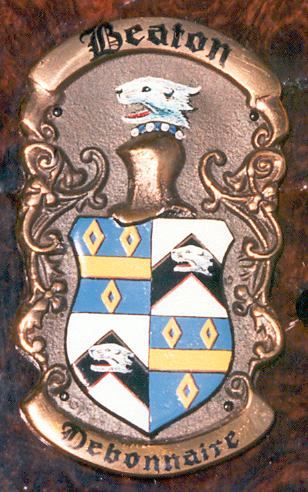
Rampant Lion and the motto
“Debonairre”.
KILMORACK
as Recorded by the Imperial Gazetteer of Scotland, 1868
“KILMORACK, a parish, containing the post-office village of Beauly, in the north-east of Inverness-shire. It is bounded on the west, the north, and the north-east, by Ross-shire, and on other sides by the River Beauly and by the parishes of Kirkhill and Kiltarlity. Its length north-eastward is 34 miles; and its greatest breadth is about 13 miles. Its upper and south-western division has a rough, wild, alpine character, and comprises the glens of the Affrick, the Farrer, and the Cannich, with their many diversities of hill and lake; its middle division comprehends the rich picturesque valley of the Beauly, from the point where that river is formed by its three head streams, down to the point where it precipitates itself in the falls of Kilmorack; and the north-eastern division is a fine open plain, about 3 miles in diameter, bounded along the south side by the now placid Beauly…. The falls of Kilmorack constitute one of the finest pieces of scenery in Scotland, yet are remarkable less for their height than for their breadth and volume, and for the beautiful assemblages of lofty rocks, green banks, and hanging woods which encircle them. The river, emerging from a narrow channel into which it has been confined by high rocky banks, suddenly expands into a fine semi-circular basin, over the lower edge of which it is precipitated in a series of small cataracts… The landowners are Lord Lovat and Chisholm of Chisholm. The chief antiquities are remains of Druidical temples, a chain of ancient forts, the ruins of Beauly Priory, and two upright monumental pillars, nearly 6 feet high. These last are on the Moor of Ord, where the most important cattle market in the north of Scotland is held.”
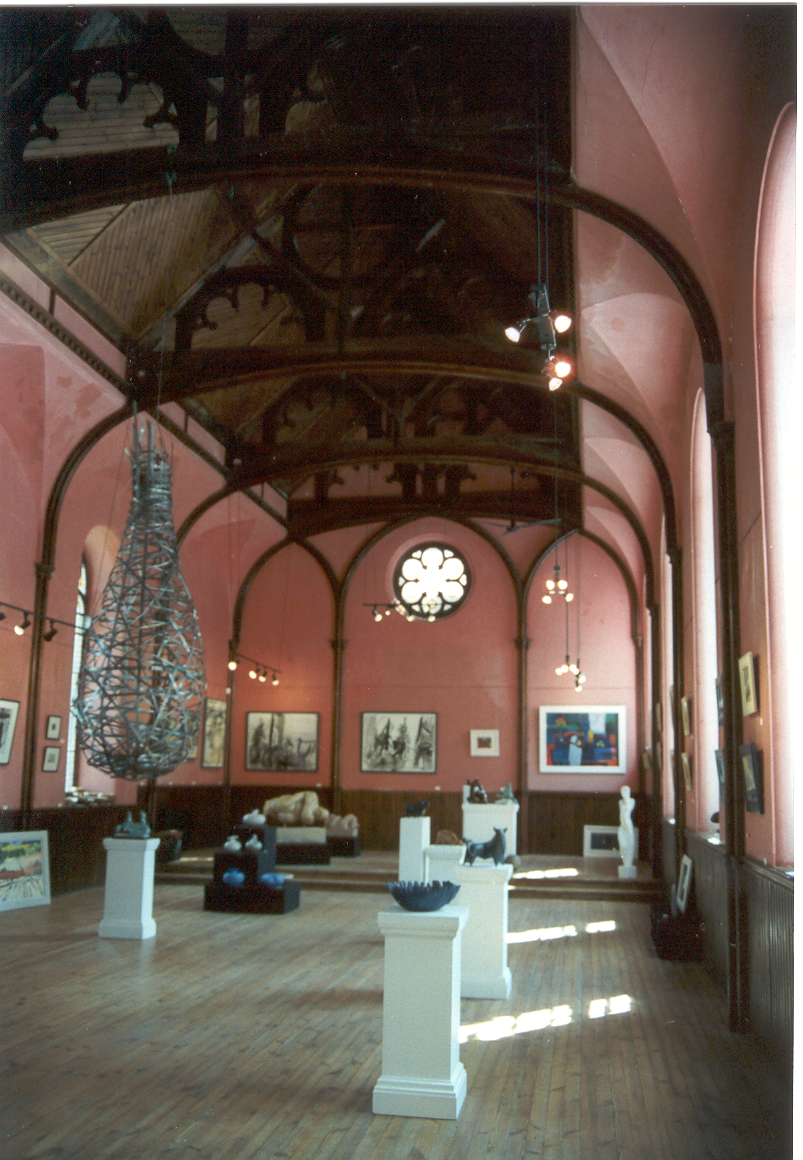
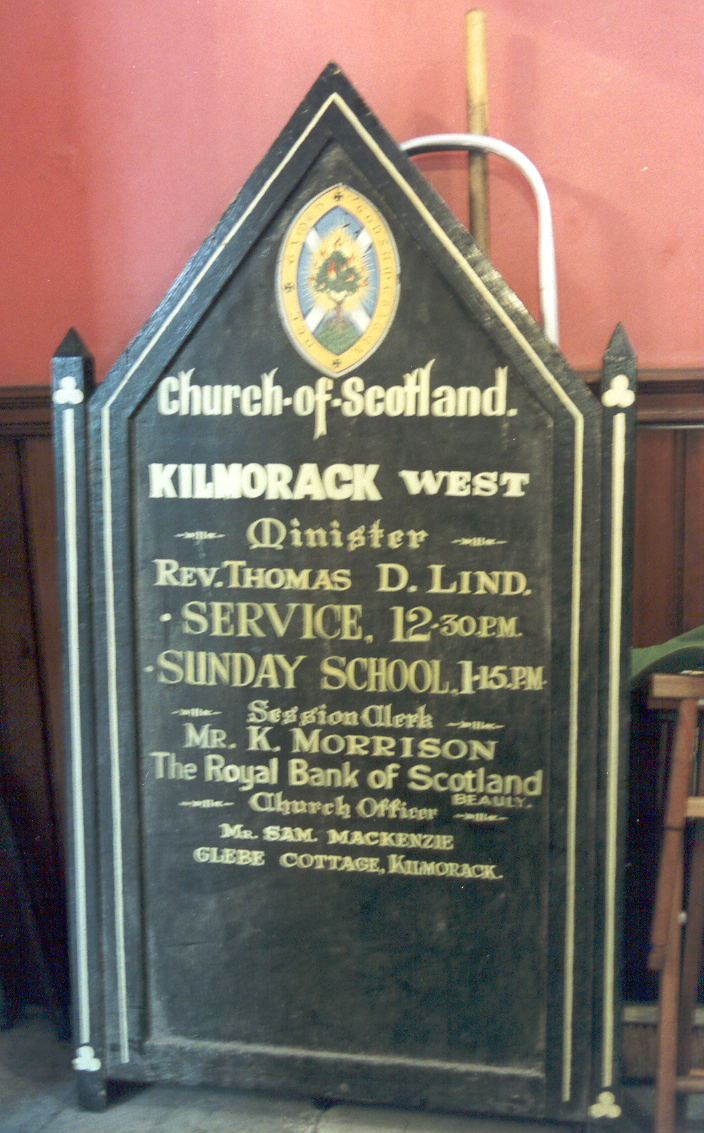
Kilmorack Church, now an Art Gallery.
Photographs taken by Sally Boardman and Liz Gudden in July 2000.
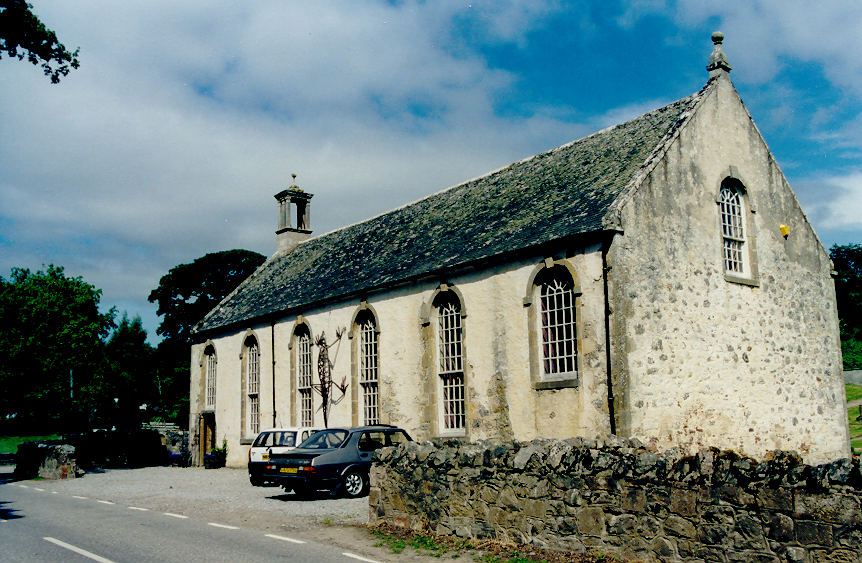
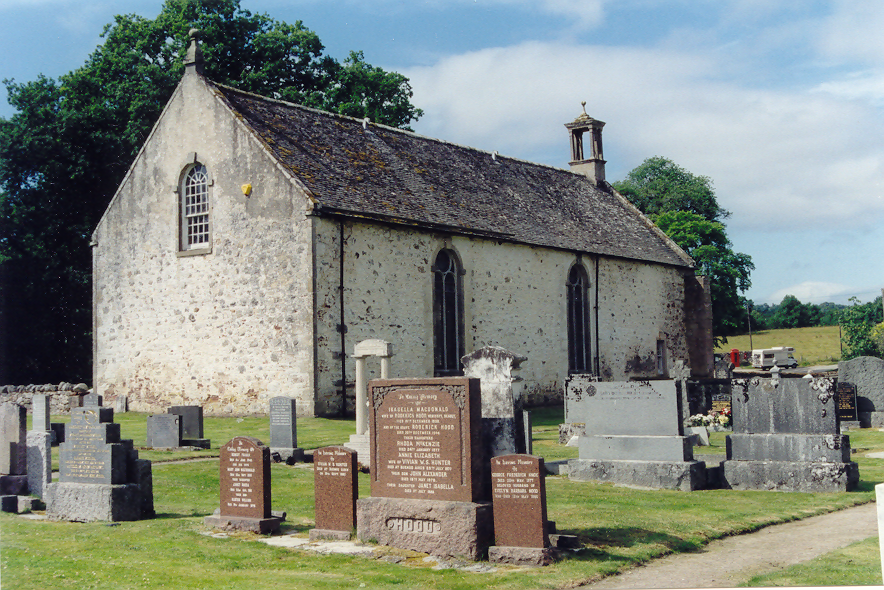
Top: Kilmorack Church entrance,
Right: A portion of the Cemetery
behind the church.
Below left: Inside the church, now
an Art Gallery.
Below right: The old notice board.
BREAKACHY
Breakachy is a hamlet within the Kilmorack area of Inverness, County of Inverness.
Nestled in the hills overlooking Breackachy is the site of an “Iron Age Village”, and the area has been farmed constantly for more than 2000 years.
The Beaton family lived and worked as crofters or tenant shepherds and, as many others, must have been affected by the clearances, even if only in lifestyle and the dispersal of family over the years.
In the 1851 Census they are listed as being resident at No. 16 Breackachy.
It was not possible to find the exact cottage in which the family lived.
Ruins of several cottages remain in the hills, one is restored as a garden shed.
The family is shown in the Scottish census for 1851 for the County of Inverness, District of
Breackachy, Parish of Kilmorack, Island of Great Britain, in the 3rd Enumeration District on p. 4.
| No of house | Name, and Surname of each person who abode in the house, on the night of the 30th March, 1851. |
Relation to Head of Family | Condition | Age of Males |
Age of Female | Rank, Profession Occupation | Where born |
| 16 | Finlay Beaton | Head | Mar | 60 | Ag. Labourer | Ref. Shire Contin |
|
| Ann | Wife | Mar | 51 | Labours wife | Do Do | ||
| Duncan | Son | U | 12 | Scholar | Inv.shire Kilmorack |
||
| Anable (Annabelle) | Daughter | U | 10 | Do | Do Do | ||
| Donald | Son | U | 7 | Do | Do Do | ||
| 17 | Annable Matheson | Head | Widow | 68 | Widow | Refs shire Seattwell | |
| Helen Matheson | Daughter | U | 36 | AgLab (Daughter) | Strathconan | ||
| Christy Cameron | Visitor | U | 54 | Fmly H. Maid | Seattwell | ||
| Annable Macrae | Grd dau | 12 | Scholar | Kilmure |
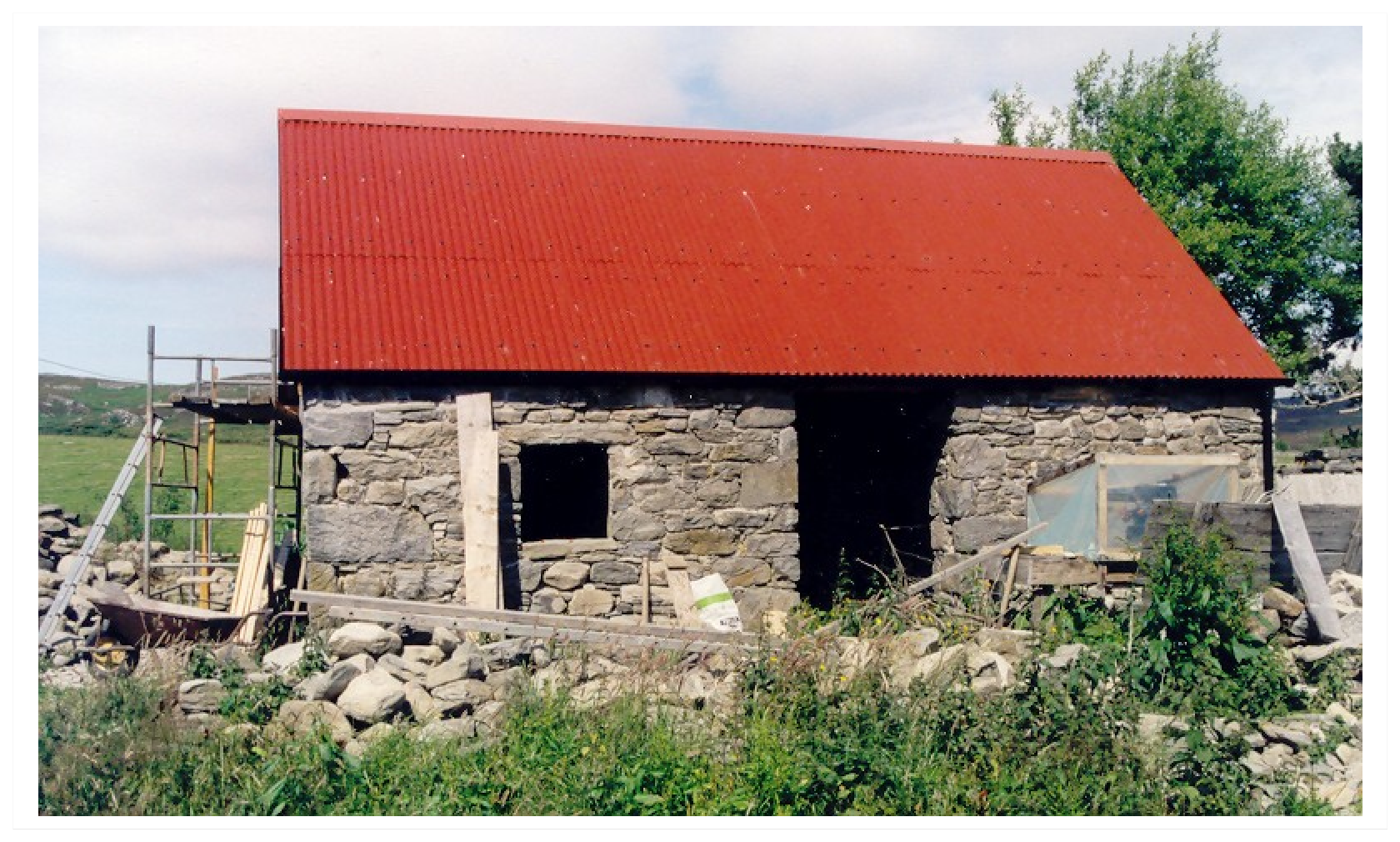
Not number 16.
An original crofters bothy being restored by
Ron McLaughlin.
July, 2000.
Description and Boundary of Enumeration District.
So much of the Parish of Kilmorack as lies between the Burn of Teanafsie on the east, and the farm of Druimnaleack on the west, the River Beauly on the south and Urchany to the north.
Alexander is shown in the Scottish census for 1851 lists for the County of Inverness, Parish of Kilmorack, Island of Grt Britain, in the 3rd Enumeration District on page 17.
PLATCHAIG
| No of house | Name, and Surname of each person who abode in the house, on the night of the 30th March, 1851. |
Relation to Head of Family | Condition | Age of Males |
Age of Female | Rank, Profession Occupation | Where born |
| 66 | Thomas McGregor | Head | Mar | 76 | Farmer 66 acres employing 5 | Inv.Shire .Kilmorack |
|
| Margaret Do | Wife | Do | 69 | Do Do | |||
| Alexr Do | Son | Do | 30 | Farm Servant | Do Do | ||
| Mary Do | Son’s wife | Do | 25 | Do Kirkhill | |||
| Simon Do | Grandson | 9 mths | Do Do | ||||
| Alexr Beaton | Servt | Un | 20 | Farm Servant | Do Kilmorack | ||
| Archibald Fraser | Herd | 16 | Herd Boy | Do Urquhart |
Description and Boundary of Enumeration District.
So much of the Parish of Kilmorack as lies between the Burn of Relic on the east, and Breallan March on the west including Platchaig, Craigscorrie, Ballalone, Altyne, Inchrory, Teanalonick, Balblair, Teawig, Grovend and Groam.
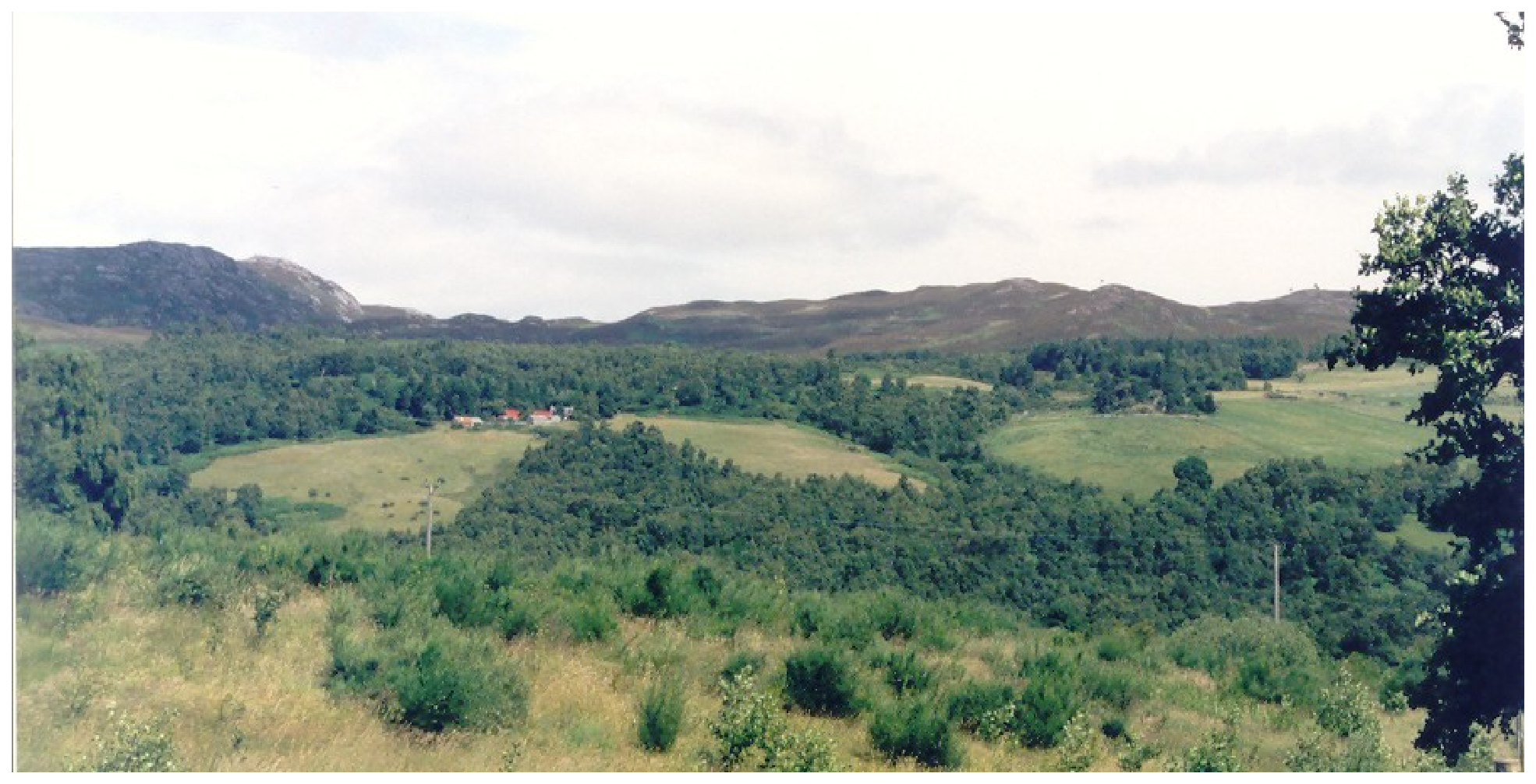
The ‘Hills of Farley’ viewed from Breakachy.
Recollections of Breakachy
In 1928 the Reverend William McDonald wrote of the countryside and the inhabitants of Breakachy during his boyhood of the early 1870’s.
There are very few men who do not, now and again, take a retrospective view of the scenes of their childhood. This particularly true of those who have crossed the seas and made homes in distant lands. They recall the old home with its garden and well, the school with its playgrounds and shinty-fields, and the Church with its high pulpit and family pew. The green fields, the flowing streams, the hazel woods and the surrounding hills - all pass under review.
The Reverend includes mention of :
Breakachy being a descriptive Gaulic term for “Grey Acres” and being part of the Estate of Chisholm of Chisholm. Looking from the summit of Dunmore ( once the site of a Roman Fort) .
The walks past Beauly Bridge, Balblair Church, Kilmorack Church. Falls of Kilmorack, Teanassie Bridge, Breakachy Road and the Falls of Breakachy.
Watching the water cascade over rocks and the roar and murmur of the waterfalls.
The foliage and flowers of the area, birch, alder, hazel and poplar trees, broom and juniper shrubs and the added fragrance of wild flowers and listening to the larks singing
The writing continues: As we leave the Falls at the highest part of the road, Breakachy now bursts in on our view. Although this is the lowest part the prospect is pleasing. We can see the farm houses as if at equi-distant points in the landscape, rich pasture lands with cattle grazing here and there, and both men and women busy in the fields. Teagate house, a substantial modern farmhouse, stands immediately in front of us, close to the edge of the stream, whose agitated waters in flood time almost kiss its doorstep, as they hasten past to increase the volume of the roaring falls.
In Autumn it is particularly beautiful, with its waving cornfields and rich pasture lands, with here and there men and women busy in the fields. I can well remember when the first reaping machine was brought into the district. The people were beside themselves! Several men had come from some of the surrounding areas to see this new wonder.
Breakachy is bounded on the North by a stream which has been known from time immemorial as Urchany Burn. Rising among the beautiful flats below, it deepens, widens and gathers volume until it reaches the river below Teanassie Bridge, thus forming a natural boundary on the north and also on the east. It is one of the best small fishing streams for miles around; although the trout are not large they are usually plentiful and constitute a rare delicacy. A gaff is not needed, while the stream is deep in parts, it is narrow and the trout are easily landed with the rod.
On the south, Breakachy is bounded by a small stream which is known as Ardachy Burn. This stream rises high up in the Ardachy hill country and flows down for about a mile through long heather, until it reaches Yellowbrook, where it widens and deepens, and in rainy weather, flows with considerable rapidity. Ardachy Bridge - spans a picturesque gorge which abounds with deep pools from whence uncanny fairies always sallied forth to the dismay of the young. The burn, which forms a natural boundary between Breakachy and Cluny.
The Culour Burn flows through Breakachy. In rainy weather it presents an imposing sights, as coming from the hill country it rushes down with amazing rapidity sweeping all obstacles before it. It is a pretty little stream with birch, alder and hazel trees growing on its banks. It abounds insmall trout, and as it is shallow, the boys in Autumn, without shoes or stockings and with their shirt-sleeves rolled up guddle for trout to their hearts’ content. They use the rod only in the rainy season when they find that the trout are both large and plentiful. At Milton the burn has cut its way down to an enormous depth, with pools where the trout remain and grow in size.
The stream finally joins Urchany Burn below the ruins of the old mill where usually good fishing sport is expected. Deep pools are at the junction of two streams.
The land rolls towards the streams that bound it and flow through it. There is scarcely any level land in the place, even where it seems level there are rolling downs in miniature. But although Breakachy is naturally separated from the surrounding districts its inhabitants share intelligence, industry and thrift. They are hospitable, large hearted and help and serve one another in time of need.
Reverend MacDonald continued on to describe the six farms, their owners and the Private Residents of Breakachy.
Tea Na Leach owned by Peter McKenzie .
Ardachy owned by Ewen McRae .
Culour owned by Alexander Chisholm .
Cruinassie owned by John Chisholm .
Teagate owned by “Willie Rose” his sister “Peggy”.
Milton owned by Alexander Forbes.
The Private Residents included :
John and Kenneth Beaton, two batchelor brothers, living at Cnoc-a-nullie. They were both stonemasons, but after they had passed the half century, or so, they did practically nothing at their trade. As John has secured a good education he became the confidential letter-writer of all and sundry in the community. But he had another accomplishment in which the young folk delighted, and that was, he played the bagpipes. What pleasant evenings those were! How the memory delights to linger on them! John was a gracious soul and greatly loved by all who knew him. He entered so wholeheartedly into the amusements of the young.
Kenneth, like Zaccheus, was short of stature, but tried to make up for it in peculiarly characteristic ways. He was noted for his romancing propensity, in which he sometimes indulged to the great amusement of young and old. Some of his creations were remarkable!
In his youth he went out, one day, with his gun when he was suddenly confronted by a large snake. He lifted his gun to his shoulder to take aim, but before he had time to get his finger on the trigger the monster had entered the barrel of the gun. However he let fire, and the last that he saw of the monster was disappearing behind Cluny Hill, about a mile away.
On another occasion he was returning from Inverness with a 200 lb bag of oatmeal on his back. It was winter, and the road was literally covered with ice. At the top of Dunballoch Hill, which is about 6 miles from Breakachy, he began to slide on the ice, and he slid all the way, up hill and down dale, until he reached home. These wild romances pleased the young folk immensely. But when they could get him up to dance a reel with them their excitement became intense. He would sometimes for their special benefit dance what he called “The Double Shuffle Step”. Although he was well over 60 years of age, he was wonderfully active in his movements. How he would step and reel and keep pace! He was in his way a most interesting and entertaining man.
This fifteen page account of Breakachy concludes :
It grieves me to think of the many ruins that can be pointed out in Breakachy.
I can, at this moment, recall the ruins of 25 houses where once bright, happy and contented families lived. Some of these, no doubt, crossed the seas and made homes for themselves in other lands, but why should there have been any cause for their leaving the land of their birth? The people should rise up en-masse and demand a remedy for the evils which are driving so many out of the land they love. There is farming land not far from Breakachy, equal to the best land that can be procured in any part of the world. Are deer a greater asset than men, and are pheasants of more value than children? Why should not the deer forests and game lands be opened up again for closer settlement? Although some have crossed the seas and have made homes for themselves in other lands they have a great love in their hearts for the land of their fathers.
Young men of Breakachy, read and think and work and agitate in the interests of the Highlands and put your strength into every effort to make the Highlands, in the truest sense of the word, a home for highland people! Let your slogan ever be, “The Highlands for highland people!” And do not leave the land of your birth, there is no other land like it in any part of the world.
Guard as a sacred treasure “your ain wee hoose ‘mang the heather.”
“The home of the brave and the boast of the free !
Firm as the rocks when the storm flashes forth
We’ll stand in our courage - the men of the North.”
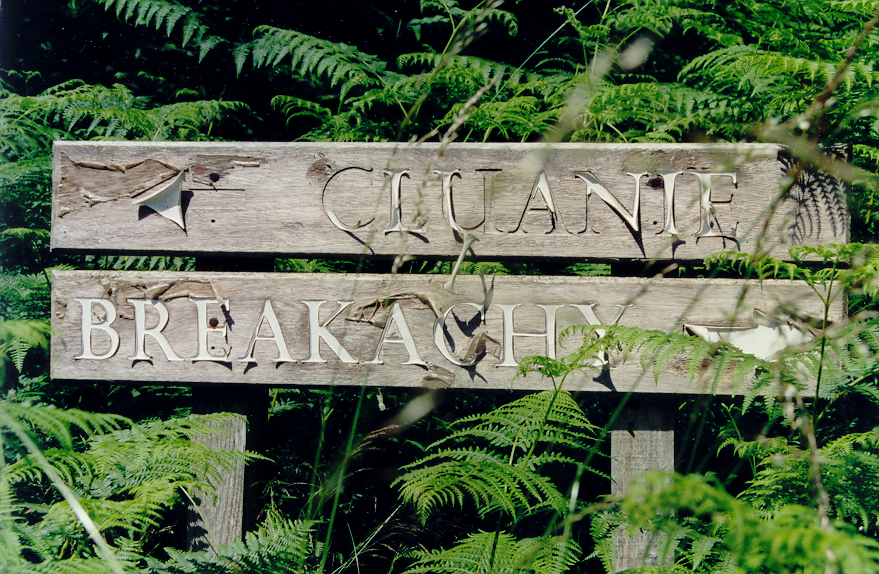
The Gaelic Language
Gaelic is the ancient British language, one time spoken universally over Great Britain and Ireland, as well as in France and Spain. Certainly it was the language of the highlands
The Reverend MacDonald mentioned its use when describing the inhabitants of Breakachy.
Lindsey Sabien (Sandy’s grand-nephew) wrote in 1965.
Sandy, who even in his old age spoke as much in the Gaelic as in English, and would chase his grandchildren from his orchard at Beatonsfield with an admixture of English and Gaelic maledictions; Sandy, one of that gallant band of Free-kirkers who migrated to Australia during ( and for some years after), the “hungry forties” of last century, those Free-kirkers who “stood to pray, and while seated sang the Psalms of David without the aid of a musical instrument”; Sandy , that five feet two of spirited Highlander, who made good thousands of miles from his native hills and glens of Inverness.
Sandy’s grand daughter, Isabel Hickman, recorded that her mother, Belle, spoke Gaelic in the house in N.S.W. until she was eleven years old, the late 1870’s.
Isabel, stated in her records, that she donated Sandy’s Gaelic Bible to the University of Western Australia but unfortunately the University is unable to find this copy.
Australia
We can only wonder at the family decision to leave Scotland and journey to Australia.
Land was always extremely important to Sandy, the opportunity to own land of his own and not to have to ‘bend his knee’ to the land owners may have influenced Sandy’s decision.
For whatever reason the family Finlay, Duncan, Annabelle, Donald, Helen and Alexander Beaton left Scotland for Tasmania, Australia on the clipper “Storm Cloud” in July 1855.
The Beatons and the rest of the passengers on the “Storm Cloud”, were sponsored by the St Andrew Immigration Society, a Launceston group established to encourage the migration of Scots to Van Diemens Land (Tasmania).
I certify that the bearer hereof Finlay Beaton, a widower aged about 56 years resided in this Parish with his family for the last 28 years or thereabout - that his daughter Helen Beaton is unmarried and ages about 27 years and of excellent moral character that his son Alexander Beaton is unmarried and aged about 25 years and of good character - that his son Duncan Beaton is also unmarried and aged about 18 years and of good character and that his daughter Annabelle is aged 16 years and his son Donald 12 years, all decent and respectable in their way, and free from all public scandal and Church censure and nothing is known to me that can hinder their reception to any Christian Family Society or Congregation when providence may deem their lot.
Given at Mews of Kilmorock this 13th day of April 1855.
R Fraser M.R Unsure of Sig.???
Copy of the family character reference written for Finlay and his children before their departure from Scotland.
The “Storm Cloud’s” arrival in Launceston, Tasmania is recorded in CB7/12/5 Book 26 at the Tasmanian Archives. Launceston
Return of Bounty Tickets on which Immigrants have been introduced and of the Amount of Paper Money certified for including the description of the Immigrants for the Month of September 1855
By the ship “Storm Cloud” James Campbell Master arrived George Town August 29. 1855.
Family Bounty Tickets |
Names of Immigrants | Single | Child Boys |
Relig | Native Place |
Trade Calling | Name of Person by whom Introduced | Date of Cert |
Amount of Paper money certif for |
| 485 | Beaton Finlay | 56 | Pres | Scot | Shepherd | A.Learmouth | Sept | £22.0.0 | |
| Helen | 28 | Housemaid | 10th | £22.0.0 | |||||
| Alexr | 26 | Farm Servt | £22.0.0 | ||||||
| Duncan | 18 | Farm Servt | £22.0.0 | ||||||
| Annable | 16 | Housemaid | £22.0.0 | ||||||
| Donald | 12 | £11.00 |
The Archival documents reveal that although Finlay couldn’t, all the children could read and write.
The Archives also reveal that there were two families of Beatons aboard the ship but no
trace of any relationship between the two.
The Tasmanian Daily News , Saturday, September 1,1855 .
The Cornwall Chronicle -
Saturday, Sept 1 , 1855
THE STORM CLOUD, CAPTAIN JAMES CAMPBELL.
This vessel has not only made the quickest passage to Tasmania on record, but is also the most splendid clipper ship that has ever yet visited the Tasmanian waters. She is built of iron, is over 900 tons, built and owned by Messrs. Stephens and Son, of Glasgow, and her performances, though quite a new vessel, already add to the credit of the Scottish builders. She is of great length with extremely sharp long bows, and an equally beautiful stern. She is very neatly rigged and sails like a witch. On the present voyage she reached Madeira in six days; made the run from Scilly to Cape Otway in sixty-six; and sighted the shores of Tasmania on the 59th day. For a considerable portion of the voyage she was but little favoured by the winds, and had an indifferent crew, but a decidedly smart commander, and chief officer (Mr.John Maxwell Auld) In twenty four hours she logged 370 nautical miles- a feat which equals, if it does not surpass the performances of the celebrated Marco Polo. The vessel will remain at George Town, where she will be placed on the hard and painted.
The immigration officer, and the president and some of the members of the St Andrew’s Society proceeded to George Town on Tuesday morning in the Cobro. They found the immigrants in excellent health and spirits, a result to be attributed to the attention of the surgeon (Dr.James M. Thomas) and the good ventilation and roominess of the berths. The health-officer at George Town has reported the immigrants to be perfectly healthy.
Four children died on the passage, one of whom was also born at sea, and named after the ship and her gentlemanly commander.
The immigrants consist of farm and domestic servants; and, to the credit of Scotland be it said, all but four could read and write. They are apparently a good class of people, and there is little doubt, after the satisfactory experience of the last few months in Scotch immigration, that all will be speedily engaged. The Storm Cloud is engaged to Messrs.Du Croz and Co. She has a few agricultural implements for this port, and coal for Calcutta, to which port she is bound. We cannot close this notice without giving Captain Campbell, the doctor, and the officers of the Storm Cloud credit for the speedy voyage, the health of the people, and the admirable order and cleanliness of the ship. We only wish that her commander had determined to bring her up to town, which might have been done with little expense and trouble, now that we have a good tug steamer on the river. A prejudice appears to exist at home that large clipper ships ought not to go up to Launceston, and it is in order to show its erroneous character that we should have liked to see Captain Campbell do with his fine ship what was done by the Whirlwind and Montmorency, which were not much under the tonnage of the Storm Cloud. - Launceston Examiner
The Storm Cloud spoke on 28th July, in lat. 38deg S,long. 7degW, the ship Admiral, bound from London to Melbourne.
The Lady Bird, in coming over the bar last night, broke her shaft, and is now on the “hard”. She was to have gone down by last night’s tide to the Storm Cloud for the immigrants and their luggage.
The Clarence will go down this afternoon.
The Lady Bird had very severe weather on her last passage to Melbourne, the sea broke over her in a terrific manner. All the crew would prefer the Black Swan in rough weather. One of Mr. Burton’s best trained horses died from exposure and cold, the sea water constantly dashing over him.
The Lady Bird arrived at the bar about 8 o’clock on Wednesday evening, the tide being out the passengers landed by boats. On coming over the bar at midnight, the propeller struck a mud bank and broke her shaft in two places. She was put on the hard on Thursday morning, and it is supposed that the necessary repairs to her can be completed so as to only delay her one trip.
In consequence of this accident to the Lady Bird, the Clarence which had been filled with coal from the barque Macassar, was put in requisition to bring up the Immigrants from the Storm Cloud at George Town. A great quantity of the coal was transhipped on board the Black Swan, which lay alongside, and the Clarence started down the river about 4 o’clock on Thursday.
A great number of passengers wished to go down to George Town by her, but this was objected to by the St. Andrew’s Immigration Society, who had engaged her for the above special service.
The Storm Cloud when painted will proceed to Calcutta with a quantity of English coal she has on board.
I have been unable to find an account of that particular journey but during the 1850’s, a standard form, “ Tender for Passage Accommodation and Diet of Persons” was used for victualling emigrant ships chartered by Her Majesty’s Colonial Land and Emigration Commissioners.
The following allowances were made for adults (over 14 years of age)
Once a week, on Saturdays adults - 8 oz Beef
Monday, Wednesday and Friday, 6 oz pork
and the days in between, 8 oz preserved meat.
Every day, 8 oz of biscuit, 6 oz flour, 3 oz oatmeal and 3 quarts of water.
Alternate days, 2 oz raisins, 1 ½ oz suet, a quarter pint of peas, and ¼ oz of tea.
Coffee ( ½ ounce), sugar ( 4 oz), and treacle (2 oz) were also allocated three and four times per week, respectively.
Rice was given Wednesdays and Saturdays
Preserved potatoes, on Sundays and Thursdays.
Butter was made available on Tuesdays and Fridays, then weekly, passengers were entitled to one gill of mixed pickles, half an ounce of mustard, salt (2 oz) and pepper (half an ounce).
An Immigration Agent’s report of 1st October, 1856 mentioned that great improvements had been made in the knowledge of the chemical ingredients of food, so far as they are suited for the healthy nourishment of man …..
……even now, emigrants who have arrived apparently in good health after a long voyage, in reality are not in such a healthy condition as persons who have lived ashore: their blood is impoverished, they have a tendency to pustular eruptions
The following is an extract from an article written by Lindsey Sabien .
First printed in the Newspapers on 3rd September, 1964.
Then published in the “Descent” the Australian Society of Genealogists magazine
Vol 2 1965 Part 4
Legend Of “Sandy Beaton”; Colourful Scot of Early Days On The Clarence.
Sandy Beaton had many ups and downs on the Clarence. He worked at different jobs, rented farms and as a carpenter. Some of the early churches on the river were built by him, including the one in which I worshipped as a child. It was directly opposite the present store in Upper Copmanhurst. His great ambition, however, was to be a landowner, and that on a large scale, which was and still is, difficult for anyone with limited finances. But to Sandy an obstacle was just something which must be overcome. Eventually he occupied land at Jackadgery, but whether rented or selected I do not know.
Later he, and the members of his family who were old enough to hold land, selected quite a large holding at Coombadjha.This land was part of Yulgilbar Station and held as an annual lease, which meant that anyone could select it. With 1,280 acres fixed as a living area, Sandy and his family held quite a sizeable block. This area is now part of Hanging Rock Station, some of the best and highest- priced grazing land on the Manning and Clarence Rivers.
Not being strong enough financially to let out his fencing by contract, so that it could be done quickly, Sandy was forced to do it himself, with the aid of those of his sons old enough to assist, meanwhile having to herd his stock to prevent them straying on to the station land. The owner of Yugilbar was very hostile towards selectors on his run, seizing and impounding any of Sandy’s stock that happened to stray on to his property.
Many stories were told of Sandy’s brushes with the station. One was that, one evening, when Sandy and his boys came in from work on the fence, they were told that the station stockmen had rounded up the mob of his horses, crossed them over the river and shut them in one of the station yards. The river was in almost half flood , but this did not deter Sandy. He and another wild Scot, one Dougal Cameron - no relation to the James Cameron mentioned earlier - set out after dark, swam their horses over the river, released the mob from the station yard, swam them back over the swollen river and restored them to his own property. When the station men came to the yard the next morning the horses were gone and the sliprails all up and pegged. Overnight rain had washed out all tracks and it was quite a mystery. I can remember my mother telling the story one morning at breakfast time, when I was a small boy, and my father laughing and confessing that he was one of the station men concerned.
Sandy’s and Dougal’s feat may be better appreciated when it is known that neither could swim a stroke !
From this time on the saga of Sandy Beaton would make an absorbing book.
In the 1880’s he walked off his land at Coombadjha, and it reverted to the Crown.
Borrowing $400 from each of his brothers-in-law, James Cameron and Kenneth Matheson, he took his wife and family to Adelaide. There he left them and went on alone to the Kimberleys in northern Western Australia, to search for gold.
The location of Sandy’s gold strike was named Beaton’s Hill, though this name has been long forgotten, and is in typical spinifex-plains country, with huge rocky outcrops. Even today it is a wild, deserted and most inhospitable region, with little surface water, on the edge of the Great Sandy Desert. Sandy’s gold strike is mentioned in W.Lambden Owen’s book Cossack Gold, which has a picture of him with his sons, working at the spot where the gold was found.
His strike must have been a rich one. It enabled him to buy a fine farming property near Yandanooka, south of Mingenew, which he named “Beatonsfield”, and also “Thunderlarra Station” between Yalgoo and Paynes Find,
So Sandy’s ambition was fulfilled. He became a landowner on a large scale.
He died at “Beatonsfield” at the age of 80, on 14th of November 1909, his wife predeceased him in 1904.
Helen Beaton married James Cameron (born in Scotland 1818) in 1862 and lived on the farm pioneered by him at Upper Copmanhurst They had five children, two girls and three boys.
This farm was in the Cameron family until the early 1950’s .
Helen and James Cameron were my maternal grandparents and had a family of five. She died while still a young woman.
Some of the facts found in “The Bawden Lectures”
on “The First Fifty Years of Settlement on the Clarence”
June 1886, July 1886 and August 1888 Given by T.Bawden
The flood of 1863 was the first really bad one, it took place on February 15. As a great many farmers and free selectors were then settled along the river and nothing like it had occurred before. Many of them were caught unaware causing great loss and suffering .
The flood of July 1876 reached a height of 75 feet at Copmanhurst and 23 feet 8 inches at Grafton, which was a record. An account of this flood was published in the “Examiner” on September 24, 1932. It caused great distress and loss on the farms. It came in the middle of the winter and the water remained in the town for three days. The damage in Grafton alone was estimated at 50,000 pounds.
In April 1853 German shepherds arrived on Yugilbar Station, bound to serve for two years at 16 pounds a year, they had to repay six pounds ten shillings a year to repay their passage money of thirteen pounds.
The first Municipal council had been elected in 1859 , and had an anti-squatter feel amongst its aldermen. T.Bawden was one of the first aldermen elected.
In 1863 Harbour works started at Clarence Heads.
The first Telegraph in the district 1862.
Establishment of the Municipality of Grafton 1859.
Grafton Hospital 1861. New Court House and Gaol 1861.
Sir John Robertson, elected representative for the area, and Premier for a period, introduced the Act (which bears his name) of 1861, introducing the sale of Crown Lands by free selection.
Amongst exports from the Clarence for the year 1858 as given in Dr J.D.Lang’s book “Queensland” 594 tierces of beef at 60/- £1782.0.0
27 carcases of beef at 120/- £ 162.0.0
114 beef hams at 25/- £142.0.0
195 cwt. of bacon at 60/- £591.0.0
6,500 hides at 15/- £4875.0.0
314 tons of tallow at 40 pounds £12,560.0.0
A tierce is a large cask. Three of them weigh a ton.
“The Australian Meat Co “(Ramornie) supplied the (British) Army and Navy for many
years with both tinned meats and extracts, also the leading Steamship Companies and
several Arctic expeditions. In 1869 from 70 to 80 men were constantly employed.
The first pre-emptive grants on Yulgilbar were made in 1857.
In Mr Bawden’s words, “In the early days the Ogilvies struggled very hard and displayed a large amount of enterprise and untiring industry, so much so that it is scarcely to be wondered at if they came to look upon Yulgilbar as theirs by right of conquest from barbarism, and therefore had acquired a right to a patent of nobility under the style and title of “Dukes of Yulgilbar”. Mr E.Ogilvie has been a prominent figure upon the Clarence for the past 48 years. Possibly if he had identified himself more fully with the people, and sympathised more with their progress, his circle of personal friends would have been greater than it is, and he would have been more popular with the masses than he appears to be. Possibly he cares nothing for these things. But I cannot help remarking that with the influence Mr.Ogilvie could have exercised, a man with broad sympathies and progressive views would have rendered the District important service.
Copmanhurst was taken up by James Grose in 1839. This was the first Station upon which stock was placed in the district. It was sold to a Mr Wallace in 1844 who in turn sold it to a Mr Smith from whom that rich alluvial flat at Copmanhurst acquired its name of Smith’s Flat. Mr Smith sold it in 1848-9 to Messrs Mylne under whom it became merged into the Eatonswill Run which the Mylnes had had since 1839. The same Mylnes who is a trustee on the Cemetery Block ?
In July , 1859 the first gold escort passed through Yulgilbar on its way to the Fairfield Diggings.
“It was borne in mind in relation to all stations that from January 1862 they gradually dwindled in area as the selectors settled on them.”
A well known aboriginal on Yulgilbar, King Billy, (full name Toobillibam) mentioned in Bawden’s Lectures, was often spoken about by Ken Beaton to his family.
E.D.S.Ogilvie
There is an extensive collection of diaries, station journals and papers, also biographies and books written about and held at the University of New England, and at the Mitchell Library, Sydney on Edward David Stewart Ogilvie (1814-1896), the squatter and owner of Yulgilbar Station.
The Ogilvie family already held land at Merton on the Hunter River. When Edward took up Yulgilbar on the Clarence River in 1840 it was over 196,000 acres and extended for 56 miles on both sides of the Clarence River.
The Journals record how Edward worked to establish the station during those early pioneering years. They also record his excellent rapport with the aboriginals , to the extent of learning their language and producing a grammar of it. Other squatters in the area did not have as good a rapport and there are documented massacres in the region.
Ogilvie had been far-sighted enough to buy freehold blocks on Yulgilbar , Plains Station and Fairfield in 1854 and then another 187 acres across the river on Yulgilbar and 169 acres at Heifer Station.
A despatch from Charles Tindal (owner of Ramornie and the Meatworks) to Ogilvie.
Our legislative Council keeps us in alarm A notice served that no new leases will be renewed for lands within settled areas. The reason for this is that land may be thrown open for sale, and as long as the Government confine themselves to selling land no great harm will be done; but they talk of giving the buyers of a few acres an unlimited right of commonage over all unsold adjoining land. I have now bought 160 acres at.£1.0.0 an acre under my pre-emptive right. This includes the house, men’s huts and the cultivation paddocks.
Ogilvie wrote to the Crown Lands Commissioner Greaves:-
“Of my leasehold lands I have purchased upon my Yulgilbar run about 5,000 acres, and this will according to the free spirit of the forthcoming Land Law entitle me to the free use of 15,000 acres of the adjacent lands, making a total of 20,000 acres for which I am entitled to claim remission of rent for the coming year.Besides this there is a further quantity of about 22,000 acres withdrawn from my lease by the formation of the reserves, of which I received notice through your letter of the 12th of June last. Upon these grounds I think I am fairly entitled to a remission of at least one third of the amount of revenue and assessment heretofore charges.”
During a five year journey to England and Europe Ogilvie embraced all things European including architecture. It has been reported that this trip altered him considerably.
After his marriage in England in 1858 he returned to N.S.W. with new ambitions.
Over the years to follow Ogilvie developed almost a passion for litigation, large and small, win or lose, he seemed to almost delight in fighting his opponents through dispute after dispute.
Ogilvie contrived that most roads through his freeholds led nowhere. This made life extremely difficult for the freeholders who actually obtained land on Yulgilbar and they were soon forced out. Some were paid by him as dummy selectors.
In 1871 gold was found on Yulgilbar in the mountains. They named the place Solferino. The find was made by Paolo Marcolino. Less than a year later gold was found at Lionsville, half-way between Solferino and the head station at Yulgilbar. There were soon 4,000 people there but this goldfield only lasted a few years. Mining rights had legal precedence over grazing so Ogilvie could not stop public roads , loss of workers or the effects on the aborigines on his station.
Ogilvie had a home built on a site he had selected 20 years before. He planned it during his European trip and imported German builders and English stonemasons. He constantly supervised and inspected during the construction. The house had forty or so rooms, was 91 feet by 85 feet and they used 1000 tons of freestone and 110,000 hand made bricks in the construction. Bullock drays had to travel 66 miles to bring mussel and oyster shell for the lime needed as there was none available in the area. There were two towers , Doric columns in front of french windows and steps leading to a formal garden. The cloistered courtyard had a marble fountain that had come from Florence. A Scottish carpenter cut, carved and installed the cedar paneling and the staircase. There were also life size stone lions and crystal chandeliers. Ogilvie was the architect and it was his amateur creation. It was completed in 1866.
The locals referred to it as “The Castle” much to Ogilvie’s chagrin.
In 1894 Edward Ogilvie’s portrait was painted by Tom Roberts at Yulgilbar when he was around 79 years of age. This painting is on permanent loan to the Clarence River Historical Society.
Edward Ogilvie died after being thrown from a horse in 1896 leaving behind a bitter family dispute over the property which divided the family. The property sold for $90,000 in 1926 but the house was left to vandals and thieves until many years later when new owners set about altering and restoring it.
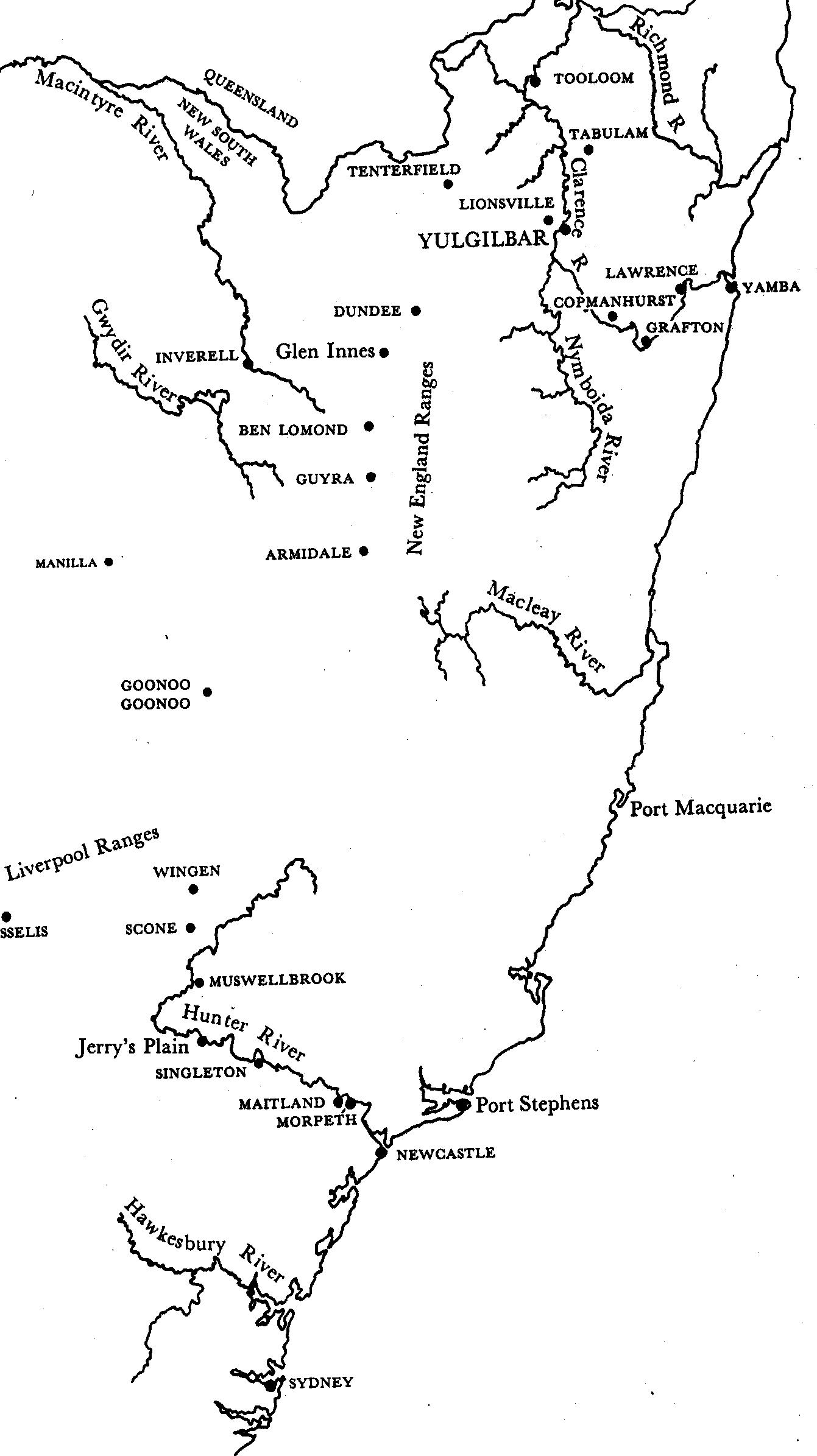
Map of Clarence river area N.S.W
FAMILY TRADITION HAS IT THAT :
Sandy engaged in two court cases through the New South Wales courts with Ogilvie (over land and water rights) and won both cases BUT Ogilvie took the case to the High Court in England. As Sandy did not have the finance to fight the case, Ogilvie won. Sandy sold up to repay debts and borrowing from his brother-in-law to move his family to South Australia.
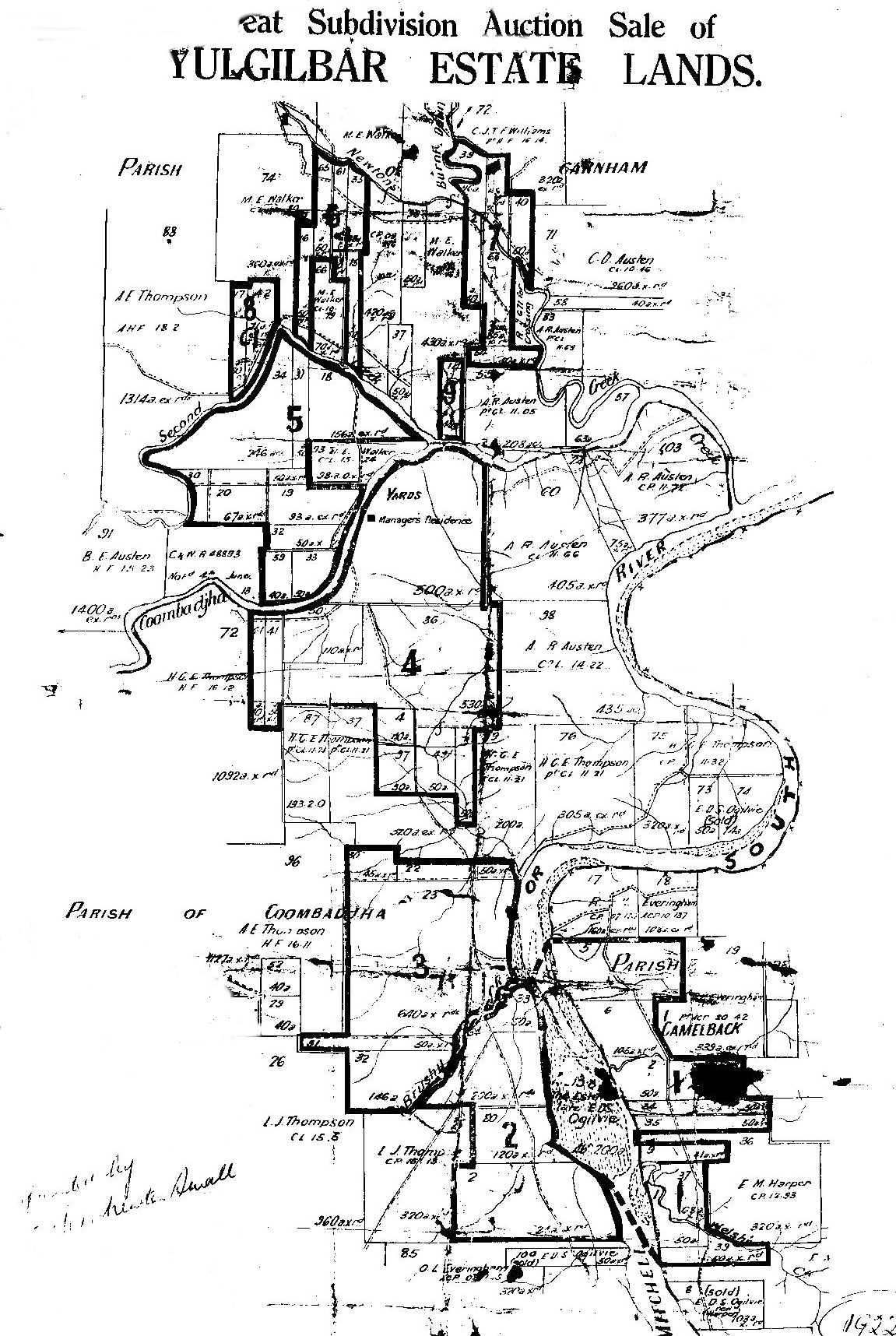
Yugilbar Estate Lands
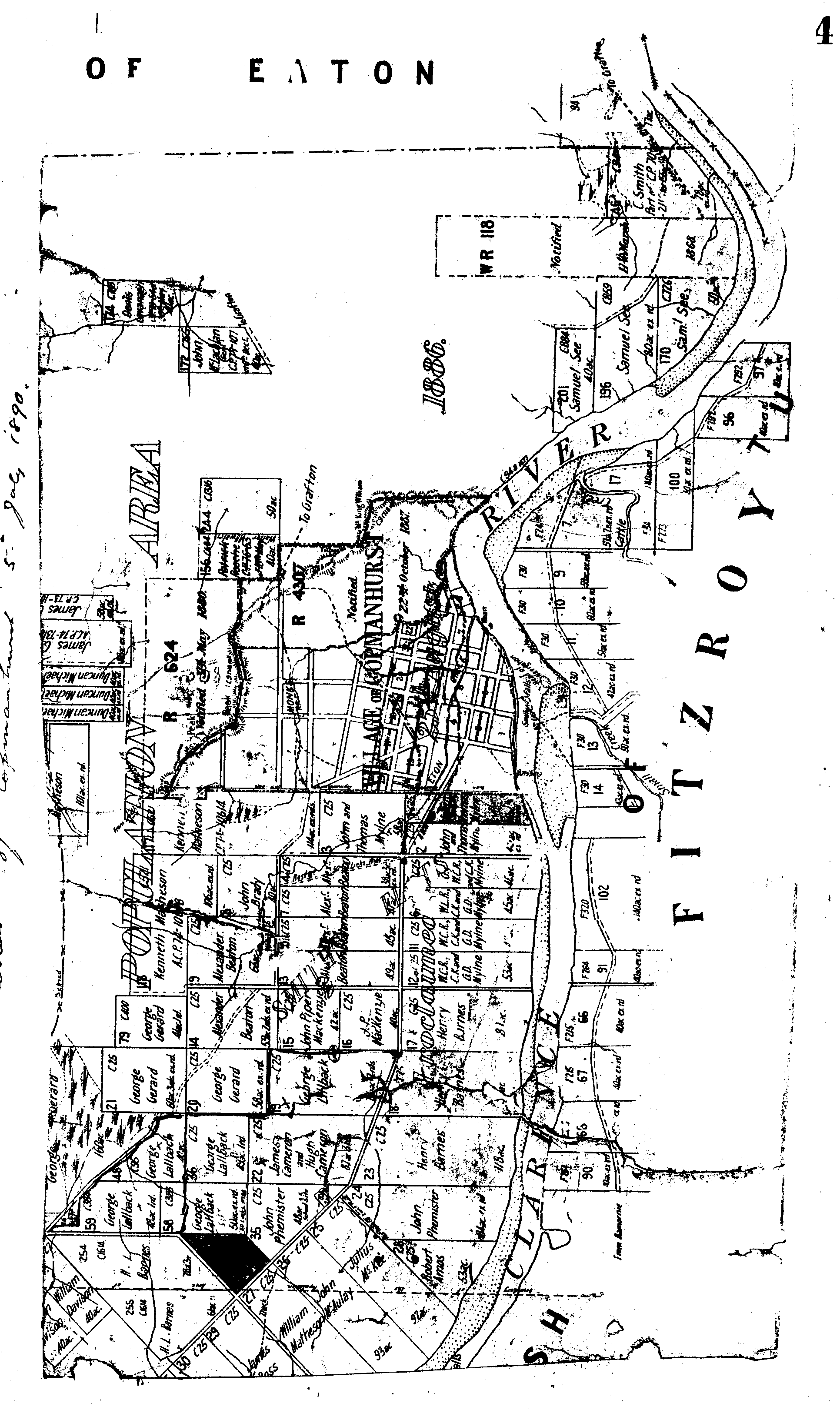
1886 map of Copmanhurst still showing blocks in Alex Beaton’s name
Research at the State Archives in New South Wales has found references to two cases.
In the Supreme Court Of New South Wales.
Between
The Honourable
Edward David Stuart Ogilvie
Plaintiff and
Alexander Beaton. Defendant.
Praecipe for Four Subpoenas herein
on behalf of the Plaintiff
Dated this Ninth day of October (A,D.) 1878
George Foott, Plaintiffs Attorney, Grafton.
Subpoenas for
William Penrose, Moran,
James Rogan and Abraham Godfrey.
#149
In the Supreme Court Of
New South Wales.
Praecipe for Writ of Summons
For The Honourable Edward David
Stuart Ogilvie Plaintiff
Of Yulgilbar Towers Squatter and Grazier
Against Alexander Beaton. Defendant
Of Coombudjha Grazier
Appearance Sixteen days after service,
Amount sought to be recovered
Over Thirty pounds.
Dated this Fifteenth day of January 1878
George Foott Attorney for Plaintiff.
The Sydney Morning Herald October, 1878
Supreme Court Notice
Ogilvie v Beaton 28th October, 1878
Chamber List October 29th , 1878
Ogilvie v Beaton
Another Subpoena for
William Hamilton to testify between
Edward David Stuart Ogilvie Plaintiff and
Alexander Beaton Defendant
on the part of the defendant.
Dated the Ninth day of October A,D. 1878
Joseph Meillon, Attorney, Grafton.
Further Appearance, Declaration and Plea papers were also obtained but these contain no additional information.
Extreme disappointment comes from the fact that a
whole leatherbound book of JUDGEMENT PAPERS for the Supreme Court of New South Wales is MISSING for the time period covering these cases.
Information from the Clarence River Historical Society.
Re Alexander Beaton and E.D.S.Ogilvie.
The court case was over the trespass of A.Beaton’s Arab horses - although Ogilvie resented his ownership of land -
According to “old hands” Ogilvie was in the wrong - hence Alexander Beaton winning the two court cases in Australia. When Ogilvie took the case to England he was successful.
The expenses were crippling to Alexander Beaton.
Mrs Newton Small said as a young bride she went to live past Upper Copmanhurst near Jackadgery and her husband said on one occasion, “We are overlooking Alexander Beaton’s property that was the cause of the lawsuit. It was regarded as one of Australia’s great early legal battles over land and water rights.”
On Clarence River Historical Society paper I have a copy of their letter to Isobel Hickman (Sandy’s granddaughter) dated 2nd July, 1978 confirming the story regarding Mrs Small, who was one of their elderly members at this time.
Gold in New England
Gold was found at the Rocky River diggings near Fairfield in 1856. Though the rush was short-lived every man won between 100 and one thousand pounds in a few months
There followed a new mood amongst the working population. Equal rights and a levelling of standards were being asked for. The squatters were equally determined to remain in their elite position.
Following the 1861 Free Selection Act being passed through parliament there was a popular demand for land throughout N.S.W and Victoria. Many of the landless and unemployed looked towards the sheep runs which were regarded as good agricultural land and they were encouraged to do so by the crusading Presbyterian Minister the Rev. John Dunmore Lang.
The law now allowed any man to select any block he liked on crown lands, he could select from 40 to 320 acres . He had to pay a deposit of 5/- an acre and promise to live on the block for three years and put in improvements valued at £1.0.0 an acre.
The selectors were allowed 320 acres Conditional Purchase and 960 acres on Leasehold, many ran into debt and had to surrender their blocks.
THE CLARENCE AND RICHMOND EXAMINER
4th November 1873.
CANGI QUARTZ REEFS.
There followed news about the following mines.
John Bull, Great Northern, Sir Walter Scott and –
Pioneer – Beaton, Matheson, and party, are busy going on with their claim, but I have not heard with what results. I wish them every success
Sandy had a gold ring made from the first ounce of gold he found in New England.
This was passed on to his son Ken who in turn passed it to his daughter Joan Langdon.
After a house fire in Shackleton,West.Aust. and the loss of all contents Winton Langdon searched through the ashes and found the still warm gold.
Remodelled, it is still in Winton’s possession.
Land Acquisitions by Sandy Beaton
A search of the following indexes :-
Grant Index 1858 to 1862
Vendors Index September 1857 to 1885
Torrens Title Purchasers Index 1863 to 1887
revealed for
12th April 1859
Grant Serial 59/1744 Portion 13 49 Acres £132 . 6 . 0
Grant Serial 59/1745 Portion 10 45 “ £130 .10.0
Grant Serial 59/1746 Portion 9 63 “ £ 81 .18.0
Grant Serial 59/1747 Portion 7 41 “ £ 86 . 2.0
Grant Serial 59/1748 Portion 4 38 “ 3 Roods £116 . 5.0
7th December 1860
Conveyance Book 70 No 494 by Beaton of Portions 4,7 & 9
These three blocks were sold after eight months for the same amount as Sandy had paid for them.Leaving him with a holding of 153 acres 2 roods.
18th December 1860
Grant Serial 61/1093 Portion 14 59 Acres 2 Roods £66 .18 . 9
Mortgage Book 103 No 494 by Beaton of Portions 10 & 13
20th April 1871
Mortgage Book 124 No 612 by Beaton of Portions 10 & 14
20th August 1874
Conveyance Book 144 No 597 by Beaton and mortgagee of an
unregistered mortgage of Portion 13
September 10th 1874
Conveyance Book 144 No 924 by Beaton and mortgagee of another
unregistered mortgage of Portions 10 & 14.
October 27th 1879
Assignment Book 196 No 459 by Beaton for the benefit of Creditors.
Note : This book (196) refers to a
Conditional Purchase of 640 acres in the Parish of Coombadjha County Gresham.
On searching, the Parish of Coombadjha is in the County of Drake which adjoins the Shire of Copmanhurst. No Conditional Purchase could be found in the name of Alexander Beaton. This may only mean he had disposed of the land before that Map was printed.
Newspaper Items supplied by Clarence River Historical Society.
UNRENEWED PRE-EMPTIVE LEASES
GRAFTON DISTRICT
The following pre-emptive leases have been declared forfeited; and will be offered for sale unless otherwise disposed of.-
One of 63 leases listed -
1875 March 19 Alex Beaton
County Gresham , 960 acres.
The Clarence and Richmond Examiner, Grafton
Thursday May 28th , 1873
FREE SELECTION
Alexander Beaton, 120 acres, parish of Cangi
unsurveyed land adjoining his former conditional purchase of 200 acres, on the south bank, of the Mitchell River, and bounded on the north by Inglebar Creek.
The CLARENCE AND RICHMOND EXAMINER, GRAFTON
4TH FEBRUARY 1873
£100 REWARD -
Whereas it has come to my knowledge that some evil disposed person or persons, at Lower Cangi, has CALUMNIATED A REPORT, to the effect that I had informed Mr GREAVES of Newbold, that the DIGGERS WERE KILLING HIS CALVES.
Now I have not spoken to Mr GREAVES for the last eighteen months, and never in my life had I any correspondence with that gentleman.
I hereby offer the above reward to any person or persons who can prove that I ever made use of the expression so unjustly imputed to me. I am now nearly nine months about Cangi, and never yet saw a beast slaughtered there; and the cowardly
scoundrel who would perpetrate such an untruthful statement, is no credit to society, except such as are of the lowest grade.
A.BEATON, Smith’s Flat.
The CLARENCE AND RICHMOND EXAMINER, GRAFTON
19th October, 1875
BUTCHER’S LICENCE –
On the same day a slaughtering license was granted to Mr Alexander Beaton, of Copmanhurst.
May 28th 1873
I have included typed copies of the handwritten land documents for their historical value.
Because of the standard of the photocopies and the handwriting they would be illegible to the reader if scanned.
There are some spaces marked …… where interpretation of the text was not possible.
Only the ‘Cemetery Title’ and ‘The Final Sale’ are included in this section of the book,
copies of the other titles are included at the end of the book.
In September 1879 G. and F.A. Ireland took legal action against Alexander Beaton in the Supreme Court of N.S.W.
No 2758 A.S 1879
This writ was issued by George Foott, of Grafton, Attorney for the said Plaintiff whose Agents are Messrs, Iceton and Faithfull, of No. 183 Pitt Street, Sydney.
The Plaintiffs claim £ 45-16-2 for debt, £4-4-0 (besides mileage) for costs, and if those sums be paid to the Plaintiffs or to their Attorney within the time limited for your appearance, further proceedings will be stayed.
The following are the particulars of Plaintiff claim :-
1879 May 4. To amount of Defendants Promissory note dated
1st February 1879 in favor of the Plaintiff Flora Ann Ireland and or order and payable three months after date duly presented for payment and dishonoured £ 39.6.10
To interest from due date to date of Writ £ 1.1.2
To goods sold and delivered and goods
bargained and sold by the Plaintiff George Ireland
to the Defendant at his request the particulars of
which are as follows
June 10, 6 yards flannel @ 1/9 10.6
Tape 1/- Hops 2/- 3.0
Thread 1/- 6 tobacco @4/6 £ 1.8.0
½ Box Soap 14.8
1 bag Salt 13.6
1 bag Sugar 72 lbs @ 4 ½ d £ 1.7.0
1 Boiler 9/6 2 pipes 2/- 11.6
£ 45-16-2
The Plaintiff also claims Interest on £ 39-6-10 of the above sum from the date of the Writ until Judgement
N.B. Take notice that if a Defendant served with this Writ within the jurisdiction of the Court, do not appear according to the exigency thereof, the Plaintiffs will be at liberty to sign final judgement for any sum not exceeding the sum above claimed, with Interest at the Rate specified, and the sum of £7.9.0 (besides mileage) for costs, and issue execution forthwith.
This Writ was served by me Alexander McLennan of Grafton Hawker on the within named Defendant personally on the Tuesday 10th day of September A.D.1879
As witness my hand this Tuesday 10th day of September A.D.1879.
Roll No. 157
In the Supreme Court
of New South Wales
G.Ireland &F.A.Ireland
v
Beaton
George Foott,
Plaintiff’s Attorney,
Grafton.
To: Alexander Beaton
Of: Coombadjha
Of: New South Wales
Free Selector
Judgement signed Twenty Seventh day of September, 1879.
Alexander Beaton has not appeared.
£ 45.18.11
Costs: £ 7. 7.0
Mileage: £ 1.17.6
Total: £ 55 .3.5
THE FINAL SALE in N.S.W.
No. 459 Book 196 Assignment
No. 459 Book 196 Assignment Page 2
This Indenture made the Twenty seventh day of October in the year of our Lord one thousand eight hundred and seventy nine Between Alexander Beaton of Coombadjha South, Clarence River in the Colony of New South Wales, Conditional purchaser and Timber Merchant/ Cutter (thereafter designated “Assignor”) of the first part John Henry Munro of
…… Grafton in the said Colony, Auctioneer and Horace Dean of the same place, Storekeeper, Trustees for the purposes hereafter mentioned ( and who are hereafter designated “Trustees”) in the second part. The several persons Creditors of the said Assignor whose name so far as the Assignor can set forth …….. ……………….. in the first Schedule hereunder written in hereunto or their respective Attorneys or Agents hereunto subscribed their monies and offered their seals and all other Creditors of the saidAssignor of the third part. Whereas the said Assignor is indebted to the several previous named in the said first Schedule and is desirous of assigning, conveying said ……… over his property of every description both real and personal for the benefit of all his Creditors in conformity of the visions of a first visions of a certain Act of the Governor and Legislative Council of the Colony of New South Wales passed in the fifth year of the Reign of Her oresent Majesty Queen Victoria. Number Nine ……. …. Acts for the further amendment of the law and for the better advancement of justice and our an Act passed in the seventh year of the same reign Number Nine constituted ‘An Act’ to amend ‘An Act’entitled ‘An Act’ for giving relief to Insolvent persons and providing for the administration of Insolvent Estates and to abolish imprisonment for debt and of all other Statutes ….. in force in the Colony of New South Wales in relation to the premises. Now the Indenture witnesseth that in consideration of the premises and of the sum of Ten shillings to the said Assignor paid by the said Trustees at or before the executor hereof (the receipt whereof is hereby acknowledged) and for other the considerations herein appearing. He the said Assignor Doth hereby grant bargain sell alein release assign transfer and set over unto the said Trustees their heirs executors administrators and assigns All and singular the real and personal Estate property, goods, chattels, debts, rights,credits and effects whatsoever and wheresoever of our belonging to the said Assignor of to which he or any person in trust for him is …… professed or entitled or of or to which he or any such person ….. trust for him is entitled legally in equitably in possession …. Remainder expectancy or otherwise ( wearing apparel and necessaries to the value of Twenty five pounds only and excepted) a true and particular account whereof is contained in the second Schedule hereunto annexed and hereunder written, such true and particular account being so set forth for the purpose of facilitating the identifications of such Estate and effects and not being intended to bind or restrain the ………. of the bargain sale conveyance and assignments thereof hereby made it being the intention of the parties hereto that all the Estate and effects to whatever and wheresoever of the said ….. Assignor shall be included in these present, and be hereby bargained, sold, conveyed and assigned unto the said Trustees as aforesaid.To have hold receive and take the premises hereby assigned or intended so to be Unto and To the use of the Trustees their heirs, executors, administrators and assigns according to the nature and quality thereof respectively Upon the trusts hereinafter mentioned subject and without prejudices to all or any Mortgages or Mortgage liens and other charges which have been already granted upon or entered into in receipt of any part of the said Estate property or effects And it is hereby agreed and declared that the word “Trustees” whenever hereafter used shall include and apply to the acting Trustees or Trustee for the time being of these present whether they or he Be the before named Trustees or the survivor of them acting alone or together with any Trustee or Trustees appointed under the power in that behalf hereinafter contained. And also to every Trustee so appointed whether scting alone or with any other Trustee of this Indenture. And also to the executors or administrators of any last surviving Trustee until any new Trustee shall be appointed. And for the considerations aforesaid and for effectuating the assignment hereinbefore made the said assignor doth hereby irrevocably constitute and
appoint the Trustees and each and every of them to be his true and lawful Attorneys or attorney in the name or names of the said Assignor his heirs executors or administrators or of the said Trustees or otherwise but upon the trusts herein mentioned and at the cost and charges of the Trust estate to ask demand and receive and take all legal or equitable means for enforcing payment of and from all and every persons and persons liable or who may become liable to pay or yield up the same as and when the same shall become payable all and every sum and sums of money goods wares merchandise estate property and effects which now are or is due owing or belonging to him the said Assignor Contd.
No. 459 Book 196 Assignment Page 3
as aforesaid And on receipt thereof or on any agreement or composition respecting the same to give and execute good and sufficient releases acceptances and other discharges for the same or any part thereof And also to enter into and if necessary sign seal execute and deliver every such conveyance assignment alienation deed and document as the Trustees shall think fit for the purpose of conveying transferring assigning assuring or alienating to the Trustees their heirs executors administrators or assigns or to any purchaser or purchasers any lands or hereditaments or by other property of the said assignor And generally to make and execute any and every act deed matter or thing whatsoever for the purpose of recovering or obtaining payment of the same sum or sums of money or the passession or delivery of the setate goods chattels and effects thereby assigned or intended so to be. And one or more attorney or attorneys under or in room of the Trustees for all or any of the purposes aforesaid from time to time to substitute and appoint with or without such salary or compensation as to the said Trustees shall seem reasonable and such substitution from time to time at pleasure to revoke And the said assignor doth hereby give and grant unto the said Trustees and to their substitutes and substitute the full and whole power and authority of him the said Assignor over the premises and doth hereby ratify and confirm and agree and undertake to ratify and confirm all and whatsoever they or any or either of them shall lawfully do or cause to be done in the premises. And it is hereby agreed and declared that the said trustees shall stand possessed of all the estate and effects hereby conveyed and assigned respectively with their appurtenances Upon trust without the necessity of any further consent or concurrance on the part of the said Assignor his liens executors administrators or assigns and notwithstanding his their or any of their dissent to sell and dispose of and convert the same into money in such manner and at such time or times as they shall think fit and duly to convey assign transfer and alienate the premises hereinbefore is conveyed assigned transferred and alienated respectively in any part or parts thereof And that the Trustees shall stand possessed of the money to use from such sale and conversion Upon trust in the first place thereof to pay satisfy and discharge all the costs charges expenses of and attendant upon the preparing and executing these presents or in any… relating thereto And in the next place there out to pay retain and satisfy to themselves respectively all such moneys costs charges and expenses as they shall respectively incur pay or to become liable to pay in and about the investigation of the affairs of the said assignor and the management sale or carrying on or conversion of the said estate of property and effects …………………………… the consent of the Creditors and getting them to execute these presents and the bring or defending any actions suits or other proceedings brought or to be brought by or against the said Trustees or the said Assignor in the premises or in the performing executing or carrying out the trusts powers and authorities hereby created or given or in any …… relating thereto And in the next place and after full payment of all and every the moneys costs changes and expenses aforesaid Upon trust to retain pay and apply the same in and towards the satisfaction and discharge of all the debts and sums of money due and owing by the said Assignor to the several Creditors of the said Assignor their Executors administrators and assigns rateably and in proportion to the amounts in their several and respective debts without any preference or priority. And after full satisfaction and discharge of all such moneys costs charges expenses and debts as aforesaid to pay to the said assignor his executors administrators and assigns the surplus (if any) of such trust moneys. And in case after full payment and discharge of all such costs charges expenses and debts as aforesaid by means of any payments by the said assignor his executors administrators or assigns or otherwise howsoever any of the said estate property and effects shall remain unsold or undisposed of then Upon Trust at the request cost and charges of the said Assignor his heirs executors or administration to reconvey reassign reassure or deliver the same respectively unto the said Assignor his heirs executors or administrators or as he or they shall direct Provided always and it is always agreed and declared that in case there shall be any sum or sums of money owing by the said Assignor on Bills Notes or otherwise which are not become payable the said Trustees may pay the sum or sums of money or a dividend therein on being all owed discount or in rebate at the current rate for the acceleration of payment in the same manners if the same sum or sums of money had been proved or claimed under an ……… in pursuance of the insolvent laws now in force in the said Colony.Provided always that any Creditor or Creditors who may have any new security or securities for his her or their debt or debts or any part thereof may execute these presents without any prejudice to the said security or securities And that as regards any such lien or security over any part of the said real or personal estate of the Assignor it shall be lawful for such Creditor or Creditors to sell realise and convert such lien or securities into money and rank as a concurrent Creditor for the balance of his or their debt or debts or at the option of such Creditor or Creditors it shall be lawful for him her or them to have a price Contd.
No. 459 Book 196 Assignment Page 3
No. 459 Book 196 Assignment Page 4
placed upon such lien security or securities (such value in case of difference to be decided by Arbitration as hereinafter mentioned) and to offer to the Trustees the right of purchase or redemption of such lien at such value and in the event of the trustees omitting or declining to accept the same and to pay the amount of such valuation within two months of such valuation being made known to them then such security or securities shall become the absolute property of the Creditor holding the same but a dividend on the debt of any such secured Creditor respecting his lien as security over any part of the said real or personal estate of the said Assignor shall only be paid on the balance of his debt after deducting the amount realized under such lien or security or the amount at which it shall have been so valued as aforesaid as the case may be Provided that nothing herein contained shall effect or prejudice the security of any Creditor over any real or personal estate or any person or persons other than the said Assignor and the holder of any such shall not be bound to make any deduction in his debt or claim in respect of any such Provided also that the Trustees may in their discretion adjust and settle and also compound for any debt or debts owing to the said Estate and accept part in lien of the whole or a security and give time for payment of any such and sue or repair from suing for the same respectively and make any arrangements they may think proper with any person or persons holding any security or securities given by the said Assignor in order to obtain or secure the possession of any land or property comprised in any such security or securities so nevertheless that the price given on any such arrangement shall not exceed the amount of principal and interest are in respect of any such security or securities And Further that the trustees may in their discretion adjust and settle cross claims and arrange for or pay small balances or claims And further that until the powers of sale hereinbefore given are fully exercised the Trustees may carry on and continue the business of the said Assignor for such period and in such manner as the Trustees may think fit and may rent and hire such place or places and employ such accountant attorney or agent or other persons or persons including the said Assignor at such salary or salaries or at such remuneration as the Trustees may think fit for carrying on or winding up of the said trust estate so that should the said Assignor be so employed such employment under his power shall as between the Trustees and himself the relation of Master and servant and the possession of any property by him by virtue of such employment shall be solely in the character of such servant And may purchase any goods for the purpose of making up stock at the costs of the said Trust Estate if the Trustees shall think fit And in case the said Trustees shall deem it expedient they may bring prosecute or defend any action or suit for recovering or retaining possession of or otherwise protecting the said Trust estate and carry on or continue any already commenced and discontinue or become non suit in any such actions or suits as they may be advised and pay or retain the costs charges and expenses of and attending any such action suit or other proceeding And also may appoint any attorney attorneys agent or agents to act for or under them in the execution of all or any of the trusts herein contained with such remuneration as to the said Trustees shall seem reasonable And further that it shall be lawful for the Trustees if the Trustees shall think fit and in the absolute discretion of the Trustees to give and deliver to the said Assignor either the use for a time to be limited or the possession of all or any part of his household furniture linen plate china glass books and wearing apparel . Provided always ……. it as hereby declared and agreed that the receipt or receipts in writing of the Trustees for any money matters or premises aforesaid payable or deliverable to them by value of these presents shall be a good valid and effectual discharge and discharges to the person or persons to whom the same respectively shall be given for so much or in such receipt or receipts shall respectively be acknowledged to be received and that such person or persons shall not afterwards be answerable or accountable for any loss misapplication or nonapplication or be bound to see to the application of the same or any part thereof respectively And that no purchaser or purchasers from the said trustees of the said Trust estate or effects or any part thereof shall be bound or obliged to ascertain whether any such sale as necessary or proper nor be affected by express notice to the contrary Provided also that in case of death of any or either or both of the said Trustees or of any other trustee for the time being of these presents or in case any of such Trustees shall be incapable or decline or neglect to act or having acted under the said Trusts shall desire to resign or become ………. Or execute any assignment for the benefit of his Creditors or go to reside out of the Colony. Then and in either of these cases it shall be lawful for the major part in number of the Creditors of the aforesaid Assignor actually present or represented by attorney or agent at any meeting of such Creditors to be held pursuant to fourteen day notice to be inserted either by a surviving or continuing Trustee or by any Creditor of the said Assignor in two or more public newspapers published in Grafton aforesaid and in the Government Gazette by any ………… to be daily passed at Contd.
such meeting to nominate and chose such person or persons as they shall think fit to be a trustee or Trustees in the place of such Trustee or Trustees as shall die or become incapable or refuse or neglect …. Or resign or become insolvent or execute any assignment for the benefit of his Creditors or go to reside out of the Colony without any regard to the original number of the Trustees and thereupon the said Trust estate moneys and premises shall vest or by all proper assurances be vested in the said newly appointed Trustee or Trustees either solely or jointly with the surviving or continuing Trustees or Trustee as occasion shall be or require And that such new Trustees or Trustee shall have the like power authority and control as the said Trustees hereby named have can or may have by virtue of these presents as if such new Trustee or Trustees had been herein named and appointed And the said Assignor doth hereby for himself his heirs executors and administrators ……… promise and agree with and to the said Trustees their heirs executors administrators and assigns That he the said Assignor shall and will deliver and hand over or cause to be delivered to the said Trustees all the books accounts securities papers deeds estate property and effects belonging to him and also give to the said Trustees a true statement of his affairs estate property debts and engagements and of the securities held is given by him And also will at all times when requested make such deliveries and give such information in relation to and such explanation of his estate property effects and affairs as the said Trustees shall require in as shall be necessary To enable the Trustees to carry out the trusts hereof And shall and will assist the said Trustees in conducting managing and arranging the affairs of the said Trust estate in every reasonable way And shall not conceal or keep back anything whatsoever from the said Trustees And further that he the said Assignor his heirs executors or administrators shall and will from time to time and at all times hereafter whenever requested so to do and at the costs and charges of the said Trustees or Trustee or the person or persons requiring the same make sign seal deliver do and execute or join in making doing and executing every such act deed transfer confirmation conveyance and assurance matter and thing for the further and better or more effectually conveying transferring and assuring the said Trust estate or any part or parts thereof to the Trustees or to any purchaser or purchasers or as they respectively shall require as by the Trustees their heirs executors administrators and assigns or their respective counsel in the law shall be reasonably devised or required Provided further and it is hereby declared and agreed by and between the said parties to these presents that in case any question matter or thing shall arise in the management regulation or conduct of the affairs of the said Assignor which is not clearly and distinctly provided for by these presents or in case the said Trustees shall not be able or willing to determine and agree upon the course and conduct to be pursued in the management of the said Trust. Then and in every such case it shall and may be lawful for but not imperative upon the said Trustees to call a meeting of the Creditors of the said Assignor by seven days notice to be published in two newspapers published in Grafton and in the New South Wales Government Gazette and to submit such questions matter or thing to the consideration of the Creditors who shall or may be present at such meeting And that the determination of the major part all number and value of the said Creditors present at such meeting respectively shall be binding and conclusive on all parties entitled to any benefit under the trusts hereinbefore ……… and declared Provided that the Trustees shall in no way be bound to call any such meeting but may act in all things as to the Trustees may seem best in the execution of the Trusts hereof without any question or interference on the part of any Creditor or Creditors or any other person or persons And each and every of the parties hereto of the third part executing and acceding to these presents by themselves or their attorneys or agents severally separately and apart from the others of them doth hereby for himself and herself respectively and his and her respective heirs executors administrators and assigns and partners and as to and concerning only his and her respective acts deeds and defaults and of his or her respective heirs executors and administrators and partners covenant with the said Trustees then executors administrators and assigns That in case they the said Trustees or any Trustees or any Trustee or Trustees for the time being of these presents Their or his heirs executors or administrators shall sustain or incur any losses costs charges damages or expenses of or incidental to the preparing of these presents and the endeavouring to perfect the same and the obtaining the signatures of the said Creditors hereto or investigating the affairs of the said Assignor or otherwise by reason of the acceptance of the Trusts hereinbefore contained or in the exercise or execution of any of the powers or trusts aforesaid or in the performing any act relative thereto and notwithstanding these presents may be set aside for any irregularity by any Court or Courts of Law or equity or Insolvency each of the said Creditors parties to these presents of the third part his or hers heirs executors administrator Contd.
No. 459 Book 196 Assignment Page 5
No. 459 Book 196 Assignment Page 5
or partners when thereunto required by the said Trustee or Trustees for the time being of these presents their or his heirs executors or administrators shall and will pay the said Trustee or Trustees their or his executors administrators and assigns such sum or sums of money as shall be the proportion of each of the said Creditors respectively of the same losses costs charges and expenses and that such proportions shall be ascertained by reference to the amount of all the demands of the Creditors respectively who are is or shall become parties to these presents excluding such debts or parts of debts as are secured but including the balance after deducting the value of the security so that the Creditors becoming parties hereto or their representatives shall contribute in proportion to their unsecured declared respectively when compared with the full amount of the unsecured debts of all the creditors including the debt of any Trustee who shall be a Creditor and who shall execute and accede to these presents And it is hereby further declared and agreed that as between the Creditors executing or bound by these presents and the said Trustees and the said Assignor his heirs executors and administrators these presents
And to …….. and conclusive on such Creditors and Assignor their and his having ….. his and administrators notwithstanding the selling aside of these presents as of and ……….. all acts which the said Trustees may do by virtue of these presents and it is hereby declared that the Trustees shall be at liberty for their own use and as …….. when for their ……… a commission of Two per cent on the gross amount of all ……….. …. May come to their hands or be received by them in the carrying out of the …………. And it is hereby further agreed and declared that if any questions dis…….. but difference a ….. shall arise between the said parties to these presents or any of them or any of their respective heirs executors administrators or assigns touching these presents of any claim or thing herein contained in the construction hereof or any matter in any way connected with these presents or the operation thereof or the rights or liabilities of the parties connected with the premises Then and in every or any such case the matter or difference shall be referred to two Arbitrators and their ……… purs…… and so with regard to the mode and consequences of the reference in all other respects to confirm to the ……. In that behalf contained in the Statutes in relation to Arbitrators now or….. the …… being subsisting or in force in the said Colony. And upon every such ……………… Arbitrators and Umpire shall respectively have ……. To examine the parties ………………….a affirmation and either to fix settle and determine the amount of costs of the … ference and award respectively or incidental thereto to be paid by both parties or by either party or otherwise and to direct and award when and by and to when such costs shall be paid And it is hereby declared that in case the Estate of the said Assignor shall be wound up in Insolvency instead of under these presents the Creditors of such Estate shall be at liberty to prove their debts against such Estate notwithstanding Providing lastly that without prejudice to existing securities the debt or claim of each Creditor shall rank as at and from the day of the date hereof. Witness whereof the said parties to these presents have on the day and year ….. above written herewith set their hands and seals ………….. Sealed and Delivered by the said
Alexander Beaton in the presence of H.H.Thomas J.P.
…………. Sealed and Delivered by the said
John Henry Munro in the presence of H.H.Munro J.P.
AND by the said Horace Dean in the presence of H.H.Munro J.P.
No. 459 Book 196 Assignment Page 6
No. 459 Book 196
The First SCHEDULE hereinbefore referred to:
List of Creditors and amounts
Sums due on outstanding Bills and Promissory Notes of the said Assignor.
Names of Creditors Due Dates for Bills Amount of Debt
| ……….. Joseph Hunth… | 9th August 1879 | £ 50.0.0 |
| ………………. ………. | 4th January 1880 | £ 30.15.6 |
| ………….. ……….. | 4th May 1879 | £ 39.6.10 |
| John Baptist Bassette | 3rd February 1880 | £ 90.0.0 |
| H…… …………… | 3rd October 1879 | £ 50.0.0 |
| Horace Dean | 4th September 1879 | £ 44.7.0 |
| James Newell | 14th September 1879 | £ 12.12.0 |
| Samuel Cohen | August 1879 | £ |
| Donald McIntosh | September 1879 | £ 67.0.0 |
| Alexander McMillan | October 1879 | £75.12.0 |
| James Cameron | 17th July 1880 | £ 160.0.0 |
| Kenneth Matheson | 17th July 1880 | £ 160.0.0 |
| James Cameron | August 1879 | £ 20.9.6 |
| Kenneth Mathews | 5th October 1879 | £79.0.0 |
| William Small | 7th October 1879 | £ 207.17.11 |
Debts due on Open Account
| John Henry Munro | £ 395.0.0 |
| John Davies | £ 35.10.0 |
| T. F.McKenzie | £ 20.0.0 |
| John McKee | £ 12.0.0 |
| Cowan McLean | £ 48.0.0 |
| Anne Land | £ 58.0.0 |
| William Attwater | £ 5.0.0 |
| Andrew Niland | £ 3.0.0 |
| Gray McNaughton | £ 2.0.0 |
| Samuel McKinnon | £ 2.12.0 |
| H.A.Volckers | 12.0 |
| Thomas Philips | £ 18.18.0 |
| John Robinson | £ 14.0.0 |
| Francis Cassidy | £ 2.19.0 |
| W.I.Hawthorne | £ 16.0.0 |
| Horace Dean | £ 2.0.0 |
| Hugh Cameron | £ 3.0.0 |
| Flora Ann Ireland | £ 5.8.0 |
| John Baptist Bassette | £ 8.0.0 |
The total of Sandy’s debts amounted to £ 1,138.19.9 ($2278.00)
The total Debt amounted to £ 1,703.19.9 ($3408.0.0)
Witness
W.H.Thomas J.P. Signed by Alexr Beaton
Witness Signature Seals
Frank Norrie Kenneth Matheson
Frank Norrie James Cameron
Frank Norrie Donald McIntosh
Frank Norrie John H. Munro
James Henderson William Small
James Henderson Horace Dean
James Henderson T. Bawden
Frank Norrie W.I.Hawthorne
O.K.Wilcox Hugh Cameron
George Moyes James Newell
James Land Ann Land
George Moyes H.A.Volchers
George Moyes John Davies
George Moyes Gray McNaughton
George Moyes Samuel McKinnon
George Moyes Frances Cassidy
Frank Norrie Ab McMillan
Frank Norrie Cowan McLean
The Second Schedule hereinafter referred to
Real Estate of the Assignor
Six hundred and forty acres of land situated in the County of Gresham Parish of Coobadjha Conditionally purchased by the Assignor at the Lands office Glen Innes on the seventh day of September one thousand eight hundred and seventy six under the provisions of the Crown Lands Alienation Act of 1861.
Personal Estate of the Assignor
Sixty head of mixed cattle including the Imported cow “Bridesmaid” also the pure bred Bull called “Royal Charlie” and eight horses all running in the above mentioned Conditional Purchase or in the vicinity thereof. These cattle are secured by Mortgage to William Small - About one hundred and fifty thousand feet of Cedar in the Market and on hand - This is secured by Bill of Sale to John Henry Munro - One team of ten working Bullocks with gear and waggon - These are secured by Bill of Sale to John Babtist Bassetti - One Team of Twelve working Bullocks with gear and Dray - Two Timber carriages - One Waggon - One Dray - Shaft haines - Plough harness - One Iron plough - One Harrow - Household Furniture - Bedding - Cooking and Kitchen utensils - About fifty pigs - A quantity of fowls - Blacksmiths Bellows - Anvil - Set of Tools - A quantity of Iron - Pitt and Cross Saws - Carpenters Tools - Chipping hoes - Cedar boat - Quantity of rafting dogs and rope - Four saddles - One side Saddle - One Clock - One Silver watch - All which are also secured by Mortgage to the said William Small
Witness
W.H.Thomas J.P. Signed by Alexr Beaton
In the Colony of New South Wales
I Philip Ernest Hodge of Sydney maketh oath and saith that the writing contained in this and the
preceding pages is a true copy of the original deed
Sworn at Sydney this eighth day of November 1879 Philip E.Hodge
Before me J.R.Boscauwen ……. Dep Registar
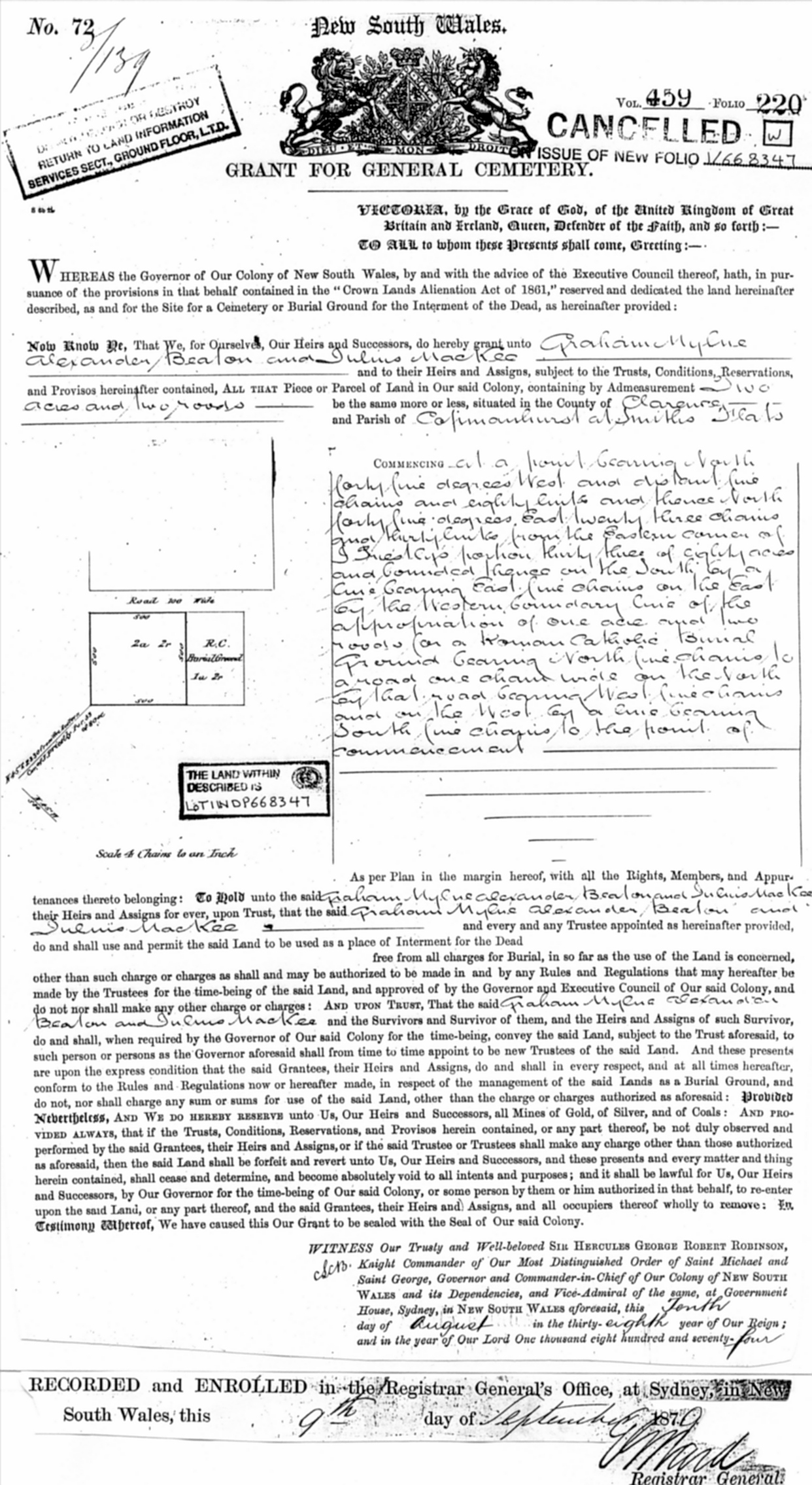
Title No. 72 Vol. 459 Folio 220
Interesting to note that this Cemetery Title still (in 2002) shows the original three trustees on the title.
Newspaper Searches
Finlay Beaton
1787
Died 6th July, 1863.
Aged 76 years
Donald Beaton (Sandy’s brother) died, unmarried, while still a young man.
A paddock at Upper Smith’s Creek, near Copmanhurst, is still referred to as “Donald Beaton’s.”
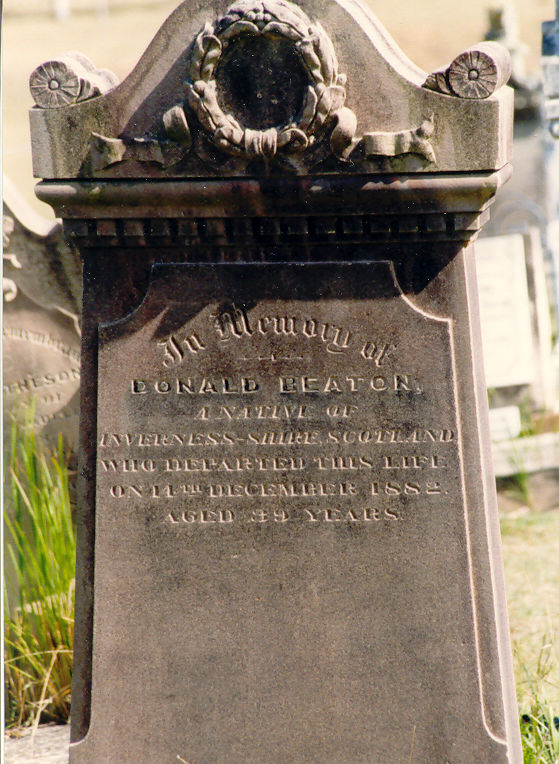
The Clarence and Richmond Examiner, Grafton
Saturday, December 23rd 1882.
DEATH OF MR. DONALD BEATON. - One well known to the residents of Copmanhurst and neighbourhood, died on Saturday last, in the person of Mr Donald Beaton. The deceased was a brother of Mrs Kenneth Matheson, and had long suffered from the wasting effects of consumption, to which he at length succumbed.
He had been in the district about 23 years, and was unmarried.
In Memory of
Donald Beaton
Native of Invernesshire Scotland
Who departed this life
On 14th December 1882
Aged 39 years.
The Clarence & Richmond Examiner
Saturday May 28th , 1881.
SAD ACCIDENT. On Wednesday last, as Mr James Cameron, farmer, of Copmanhurst, was returning home from Grafton, in company with several others, he was thrown from his horse at Rocky Point, and we regret to say received such severe injuries that he died about three hours afterwards, while being conveyed to town. From the evidence given at the inquest held on Thursday last at Tattersall’s Hotel, before the coroner, Mr A.Lardner, and a jury of twelve, it appears deceased was riding a spirited animal, which he was unable to control, and the horse having left the road a short distance, while galloping, jumped a fallen tree, and threw his rider, whose head struck the log, rendering him insensible. Dr Houison was at once sent for, and was quickly on the spot, and advised his removal to Grafton. He died as we have said, before reaching town, the doctor’s evidence stating that death resulted from concussion of the brain. The jury returned a verdict of accidental death. Deceased was an aged man, and very much respected in his neighbourhood. He leaves a family of six children, who had the additional misfortune to lose their mother about twelve months ago.
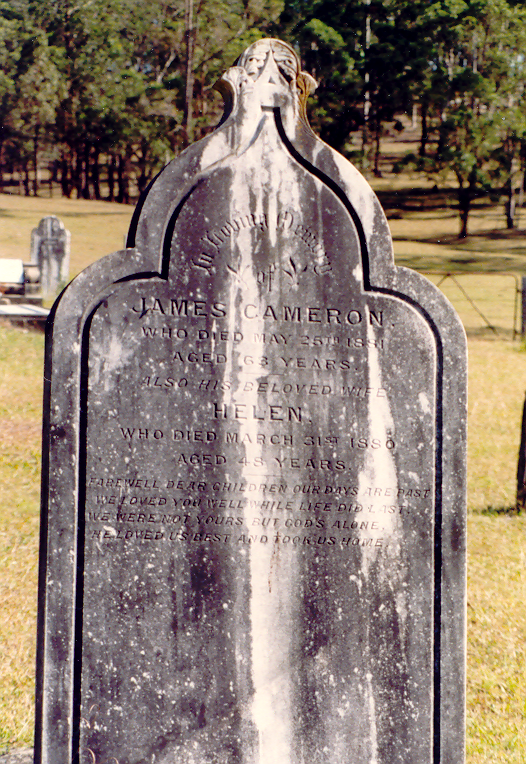
The Clarence & Richmond Examiner
Death
CAMERON. On the 31st March, at her residence, Hillington, Copmanhurst, after a long and painful illness, HELEN, the beloved wife of Mr.JAMES CAMERON, of Copmanhurst, aged 48 years.
Deceased, who was a native of Rosshire, Scotland, and a resident of the Clarence of over 20 years, has left three sons and two daughters, and a large circle of friends to mourn their loss.
1880
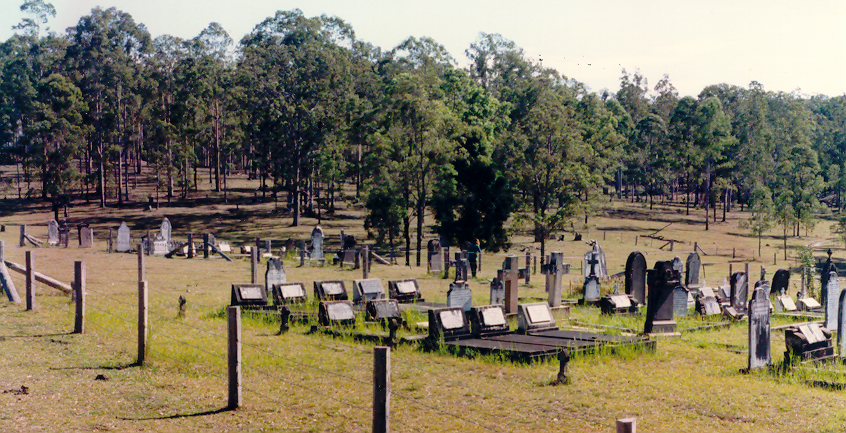
Annabelle Beaton married Kenneth Matheson, and lived for the rest of her life at Copmanhurst. She had ten children and died in 1922.
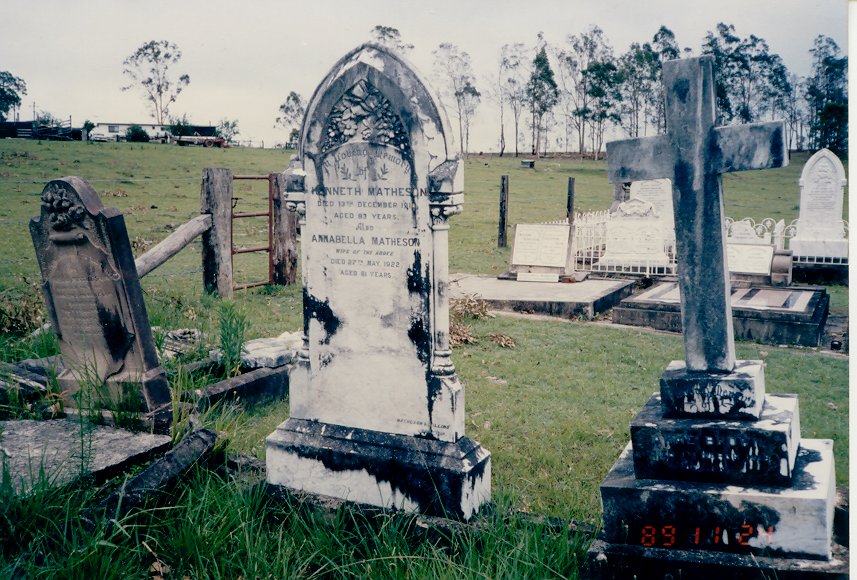
The Clarence & Richmond Examiner
1878
IN RE KENNETH MATHESON’S C.P.
Inspector Trollpoe deposed : Visited the selection (17th Sept, 1874) , 240 acres, county Clarence, parish Copmanhurst, on the 20th June, 1877 ; found there improvements amounting to 45 pounds; the full time for Improvements had not expired; the selection bore sign of having been occupied.
Kenneth Matheson deposed that he had occupied the selection, and had made improvements to the full value of 220 pounds; made his declaration for residence and improvements on the 29th November 1877.
The Clarence and Richmond Examiner, Grafton
November 28th 1871
PUBLIC MEETING. - A public meeting of the farmers of Smith’s Flat was held in the Public School room, on Thursday evening, the 10th instant, to take into consideration a proposal from Mr Joseph Page, J.P. Ramornie, Manager of the Australian Meat Company’s Works, who it appears expresses a desire to hear the conditions on which the farmers would be willing to plant sugar cane, which he would there-upon convey to the Directors, and urge upon them the desirability of making such additions and alterations to their plant at Ramornie, as would enable them during the spring (the season their work is slackest, owing to scarcity of fat cattle), to convert the works into a sugar mill, and devote their attention to the manufacture of sugar.
Mr A.Beaton, having been voted to the chair, enlarged upon the business before them, and treated the meeting to a great amount of valuable information relative to the sugar industry generally, Messrs Davison, Matheson, Phemister, H.Cameron, and J.Cameron, subsequently spoke to the question, when after some discussion, it was agreed that a deputation consisting of Messrs. A.Beaton, James Cameron, and J.Phemister, wait upon Mr.Page, and advise him that the farmers are agreeable to plant, if the company dealt with them on as liberal conditions as those of the sugar companies down the river.
In an account in the newspaper dated 19th October 1875 there is an item devoted to the crushings and yields of the sugar mills on the Lower Manning and concludes with the words:-I think that speaks well for the sugar producing qualities of the Lower Manning.
The Clarence and Richmond Examiner, Grafton
August 14th, 1866
List of Subscriptions paid towards the erection of the
NON-VESTED
NATIONAL SCHOOL HOUSE, and TEACHER’s HOUSE at
SMITH’S FLAT
71 Contributors are named on the list as having paid their subscriptions and 6 who had promised but not paid.
Those known to us were: -
Alexander Beaton £5.0.0
Graham Mylne £5.0.0
Kenneth Mathes £5.0.0
James Cameron £4.0.0
John Phemister £2.0.0
John Camero £2.0.0
E.D.Ogilvie £1.1.0
Donald Beaton £1.0.0
John Cameron Jnr 10/-
GEORGE GERARD , Hon Treasurer.
Smith’s Flat, 7th August.
A social and historical portrait of the times as reported on 4th February 1873.
Departure of Mr A.N. Small- Public Dinner.
January 28th - Very general was the feeling of regret manifested by the folk here upon receipt of the intelligence that our worthy teacher of the public school, Smith’s flats Mr A.N.Small was about to depart to another sphere of action, in the service of the Council of Education, he being appointed to the charge of the Public School at Wyrallah, and our Smith’s Flatites determined that he whom resided amongst them during the last nearly three years, should not depart from the locality , without receiving some marked token of their esteem. Accordingly Mr Small was invited to a dinner at our Host Lallhachs, on the evening of Friday, the 24th instant, which was got up in Mr Lallhach’s best style. Further comments upon the cuisine arrangements is unnecessary, as at the same festive board we have met before on a similar occasion.
Mr H.Cameron occupied the chair with the guest of the evening upon his right, and Mr H Baillie acted as croupier. No fewer than twenty-five gentlemen sat down to discuss the good things provided, which could not fail to gratify the palate of the greatest epicurean.
After doing justice to the inner man, the cloth having been removed, the CHAIRMAN called upon the company to fill their glasses , and in a most loyal manner to drink that loyal toast, ”Her Majesty the Queen ,and the Royal Family”, which they did with a right good will. Then followed the toast “The Governor, Sir Hercules Robinson.”
The Chairman again arising, aquainted the gentleman that it had fallen to his lot to perform the most pleasing task that could be allotted, viz, to propose the health of the guest of honour whom they had met. He doubted not but everyone in the room would re-echo the sentiments of his mind, regarding the gentleman whom they had met to honour, when he said that the loss occasioned was one of the greatest that could befall them .
He reviewed the works of Mr Small since his stay here; he expressed his high appreciation of his services in his capacity as teacher- eulogised upon the example set by him to the youth in his private walk. The community he deemed would lose one whom it had learned to respect. Their school would lose its teacher, one that it would be difficult to replace, and they would all lose a friend whose memory would be ever fresh to them, and who would carry with him their fervent good wishes for his health whatever his lot would happen to be cast. He then desired the gentlemen present to charge their glasses to the brim and drink them down to the bottom, with three times three to the health of their guest - Mr A.N.SMALL. The toast was then most enthusiastically received.
Mr Small, in rising desired to express his thanks for the enthusiastically manner in which they had drunk his health, expressed the great pleasure it gave him to accept the very cordial invitation given him to enjoy the social reunion before a parting, perhaps for long, perhaps for ever. His feelings would not find expression, pent up and bowed down as they were at the thought of leaving a spot that had been endeared to him by so many ties of friendship. He had come amongst them, to most of them an utter stranger, and left them friends. He left them under the painful impression that to him the pleasure of associating with them would soon be a thing of the past. As he looked upon every well known face it occurred to him that their genial intercourse would soon pass away but there was one thing that time and distance could not affect, and that was the memory of the many happy days it had been his pleasure to spend at Smith’s Flat. He left them with the pleasant reflection that to none could he look but with the eye of friendliness. He now left them to occupy another sphere of labour, and hoped they would find a successor more worthy of their esteem. It would be vain of him to suppose that when he should again see them - as he hoped to do - that he would find their sequestrated and small locality transformed beyond recognition, by the majestic strides it had made, but he did hope that it would find them all performing their respective parts in the fabric of their society, with the same unanimity as at present. He hoped they would be long spared to bless each other. He desired again to thank them for the cordial manner in which they had drunk his health.
The Croupier then proposed the toast “The Council Of Education and Staff of Teachers”, in a neat address, and it was responded to by Mr J.W.E.Baillie, of Ulmarra, who explained the operations of the Public Schools Act, and treated those present to a great amount of valuable information.
“The Pastoral, Mining and Agricultural interests of New South Wales,” was then proposed by Mr John T Polson and responded to by Mr A. Beaton. Both these gentlemen spoke to the subject in fitting terms, giving valuable statistical and other information, which time does not permit of me giving to you.
Mr J.Phemister, in a humorous address, proposed the toast “Of the Ladies”, coupling with it the name of Miss Small - Mr Small responded. The toast “The Land We Live In,” was then proposed by Mr J.Phemister, and responded to by Mr J.T.Polson, in a telling speech, reviewing the history of the colonies from the date of Captain Cook’s landing to the present time.Mr J.T.Polson then proposed the toast, “The host and hostess,” and took occasion to express his sorrow for their guest’s departure, whom he was acquainted with for upwards of twenty years. He was the friend of his youth, and although oceans had rolled between them they were friends still, and ever, he trusted would continue to be. None could be more sincerely sorry at his departure than himself, and he hoped he would be successful in his new sphere - Mr Lallbach replied to the toast.
Mr Small then in a feeling manner, proposed “The Health of the Chairman,” which was drunk with enthusiasm, and duly acknowledged.
Those of the company who desired to trip the light fantastic, had an opportunity of doing so after the dinner and availed themselves of it. The entertainment was pleasantly diversified with songs, and recitations, and the partydispersed after the 25th of January was advanced. Thus ended one of the most pleasant reunions that had ever taken place at Smith’s Flat.
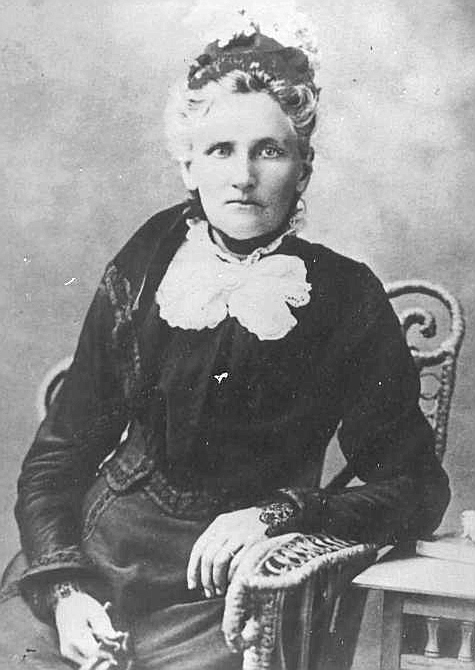
Euphemia Beaton nee McIntosh
Euphemia Beaton (nee McIntosh)
With grateful thanks to Michelle McIntosh for supplying the family research,
Anecdotes, Memories and Research of Enid M.Dillon (nee Collins)
Daughter of Albert James and Jemima Rachel Collins (nee McIntosh)
Daughter of Donald and Margaret McIntosh.
The McIntosh family originated from the Isle of Skye.
One story has it that three brothers, originally from near Muir of Ord, fled to the Isle of Skye after the Battle of Culloden of 1745.
 From
records and word of mouth it has been established that the family came
from the Snizort area and migrated to Australia on the “Midlothian”
arriving in Sydney on 12th December 1837.
From
records and word of mouth it has been established that the family came
from the Snizort area and migrated to Australia on the “Midlothian”
arriving in Sydney on 12th December 1837.
John and Ann McIntosh’s Family
1806 John McIntosh born Skye.
Married : 26th December at Skurinish to Ann daughter of Donald and Mary Robertson, born in the South of Isle of Skye.
Children :
1828 Donald McIntosh born on Isle of Skye.
1833 John McIntosh born 3rd January at Kensaleyre, Isle of Skye.
1836 Mary McIntosh born December at Kensaleyre, Isle of Skye.
1840 Charles McIntosh born 22 April in N.S.W.
Euphemia McIntosh born 16th April in N.S.W.
Ann died 17th December, buried at Copmanhurst.
1880 John died 6th February, buried at Grafton.
From a family collection.
Is it Euphemia ?
John McIntosh was recruited to work on the farm owned by Andrew Lang, brother of the now famous Presbyterian Minister, John Dunmore Lang.
There is a statue of John Dunmore Lang in Wynyard Park, Sydney with the inscription
‘ Dunmore Lang D.D. -Patriot and Statesman. Died 1878.’
The river was used as transport for many years before railway was available, the family arrived by small boat to the busy town of Morpeth.
Donald grew up there with school, church and highland heritage all contributed to close Scottish ties. They were all Free Presbyterian, Gaelic speaking and a long way from home.
Donald married Margaret McGregor on 16.6.1852 at the Scots church Maitland by the Rev. William McIntyre who had been the chaplain on the “Midlothian”, the ship on which the McIntosh family arrived in Australia. Donald and Margaret had eleven children, seven dughters and four sons. Donald died in 1912, highly regarded as a man of integrity.
John died in 1844 at the age of twelve after falling from a tree.
The story is told that as young John was transported by boat to seek help, gathered on the banks of the river were the Scots who had watched him growing up. They sang “Will Ye No’ Come Back Again” a plaintive song, expressing the solidarity of a close knit community.
Mary so the story goes, knew Elizabeth McArthur (wife of Captain John McArthur who intruduced merino wool to Australia) personally and on occasions had afternoon tea with her. Perhaps closer to the truth may have been that she worked at Elizabeth Farm as a domestic, during her late teens and at the later stage of Elizabeth McArthur’s life. Some of the McIntosh women were petite, attractive, full of fun and with personalities of some charm. Could she have spent time with Elizabeth McArthur as a companion?
Mary married John Hopping on 31st Dec, 1859, a schoolteacher, and lived at Parramatta with their two sons Charles and John. Some time after their marriage, John Hopping began using the name
‘ Henry Mills’ and over the years this continued, although official documents were still in the Hopping name. Mary is buried as Mary Hopping. Why did he use both? A mystery to be solved ?
Charles was one of two children born to John and Anne in Australia. Charles was drowned in the flooded Manning River on 28th August, 1861. The papers reported him as being greatly mourned.
Euphemia was born on the Hunter, probably at “Brandon”, a property near the area in which they lived.
Euphemia married Alexander (“Sandy”) Beaton on 11.4.1865 at the South Arm on the Clarence River.
“Sandy was unforgettable, determined, defiant, most ingenious, incredibly humerous and master of all situations. He spoke gaelic and was an ardent Free Kirker. Sandy’s passion was to own land.”
The early Scots were very clannish, although geographically very distant, and the Beaton cousins at regular intervals visited their cousins on the Clarence.
Enid remembered travelling with Ann Beaton on the trip back to school in Sydney. Presumably Ann was on her way back to Western Australia.
Enid concluded her collection of memories with the paragraph –
Our ancestry laid down sturdy foundations for us all, taught us lessons about work and play, caring and sharing, the importance of always being concerned about our personal integrity in all our activities and relationships. By example, they gave us the gift of pausing at difficult tasks and looking upwards, reverently recognising the God they worshipped. We also learned the therapy of laughter, for which especially our Scottish ancestors are noted. Four, five and six generations on, let us never forget this, our heritage.
Enid Morven Dillon.
LINES SUGGESTED
ON THE
DEATH OF CHARLES McINTOSH,
WHO WAS DROWNED
WHILST CROSSING THE MANNING RIVER
But no longer can I linger,
Upon this tale of woe;
But hope the Lord may sanctify,
Their trials here below.
Although this one it seems severe,
Let’s hope it’s for the best;
And seek a home beyond the skies,
Where all is peace and rest.
ROBERT JOHNSTON.
Dingo Creek
O’erwhelmed I was with sorrow,
For grief had pierced my heart;
I little thought that he and I,
So suddenly there should part
I turned away in anguish,
That no words can express;
I thought upon his parents,
And of their sad distress.
I knew how much they loved him,
For he was kind and loving too;
And now that they had lost him,
What would his poor parents do.
When I saw his loving sister,
Her looks were quite forlorn;
I knew how much she’d miss him,
And deeply she would mourn.
We reached that fatal ford together,
As the night was closing in;
And scarcely had we left the bank,
When our horses had to swim.
My horse, he struggled violently,
Twice he sank beneath the tide;
He reared and plunged with all his might,
And we reached the other side.
It was then I called poor Charley,
But no answer could I hear;
I feared he had sunk beneath the tide,
When no helping hand was near.
A few moments scarce had passed away,
Since he stood by my side;
And now to think that he lay low,
Beneath the flowing tide.
.
The Family Bible
Alexander and Euphemia were married on April the 11th in 1865.
On the occasion they were presented with a Family BIBLE.
The births of Sandy and Euphemia’s children are recorded in the Bible.
A large, leather bound, beautifully illustrated book, it is now in the possession of Kate Langdon.
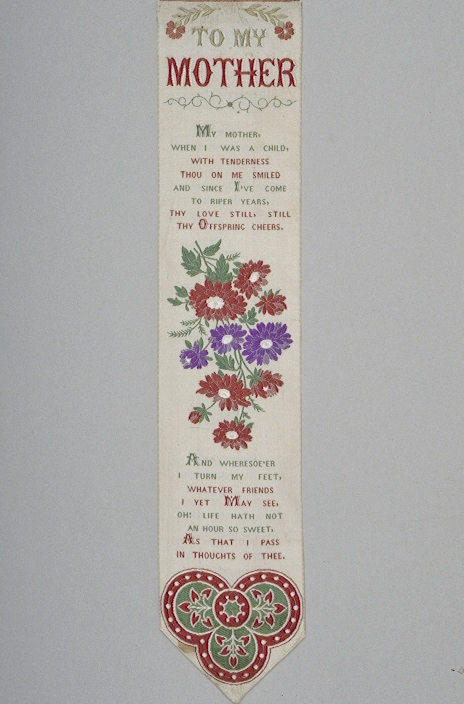
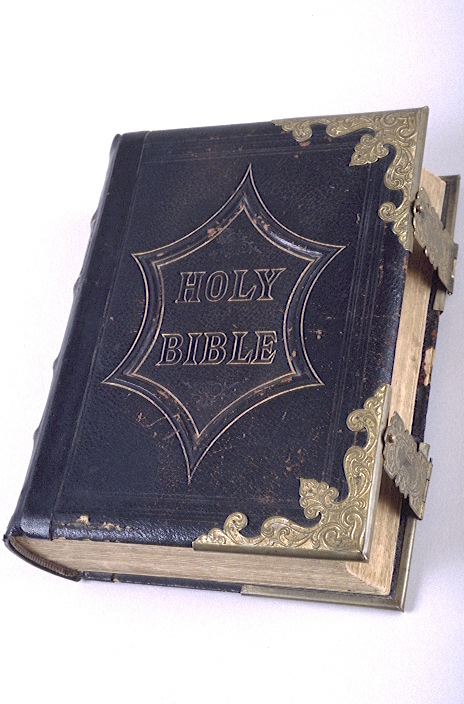
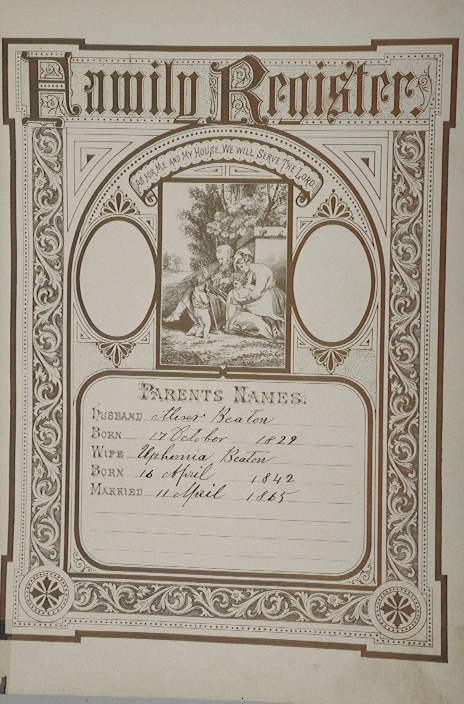
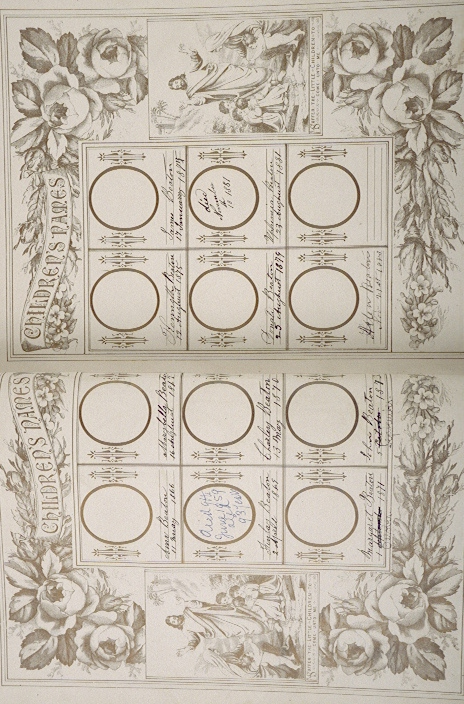
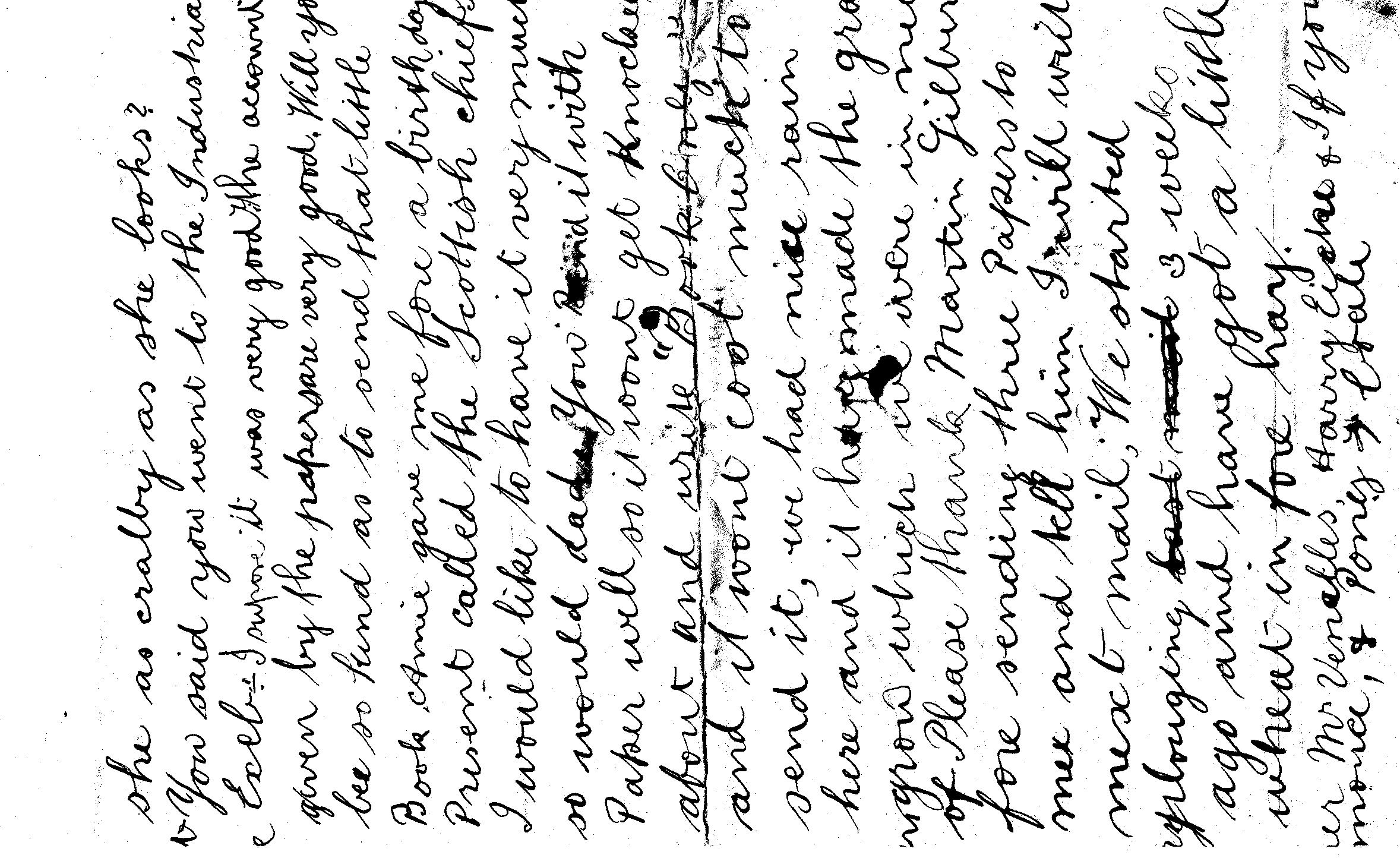
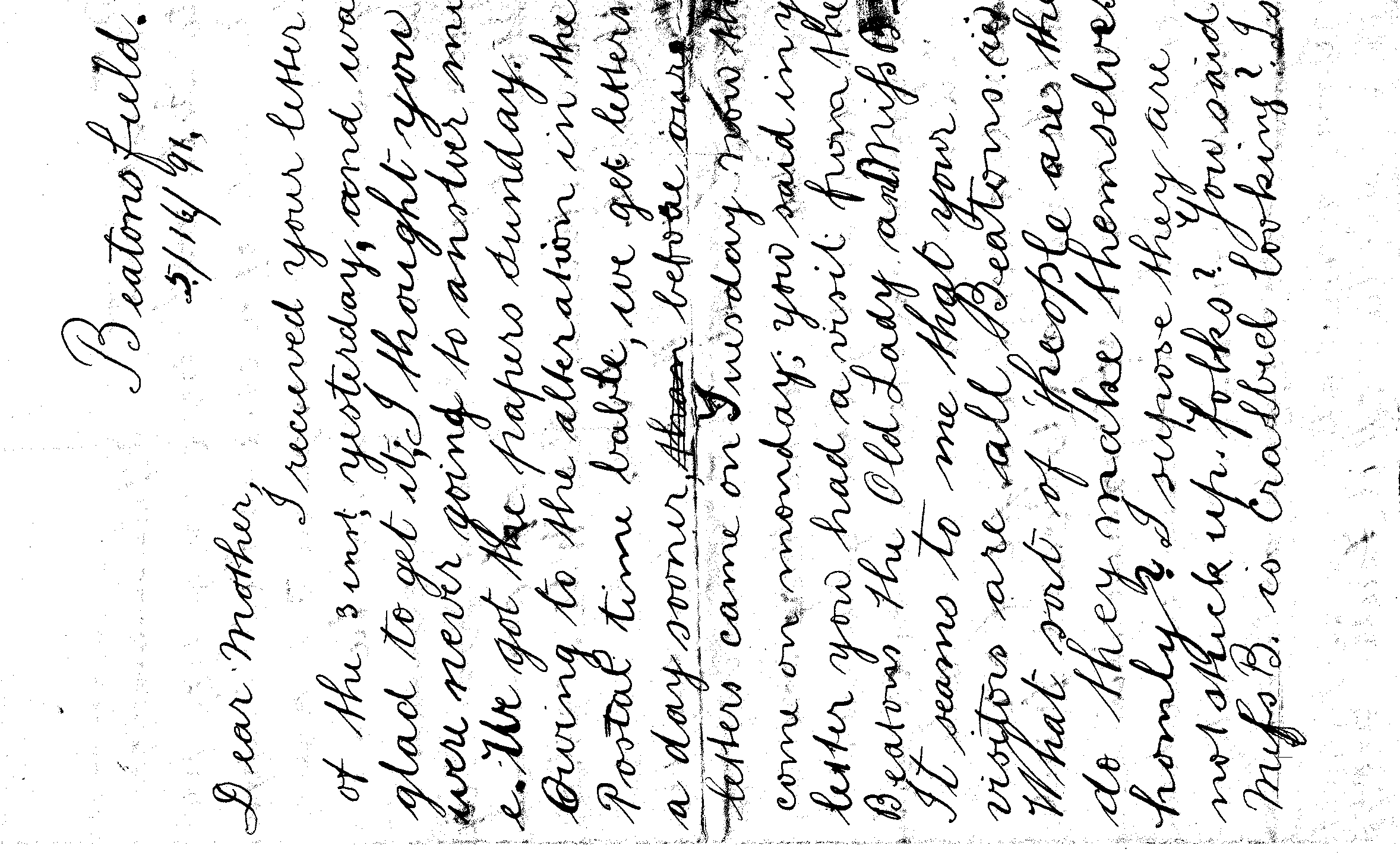
Ken Beaton’s letter to his mother. 1891. Beatonsfield.
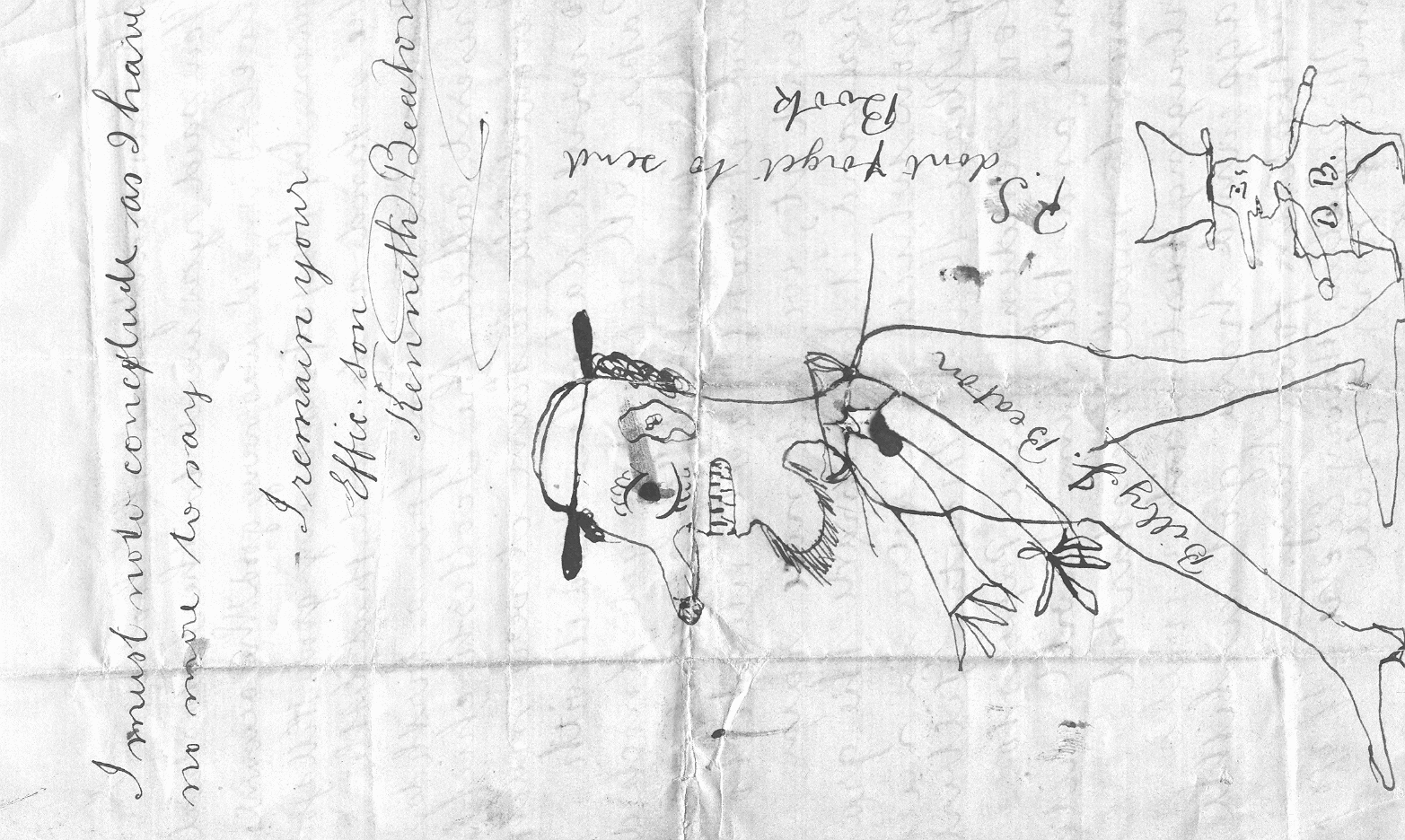
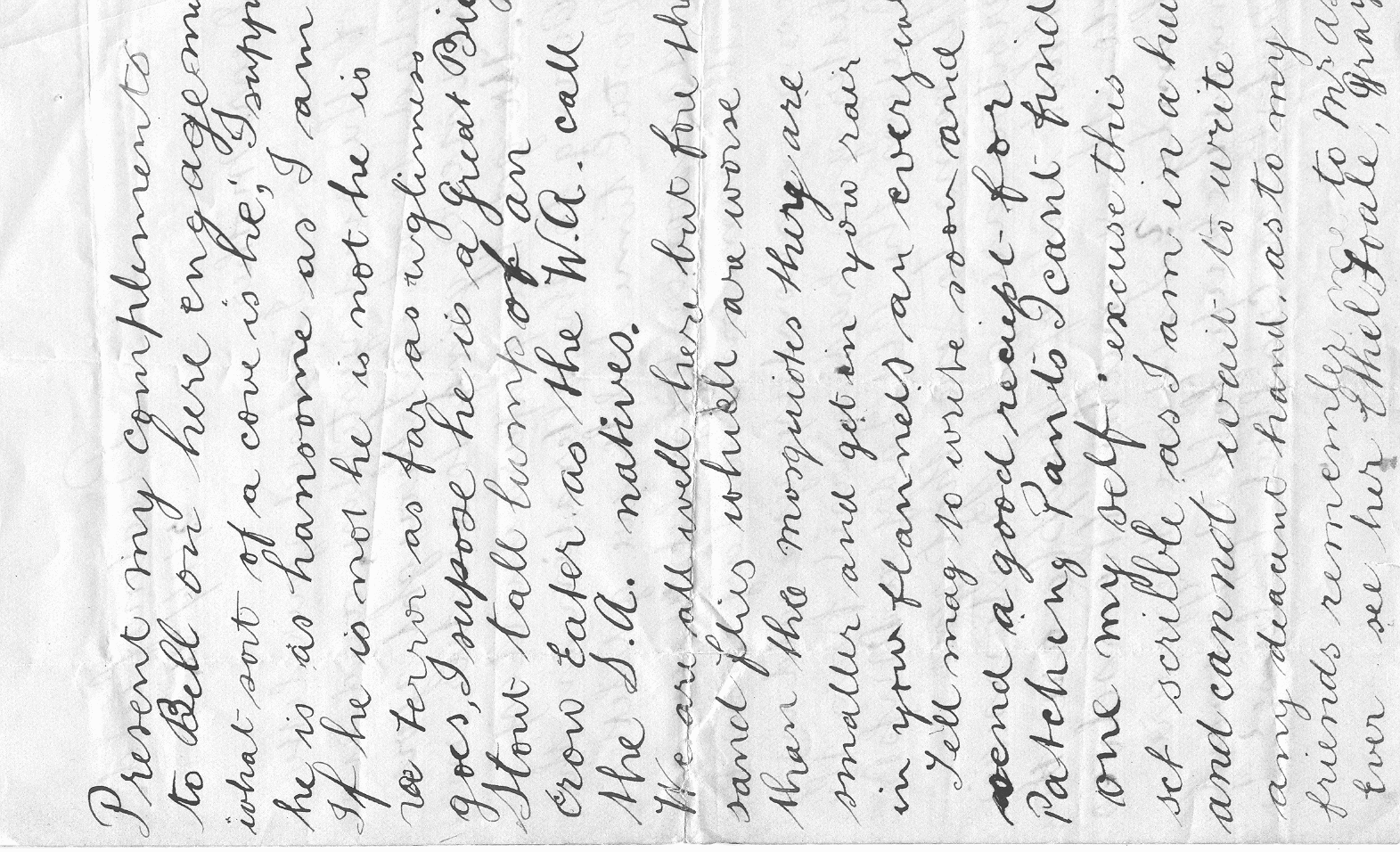
South Australia, then on to Western Australia.
By November 1879 Sandy and Euphemia had sold up all their possessions in New South Wales.
At some time after that money was borrowed from a brother-in-law and the family moved to South Australia. Ann would have been 14, Belle 13, Finlay 11, Charles 10, Meg 9, Jack 8, Ken 5, James 3 and Don a babe in arms. The arrival of Euphemia in August 1881 and Helen in November 1883 places them in South Australia at that time.
Exactly where they lived or what Sandy worked at is unknown.
Some of the children’s experiences in South Australia are recorded in their individual chapters.
News of rich gold finds in the Pilbara and Kimberleys in the 1880’s circulated and men flocked to the diggings.
We have no records of how Sandy travelled to the west, although, his son James in a 1939 newspaper article stated he travelled by boat via Queensland to the Kimberleys.
In 1978 his grand-daughter Isabel recorded that he travelled overland from Adelaide to the Northern Territory, so ?
The first documentation naming him was at the goldfields at Nullagine.
Finlay and Charles, arrived from Adelaide having travelled in the ‘S.S.Flinders’ in October 1888, to assist Sandy with his mine followed by,
John and Kenneth, in September 1889, sailing in the ‘S.S.South Australian’. (ref. Inward passengers lists, Battye Library).
There is no record of the boys journeys from Perth to the north but we have to assume they travelled by coastal ship to the port of Cossack and then by road to Nullagine via Roebourne.
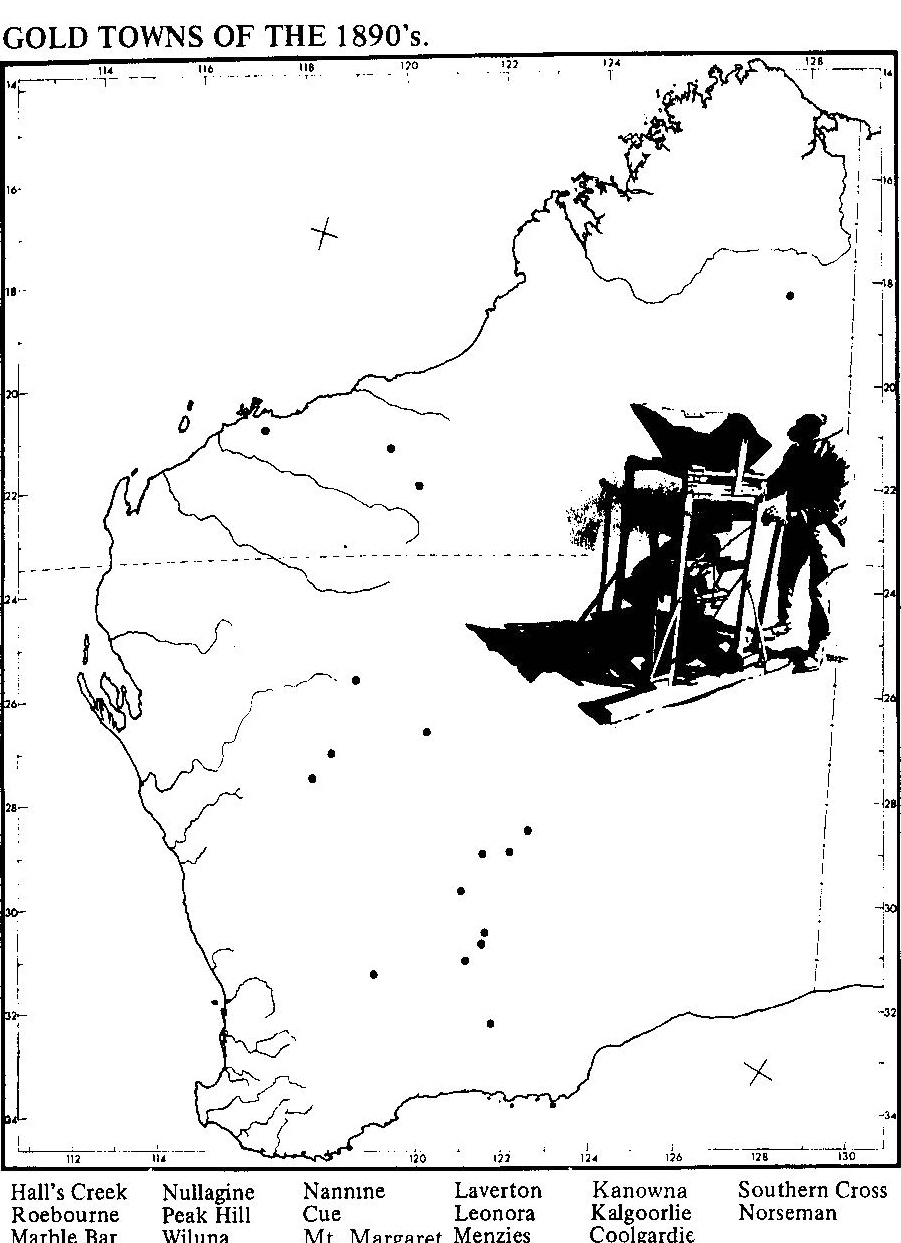
Nullagine
Euphemia, Ann, Belle,
Meg, Jim, Don and Nell travelled to Fremantle in the French ship, ‘S.S Polynesian’ to Fremantle in November 1892 (ref Inward passenger lists, Battye Library). Thence by coastal ship to Geraldton and by road to ‘Beatonsfield’, the farm home at Yandanooka to rejoin their husband, father, sons and brothers after a period exceeding four years.
GOLD in Western Australia.
We will never know the truth of Sandy’s travels, explorations, finds or rewards.
I am including all the printed stories that have been found over the years.
The story that has not been printed (to my knowledge) is the story of Nathaniel William Cooke. Having read some of his and his son Lewin’s diaries and papers, I can only have the highest regard for him and his long list of endeavours.
Nathaniel William Cooke was the son of John Taylor Cooke who arrived in Western Australia in the ship “Lotus” in 1829, and married Mary Anne (nee Morgan).
Nathaniel was born in a cottage in St Georges Tce on 20th January 1838 and died on 17th March 1922 aged 84 at Guildford.
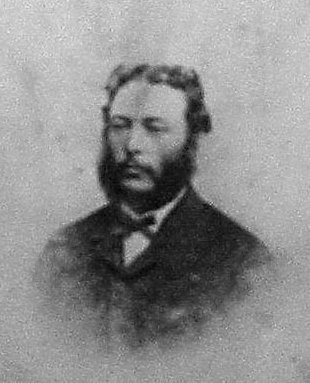
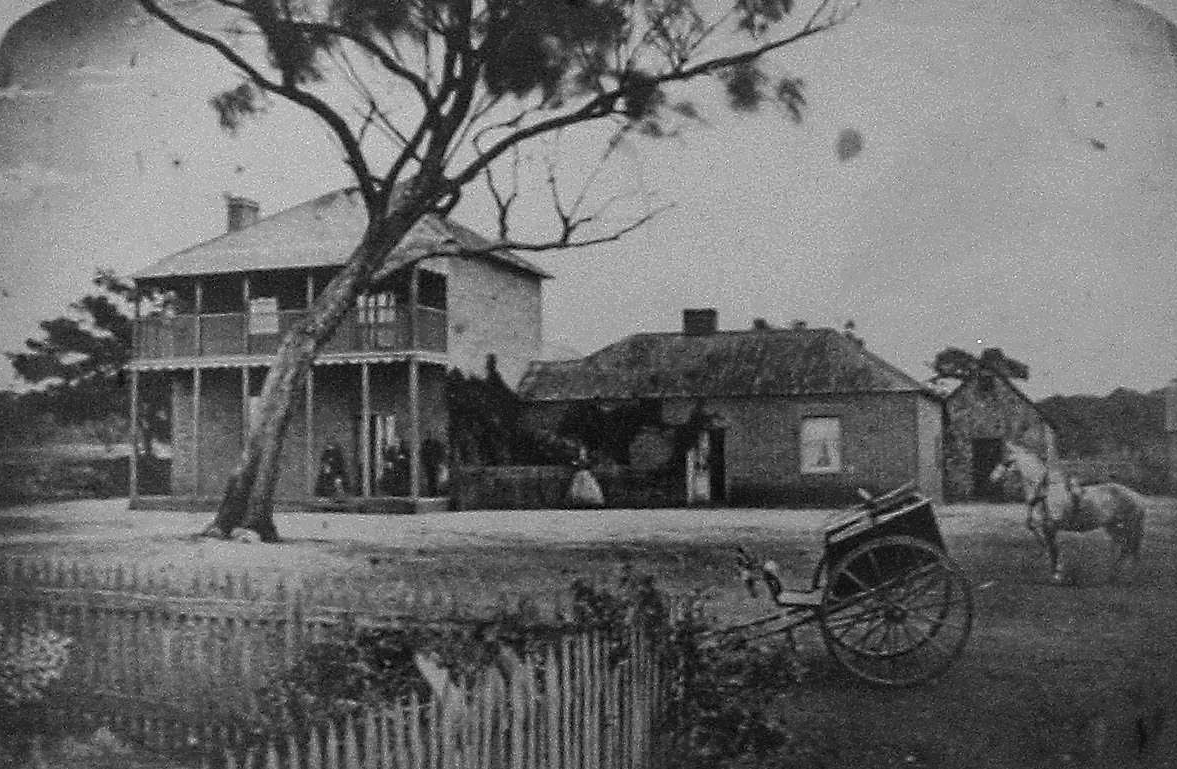
The Cooke family home at Newleyine (near York) 1847.
Nathaniel Cooke. c1878.
Nathaniel and his son Lewin Cooke reputedly met Sandy on their way back to Roebourne for supplies, after finding gold and pegging their claim at Nullagine.
There is no doubt at all that Nat was an experienced explorer and had found traces of gold at various places during previous trips and on this particular trip.
Nowhere in the documents is there a mention of Sandy until after the publication of Warden W.L.Lambden Owen’s book ‘Cossack Gold’ in 1933.
But portions of the diary were lost due to water damage and subsequently when rewriting Lewin left out the indecipherable sections. Maybe Sandy was mentioned in the original.
Nathaniel is reputed to have given Sandy a tracing of where to find water .
From Lewin’s Diary :-
Tuesday 19th June, 1888. Sample good from day before. Tried to track it up without success. Found fine pool of water up a creek running out of some conglomerate country, pudding stone sort of rock.
Thursday 21st Think they have found where the gold is coming from. Out of a leader just dipping under the table-land. Got good colours at the foot of the reef.
Friday 22nd the colours are good and I think sufficiently strong to pay
Monday 25th Good prospects
Tuesday Two bags – one fair the other no good.
Friday 29th Piece about 5dwts
Sunday 1st July Nathaniel brought in some stuff in his handkerchief with colour.
Saturday 21st At Mears – they heard we were coming in with a great quantity of gold.
Monday 30th Picked up mail from Roebourne.
August 14th Lewin arrived in Fremantle on the ‘Otway’ from Cossack.
Lewin’s diary continues on to mention the gold he brought to Perth but no mention at all of their pegging a claim or of Nathaniel returning to the claim. Mentions of Lewin showing the gold to his Uncle and others.
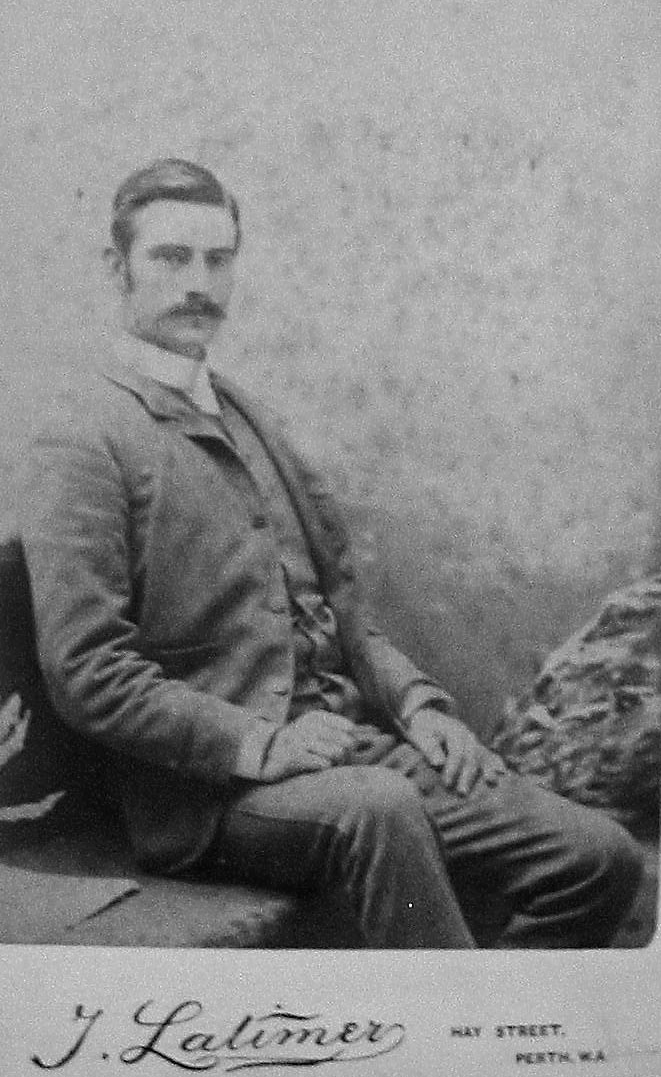
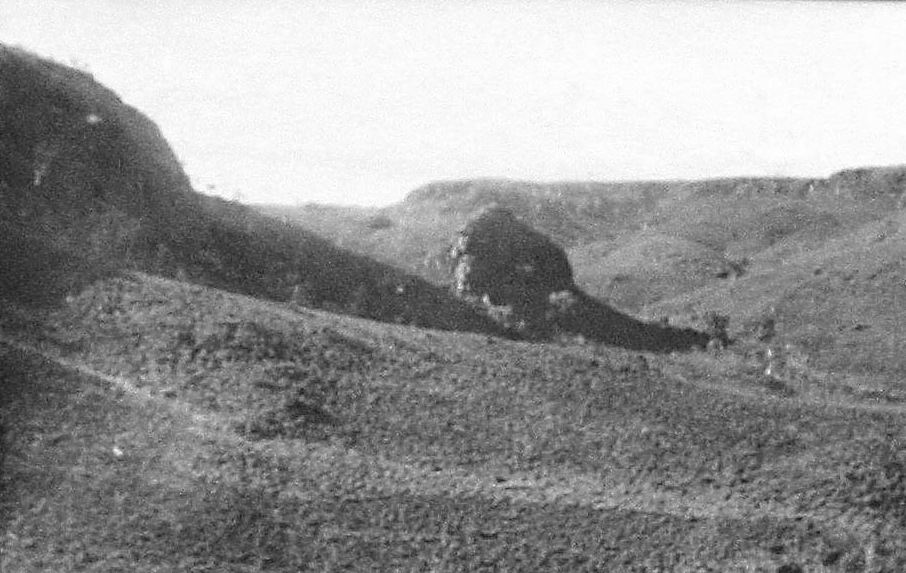
The north-west landscape.c1890’s
Lewin Cooke.
An exerpt from an account of
Nathaniel William Cooke’s Travels in the West Australian Bush
by his son Mr N.W.(Weston)Cooke. 1948.
Being short of provisions they decided to go down the Nullagine River, and from a point, continue on to Coppins Eel Creek Station, where they obtained sufficient for the time being. From Eel Creek they set their course Southward and through Coppins Gap and out on to the edge of the Norton Plains, looking for good pastoral country – then back to the Nullagine River, which they struck at a part called the Big Bend, and followed the River up prospecting creeks on both sides, and finding gold in many places.
19.6.1888. On this day they discovered what they considered PAYABLE GOLD in a part that is now known as Nullagine proper in the conglomerates – and pegged their claims, including a Reward claim.
Unfortunately they could only remain on their find for a few days , as they were actually starved out for the want of good food, clothes, boots, horseshoes etc. etc. and to make sure of a good supply, decided to travel to Roebourne.
It might be necessary to mention here that on their return to Nullagine, after an exploration of the Marsh and Ethel Creek country, they found that Sam Wheelock and other men who were prospecting in what was considered the most likely place for gold, had cleared out, owing to the scarcity of water.
At the time these discoveries were made, there was a Reward of £1000 offered by the Government for the discovery of payable gold in the North West division, and without doubt N.W.Cooke is justly entitled to this notable historical achievement, as his discovery of the Nullagine, as previously mentioned, had been reported to Mr. John Edgar J.P. of the De Grey Station prior to these discoveries. However after a considerable amount of trouble Mr.N.W.Cooke received £250.0.0 – a poor compensation for the expenditure, labour and risk that the discovery entailed on the finders, apart from the honour he had rightly earned.
Owing to the Kimberley Goldfield having petered out, prospectors and others who could find the means to do so, were on the move, but most of them had spent their all at the Rush. There were a few however, who were able to continue, and were looking for fresh fields, and some of these men who had heard of the discovery of payable gold at Nullagine, were heading in that direction, among whom, was a man named Beaton, whom Owen in the book he wrote “Cossack Gold” stated that from his (Beaton’s) experience as a prospector, he was able to secure the right ground, and thereby gained much gold that the inexperienced discoverer of Nullagine lost.
I now refute this wrongful accusation and will reveal the truth.
The fact is that Beaton, whom N.W.Cooke first met on the route from Roebourne to Nullagine, when he Cooke was going down for provisions, and gave Beaton a tracing of the country ahead, and direction to travel, to enable him to reach the Nullagine safely, and Cookes Creek. The tracing also clearly showed Beaton where he could obtain water, which was most essential. Beaton arrived safely at Cookes Creek, and had the field to himself, as the former prospectors as previously mentioned, had left owing to scarcity of water.
During Cooke’s temporary absence, Beaton had plenty of time to hurriedly look over the claims pegged by the Cookes, and shifted the pegs in such a manner that enabled him to peg in the most valuable portion of Cookes claim for himself.
Other prospectors arrived during Cookes absence, and on his return he could see that Beaton had shifted his pegs and accused him of so doing, which he, Beaton denied, and after much argument, it was decided among the few men there, that they should draw straws, and the successful one was to have his choice.
The devil looks after his own and Beaton won the draw, and from this particular portion of ground, obtained a great quantity of gold which rightly belonged to Cooke, and was given credit by ‘Owen’ of having, through being an experienced prospector, secured a fortune, that Cooke owing to inexperience missed.
Down the years Beaton could have relieved his troubled conscience,and made amends, but did not do so. However when Beaton was on his deathbed he sent a message to Cooke who was then living at Guildford, stating he wanted to see him. Feeling that no good purpose could be served by such a visit Cooke did not accede to Beaton’s request, and remarked that he did not want any deathbed repentances, and there the matter ended.
This episode would not have been mentioned, had it not been necessary to refute Owen’s error in his book “Cossack Gold” in which were many mistakes and untrue statements.
(The writings continued regarding Owen’s inexperience as a Warden and lack of Mining Law knowledge etc.)
cont.
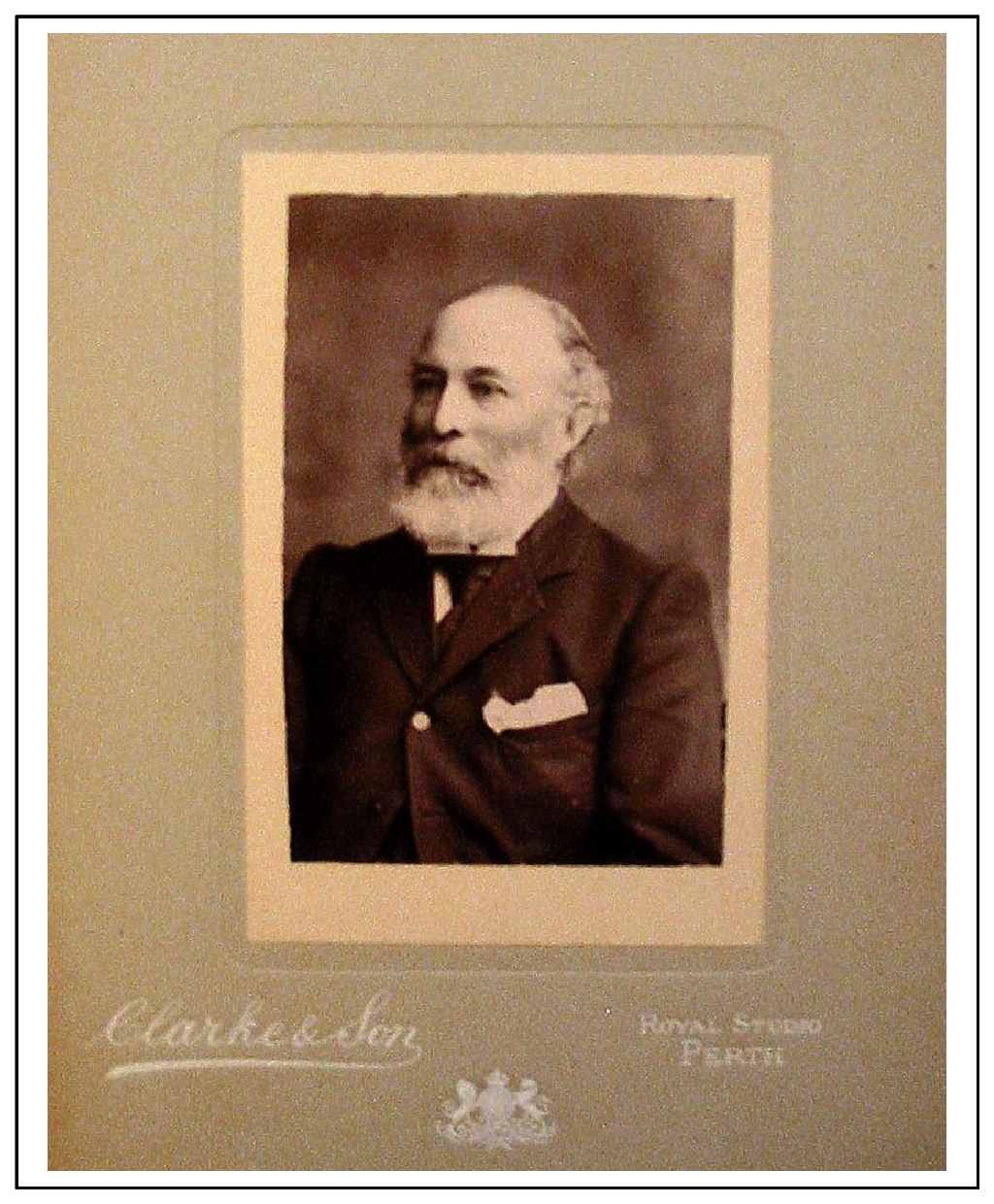
But for him to express his opinion so
emphatically on Beaton’s ability as
an experienced prospector, and through which he, Beaton, made a fortune at the expense of N.W.Cooke, must be corrected and the truth revealed, which can be verified by men who were present at the Nullagine Alluvial Gold find, and are still alive and well.
Weston Cooke.
1948.
My sincere thanks go to Mr Roy Cooke (Nathaniel’s grandson, Weston’s son) for his kindness in allowing the reproduction of his photographs and access to the family diaries and writings.
Nathaniel Cooke. 1899.
From “Cossack Gold” by W.L.Lambden Owen.
Printed by Angus and Robertson in 1933 and reprinted by Hesperian press in 1984. Photo and text reprinted here with the kind permission of Peter Bridge, of Hesperian Press, W.A.
Lambden Owen was appointed Warden of the Pilbarra in 1889 after the death of the first warden to the district, Warden C.W.Nylusey, who held the position for seven months, from the 1st October 1888 until 29th May, 1889.
Page 72.
Nathaniel Cook was looking for pastoral country when he came on gold. He knew little about the subject beyond the knowledge that this was indubitably gold. Yet, had he kept his counsel he might have made the quick and easy money that Beaton made.
Being temperamentally incapable of reticence, he told his secret to one and another, among them to Beaton who was an experienced digger. The result was the exploitation of Beaton’s Hill from which gold was taken to the tune of ten ounces to the dish and one hundred and fifty ounces to the cart-load. For the information of the uninitiated I had better say that gold ore or wash-dirt is deemed payable at well under one ounce to the ton. Beaton’s moreover was unusually easy gold. No batteries or any sort of machinery were on the Nullagine. It was contained in ordinary soil and conglomerate which was washed in the creek nearby.
Page 91
The unrecorded wealth amassed by lucky diggers who went east may be guessed at by a comparison with any lucky digger who stayed west. Beaton of Beaton’s Hill will suffice for an example.
With no better machinery than the crude home-made implement known among miners as a “Long Tom,” he washed enough gold out of the dirt to buy the late Samuel Moore’s sheep station near Dongarra on the Irwin River and to settle his sons on two others near Cue in the Murchison district.
The “Long-Tom” is usually erected on the banks of a pool or creek in which there is water. The qualification is important because in many “pools” and “creeks” there is no water most of the year. Built mainly of bush timber, it consists of a staging from ten to twelve feet high to which is attached an ordinary hand-pump. Slightly below the top of this staging is a trough made of boards or hollowed logs from eighteen inches to two feet wide and six to nine inches deep, lined with coarse blanketing, and having “ripples” (indentations an inch or two deep) spaced five or six feet apart. The trough slopes at a slight angle to the ground. The dirt containing the gold is tipped from the staging into the top of the trough and washed down it by water pumped from the pool. Gold being the heaviest remains on the blanket and in the ripples. After a certain amount of dirt has been treated, the blankets are taken up and washed in tubs and the gold deposit is collected.
At thirty-three feet Beaton had come upon a rich “wash,” a sort of kaolin, about sixteen feet wide and four inches deep, showing gold “like plums in a pudding”. The Hill at Nullagine in my own North-west division some three hundred miles from Pilbarra.
List of Cancelled Gold Mine Leases 1954.
Published 1.5.1954 for the Minister of Mines.
Pilbara Goldfield – Nullagine District.
Lease No Ore Treated Gold Produced
37 Beaton’s Hill 1.00 tonnes 1.93 oz
Production Period Prev to 1897. Part of same ground.
British Petroleum of Aust Ltd. 787.00 145.29
36 Cooke’s Hill 60.00 81.57
47 Cooke’s Hill(Conglomerate) 22.00 24.43
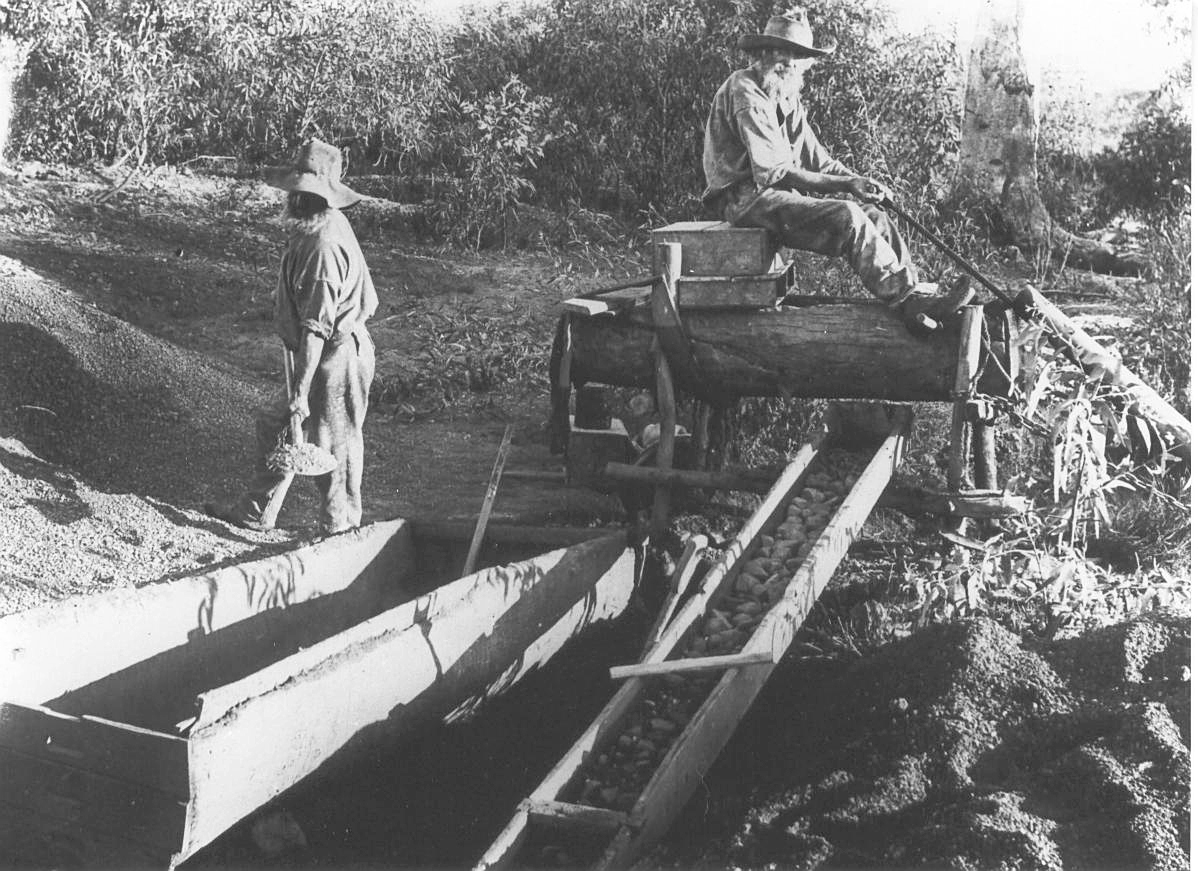
One of the boys with Sandy (seated).
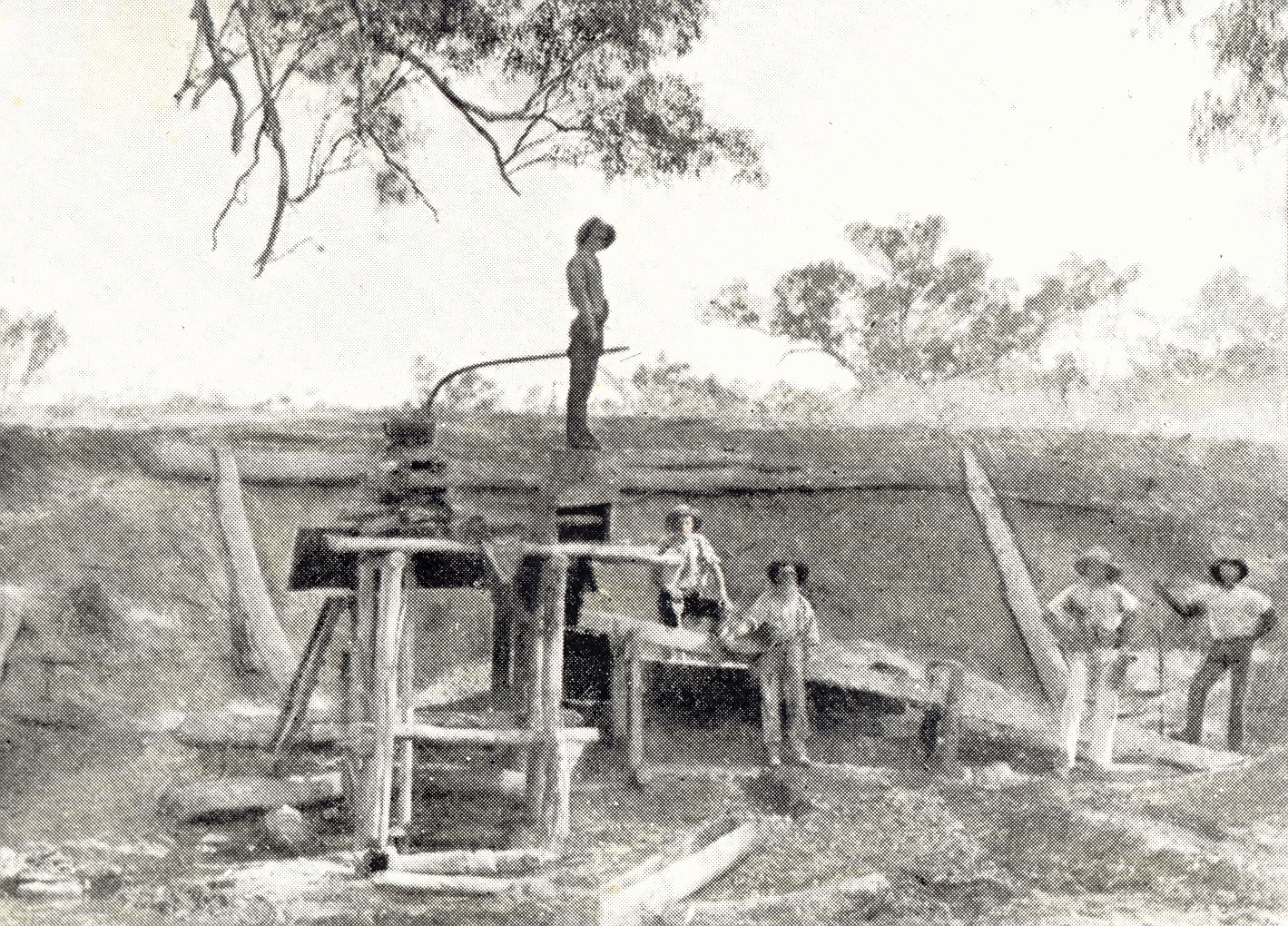
From the book “Cossack Gold” , 1933. Reprinted by kind permission of Peter Bridge, Hesperian Press.
Standing on top of the long-tom: Ken, Sandy standing in front of the ramp, Jack standing behind Sandy and Charles and Finlay on the right.
Geological Survey of Western Australia 1888-89.
By Harry Page Woodward, Government Geologist.
(Extracts only)
Page 17.
Gold . – Gold is said to have been first found in this Colony in 1688 by the Dutch bucaneer, Dampier, after whom the North-West coast was named. He spent a good deal of time in that year in searching for the precious metal, and that he met with success seems to be confirmed by the fact that on some of the old Dutch charts this coast is marked “Provincia Aurifera,” and also that in 1888, just 200 years later, rich alluvial fields have been found in the same locality with gold almost on the surface.
Page 19.
In 1888 some very rich reefs were found to the Eastward of Roebourne Bay, and many of them were opened up, but, owing to the discovery of alluvial diggings in the neighborhood, only one or two are now being tested and these are proving to be of great value. The stone is a milky quartz with occasionally a bluish tinge, containing a large quantity of antimony associated with the gold. The reefs run East and West, and are the only known metalliferous lodes in the Colony running in this direction. The rocks are slates, often calcareous, with hard ridges of banded quartzite and large dyke masses of amygdaloid standing up out of the plain. There are also some very rich deposits of alluvial gold, extending over three hundred miles of country, and following the coast to the East and West. Up to the present most of the finds have been in shallow ground, but now richer deposits of gold are being found in the deeper alluvial deposits, and these are often associated with cementing deposits, similar to those occuring in the other colonies.
Judging from the large quantities of gold already sent away from this district it must be a very rich gold-bearing tract of country, and when the alluvial gold ceases to be the all-absorbing attraction, the reefs will be sure to receive attention.
Geological Survey of Western Australia 1890.
By Harry Page Woodward, Government Geologist.
(Extracts only)
(Page 26-27)
Near Emu Springs the road takes a sudden turn, running away to the N.E., which direction it follows to the Nullagine, over the table-land, and then down the valley of that creek.
On approaching the Nullagine Goldfield the country changes, the tableland giving place to flat-topped hills, with here and there masses of granite, and further on clay slate hills make their appearance.
One flat spur of this table-land extends to the North on the Western side of the creek a little below the goldfield, and it is in this that the conglomerate beds are being worked.
In this conglomerate the gold is alluvial in character, but is true reef gold, being deposited there subsequently to the deposition of the boulders, between which it has been infilled with silica and iron probably by thermal action. These beds dip at an angle 12degrees N.W. They vary greatly in character from quartzite to boulder conglomerate, but it is only in the ferruginous beds that the gold is found.
This formation is probably of Devonian age, resting uncomformably upon the edges of the clay-slates, and quartzite conglomerate beds with quartz reefs of the Metamorphic series.
Another line of flat topped hills, but lower, extends along the side of the creek, but these are of much more modern formation, and it is these that the deep leads are met with. The beds which form these hills rest directly upon the indurated slates and are pipe-clay, soft white sandstone, gypsum and boulder beds. The wash is often very ferruginous and hard, necessitating crushing. The whole of these beds are capped by a ferruginous sandstone containing large quantities of fossil wood. To the Eastward the country opens out and large flats are met with, on some of which all trace of soil has been washed away, leaving the edges of the indurated slates with quartz reefs exposed, and it was on these flats that a good deal of gold was picked up.
Some of the reefs are worth testing and this country is said to extend away 40 miles to the Eastward.
Geological Survey of Western Australia.
Bulletins 15, 20 and 23.
By Gibb Maitland, Government Geologist.
10th February 1908.
Part 11- DESCRIPTIONS OF INDIVIDUAL MINING CENTRES.
J. – NULLAGINE.
Pages 114- 129. There is a wealth of information on these pages but as it mainly applies to the period after the Beatons left Nullagine I will not include it in total.
(Page 116) HISTORY
Very little appears to have been officially recorded of the early history of the Nullagine District. It seems, however, that the first discovery of gold at Nullagine was made by Mr. N.W.Cook, in the year 1886, as a reward for which he received, two years later, a sum of £250 from the Government.
The spot at which the original find was made lies at the western extremity of a long, narrow, laterite tableland, in close proximity to several quartz reefs; the position of this spot is indicated on the geological sketch map of Nullagine.
(Page 117)
1902 Report quoted :-“A large amount of good and useful development work is being done in the Nullagine District, where a further 10-head of stamps is being erected on the British Exploration and Development Company’s property, which when completed, will enable them to run 15-head, and for which purpose they are carrying out a water scheme which, when completed, will bring water a distance 1 ¼ miles from the river to the mine. Later on another 20-head is proposed to be erected.”
(Page 118) Table showing the Yield of the Alluvial and Superficial Deposits of the Nullagine District generally.
| Year | Gold - Gross Ozs. | Gold – Fine Ozs |
| 1897 - 1904 | 3,670.2 | 3,440.48 |

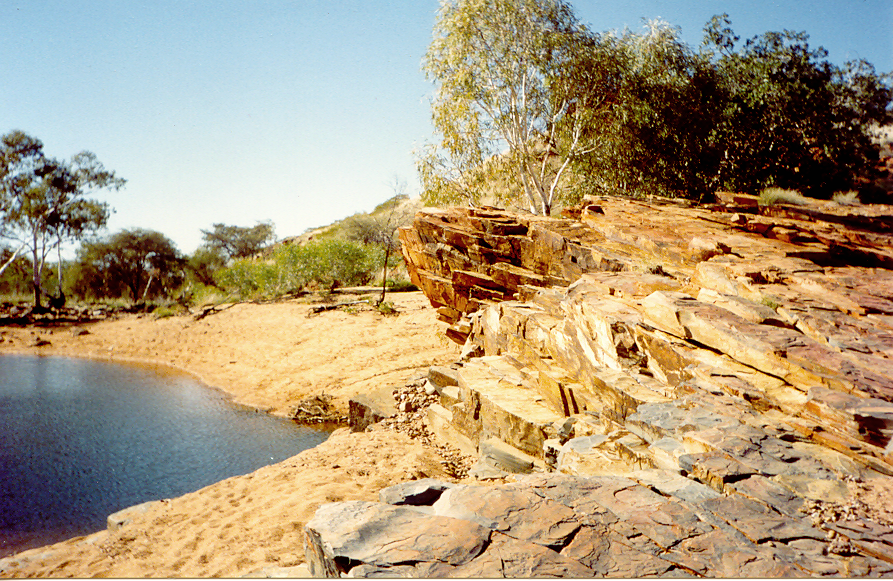
Beaton’s Pool .Nullagine.1996
Information from the Mines Department of Western Australia
From the booklet titled, “Gold in Western Australia”, the Geological Survey of Western Australia by Department of Minerals and Energy.
The Beatons Creek Conglomerate (now considered a conglomeratic member of the Hardey Sandstone) at Nullagine represents an ancient alluvial gold deposit that was laid down by rivers that drained the Pilbara Craton about 2750 million years ago.
Gold mined from secondary deposits is invariably recovered as the native metal; gold-bearing sulphides and tellurides do not withstand the erosional processes that form the deposits. Gold from secondary deposits ranges in grain size from ‘mustard’ or ‘flour’, in which individual particles weigh less than one millionth of a gram, to nuggets, which exceptionally, may weigh several kilograms. Most alluvial gold recovered is about the size of silt or fine sand.
Nuggets probably formed in the oxidized parts of lodes or veins and have since been weathered out into the surrounding soil. When found in stream gravels they have been rounded and flattened by abrasion during transport.
Most eluvial and alluvial gold mined in Western Australia was removed from unregistered claims. Production records are therefore incomplete, particularly with respect to the exact location of the finds. As a result, most of the gold won can only be related to a goldfield or district and not to a specific mining centre or lease.
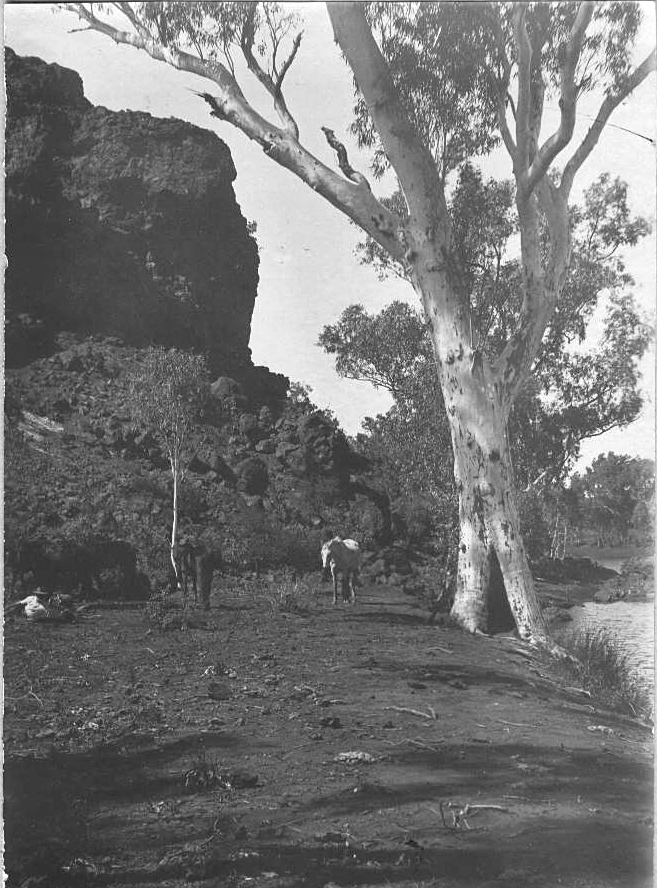
The entrance to Tatania Pool, Nullagine.1890.
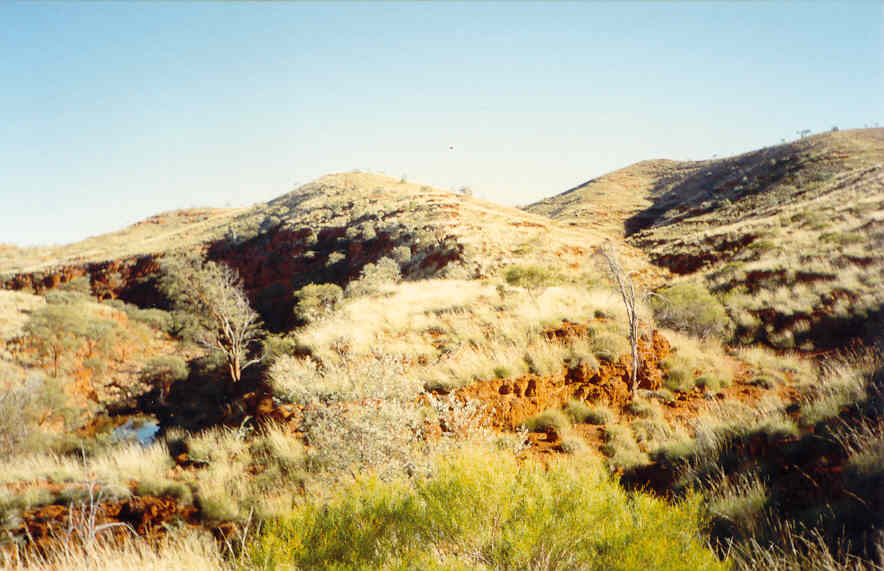
Chichester Range the hills around Nullagine. 1996.
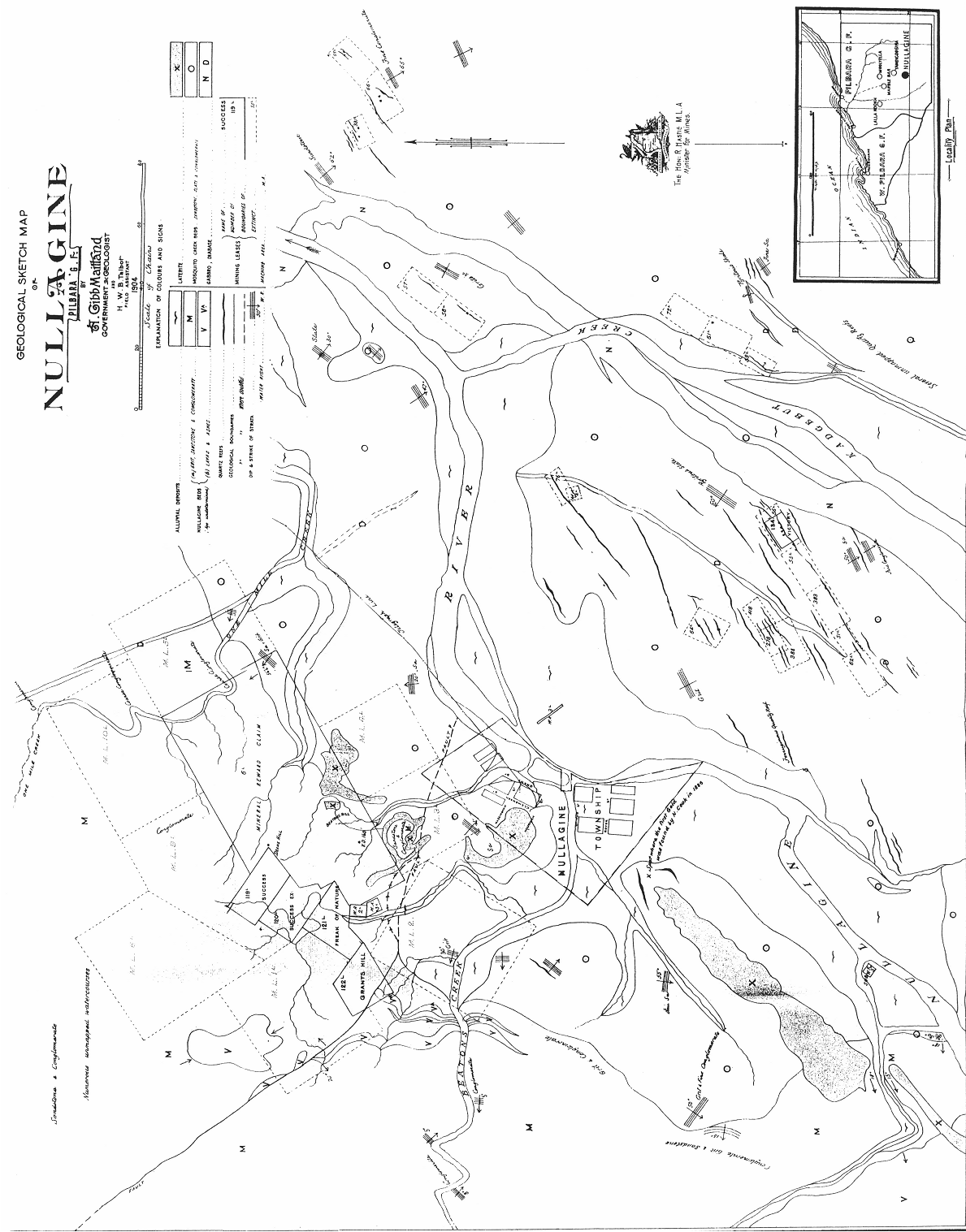
Govt.
Geological Map 1908
Beaton’s Hill
Spot where Nat Cooke found first gold
James Beaton (Sandy’s son) wrote several articles under the name Sedge Moore.
Land and Gold
Printed in the Western Mail , March 9, 1939.
Dear “Non-Com,” - “Follow the trail of the overland To the Kimberley days of old, Then down the track of the far outback To the scene of the Cossack Gold.” Much has been said and written of the big-hearted men and women who pioneered the eastern goldfields, pioneers of the nineties of whom it can be justly said they were makers of history and a state. This article is a brief tribute to another of the old brigade, not yet mentioned, the late Alex (Sandy) Beaton, of Beatonsfield, Yandanooka, of this state, and a genuine pioneer of the mining, farming and pastoral areas of Western Australia. No spectacular fortune won and lost here, but just a steady pursuit of an end resolved upon. Land with its home and family ties, and traditions carried on. Born in Inverness, Scotland. Alex Beaton arrived in N.S.W. while still a very young man. A carpenter by profession, he nevertheless always had a leaning towards the land. Having tried his hand at various jobs, including a little mining, he at last selected land on a station owned by a fairly large station owner of the Grafton district of the State, or colony as it then was. Having started operations he was promptly visited by the squatter, who informed him that selectors were not wanted, and he offered to pay him a sum to leave. This was refused. “Very well,” said the station owner, ”I will break you.” He did. When the boat on which Sandy was passenger for Pt Adelaide was about to sail the squatter came to him and said, “ I told you I would break you, but there is no animosity in my feelings towards you.” On arrival in South Australia he worked at his trade and contracts until ’86 when the news of gold in Kimberley, Western Australia, came through and a rush started. Leaving his family of ten children with their mother in the Holy City, Alex Beaton sailed via Queensland for the new find in far away Kimberley. He was to leave his mark on the map of Western Australia in many ways. Enduring all the Vicissitudes and trials incidental to a new gold find, he gradually moved south, always chasing the weight. At Nullagine some small measure of success attended his efforts. Here in partnership with Nat Cook for a time, he worked a claim. Alex Grant, of Grant’s Gully, was a mate at this time. He, with Alex Beaton, has left his name for all time in this area. Beaton’s Hill, Beaton’s Creek and Grant’s Gully remain as memories of their prospecting activities in those far away days. Having by this time been joined by four of his sons, Finlay, Charlie, John and Kenneth, and having disposed of his Nullagine interests, Beaton and sons harnessed up the team and started south once again. |
Let me state here that Warden Owen, in his book “Cossack Gold”, is wrong regarding the amount that Beaton made from his goldmining ventures. He did NOT make enough to buy a large tract of land and to start his sons on fully equipped station properties.This was to come from his determination and doggedness in the fulfilment of his resolve.Again the author quotes Beaton as being an experienced miner. This is far from being a fact. His Long-Tom at Nullagine was just the result of common sense and a sound practical mind. He gives a photo of the sluice and the Beatons at work. Down the Ashburton, Gascoyne, Murchison, Greenough to Geraldton and thence to Dongara. Here his longed for dream came true and he purchased 500 acres of land from the late Sam Moore. This place situated on Greenbrook in the heart of Yandanooka Station, then owned by the late Mrs Whitfield, was to be the scene of all his future movements. It was from here that any real success that may have come his way started. And it was from here that the Beaton clan spread north, south, east and west after many years of successful working together. Having brought his wife and the remaining members of the family from the East, he settled down to further pioneering. This time on the land. Further land was leased at Yongala and a few sheep ran there. Today this place is a maze of farms, good, bad and indifferent. In those days in the nineties it was a wild and scrubby looking hole, mostly noted for wild dogs and tame blacks. Nanakine station was then leased from the firm of Wainwright and Co, of Geraldton. This was sold to a man named Edwards, and the late Sam Eakins, being desirous of disposing of Thundelarra station on the lower Murchison, and finance having been arranged, the place was purchased. Here the sons worked in harmony with the father for many years. Fencing, well-sinking, sheperding and cattle chasing. Entering into a cattle deal with the late Sam Phillips, of the Grange, Dongara, now the property of the Mitchells, Alex Beaton started his pioneering of the pastoral areas. There were no fences and windmills in those days and it was genuine pioneer work. Human nature gives to each and every one of us an individuality of our own, and although we may strive our damndest, it is not possible to at all times see eye to eye with our nearest and dearest. So the family began to drift apart, and naturally I suppose, to build and pioneer lands and homes of their own. Finlay, the eldest son, drifted north again, where in a previous article to you, ”Mention of Lonely Graves”, I left him in his loneliness in far away tropical Darwin. His troubles over. His soul at rest. Then to Sandy Beaton there came the greatest blow of his long life, when the greatest and best help of this |
Land and Gold Contd.
great old pioneer, his life’s mate and wife, passed on to her rest. The breaking up of a life partnership is one of the saddest breaks this life can give. Where once there was a guide, philosopher and friend, there remained but an aching void and a great loneliness. In the midst of the family’s various activities in the various parts of the State this hardy battler, Alex Beaton, at the ripe age of eighty, travelled along the heavenly highway to rejoin his earthly mate. |
He has left a name in Western Australia that bids fair to live for ages and a mark on the map that proves his ability and courage. Now, in the sere and yellow, with snow white hair, I a grandfather myself, can realise his sturdy battle, to build up his future whilst as a pioneer he helped to build a State. Vale, Alex Beaton. SEDGE MOORE, Nannup. |
Articles from ‘The West Australian’.
27th September, 1888.
Large nugget 160 oz. Great excitement at Roebourne.
Banks giving £ 3.10.0 oz and miners are doing well.
Monday October 1st, 1888. The Pilbarra Field.
A Warden wanted to settle disputes.
By Telegraph From Our Correspondent.
A dispute has arisen at the P. owing to the finder of large nuggets having pegged off 400x 400 yds and having forbid anybody going on that area until reward claims have been allotted. The other diggers consider that they have a right to enter upon the area on the ground that it is an alluvial patch. In the meantime all parties have knocked off work and are awaiting the decision of the Commissioner of Crown Lands. Owing to the disputes of this nature there is likely to be further trouble, and it is very necessary that some official with authority to act temporarily should proceed to P. at once.
Several good sized nuggets have been found. All I have seen have the appearance of reef gold, and practical miners consider that the field is reefing country and that the alluvial gold found consists of blows from reefs.
The finders of the large nuggets have applied for a protection area on the ground they have discovered reef and not alluvial gold.
Parties are continually leaving Roebourne for the field.
October 2nd There was a report of Warden Nyusey’s appointment to the field.
Finlay and Charles travelled on the S.S.Flinders to Western Australia in October 1988 to join their father at Nullagine.
Tuesday November 6th, 1888. Roebourne News.
There are now over 200 men on the field and another 100 in town.
The Warden is now on the field and will no doubt have plenty of work as a rush has been commenced. Horses are fetching good prices 15 – 20 for hacks and there is great demand for picks, shovels and mining tools. Mutton is being sold for 2 ½ d per lb, beef same gold 3.15.0 oz. The bank advances 3.0.0 and there are over 500 oz in the Bank.
Monday December 17th 1888 Gold from Pilbarra
About 700 oz of gold including the big nuggets recently discovered at Pilbarra, arrived by the Otway yesterday, and were taken to the Union Bank. We understand that the nuggets will be sent to the Exhibition.Melbourne.
John (Jack) Alexander and Kenneth travelled on the S.S.South Australia in
September 1889 to join their father and brothers in their endeavours.
Isobel Hickman ( Sandy and Euphemia’s eldest grand-daughter )
recorded the following in 1978.
Alexander Beaton arrived in the Kimberley, W.A. in 1886 for the gold rush. He travelled overland from Adelaide through the Northern Territory to Hall’s Creek. ‘Beaton’s Creek’ in the vicinity commemorates his name. He was a talented wood carver, furniture designer and cabinet maker in Scotland, where his family were crofters. He migrated to Australia and secured grazing property in Grafton region, N.S.W. where he bred fine Arab horses and other blood stock. His land had frontage to the Clarence River. The property adjoined Yulgilbar Castle, the home of an influential Scottish settler named William Ogilvie. After years of hostility between the two Scots over water rights, a legal battle ensued between Ogilvie and Beaton. As the result of his heavy legal costs Alexander had to sell his property. He moved his family to Adelaide and when gold was discovered in the Kimberley, W.A. he made the long trek alone to the gold rush. In 1887 he found and worked the rich Nullagine mine in what is still known as ‘Beaton’s Hill’ (ref. ‘Cossack Gold’ by Lambden Owen, Resident Engineer, North West, 1886, and Warden of the Pilbara 1889, Battye Library).
He made sufficient money from his Nullagine mine to enable him to buy a property of about 1000 acres of fertile farming and grazing land at Yandanooka, Irwin region about 1889 , and the valuable grazing property, Thundelarra Station, Lower Murchison. Thundelarra consisted of half a million acres and the A.BEATON AND SONS raised sheep, cattle and horses.
The railway between Midland Junction and Geraldton was not completed at that time and all goods, food and building materials had to be carted to Yandanooka from Dongara, about 50 miles away.In November 1892, having built a large bungalow type homestead on the Yandanooka property, he was able to bring his wife, Euphemia, four daughters(Anne, Mary Isabella ,Margaret and Helen) and two young sons (James and Donald) from Adelaide.
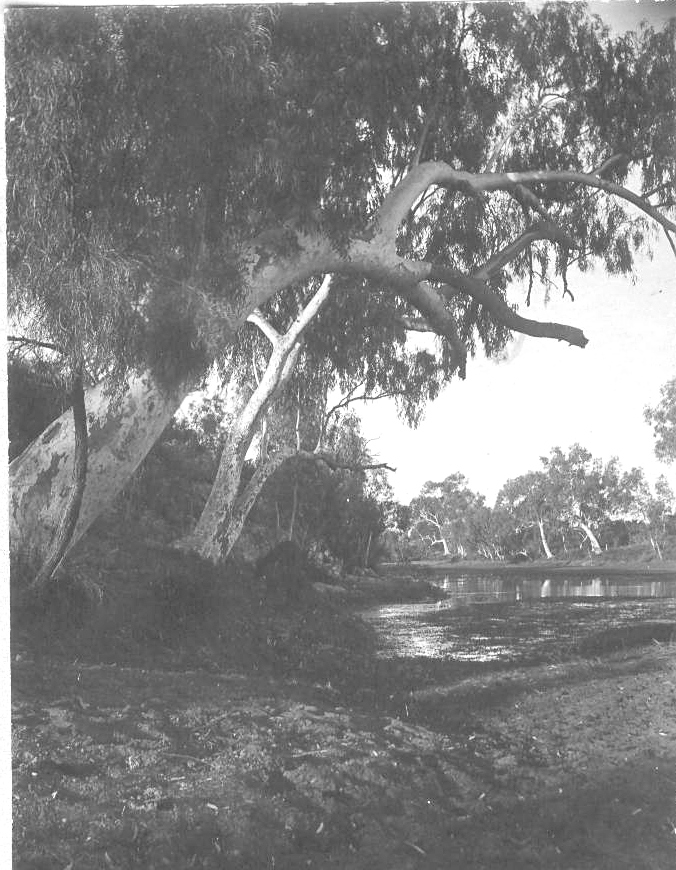
Bonnie Pool, Nullagine.
1890’s
OLD TIME TALES, 15th January, 1910.
(Written expressly for the Southern Cross Times) Author unknown.
The visit of Mr J.Rogers recently to the Cross added one more to the very few who battled on Southern Cross in 1888 and still remain on the surface. Naturally, the visit of a genuine old prospector recalled to the few, old recollections. The relating of some of these were very interesting, and as true as they were interesting. A party of mining men were gathered together a few nights since and the early prospecting days were the topic. Those whose experience only went back 15 or 16 years had their theories as to the merits of those who claimed honours as early prospectors, but the names of several, one after the other, were laughed at by the few who not only claimed to have been here but substantiated their statements by producing miners’ rights dated 1888, and issued by Mr Alpin Thomson, the then Warden. The name of the finder of S.X. was definitely settled, and those old hands would permit no interlopers. Mick Toomey, of York, a W.A. native, was the prospector of S.X. and was in the employ of Mr Tom Risely. At the time Mr Risely was camped at Golden Valley and sent Toomey out to prospect south. “I rarely speak of these things now,” said one old prospector, “ it fairly sickens one to listen to all the claptrap that crops up in certain papers from time to time from a class we call ‘pot-house prospectors’.” Rarely have the original prospectors of any of the fields been recognised, the credit has generally gone to someone who wasn’t there. For instance, I have often heard Greaves’ name mentioned as the original finder of Yilgarn, and even S.X. Well, he wasn’t there when gold was first found. Again, whoever heard of Leonard Elvery being the finder of Pilbarra - very few, but those few knew he was the first to find gold, but others got the credit Again, look at the Nullagine country, the finding of which opened up the 40 Mile, the Salgash, the Western Shaw and Marble Bar, who at the present time remembers that old Nat Cooke, of Roebourne, first found the gold and took as mate with him to work the reward claim, one named Beaton. Here let me give an interesting incident, Beaton pegged out a Prospecting Area 400yds, by 400yds, and after locating his rewards claim, with one additional for each of the party, he could have still kept the balance locked up until the arrival of the Warden from Egina. However as the Warden could not arrive for some weeks the men had a meeting and themselves granted the reward claims, and Beaton threw the rest open. When the Warden did arrive a bush lawyer jumped one of the claims on the ground that the Warden had not granted it. The Warden, however honoured the agreement of the men with Beaton, and the would be jumper had to clear, but that’s by the way. |
Leaving the Nullagine district the next to be found was the Ashburton, and who found that? Why, Jack Ford and his mates. Then followed the Murchison. Several have laid claim to that, but Mr Cruikshanks, who is now in the Government Service, but then owned Annean Station, will tell you that MacPherson was the first finder of gold, and so he was. Bailey, who afterwards caused the rush to Coolgardie, was close in attendance and found Bailey’s Island, Nannine. Then turn to Cue, about 50 miles south of Nannine. “Of course Tom Cue found it,” say the half-knowing ones. Well the truth is Heffernan and Fitzgerald found it by following the advice of Townsend, of Coodardy Station. Their mate, Tom Cue, simply wasn’t there when it was found, but when he did arrive he was sent to report to Warden Walters at Nannine. So you can truthfully say Cue was called Cue because he wasn’t there. I mentioned MacPherson a short time since, and now I must mention him again, as he was the first prospector I, as a newchum 21 years ago, had the pleasure of seeing, and it was this way. One Sunday morning in the latter part of 1888 I was sitting at Arthur Bailey’s camp. (You see Bailey was looking after a show here in S.X. for Holman, Haines and Co, of Perth). Whilst we were chatting we saw in the distance an old grey-bearded man, almost in tatters, riding a horse, with three pack horses following, and a nigger bringing up the rear. Mind I was a new chum. Bailey had all his life been associated with gold. I did not know enough to attach the importance to this that Bailey did. Now, mark me, I don’t want any arguments about this, but all of you who were here 19, 18 and 17 years ago will remember that Arthur Bailey revisited S.X. in each of these winters. He was always waiting to get news of rain out east, so as to get to the country about 160 miles east of S.X. Note how close he stuck to MacPherson. MacPherson had hardly arrived on Annean Station when Bailey turned up in the vicinity. MacPherson afterwards married and, I believe, died before Bailey was able to visit that country 160 miles east of S.X. I do not wish, nor do I intend, to disparage Bailey’s efforts. He and I were always friends, and for some time mates in the Nor’-West, but were he alive today he at least would be one of the first to prove my statements. You can get all the pot-house prospectors to argue this for all I care. What I state is the truth, and I don’t care a tinker’s curse for what other’s may say. But hold a bit. I cannot leave MacPherson’s name until I tell you more of his work. Had he not lost a horse at Strawberry Rocks he would have been at Parker’s Range before Parker’s party. He pushed the fire together and soon had the billy going. We both assisted to unsaddle the horses, and the stranger was welcomed to Bailey’s camp and billy. |
In the evening I strolled across, the stranger had had a wash and a good sleep, and he was telling of his trip. His name was MacPherson, and he was prospecting on behalf of Dr Hope, of Fremantle. He told both of us that he had got excellent prospects about 160 miles east of S.X., but the country was absolutely too dry to He showed us a few specimens. He, however arrived a day too late and returned to S.X. disgusted with his luck. He went to Kookerdine, then reckoned seven miles from the Cross, to water and spell his horses, and found grand gold in the opaline formation of a huge outcrop. He named his find Mt MacPherson and reported to his principal, Dr Hope.. |
To MacPherson’s disgust, Bill Hampson (Sailor Bill), who kept the shanty, was called upon to report, and a syndicate, comprising Monger of York, Graves of Perth, and others, got into the show, and poor old MacPherson got a very trifling interest, and so did, I believe, Dr Hope, who had found all the expenses. Mt MacPherson has been a good friend to S.X., but it is now, and has been for many years known as Hope’s Hill. This is another instance of my contention that the real prospectors are never heard of. Their love of solitude leads to their being prospectors and keeps them from being associated with the class of prospectors we refer to with a certain amount of contempt. Here are my rights for each place I speak of ; that’s some proof, any way |
NUGGETS OF THE NORTH
Reminiscences of Old-Time Rushes. By ROMANY. Truth 16th July, 1911
The Strenuous Struggles of Pioneer Prospectors.
With every old pioneer who loads his packs for the last Great Rush, to peg out a claim where the streets are paved with gold, a link that connects the effete today with the strenuous yesterday is severed. The Iron horse had left the old back tracks but a memory; and the scenes of yesterday, so full of romance, grow misty as the pioneers grow less. The prospector of today, with the advantages that civilisation offers, has a comparatively easy time trying the few remaining places that may develop a rush, and with these facilities prospecting has degenerated into a picnic. Take away the hardships entailed, remove the possibility of attacks from blood lustful natives, and prevent the agonising tortures of thirst by a judicious distribution of wells along the outback tracks, and the life grows prosaic, the romance dies. ***** To hark back less than a quarter of a century, a mere breathing spell in the history of a country, and the scenes enacted in the back reaches of W.A. become endowed with sufficient glamor to satisfy the most insatiable reader of stirring themes, and especially is this phase to be applied to the Nor’-West- a land so little known to the dwellers further south, whose ideas of living conditions and the inhabitants in that land of the Unknown are derived from an occasional sensation created by some natives paying off a score with a squatter per medium of a spear. And yet the Nor’-West possesses a history, which , if written up with a due regard to veracity, would prove as interesting as any work yet published. In the middle eighties, the restless gold-hunters took a deep breath when they heard of gold being discovered in the Kimberley fields, and they rushed with all the old time eagerness to the new Find, overland, and by boat, old hands and new. The country was new, the natives were fierce and treacherous, and the gold was sufficiently scarce to cause excitement when anyone came in with a few ounces of gold in his “shammy”. ***** The spearing of Marryatt, in what was afterwards names Spear Gully, and the ensuing massacre of the tribe by the revengeful diggers, and the murder of Johnson by Hornig, and the subsequent hanging of the latter, lent the necessary blood colour to the life. Paddy’s Market will long be remembered where the New Zealanders - who came with rattling turnouts - |
stocked their carts, drays and wagons, and tried to sell them by auction. The white ants eventually accounted for most of these. The scarcity of meat which drove the diggers to shoot the kite hawks for food, the bushy-tailed rats that gnawed holes in the pack bags, and ate everything edible, the shortage of leather that caused everyone to sole their boots with bars of iron, these and more make interesting conversation around the camp fire of today. But after Kimberley had failed to satisfy, the hardy North Queenslanders and South Australians- who had pushed across the border with their pack horses to avoid John Forrest’s stock tax then in operation- drifted further south to the Pilbarra district, and here, as the country with its rockholes and fairly permanent pools, presented greater facilities for prospecting, many sensational, if small rushes took place. Old McPhee - whose lonely grave at Nullagine with its cross made with empty meat tins, remains a mute reminder of a sturdy old prospector - was among the first to break the new ground. Then Beaton (one of the discoverers of Nullagine) in finding Beaton’s Gully, caused a wave of excitement to overwhelm the gold-hunters, and as a result, the conglomerate hills of Nullagine resounded with the rattle and swish of seive and dish, and the shady retreats of Cajebut Creek and the Claypans became picturesque with the tents and camps of the pioneers, whilst the jangle of horsebells, and the deep, resonant boom of the famous Condamine, provided a music that appeals alone to an Australian bushman ***** The Pont Bros (South Australians) were either the finders, or amongst the first on the Egina field, one of the best patches found in the Nor’-West. This field was noted for an absence of reefs, whilst a little further away Black Gin Point provided a mild sensation. Wells is credited with finding the first gold in the Pilbarra district, and a gully carries his name to this day. Wells , I think, was a Groper. He was always prophesying that he would find a gold field, till at last people started to treat him as a huge joke, but their opinion suddenly veered round when he came in one day and placed his gold in the bank, and then applied for the Government reward. Pilbarra became the magnet for the gold-hunter, and soon gully after gully was opened up, each in turn providing a thrill of excitement to the diggers. The warden’s camp was fixed on the Pilbarra creek, and the place was called Warden’s Pool. |
In proceeding to this place Norton’s Surface was discovered, and through it, Pilbarra Top Camp. Bobby Norton and his mates had an altercation before reaching the pool, and words came to blows, until one picked up a stone to hurl at his mate, when he suddenly discovered that it was a piece of gold. This made them forget their argument and that day they specked some hundreds of ounces of gold. Some of the pieces picked up on this flat ranged up to 100 ounces, and nowadays the place has been worked and re-worked for miles around with dryblowers and shakers. Another good patch was afterwards found near the old well by an Irishman, who, only for his greed, would have secured the lot. He had been working for some time on his own, but one day someone who didn’t believe his yarn that he was getting nothing, dropped his tools near the boundary, and then went to “crib”. But on his return he found the old Irishman had shifted his pegs and had taken in the ground where the tools had been dropped. In the ground he had vacated some other digger put a hole down, and bottomed on enough gold, in pieces, to cover the bottom of a whisky case, one being over 200 ounces, if I remember aright. ***** Later on in the short history of the Nor’-West, Nat Smith and his mates discovered the “Just in Time”. They had been prospecting the conglomerate belt for some time without success, and on the day when they had packed up to depart, Nat put down the final hole and struck the gold, and at dinner that day he provided a special dish, keeping it covered until the last. His mates were all curious to know what the dish contained - Nat hadn’t told them about finding the gold- and when he lifted the billy can lid off the plate and showed them a 26 dwt piece of gold, they all exclaimed, “It’s Just In Time,” and the place thus received its christening. Nat Smith was taken ill shortly after and had to go to hospital, but while he was away his mates carefully placed his share aside for him - unlike some mates of today. Another rush that will be remembered by old Nor’westers was the “Keep It Dark”. Writer heard several yarns as to how and by whom this was found, but the following seems to be the most authentic. Ernie Bayley- no relation to Arthur of Coolgardie-Billy Barnes, Alf Treppidan and Steve Lorden (inventor of the Lorden dryblower), were prospecting at what is known as the Six Mile, but as luck was indifferent, Ernie Bayley persauded Barnes to go with him along the range to where he had obtained colors. (Ernie Bayley was one of the best prospectors in the Nor’-West, and many gullies and patches up there carry his name). When Bayley and Barnes went along the range, Bayley was the first to find payable gold, and they then went back and brought their mates along, and all worked together from daylight to dark, urged on by the extreme richness of the ground. Writer was told by Bayley that they cleaned up a pound weight of gold from many of the runs through the ‘blower. ***** Ernie Bayley was a quiet, easy-going chap who never lost his head at the sight of gold, and his lack of desire to work like a navvy didn’t suit the others, and this led to a split and Bayley went working on his own. If they had had enough tucker to last out, they could have worked the gullies out without anyone being a whit the wiser, but a trip to Roebourne for supplies, and the subsequent indulgence in the liquor that loosens men’s tongues caused the rush that ensued. One afterwards blamed the other for letting the secret out, but it was said that one of the party told a friend - with the advice to “keep it dark”, and it soon travelled to other friends, and the information was wired to Marble Bar. When Barnes and his mates were coming back- |
with it was said 30 cwt of food on their packhorses - across country they fell in with a chap looking for a kangaroo, and he told them to get on to the main road leading to the find. Barnes, to use his own words, went to one gully and with his knife scraped six dwts of gold out of a crack in a bar, and then they left the place in disgust. “The Keep It Dark” was one of the best rushes in the North West. Talga Talga, was one of the early rushes and here some fine slugs were unearthed afterwards. When the reefs were found, the boulders of quartz used by the dryblowers, to steady their shakers, were found to be studded with gold. “Sharks Rush” was another field where the prize nuggets of the north were found, and several rushes took place here. Trepidan’s and the Pantomime were both adjacent, and in connection with the latter an amusing incident is related, from which the latter place derived its name. One chap arrived on the field too late to secure a claim on the gold, and as he mooned around, one of the lucky ones took pity on him, and gave him a portion of his claim with the provision that all pieces over ten ounces were to be handed in. This was agreed to, and things went satisfactorily until one day the owner of the claim saw his tenant trying to push something into his pocket, that would not go in. The argument that took place about the weight of the nugget was described as “as good as a pantomime” hence the name of that rush ***** Years afterwards McPhee Bros and Barnes at the same place found the “General Gordon” nugget weighing something in the neighbourhood of 400 ounces, and the exhibition of this at McDonald and Fisher’s store in Marble Bar, led to a great rush in which writer joined. This find originated through McPhee’s blackboy specking 60 or 70 ounces of gold one day when he was tracking horses. The Mc Phee’s and Barnes were then working a reef in the vicinity and when they duffered it out, they all went to look at the place where the boy had found the gold. After all the others had specked the gully, Billy McPhee walked up to it and saw the big piece sticking out of the ground. Barnes afterwards sued McPhee for a share in this and obtained it. In the rush that set in several fine pieces were found in “lousing” the ground.A few years afterwards when the place was thought to be worked out, Archie Clyde, who was fossicking the old workings, hooked out a piece weighing about 400 ounces, “The Bobby Dazzler,” and this was sold to the Paris Exhibition for $3,200. The same man found another piece afterwards of about 200 odd ounces. McPhees started another rush to Broadalgerie in the Oakover country, but it was only a one gully rush, the only man who did any good out of it being Martin, a German. He pegged out a leader and erected a windmill battery with which he crushed about 100 tons of stone for 800 ounces of gold, dozens of other rushes of greater or lesser note occurred all over the Nor’West, but being outside writer’s ken they are left for others to write up. These touched upon are detailed in many instances from memory, and time may have caused writer to omit some details, but the essentials are correct. ***** |
The Sunday Times Perth W.A. 1st September 1929 Pioneering the Gold Trail
Stories of the Kimberleys- Discovery of Hall’s Creek - by Charles Counsel (No 1)
At a meeting of the Historical Society by Mr Counsel J.P. Pioneer of the Kimberleys.
Recounted exploration details of John Forrests journeys of 1879 and 1883 and the finding of gold and auriferous country in east Kimberleys.
Excerpt from article:-
Every steamer coming to the West was loaded to its full capacity with men, horses and equipment, and it is estimated that fully 10,000 men arrived in Kimberley between 1885 and 1887. Hundreds of men came overland from New South Wales and Queensland, right through the Northern Territory, and then struck across to Kimberley. They experienced intense hardship and suffering.
8th September 1929 Pioneering the Gold Trail
Stories of the Kimberleys- Discovery of Hall’s Creek -
by Charles Counsel (No 2)
Excerpt from article:- “BEATON’S HILL”
The next find in the North-West was at Nullagine, by the late Nathaniel Cook, while he was out looking for pastoral country. Not knowing very much about gold mining, he told his secret to an old Kimberley digger, one Beaton, and the late Mr Green, who afterwards was storekeeper on the Nullagine. Beaton immediately got on to rich gold, and opened up what was known as “Beaton’s Hill”, from which he took a large quantity of gold some of which went as high as thirty ounces to the dray-load.
The dirt from “Beaton’s Hill was carted to the creek where it was sluiced in a rough manner, and there must have been a lot of gold in the tailings. At Christmas time 1889 there were fully 1000 men working about the Nullagine and most of them did very well.
There was a big extent of gold bearing country around Nullagine, and a lot of gold was got on the outside camp , particularly at “Mosquito Creek” where many rich leaders and reefs were afterwards worked in small patches. One of the peculiarities of the Nullagine diggings was the conglomerate formation in which the gold was found, which is supposed to be identical with the conglomerate lodes on the Rand in South Africa.
Of historical interest only – Cooke’s diaries didn’t list any of these delicacies !
Perhaps Lewin sold them later in his Marble Bar Store.
From the book “Westward Gold” by H.H.Wilson.
published by Rigby.
E.C.Deland of Rockcliffe’s Store in a letter to his parents listed
the tinned foods available for the miners to purchase.
Whole hams, Ox tongues, stuffed goose,
turkey, chicken, pidgeon,
duck, teal, rabbit,
lamb and mint sauce, ham and eggs, jellies,
steak and onions, Kippered herrings, custards,
chutney, cauliflower, tomatoes.
Western Mail, Highways and Byways, 3rd June, 1937.
Dear “Non-Com”, The following information was imparted to me by Mr W.S. Barnes, who has lived in the Nor’ West since ’83. Phil Saunders received no reward for being the first man to find gold in the state. Hall, of Kimberley fame, applied for a reward. He was offered $1000 , which he refused. Mrs Hardman was given $1000 after her husband’s death in consideration of the favourable report which the deceased gentleman submitted to the Government in reference to the Kimberley district. James Withnell and W.S.Barnes were given a reward claim at Mallina during ’88, the first reward claim for gold granted in this State. Pilbarra Creek was opened by Harry Wells, who showed about 30 ounces of gold as proof of his find. Wells was given a cash bonus, but no reward claim. The gully carried 30 men for about six months. The largest nugget found there weighed 103 ounces. It was found by Bobby Norton. He was so elated over his find that he went to Roebourne and splashed it all in celebration of the event. Although there was good gold for 30 men, fully 100 were working when Egina broke out. A murder was committed on this field which caused quite a sensation. Jack H. shot and killed Captain Moon, a popular coastal sea captain. He was arrested by Constable Mitchell (who in later years became police inspector in Perth), and was sentenced to 14 years penal servitude. The two Pont brothers discovered Egina. They had previously been with Hall of Kimberley. The brothers did well. They could easily fill with gold the lid of a quart pot daily. Prospectors flocked from all outlying parts to this field, which carried from 300 to 400 men in its flourishing days. A constable visited the camp occasionally, but there was no actual crime Any trouble |
which arose was settled among the diggers themselves in their own way.Water was bad, and this was the cause of much sickness. Nat Cook displayed a small bottle containing three ounces of gold which he claimed to have found in the Nullagine conglomerate. Application was made through Warden Owen and a reward claim was granted jointly to Cook and Beaton. About 500 men arrived quickly on the field, a large proportion of whom obtained payable gold. Ted Francis, Harry Jenkins and James Edmondson were the prospectors of Marble Bar. Pantomine Patch followed Marble Bar.McPhee, of Kimberley renown, is said to have been the first finder; but he left it before getting anything payable. Nelson and Jack Williams came on to it afterwards, and were joined by Doyle, Pride and Purcell.The latter three were fixing camp one day at Split Rock while the other two worked the claims staked by the party. This was a lucky day for them as the claim workers unearthed a nugget weighing 333 ounces. This became known as the “Little Hero” nugget. They were so excited over their find that they got bushed going homewards and spent the night out. They obtained good payable gold in addition to this nugget. Shark’s Gully was found by German Con. He left it before finding anything payable, and told JackMcKay of the prospect he had got. McKay in turn, told his mates Alf Healy, Triverton and McEwan, and together they went up and pegged four ordinary claims of 50 feet square. Next morning they brought a slug of 100 ounces to light, and within two weeks the partners between them unearthed 56 lb weight of the precious metal. The ‘Western Shaw’ was found by Jack Leyland and the two Henry brothers. The two latter were speared later by hostile natives near Mt Broome, 30 miles from Derby. JOHN MEIKLEJOHN,Nedlands. |
An Old Nullagine Pioneer. - WESTERN MAIL, 2ND March, 1939.
Dear ”Non-Com,”-I have had a chat with Harry Woodman who has passed his 82nd milestone and spent most of his life prospecting. He claims to be the oldest living pioneer of the Nullagine field. Besides the Nullagine, he has had a varied mining career commencing at Mt Brown in Queensland in ’81. He lived at Croydon after that and there met Arthur Bayley and Jerry McAuliffe, both to later become famous in W.A. He came from Townsville to this State in ’85 on the same boat which carried Jerry McAuliffe. Woodman figured on the Kimberley, and all the Nor’-West rushes, also in those of Murchison and Coolgardie, but spent the greater part of his life on the Nullagine where he left only a few months ago. His first experience on the Nullagine dates from 1888 when he fell in with two sons of Beaton. They told him that a man named Cook, who was |
actually a pastoralist, had been looking for cattle country in the Nullagine, and had accidently found gold there. He confided this to old Beaton, who with his two sons made ready to go out with Cook to investigate. Woodman was highly elated to get the news from the boys and he called his two mates, Jack Barry and Andy McCarthy, and they also became eager to go. Their horses were loaded up and when Cook and the Beatons led off, the Woodman party zealously followed until the Cook party were found busily getting gold from the conglomerate by dryblowing with dishes. Woodman confesses to have been fairly successful in his search for gold in various parts, but all he ever made went back into the ground - the usual way with the prospector. Although still very sprightly, he fully realises that his age handicaps him from any more prospecting. JOHN MEIKLEJOHN,Nedlands. |
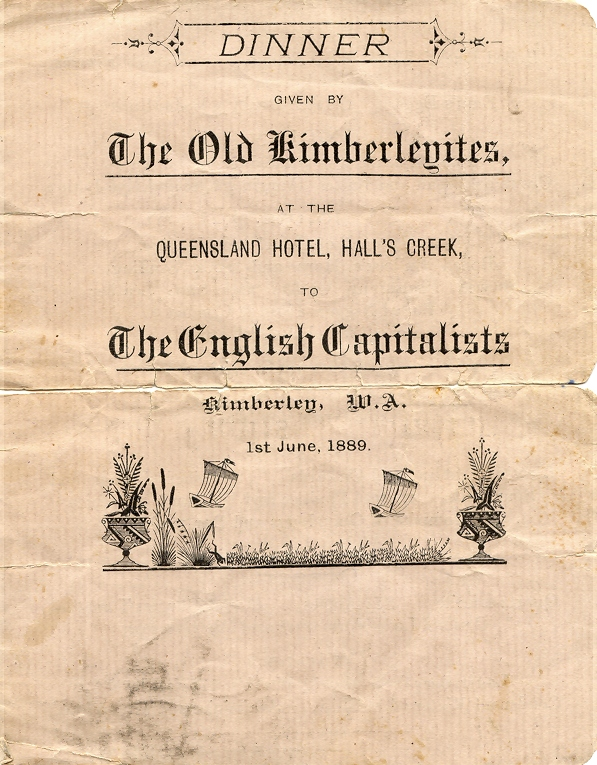
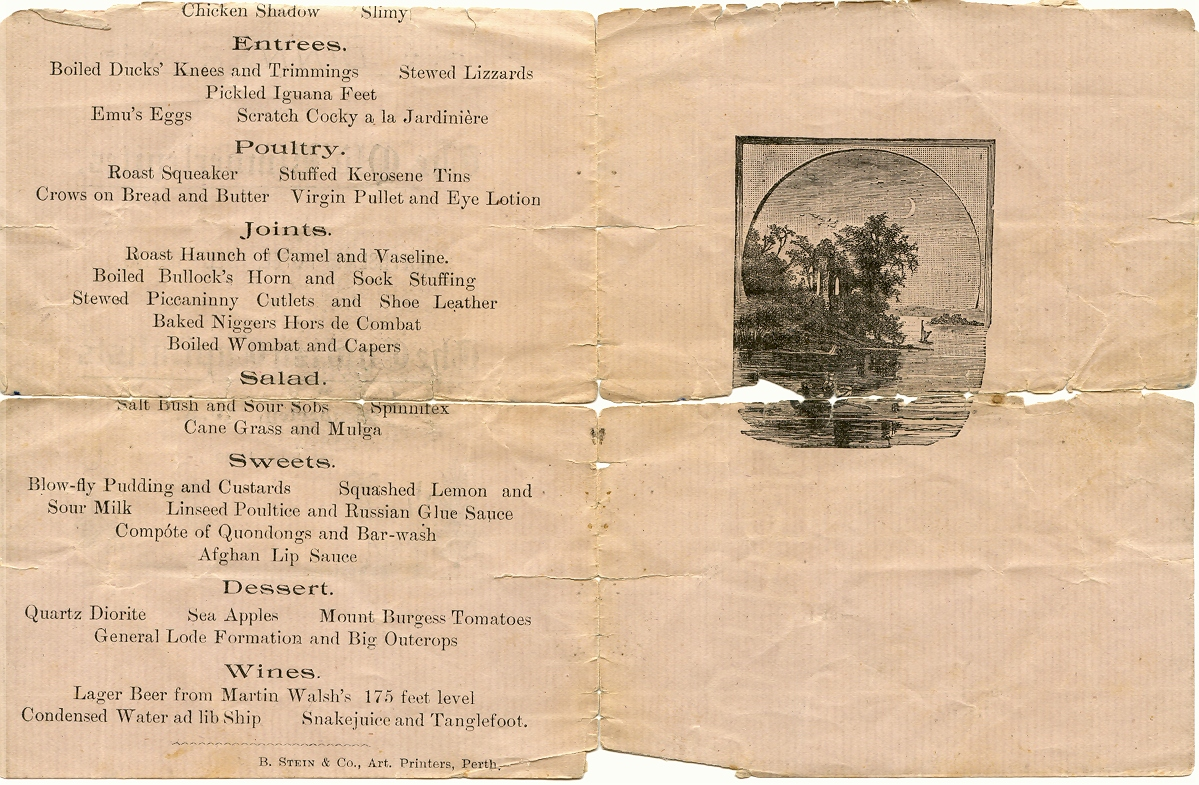
The 1st of June 1889.
This copy kept by Ken Beaton and still in his family’s possession.
D.W.deHavelland in “GOLD & GHOSTS” Vol.1 in Chapter eight, titled -
‘The Pilbara Goldfield’ also records the details of Cooke’s find in 1886 and his consultation with Mr Beaton and Mr Green.
The Pilbara Goldfield was proclaimed on 1st October 1888 into two areas, Nullagine and Marble Bar. This goldfield holds the record for the largest number of nuggets over 50 ounces in any of the Western Australian goldfields.
The township of Nullagine is perched on the edge of the Gibson Desert and was founded in 1895. The town is only a few hundred metres north of where Cooke found his first nugget in 1886. The crossing where Cooke first entered the area is within the town boundary itself.
Most if not all the finds in Nullagine, were first worked by the dryblower.
From its discovery in June 1886 to early 1893 Nullagine remained just another alluvial field, with prospectors using the place as ‘tucker ground’until something better came along. However after 1893 it became the principal alluvial centre of the north-west with up to 1,000 diggers feverishly scraping, gouging or tunnelling for a living.
An upsurge of overseas investment in the industry, led by Great Britain, saw Nullagine receive a considerable share of funds. But by 1906 the British Exploration Company ceased operations and the Nullagine district slowly wound down until only a few diggers eked out a living from dryblowing.
Due to its isolation, food often became a scarce commodity in Nullagine.
All stores came by ship to the Condon anchorage at the mouth of the De Grey River.
In 1896-7 the port of Hedland opened. It remained a tidal basin , relying on the high tides to pass over the sand bars running across the entrance, until the dredging of the harbour in the 1960’s.
Strings of pack camels, and wagons drawn by horses and bullocks were used to cart the goods from the port along the old Stewart track, first to Marble Bar then on to Nullagine.
During one food shortage , premium price for flour was 1/6d per pound for the flour. The diggers were happy to pay. Tinned food was hard to find and costly.
BEATONS HILL
Alluvial gold was often not reported, as was the case with Beaton’s Hill, which is just beneath Grant Hill and Success Extended leases but still forms part of the same ground. Official records show no alluvial gold for the above leases and only 1.93 ounces coming from Mr Beaton’s claim before he sold out to the British Exploration of Australia Ltd around 1897-98. Using only a ‘long tom’ Beaton managed however to collect enough gold from his lease to purchase Samuel Moore’s sheep station near Dongara on the Irwin River. The hill was so rich that a dray load of dirt often contained as much as 30 ounces of gold. At 10 metres Beaton came across a rich ‘wash’ about 6 metres wide and 10 cm deep , showing gold nuggets‘like plums in a pudding’. The gravels were washed in the nearest creek on a rough sluice called the ‘long tom’.
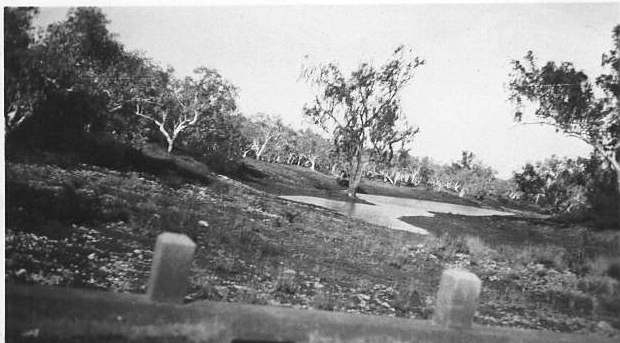
Beaton’s Pool, Nullagine. 1890’s.
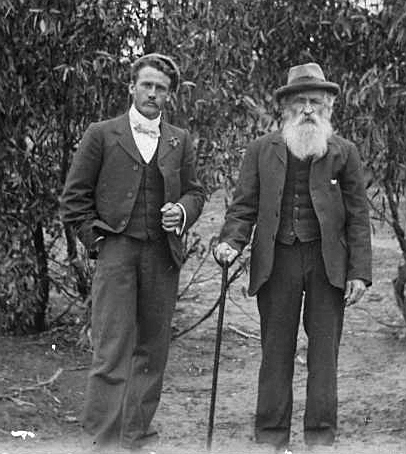
Don and Sandy at Yandanooka.
YANDANOOKA
Yandanooka in the local native language means “Water in the hills” or “Lots of folding hills”.
Sandy arrived in Western Australia somewhere between 1885 and 1887 and by this time was between 56 and 58 years of age, still used to hard physical labour and endeavour. He worked alongside his sons on the goldfields, and later to establish the family in their own home and property ‘Beatonsfield’ at Yandanooka during 1891.
Thundelarra Station in the Yalgoo area was bought around 1897 - 8.
Sandy bought 500 acres at Yandanooka in 1891 and named it “Beatonsfield”. Stories vary between 500 and 600 acres in the original purchase.
It has been presumed that Sandy heard of the good land in the district from Nat Cooke when they were together in the goldfields. It was certainly an area Nat knew well. Sandy would have bought on information gained because of having no knowledge of local conditions.
This property remained in the family until their holding of 1900 acres was sold to the Government for Soldier Settlement in 1948.
In February 1854 Thomas Whitfield took up Yandanooka Station and below is the text from a newspaper advertisement of 1879 when he sold the property and retired to Albany, where he died in 1883.
NEWSPAPER ADVERTISEMENT Sat. 8th November, 1879.
FOR SALE
Squatting property on Irwin River near Champion Bay, West. Australia. Yandanooka Station and stock, the property of Thomas Whitfield Esq. who is leaving the colony. The station containing an area of 69,000 acres (more or less) of first class salt bush and grazing country, is well watered by springs and a shallow well. The Freehold property consists of 380 acres of splendid land securing the Home Station and the different wells and springs.
The improvements comprise a 5 acre paddock, 7 roomed dwelling house, kitchen, store, washhouse, workshop, woolshed and skillions, woolpress, stockyards, mens hut etc.
Plant, every requisite for working a large sheep station.
The stock consists of; 5 carts and stock horses, 4217 good breeding ewes, 2639 large framed wethers, 44 rams carefully selected.
The whole will be sold subject to a lease to Mr Lachlan McPherson ending 17th December 1884. The carrying capabilities of the run are estimated at 29,000 sheep and the Port of Dongarra being near no difficulty is experienced in shipping the wool.
Yandanooka station covered 69,000 acres. It didn’t sell so leases were renewed from years of expiry 1887 -1907 but this area was west of the Midland Railway line.
John Forrest, later Lord Forrest, selected 5000 acres of land which was a reward from the Government for Services Rendered, in the Yandanooka area on 21st December 1876 .
This land was sold in 1882 .
The Midland Railway was opened in 1894.
After the opening of the Midland railway line and with the lack of port facilities at Dongara, Smith’s Mill on the Irwin River fell into disuse.
In 1894 there was a steam mill built near the railway line, with large floor space and receiving sheds running the length of the siding. During the next twenty years most of the flour milled here was shipped out through Geraldton to the North-West.
There was a siding at Yandanooka and later a grain depot, in those days bagged grain, and bags were stacked 22 high.
Yandanooka was the district centre at the time.
Children travelled to school by sulky, ponies, bicycle and foot
The Hall , built with R.S.L. fund raising in 1918, was well used for many activities, clubs and church services.
A telephone exchange was also installed during these years.
In the 1930’s the community established a Golf Course, tennis courts and a cricket pitch having been well used for years. Teams travelled by train to participate in nearby towns.
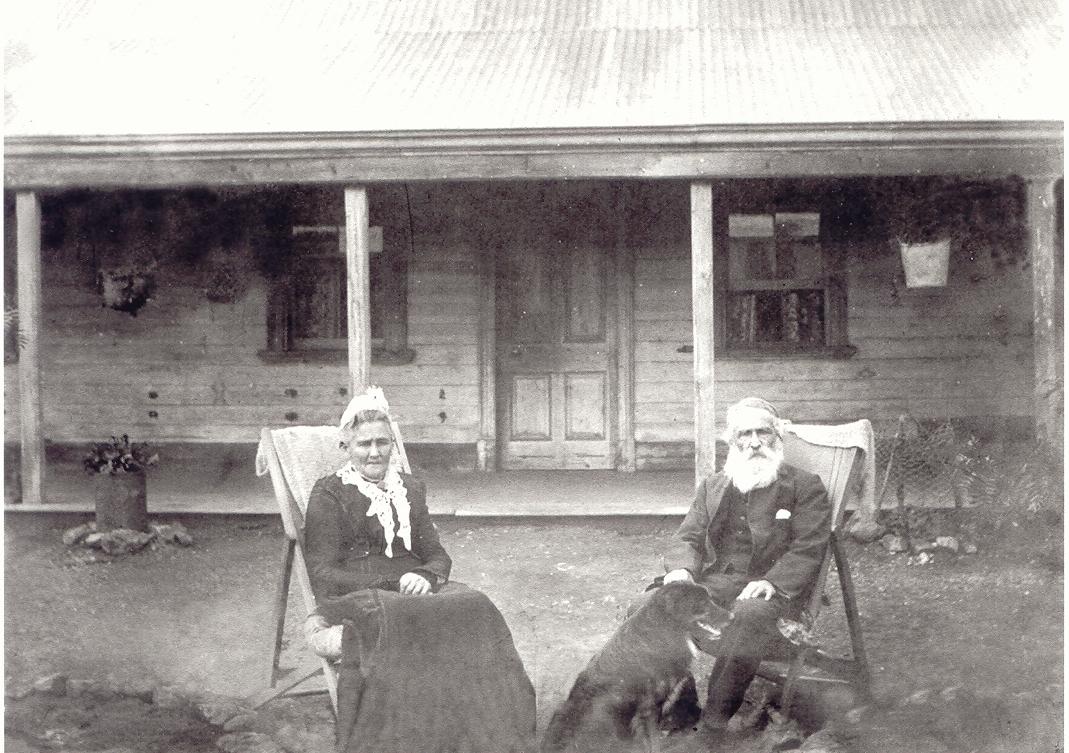
Sandy and Euphemia, 1903.
This is not taken at Yandanooka, - unknown location.
MINGENEW
The name of ‘MINGENEW’ is derived from ‘Mininoo’ meaning ‘Place of Many Waters’
or ‘Minyanoo’ meaning ‘Place of Many Ants.’
When the Gregory brothers came exploring in the 1840’s they gave a glowing account of pastures but also must have commented on the abundant supply of underground water coming to the surface in springs.
They found coal in the south branch of the Irwin River in 1846.
This district is very interesting geologically, the Irwin Valley being of very great age. The sea has come and gone several times and specimens of fossils are found here.
The grazing of cattle was entered into in the 1850’s. Then as settlers moved in, large properties were taken up and later smaller holdings came in to being.
So the district developed and is well known for it’s stock, wool and grain to the present day.
The town was unofficial from 1900 to 1912 but it was an important centre in the 1890’s especially when the railway from Midland was completed in 1894.
Stock was brought down from the north and railed south and supplies came from Perth or Dongara which were carted to the Murchison Goldfields and to settlers further North and East.
Mingenew was part of the Irwin Road Board in 1871, then the Upper Irwin Road Board in 1901, (headquarters in Mingenew), Mingenew Road Board in 1919 and the Mingenew Shire in 1960.
The historical Museum building was the first Road Board Office built in 1906. The first hall was of galvanised iron built in1895. A stone hall of local stones was constructed in 1917 which is now the Lesser Hall and the present Hall was built in 1959.
Old properties in the district are Nangetty, Manarra taken up by the Broad family, Yarragadee by John Morrisey and Yandanooka by Thomas Whitfield.
Coalseam Park is a beauty spot especially in the spring and Depot Hill another attractive place.
Information sheet obtained from Mingenew Museum
Excerpt from “Mingenew1846 - 1986,”by the Mingenew Historical Society.
Printed by Hesperian Press.1988.
Permission to include this excerpt given by the Mingenew Historical Society.
Chapter Nineteen, page 80.
The Government purchased this property in 1912 and divided it in 1914, 42 lots were thrown open for selection at 2 pounds an acre and only one application was made.
This from Ann Beaton and Helen Brain comprising an area of 119 acres and 3 roods.
In 1916, considering the number of men on active service overseas, 35,000 acres of the estate were set aside for discharged servicemen. These were in blocks of 500 to 600 acres and later enlarged to 1,000 acres. Lots 1 to 36 were made available to servicemen for three pounds an acre.
Clearing was still carried out in the arduous back breaking manner using shovels and axes, fencing done by hand, bush timber cut for posts, carted by horse and dray, brace and bit used to cut holes to thread the wire through.
In 1923 a Royal Commission was held regarding the repatriated servicemens’ dissatisfaction throughout the State with the price and quality of land and seeking a reduction of capital costs and interest rates.
The price of wheat was 7/4 (75c) a bushel in 1920/21 and by 1932 it had dropped to below 2/- (20c) per bushel.
From the 55 original discharged servicemens’ blocks, there are now 26 holdings at Yandanooka
Following the Second World War, the War Service Land Settlement Board obtained E.H.LeeSteere’s “Yanda,” E.Broad’s “Manarra,” Grant’s “Mt.Scratch,” Beaton’s “Beatonsfield”, and a portion of Pearse’s “Yarragadee” for discharged servicemen.
Beatonsfield
Victoria Loc 1911
Being Lot 25 and Victoria Loc 1965
Yandanooka Estate Lots 21,22,23,78,80 & 84.
War Service Land Settlement.
Farm A 683 Plan Ref 123/80 E2 & D2
Victoria Loc 1911 being Lot 25
Farming wheat and sheep.
Situation 5 miles North-East from Yandanooka Road, District Mingenew.
Nearest School Yananooka five miles.
Late Owner A & H Beaton.
Approx Area 1921 acres.
Description of Land : 1491 acres 1st class, 214 acres grazing heavy loam and clayey soils. York gum, Needlewood and Jam. 187 acres 2nd class, fair light reddish soil, Jam and Scrub some stony and rocky outcrop. Annual Rainfall 16 inches. Growing Period Rainfall 12 inches.
Clearing Approx 1469 cleared, 80 part cleared.
Fencing Boundary fenced subdivision into 14 paddocks.
Water: Three wells.
Buildings: House, mud brick, cottage, mud brick, machinery shed.
Yards: Fowl yard, sheep yards and dip.
Pastures : Natural grasses.
An original copy of the advertisement is still in David Bagley’s possession.(2001)
In August 1948 Mr Bagley and his wife Judy were granted the property through War Service Grant. They took possession in 1949.
His son and daughter-in-law David and Michelle are now the owners, so for 110 years there have only been two family names on the title for the land, Beaton and Bagley.
The cottage mentioned in the advertisement was the original home Sandy built for his family. This was in use by family and workers and was still intact until a severe cyclone during the 1970’s that unroofed and damaged the structure to the extent that it was uneconomical to restore.
A two room cottage made of hand made mud bricks consisting of local clay from the creek which had iron stone pebbles and they mixed in wheat husks (known to farmers as Cocky Chaff) to bind the mixture. The ceilings were pressed tin, the roof corregated tin, all wooden window frames, and verandahs all round completed the building.
Mr Snow Browning, a Mingenew resident, worked on the farm for Ann and Nell as a farm worker when a young man. The workers lived in the cottage and went to the house for their meals. The kitchen was across a breezway from the house (as was the custom then to reduce the risk from fires) and he remembers the high standard of the presentation, table settings etc for them all, workers and family.
The house ( four rooms with verandahs added and enclosed) was also made from hand made bricks, with foot thick double brick and the cavity was filled with clay. Oregon timber was used for the windows, flooring and wide skirting boards with pressed tin ceilings throughout the house.
When the roof timbers had to be replaced Mr Bagley found they were all hand cut local timbers. After replacing the timbers he nailed the original tin back on.
In 1996 David and Michelle Bagley obtained quotations on the restoration of the house, they were disappointed to find that even after paying $80,000 the builder couldn’t guarantee it would last ten years.
So came the demolition of the old house. The roof was removed and overnight the walls collapsed. Because the building was on the earth, the foundations had fretted away.
People around the district restoring old homes eagerly sought the pressed ceilings, doors, wooden window frames, door frames, floor boards and skirting boards.
When pulling up the carpet and three layers of lino the Bagley’s found old newspapers.
Eastern Districts Chronicle April 27th, Victoria Express Jan 29th, 1890 and April 19th 1890, The Morning Advertiser, The Graphic September 1st 1888. Treasures in themselves.
Yandanooka C.W.A. approx 1948.
Standing l to r: Mesdames C.Boddington, L.Saunders, H.Brain, I.Chivers.Seated l to r :Gran Colegate, Mrs L Easterbrook,
Miss A.Beaton, Mrs E.Wass.
Yandanooka. Circa 1920’s.
L to r : Nell Brain, unknown, Mrs Whelan with Dorothy (now Mrs Boddington), Mr Whelan and Ann Beaton with her fox tails.
Arlene standing on the
Wind generator stand next to the car shed. 1948.
Beatonsfield, Yandanooka
Taken in 1948 by Arlene Sinclair.
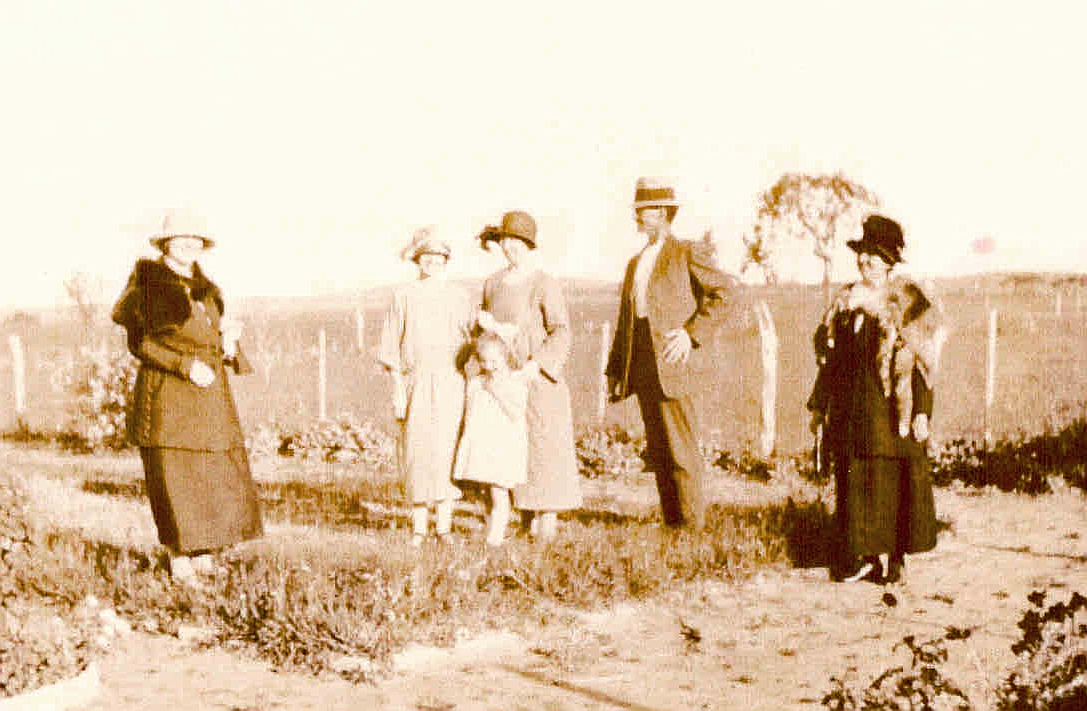
Yandanooka c 1920.
L to r : Nell Brain, ? , Mrs Whelan, Dorothy Whelan ( Mrs Boddington), Mr Whelan and Ann Beaton
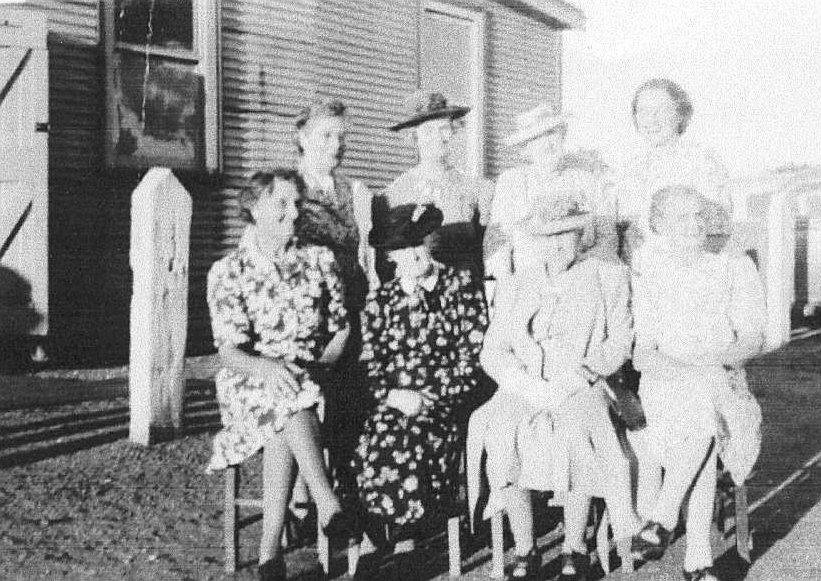
Yandanooka C.W.A. Ladies c1948.
Standing l to r : Mesdames C.Boddington,
L. Saunders, H.Brain, I.Chivers.
Seated l to r : Mrs J.l.(Gran) Colegate, Mrs
L.Easterbrook, Miss A.Beaton, Mrs E.Wass.
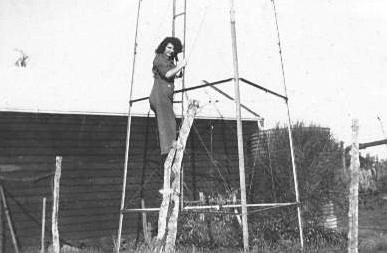
Arleen Sinclair.
Taken at Beatonsfield 1948
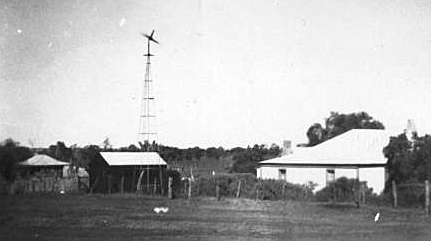
Beatonsfield, 1948.
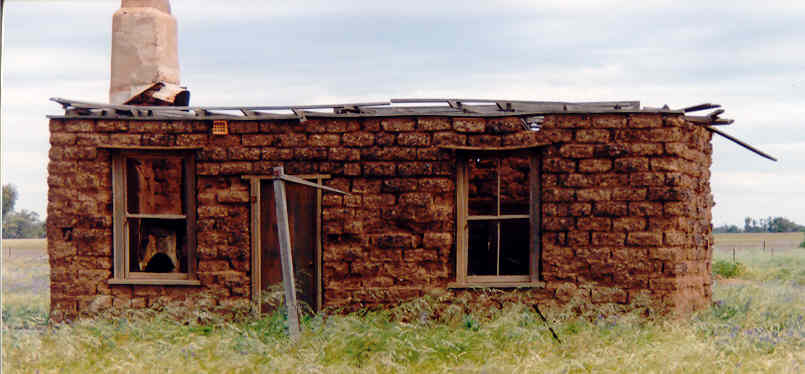
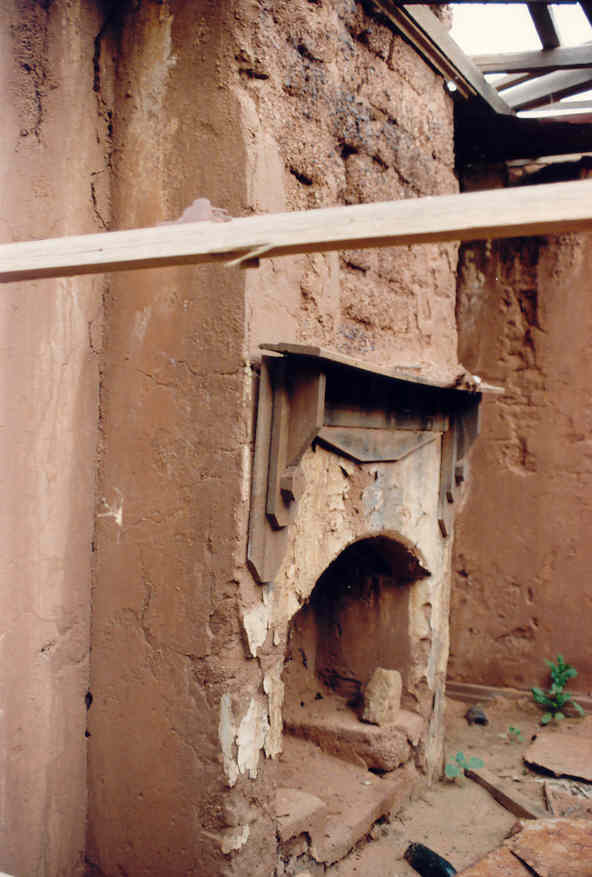
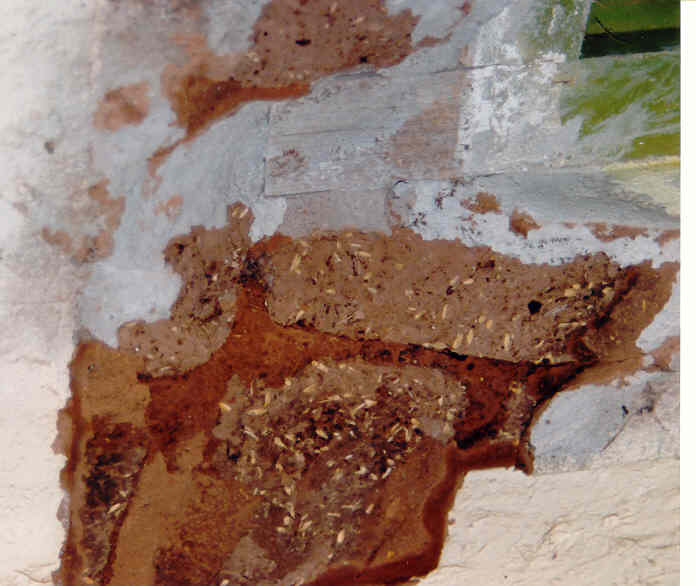

“Beatonsfield”
The ruins of the original cottage.
The fireplace.
Detail of the handmade bricks.
The front door of the second house, demolished in 1996.
Photographs taken in 1992
THUNDELARRA HISTORY
Some of the names in the area : Yalgoo, Thundelarra, Warriedar Hill, Fields Find,
Gnow’s Nest Range, Bullajungadeah, Lake Monger, Tindaloo Pool.
Eakins named it Thundelarra; “Thighbone of the God” is said to be one translation from the native tongue.
A second translation for Thundelarra has been suggested as “Place of many springs” of which there are quite a number on the property.
The first lease in the area was taken up by Donald McPherson in 1872, lease 8289 covering 800 hectares.
The following year H. and N. Cooke took up 2,400 hectares lease 9314.
The Eakins brothers (Samuel and John)moved into the district and in 1875 took out their first lease of sixteen hundred, followed by other leases over the ensuing years
Near the creek which contained Tindallo Pools, he built a large stone house with an iron roof and a substantial shearing shed.
1889 saw the start of eight years of drought in this region, far longer than Eakins could hold out and by 1897 Thundelarra was in the hands of Frank Pearce, the homestead and station deserted.
A Beaton and Sons were looking for more land to purchase, having established themselves at Yandanooka, and having leased a station property for a short time.
The mining centre of Fields Find discovered by James Field in 1895 was near the property and the Beatons sold meat there and enjoyed the social company during the heydays of the mine
There is, close to the homestead on the creek flats, a group of four graves.
By 1904 they had employees working with them on the station; the police records mention the seven year old son of one falling down a well and drowning. The lad named Timothy, a part aboriginal, was buried on the station. One is quite small and is obviously that of a child, perhaps young Timothy.
There are also records of a carpenter, Philip Hothar Scheer, who died from a self inflicted gunshot wound on 13.1.1910 aged 55 years. His burial at Thundelarra was witnessed by Charles Beaton and
W Baumgarten.
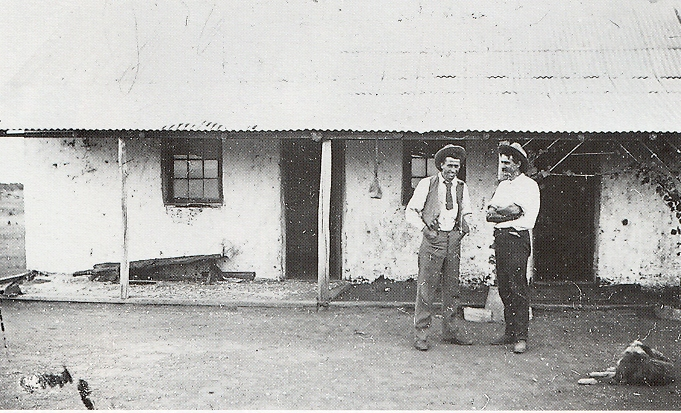
Charles and Jim Beaton outside what is thought to be the original cottage on Thundelarra, 1900.
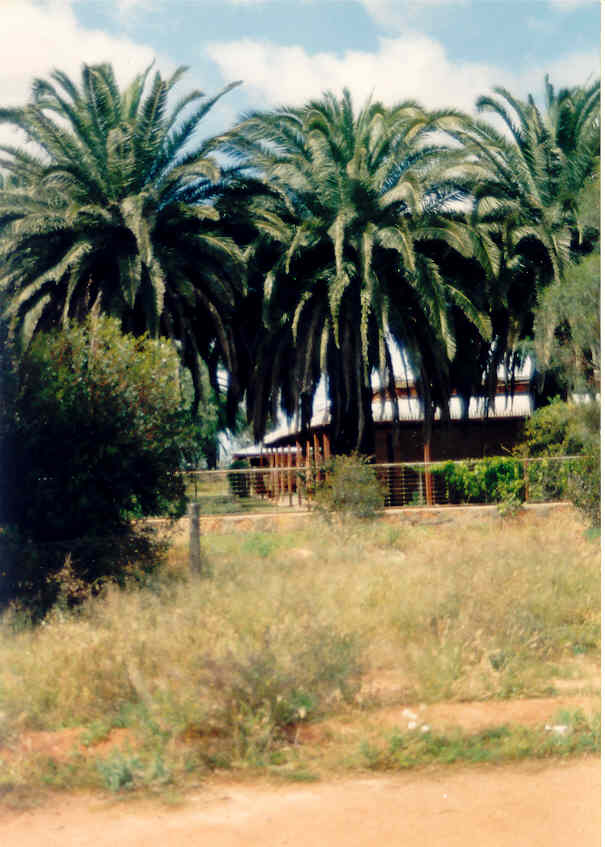
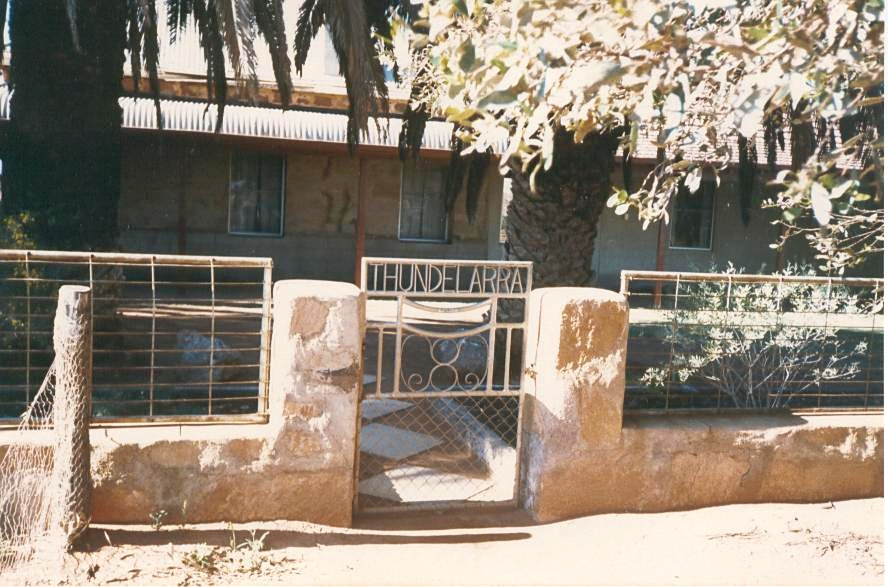
The front gate to the Thundelarra homestead.1992.
The homestead shaded with the palms.
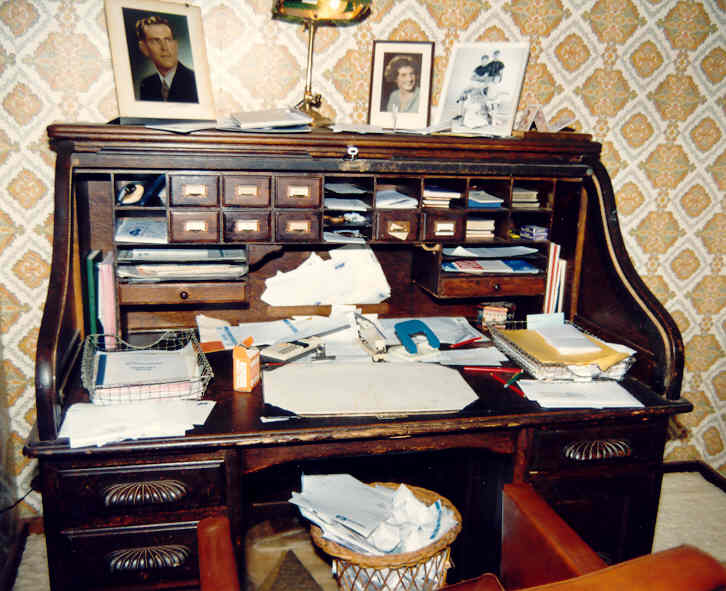
The restored desk, in use. 1992
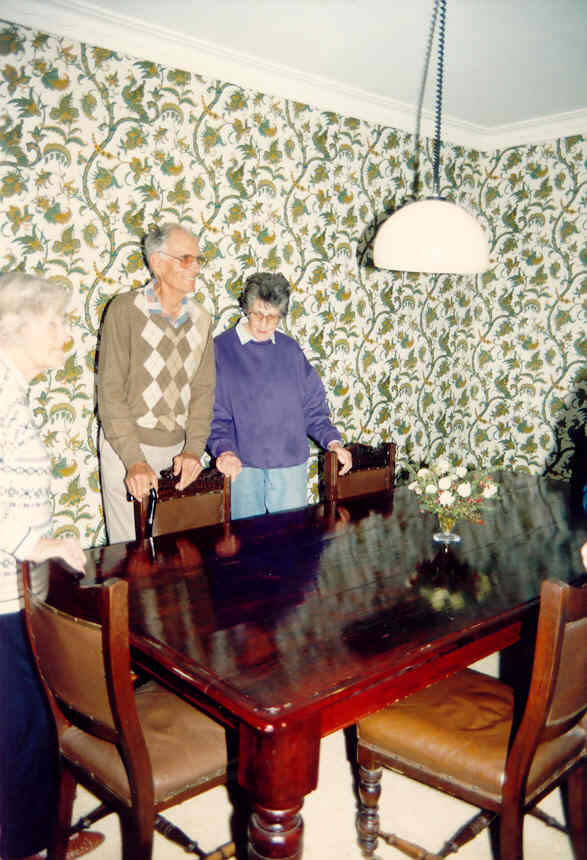
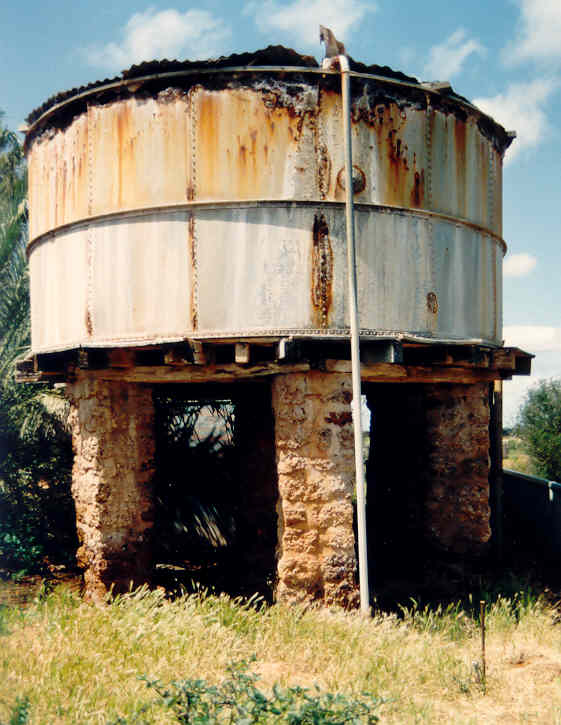
The original dining room table, still with carved initials.
L to r: Joan Langdon, Jack and Helen Morrissey. 1992.
An old homestead water tank.
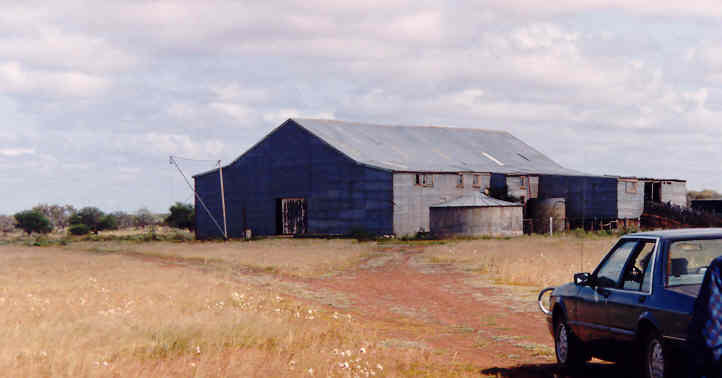
The Thundelarra shearing shed, built in 1917 and still in use 2003.
An original tank and tankstand.
The house hidden by the palms.
THUNDELARRA with the Beatons.
This property traded as A.Beaton and Sons. and was originally registered in six names, Sandy and his sons, Charles, John Alexander, Kenneth, James and Don.
The lease is approx. 280,000 acres and in some spots water only 10 feet underground.
James took his share, $50 and a horse and went his way, but exactly which year I cannot ascertain.
Ken still held a share when Sandy’s will went to probate in 1909 and presumably sold his share shortly afterwards, having taken up virgin farming land at Erikin.
Jim had also taken up a block in Erikin, across the road from Ken.
After Sandy’s death, Thundelarra was registered in three names, Charlie, Jack and Don.
Charles and his bride Charlotte (Lottie) Broad made their home there, after their marriage in 1903, and six of his eight children were born on the station.
The house which Charles had built for himself and Lottie was actually two buildings 8 feet apart, the living and sleeping area in one and the kitchen and dining rooms in the other. There were originally separate dining rooms for white and black diners, cooks room and storeroom and meat room. Most windows were glass louvred, the walls thick mudbrick, high ceilings, several rooms all with connecting doors and doors leading out to the surrounding wide verandahs. A tennis court and swimming pool were built next to the house, all still in use.
Don, Irene and their three children, Helen, Donald and Duncan lived on the station too.
Charles, left Thundelarra in 1918 and went first to Perth and then into partnership with his brother-in-law Alf Broad in Cogla Downs Station in the Cue District.
In 1919 Jack married Isobel Stubbs and their children Ian and Laurie added to station numbers.
By 1923 Thundelarra was in Jack and Don’s names only. It was over this period that sheep numbers at Thundelarra, rose to their peak of 28,500 in 1928.
The state was at the time ‘riding on the sheeps back’ as the saying goes. And the Beaton menfolk, sons and grandsons, certainly enjoyed the lifestyle. They were all tall, attractive, personable, socially graced, literate young men, and for the day, wealthy.
They literally had the world at their feet, and although over the years they had worked hard, they were now in the habit of having others to do the work, and their sons had grown up having known no other life but a life of plenty. The attitude all the boys had developed regarding their position and standing in the ‘Pastoralist and Grazier’ positions in society also contributed to the condition of the property.
There were stories retold by past guests ( one, a past Governor of the State) of gambling weekends held by students holidaying with their schoolmates, drink, smokes, high stakes and a good time had by all, but very little work done by the young men.
Conditions deteriorated over the next years with repercussions from poor seasons, fragile country, overstocking and lack of purposeful management direction.
Eventually due to drought, depression and low wool prices the bank stepped in and Jack approached Stan Lines and asked him to return and manage the station for him.
From this time on Donald had no further financial interest in the station.
Donald’s sons Donald and Duncan both had periods of working the property during the 1930’s.
Duncan was still working at Thundelarra when he enlisted in the Air Force during W.W.11.
When Jack approached Stan Lines requesting his return, to manage the property, numbers were reduced to 2000 sheep and only 4 working windmills on the station.
Stan Lines had previously worked on the property, was a level-headed man and well respected member of the community.
He served on the Yalgoo Road Board from 1952 to 1960 and was called on on several occasions as arbitrator or intermediary on one or two awkward incidents in the town.
Stan Lines stayed and managed the property for Jack and then Ian, until he retired in 1962 .
Ian had said it would remain in the family for as long as Stan wanted to stay there.
After Stan Lines informed Ian Beaton of his desire to retire Thundelarra was placed on the market for sale.
It had been owned by the Beaton’s for 65-66 years.
Thundelarra after the Beaton’s
January 1963 saw John (Jack) and Helen Morrissey and their family take over the station.
The Beaton’s old homestead into which they moved was beginning to fret badly,
particularly at ground level where dampness had penetrated.
The salt affected foundations were mentioned in the purchase notes. An old Italian tradesman Fermo Figiroli and his assistant Tony Berti were engaged to repair the foundations.
They meticulously removed a section at a time from the walls up to a metre high and replaced them, working for three months of the year, then returning the following year until they had completed re-construction of all foundation.
They assured the Morrisseys that it would never fret again.
The Morrisseys took thirteen doors out of the main house, the breezeway between the two buildings became a sitting room, they replaced windows, redecorated, restored the office desk used by Beatons for many years, restored the dining room table and billiard table, some scored initials still visible, and now occupy a homestead typical of the early days on the outside yet with all modern facilities.
In 1970, after Cyclone Ingrid, the house was flooded, this was the only time the house had ever been flooded. Flood waters had come up to the house before, but never into the house.
Alex Beaton (Charles’ son), when talking to Jack some years ago, about the value of Thundelarra, it’s position, rainfall, climate, the developments and the number of windmills, was regretting the loss of the property to the family.
After Jack’s retirement from the running of the station, his sons John and Tom took over the ownership of the property. Some four years later John purchased a neighbouring station and sole ownership of Thundelarra was taken over by Tom, Roxanne and their children.
For some years Jack and Helen looked to the tourist industry. Having house guests in the restored main house, backpacker accommodation in the new shearers quarters, and parking for caravaners.
This service was extremely popular because it offered an insight into station life and the outback that city and overseas visitors have no opportunity to experience otherwise.
Jack, ever ready to explain station operation and conduct tours of the property, also to the old mining centres, rock hunting spots and places to delight painters, bird watchers and flower lovers.
Several Beaton family members took advantage of the opportunity to see this place we had all grown up hearing tales about.
They must have been magical days for those young men and ladies because they all remembered and relived that magic over and over throughout their years.
Jack and Helen have now retired to Geraldton, so the opportunity for a personal guided tour is gone but their family retains Thundelarra in a strong family commitment to the land running back through five generations.
Thundelarra is in good hands, long may it continue.
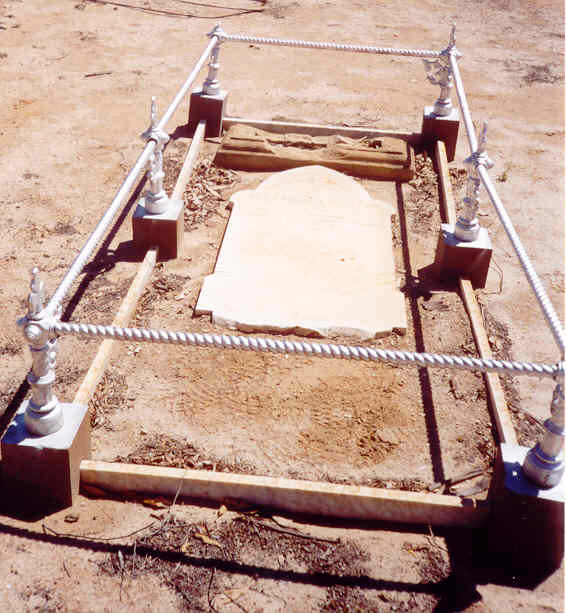
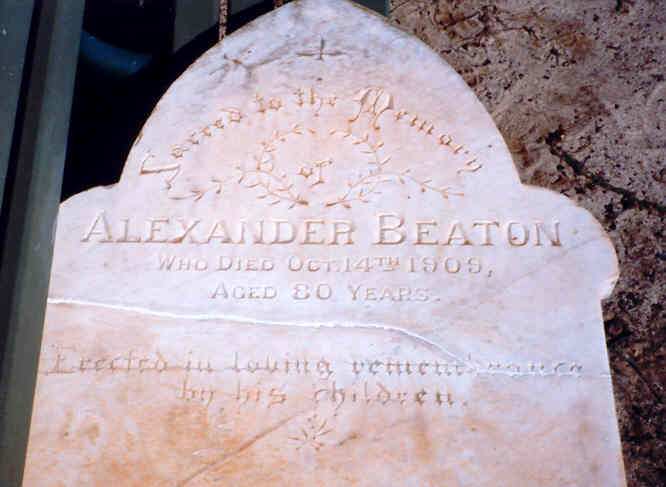
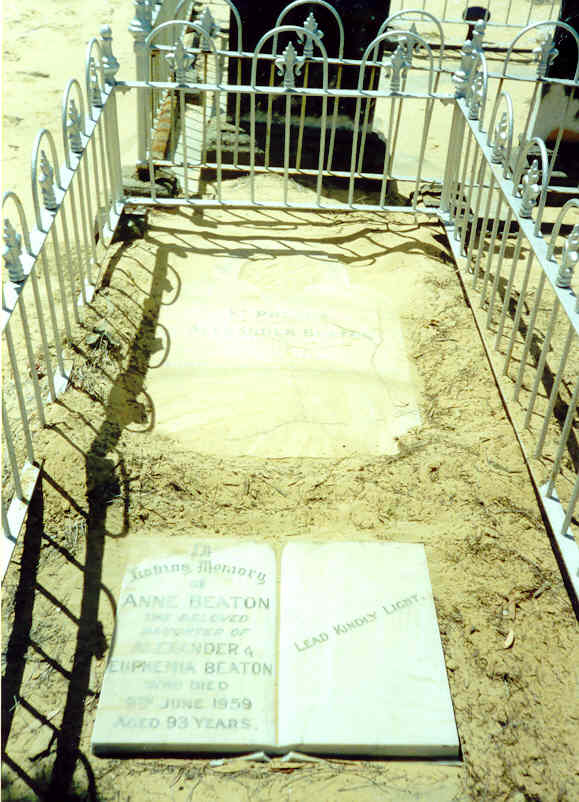
Ann
Died on June 9th, 1959
at the age of 93
and is interred with her Mother
Euphemia
Died on the 23rd August, 1904. at Guildford
and is interred in the Midland Cemetery in the Presbyterian Section
OBITUARY
Mr BEATON Senr
Mingenew Oct.14
Mr Alexander Beaton of Yandanooka, Upper Irwin, died today at the advanced age of 80 years.
Deceased was one of our worthy old pioneers.
He arrived in the Upper Irwin District many years ago, and by dint of industry and thrift became successful in his agricultural and pastoral enterprises.
A man of high integrity and genial temperament he won the respect of the community among whom he lived.
Much sympathy is felt for the late Mr Beatons bereaved family.
Announcement printed on page 2 in
The Geraldton Express
Friday October 15th 1909
Sandy is buried at the Mingenew Cemetery
in Lot E 21
Immediately inside the entrance gate.
Be it known on the twenty sixth day of November one thousand nine hundred and nine the last Will and Testament ( a copy whereof is hereto annexed ) of Alexander Beaton deceased who died on the fourteenth day of October one thousand nine hundred and nine at Beatonsfield near Yandanooka in the said state of Western Australia, was proved, affirmed and registered in the Supreme Court of the said state at Perth, and that Administration of the Real and Personal Estate of the said deceased was granted by the aforesaid Court to Charles Beaton of Thundelarra Station Murchison and John Alexander Beaton of Beatonsfield near Yandanooka both in the State of Western Australia farmers and graziers two of the Executors named in the said Will, they having been first sworn well and faithfully to Administer the same.
Leave being reserved to Anne Beaton the other Executrix to come in and prove.
By the Court
Signed by F.A.Moseley Master
293/09 Probate Jurisdiction
In the Will Alexander Beaton late of
Beatonsfield, Yandanooka in the State of Western Australia, farmer and grazier, deceased.
I, Alexander Beaton of Beatonsfield Upper Irwin in the State of Western Australia, Farmer and grazier do hereby revoke all former Wills and Testamentary dispositions made by me and declare this to be my will and Testament. I appoint my sons Charles and John Alexander and my daughter Anne (hereinafter called my trustees) to be the Executors and Trustees of this my will. I devise and bequeath my farm known as Beatonsfield together with all stock, working plant and furniture therein as used in connection therewith to my two daughters Anne and Helen in equal shares as tenants in common and free of Estate and other dutys and whereas I am entitled to one fifth share in the sheep station known as “Thundelarra” together with all stock, implements, plants and other chattels thereto belonging (all of which are hereinafter comprised in the word “station”) and the business of Graziers carried on upon the said station by myself and four sons, Charles, John Alexander, Kenneth and Donald in partnership under the style or firm of “A. Beaton and Sons”.
I hereby bequeath all my share and interest in the said station and business to such of my said four sons and partners as shall retain their interest in the said Station and business at the time of my death as tenants in common subject to payment of the pecuniary legacies (free of Estate and other duty) hereinafter bequeathed that is to say to my son James two hundred and ninety pounds , to my daughter Anne one hundred and ten pounds to my daughter Mary Isabella one hundred and sixty pounds to my daughter Margaret one hundred and sixty pounds to my daughter Helen one hundred and ten pounds to my nephews Archibald Cameron and Finlay Cameron and my niece Mary Ann Cameron twenty five pounds each and to my sons Charles, John Alexander, Kenneth and Donald one hundred and ten pounds each. And I direct my debts and funeral expenses and the said pecuniary legacies to be paid out of any part of my estate not hereby otherwise disposed of and if my undisposed of Estate shall be insufficient for the purpose then the said debts, funeral expenses and legacies shall be a charge upon and be payable out of my share in the said station. And whereas it is my desire that such of my sons as shall carry on the said station after my death shall not be embarrassed or inconvenienced in carrying on the said Station by payment of the said legacies.
I hereby authorise my trustees if any of my said sons shall so long continue to carry on the said station after my death to allow the said Station to be so carried on and to postpone payment of the said pecuniary legacies for three years from the date of my death and no interest shall be payable on any such legacy within the said term of the three years and further that none of my said trustees shall be personally responsible for payment of any of the said legacies unless he is a partner in the said station except as to moneys received by him or her for payment of the same legacies and I hereby devise and bequeath all the residue of my estate not hereby otherwise disposed of untosuch of my sons and partners as shall become entitled to my share and interest in Thundelarra as a foresaid for their own use and benefit.
In witness whereof I have hereunto set my hand to this my last Will and Testament this twelfth day of August one thousand nine hundred and eight - A Beaton - signed by the said Testator
Alexander Beaton as his last will and testament in our presence who at his request and in his presence and in the presence of each other have hereunto set and superscribed our names as witnesses (the word “Anne” having first been in- ? between the third and fourth lines of the first page of the said Will)
H.Wilson, Solicitor Geraldton . J.Moore his clerk. Signed by F.A.Moseley Master.
The Beaton Family
Born Died
Alexander 17th October, 1829 in Scotland. 14th October, 1909,Mingenew.
Euphemia 16th April, 1842,New South Wales 23rd August, 1904, Guildford.
Sandy and Euphemia married in New South Wales on 11th April, 1865.
Children: Born Where Died
Ann 11th of May , 1866 Copmanhurst, 9th of June, 1959.
Mary Isabella 16th of August, 1867 Copmanhurst, 9th of April, 1942.
Finlay 2nd of April , 1869 Copmanhurst, 29th October,1907.
Charles 18th of May , 1870 Copmanhurst, 25th of July, 1954.
Margaret 1st of October , 1871 Copmanhurst, 17th of June, 1956.
John Alexander 5th of September , 1873 Copmanhurst, 7th of July, 1960
Kenneth 12th of August , 1875 Copmanhurst, 29th September,1964.
James 17th of January , 1877 Copmanhurst, 25th October,1963.
Donald 25th of August, 1879 Copmanhurst, 9th of June, 1955.
Euphemia 23rd of August , 1881 Solomontown,Port Pirie Sth Aust 10th of Nov, 1881.
Helen 21st of November, 1883 Parkside, Adelaide, 19th February, 1964.
Marriages:
Ann
Mary Isabella (Belle) married Charles Crane on 6th January, 1894, Yandanooka.
Finlay
Charles married Charlotte Broad on the 11th November, 1903, Mt. Magnet.
Margaret (Meg) married James Sinclair on the 12th March, 1895, Geraldton.
John Alexander (Jack) married Isabel Jeffreys Stubbs on 20th February, 1919, Perth
Kenneth married Ethel Foale on 18th August, 1909, South Australia.
James married Winifred Farrell(nee Coombes) on 4th January,1910,Kellerberrin.
Donald married Irene Purchase on 22nd December, 1906, Yandanooka.
Euphemia
Helen married Leonard Brain on 29th March, 1919, Yandanooka.
Descendants:
1st Generation 2nd 3rd 4th 5th 6th
Sandy & Euphemia Ann
Belle 5 5 1
Finlay
Charles 8 19 35 18
Meg 3 8 18 24
Jack 2 2 7
Kenneth 2 3 9 3
James 8 26 57 64
Donald 3 9 27 10
Euphemia
Helen
The numbers are incomplete for the 4th , 5th and 6th generations.
Family War Service for King and Country.
World War 1
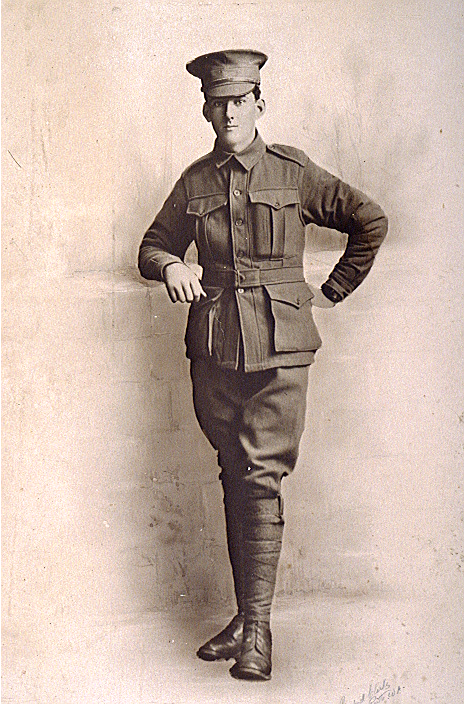
Sandy’s Son
Donald Beaton AIF—28th Battalion - France - Wnd- L.R. Leg.
Sandy’s Grandsons
John A. Crane - 2nd 44th Btn - France - Cas- Villers Bretonneux mMemorial
C.M.M.Sinclair-
J. A. Sinclair - 25th L.Horse – France - Gassed - died 1934
World War 11
John A.Crane
Sandy’s Grandsons and Grandaughters
Charlotte Beaton W.A.A.F. Training
Donald Beaton R.A.A.F. Middle East.Sqdn Ldr, Pilot, D.F.C.
Duncan Beaton R.A.A.F. New Guinea Grd Staff
Ian Beaton R.A.A.F. Pilot
Nigel Beaton R.A.A.F. Pilot
Peter Beaton A.I.F. 2 /4th M.G.Bn. Changi.
Ron Beaton R.A.A.F. England Grd Staff
Stuart Beaton R.A.A.F. New Guinea Pilot
Sandy’s Grandsons-in-law
John McKay A.I.F. Training Troops
W(Bill) Webb A.I.F. Middle East
M.Kenneth Simpson R.A.A.F. Casualty Pilot
Vivian Bickford R.A.A.F. Grd Staff
W.J.(Blue)NancarrowR.A.A.F. Grd Staff
James Hill R.A.A.F. Grd Staff
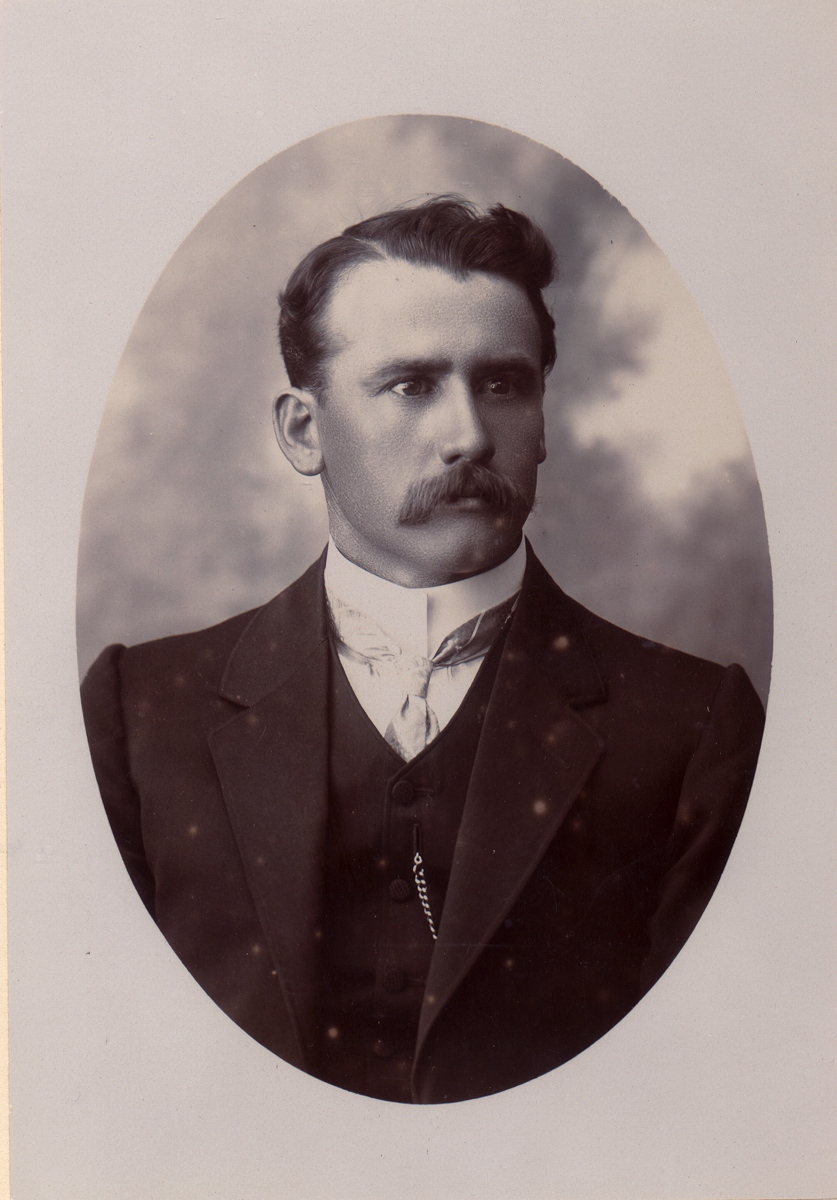
Ernest Austen A.I.F. Middle East
Sandy’s Great Grand Sons and Daughters
John Hickman A.I.F. New Guinea
Kathleen Sinclair W.R.A.A.F.
Ann Beaton
Donald Beaton Snr.
Ann was born on 11th May 1866 at Copmanhurst N.S.W.
As the eldest child and daughter and her mother having eleven children in all, we can believe Ann was indispensable to her mother.
Ann was in her fifteenth year when the family left Copmanhurst and moved to South Australia.
In later years Ann travelled from Yandanooka to the east to visit her cousins.
Ann was well remembered by nieces and in her later life moved around and visited her siblings and their families. and was indispensable in the family in times of need, for instance when one of her sisters-in-law was ill.
My mother, Marion remembers her visiting them and being most put out by their lack of commitment to work, work and more work.
In her later years she formed a friendship leading to marriage but her brothers kindly told her ‘no fool like an old fool’ and ‘he’s only after what he can get’ so she never did marry.
Sandy left the Yandanooka property to his two daughters Ann and Helen who were both still unmarried and looking after him when he died.
It has been mentioned elsewhere that their land was resold for soldier settlement in 1948.
Ann and Nell’s money was invested, following advice, into blue chip investments that were
secure but not paying a huge dividend ,which left them on a very restricted income.
Ann and Nell lived together, for many years, in a house opposite the old rear entrance to the
Perth Zoo, in Mill Point Road.
It was always part of any family visit to the Zoo to call and see the Aunts, whether on the way there or on the way home, and frequently we saw other members of the family there.
Ann and Helen were the link in the family as everyone kept in touch with them, so you could get news of everyone else from them.
A very tiny lady when we knew Ann during the 50’s.
She lost her sight during the last years of her life.
I remember Ann with affection, maybe our link of names.
Ann’s health deteriorated and during her nineties she was admitted to a nursing home in Mt Lawley.
Aunt Nell recorded in the family bible “died 9th June 1959 aged 93 years”.
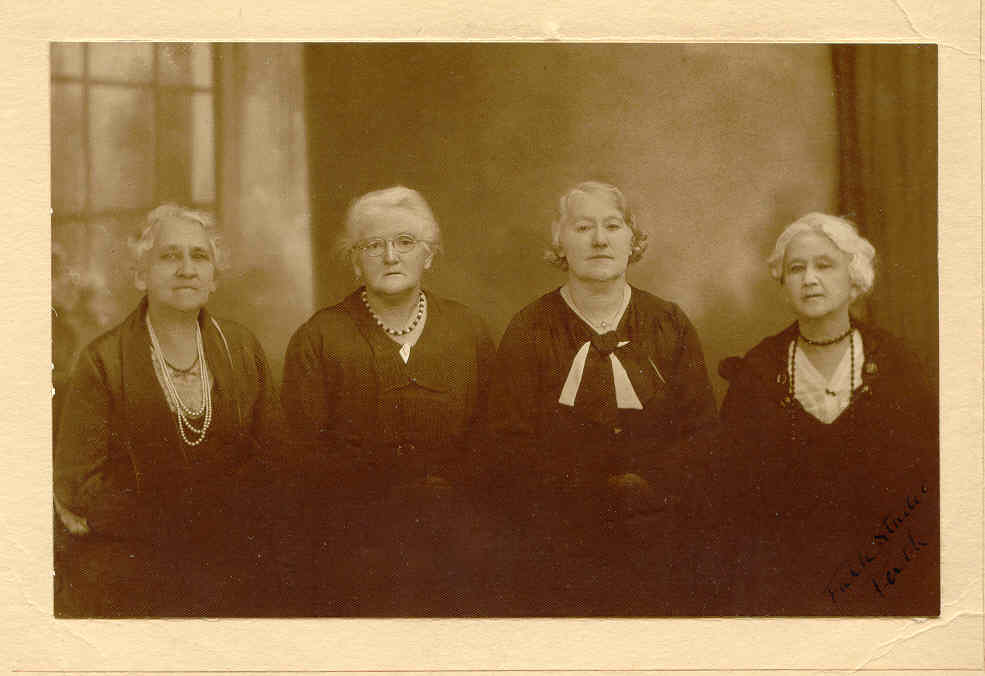
The four sisters: Ann, Meg, Helen and Belle.
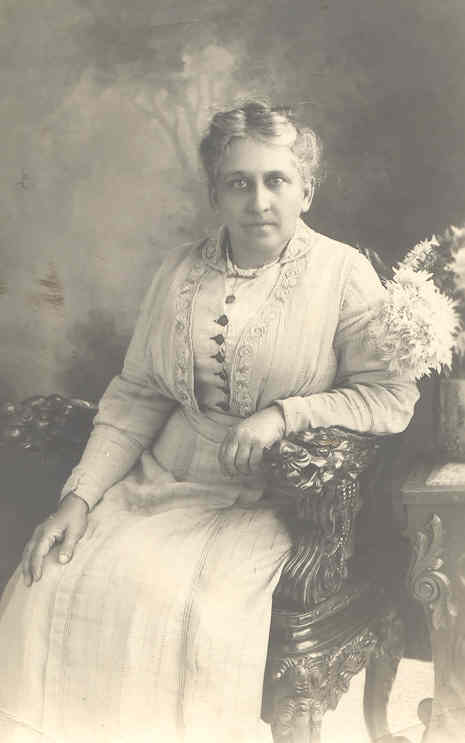
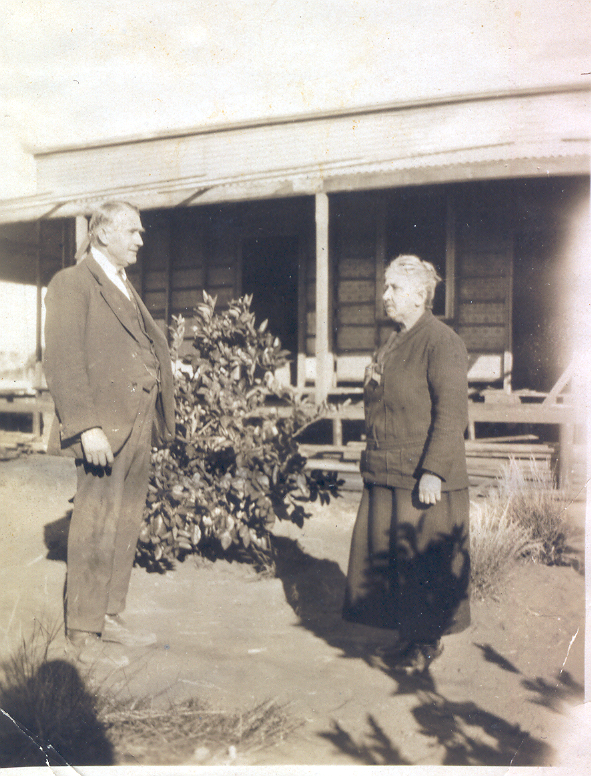
Charles and Ann Beaton
Cogla Downs.1930’s
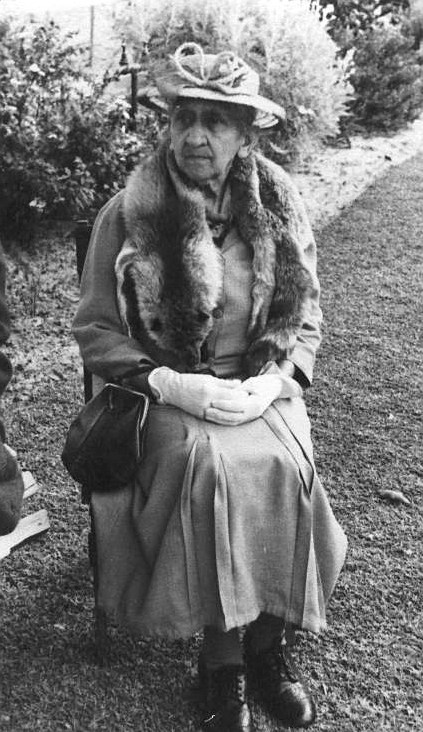
Ann Beaton circa 1920
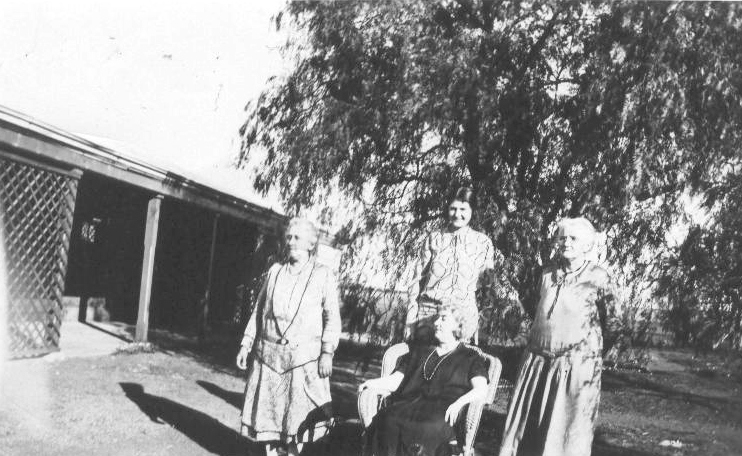
Standing L to R: Ann Beaton, unknown, Meg Sinclair. Seated: Nell Brain.
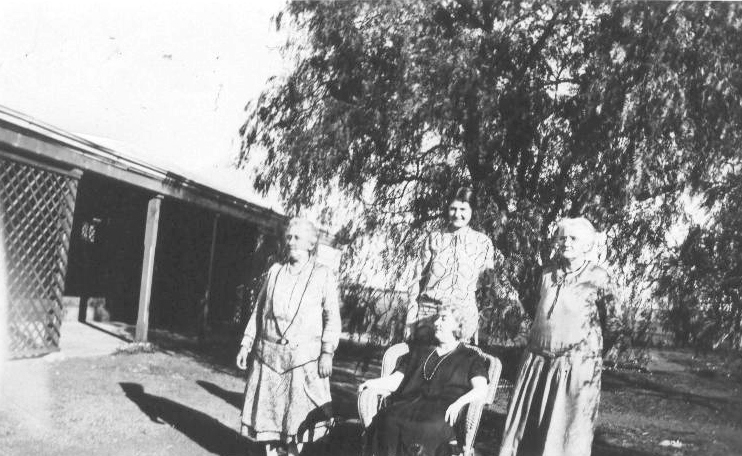
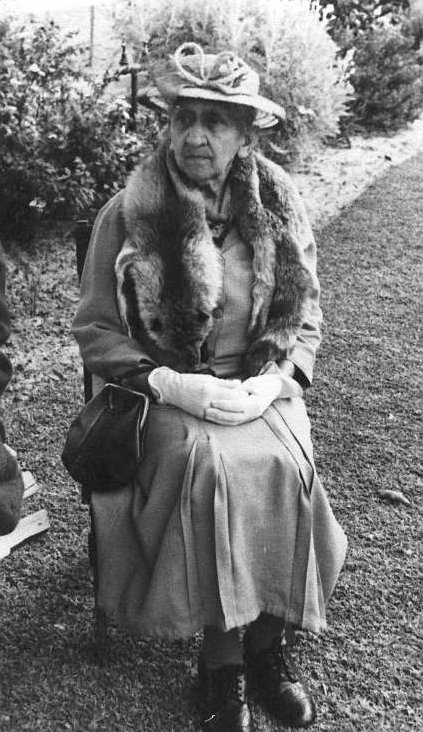
Ann , wearing her
renowned fox tails.
Mary Isabella Crane (nee Beaton)
Mary Isabella was born on the 16thAugust, 1867 at Copmanhurst, N.S.W.
The second daughter of Sandy and Euphemia Beaton, she was always known as Belle by her family.
Belle was in her 12th year when the family left Copmanhurst and moved to South Australia where she remained with her mother, Ann and their younger siblings until sailing for Western Australia in 1892 on board the “S.S.Polynesian”, then in her twenty fifth year.
Belle married at Yandanooka by special licence on 6th January, 1894 to Charles George Crane who at that time was an accountant at Wainwrights of Geraldton.
During these years she lived at Geraldton, Arrino Station, Lower Murchison,Yalgoo, Kuninoppin with her husband and had a family of six children, two daughters and four sons. Her firstborn, Euphemia died in infancy, and her eldest son was lost in France during World War I.
Following this tragedy, in 1919 Belle and Charles moved to Moree,N.S.W. with their three younger sons. Their daughter, Isabel, remained in W.A.
Following Charles’ death in 1932, Belle returned to W.A. and lived first in a flat in South Perth and later at Holmlea Rest Home, Rivervale, W.A. until her passing on 9th April, 1942 and is buried in Karrakatta Cemetery.
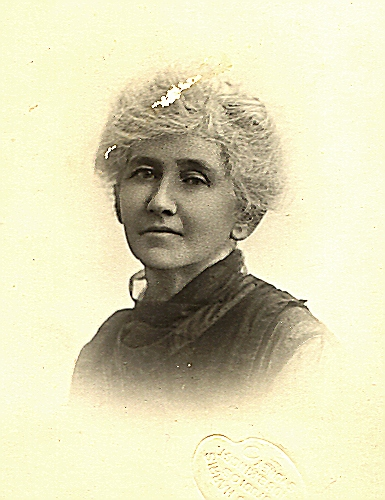
Belle Crane (nee Beaton )
We are indebted to Belle’s daughter, Isabel Hickman, (Sandy’s second grandchild born in March 1896) for having the foresight to document biographies for Sandy and several of his children .
I include those she wrote for her mother, father, herself and her husband Neville as she wrote them.
For other members of the family I have incorporated the information amongst their stories.
Having these records has been a great advantage.
BIOGRAPHY
Name : Mary Isabella Crane (nee Beaton)
Districts: Geraldton, Arrino Station, Irwin region, Ninghan Station, Lower Murchison region, Yalgoo, Kuninoppin, eastern agricultural region.
MARY ISABELLA CRANE, born 16.8.1867 at Copmanhurst, N.S.W.
Second daughter of Alexander and Euphemia Beaton of Yandanooka
Died Holmlea Rest Home, Rivervale,W.A. 9.4.1942. buried Karrakatta Cemetery.
Married 6.1.1894 by official permission in home of Alexander Beaton.
To Charles George CRANE born 2.6.1869 at Warialda, N.S.W.
Third son of John and Elizabeth Crane, Warialda, N.S.W.
Charles Crane died in Newcastle 1931. Buried in Newcastle cemetery.
Children :
1.Euphemia, born 11.3.1895 at Geraldton, died 17.3.1898.
2.Isabella (known as Isobel) Elizabeth born 7.3.1896 at Geraldton,
teacher, married Neville William Hickman , 1921 at Perth, one son. Lived in Narrogin and Broomehill for four years. For past fifty one years has resided in own home at South Perth.
3.John Alexander, born 11.3. 1898, Geraldton, killed in action at Messines, France on 4.6.1917,unmarried.
4.Charles Kenneth, born 22.3.1901 at Arrino Station, Irwin region, married Marjorie Rendall, Newcastle about 1929, one son, retired entrepreneur, living in Sydney N.S.W.
5.Wallace Donald, born in Subiaco 22.4.1903, married Dorothy Lysaght in Sydney, two daughters. Retired electrical engineer living at Gosford N.S.W.
6.Finley George born 12.7.1909 at Geraldton, invalid pensioner, living in Newcastle. N.S.W.
Arrived in W.A. 1892 with her mother, three sisters and two brothers on board
S.S.Polynesian from Adelaide (ref. passenger shipping lists Battye library.)
Lived at home with her mother, brothers and sisters in Adelaide waiting to
join her father Alexander Beaton in W.A. After arrival in W.A lived with
parents at Yandanooka until she married 6.1.1894 Charles George Crane of
Geraldton. After marriage lived in Geraldton, Arrino Station, Irwin region,
Ningham Station, Lower Murchison, Yalgoo, Kuninoppin. In 1919
accompanied husband Charles Crane to Moree N.S.W. In 1932 after her
husband’s death she returned to W.A.
11. No land acquisition, nor business interests.
Well educated by private tutors on her parents’ property at Copmanhurst N.S.W. and later at a private school for young ladies in Adelaide (name of school forgotten by compiler). Spoke Gaelic in her parents’ home until about eleven years of age. Had been taught singing, piano and painting(oils).
Presbyterian.
Politically Conservative, anti -Labour Party.
1.Photograph taken in Adelaide just before coming to W.A. in
possession of daughter Isobel Hickman.
2.Copy of marriage certificate.
16.Death recorded in West Australian after private burial service
10.4.1942.
17.Few family records available owing to all possessions destroyed by fire in
Kuninoppin homestead.
Any remaining in possession of daughter Isobel Hickman.
18. Compiler: Isobel Hickman ,23 York Street , South Perth 6151 28.6.1978.
BIOGRAPHY
Name : Charles Crane
Districts: Fremantle,Geraldton, Arrino Station, Irwin region, Ninghan Station, Lower Murchison, Yalgoo, Kuninoppin, eastern agricultural region.
Charles George CRANE, born 2.6.1869 at Warialda , N.S.W.
Third son of John Crane and wife Elizabeth of Warialda. N.S.W.
Died at Newcastle N.S.W. 1931. Buried in Newcastle Cemetery.
Married 6.1.1894 by official permission in home of Alexander Beaton Yandanooka ,W.A..
To Mary Isabella Beaton born 16.8.1867 at Copmanhurst, N.S.W.
Second daughter of Alexander and Euphemia Beaton of “Beatonsfield,” Yandanooka, Irwin Region, W.A.
Charles Crane died in Newcastle 1931. Buried in Newcastle cemetery.
8. Listing of children as above in Belle’s Biography
9. Arrived by ship from N.S.W. about beginning of 1892. Was met by intimate family friend Mr Stuart, Chief Manager in Perth of Bank of New South Wales (no record available of ship).
10.He was an experienced bookkeeper on his father's sheep property at Warialda N.S.W. Soon after arrival in W.A he secured a clerical position with the firm of Hubble in Fremantle. In 1893 became accountant at Wainwrights, a prominent business firm in Geraldton. About 1900 he became manager of Arrino and Ningham sheep stations which were owned by the Bank of New South Wales. After the station properties had been sold by the bank (Arrino to Durack Bros. and Ningham to Paddy Connelly, a well known horse racing identity),Charles Crane joined the State Civil Service and as an Inspector he supervised the building and maintenance of most of the rabbit proof fence in W.A. During the course of the work he was stationed at Yalgoo for three years and at Port Hedland for six months. His means of transport over the thousands of miles which he travelled in isolated parts of the state during those years was a buckboard and three-in-hand of two horses and a mule. His only company, apart from emus and kangaroos, which raced along beside the fence or became entangled in its mesh, was 'Ginger' a small sturdy dog who as companion rode on the seat beside his master throughout the days and during the nights spent under the stars, kept vigil against marauding Aborigines.
11.About 1910 with other members of the State Civil Service , he settled on a farming property at Kununoppin. While there he was appointed Inspector for the Industries Assistance Board (I.A.B.) and once every month he travelled throughout the settlement (which included Kodjin and Trayning) and inspected properties of all settlers who were being financially assisted by the Agricultural Bank. At the time of the Civil Service Settlement the nearest railway was at Kellerberrin, 40 miles distant from the Crane property. The Dowerin-Merredin line was in the course of construction, and when completed Charles Crane's property was eight miles south of Kununoppin townsite. Crane's Dam which was constructed by the Govt near his property, was named after him. I n 1919 saddened by the death of his soldier son, he sold the property and with his wife and surviving sons, went back to N.S.W. where he purchased a grazing property about 60 miles from Moree.
12.Well educated, having matriculated from Tamworth Grammar School, N.S.W.
13.Anglican
14.Politically Conservative and anti-Labour Party. His older brother, John T.Crane was for many years Parliamentary Representative of the Gwyde (later Moree)N.S.W. electorate in what was then known as the National Party.
15.Photograph, taken soon after the death of his eldest son, is in possession of daughter Isobel.
16.His death was recorded in Newcastle,N.S.W. press and also in the West Australian.
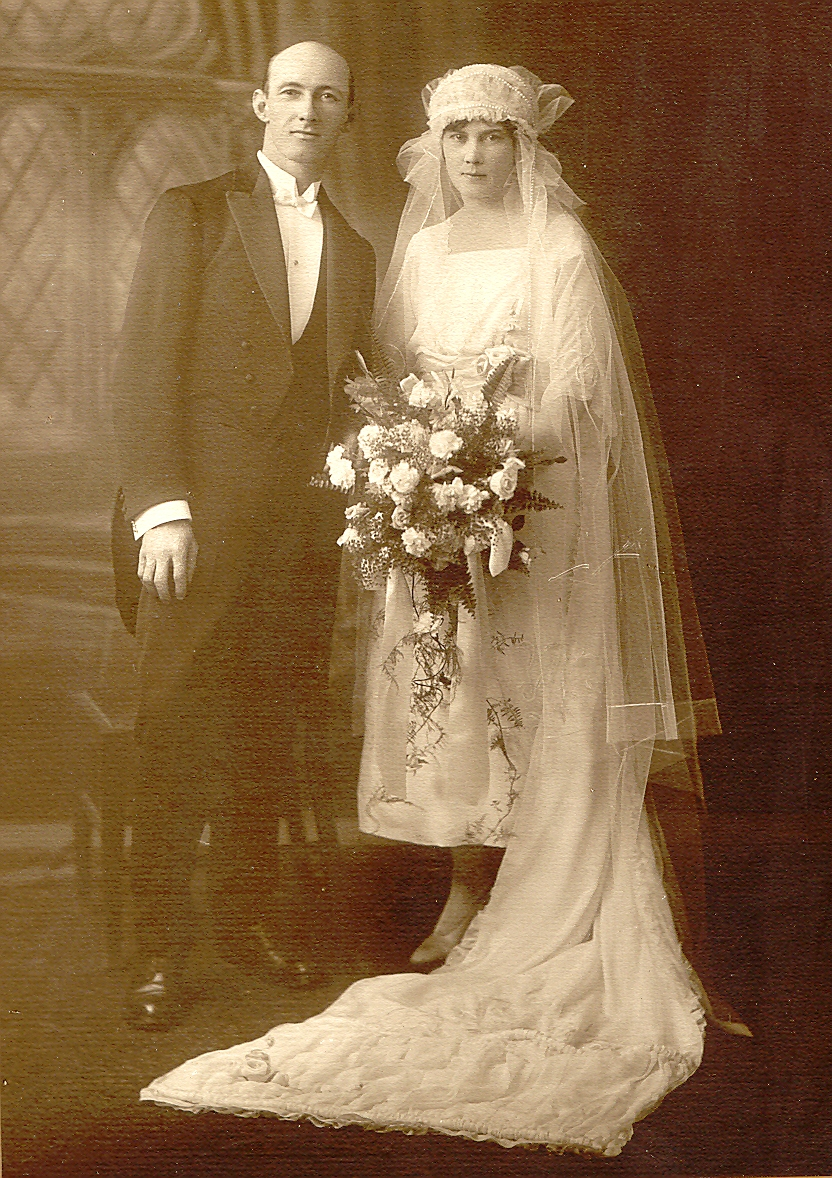
Neville and Isobel Hickman on their wedding day in 1921
Isobel’s Autobiography
Name: HICKMAN ISABELLA (known as ISOBEL) ELIZABETH
Districts : Yalgoo, Kununoppin, Goomalling, Narrogin, Broomehill, Perth.
ISABELLA (known as ISOBEL) ELIZABETH HICKMAN, born 7.3.1896 at Geraldton W.A.
Second daughter of Charles and Belle Crane of Geraldton.
Living at South Perth W.A.
Married in 1921 at Perth.
To NEVILLE WILLIAM HICKMAN, born 13.10.1887 at Bundaberg Queensland.
His parents were Rupert Dudley and Sarah Round Hickman of ‘Oberon’ Bundaberg, Queensland..
Neville William Hickman living in South Perth..
Children : One son, John Crane Hickman, born 26.10.1922 at Katanning; married in 1971 Dallas Elizabeth Milbank (one son) living in Darwin N.T
Was born in W.A. and lived here all her life.
Was a teacher with the Education Department before marriage; resumed teaching in 1942 and continued until retirement in 1963. Taught in both independent and government secondary schools in Perth.
Joint owner with Neville Hickman of residential property in South Perth.
Well educated. Teacher’s Certificate Education Department and Graduate of University of W.A.Batchelor of Arts(Economics)
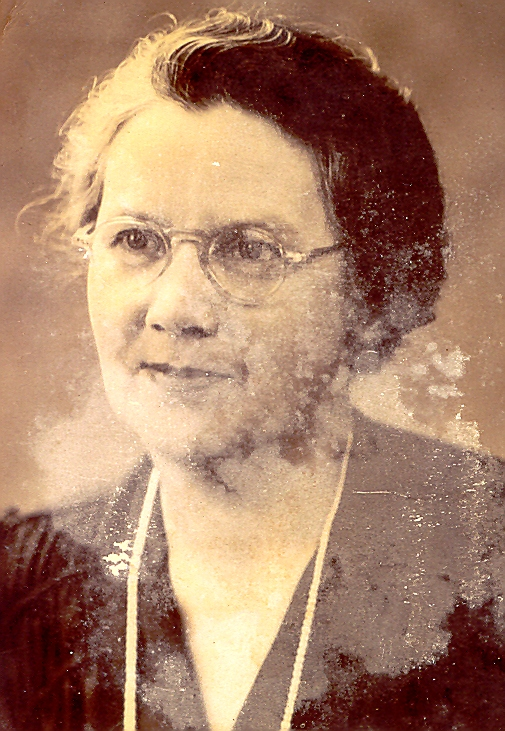
Anglican
Liberal Party
Photograph in own possession.
Is still living in own home at 23 York St South Perth.
Family records in own possession.
Compiler Isobel Hickman , 23 York St South Perth 6151. 28.6.78.
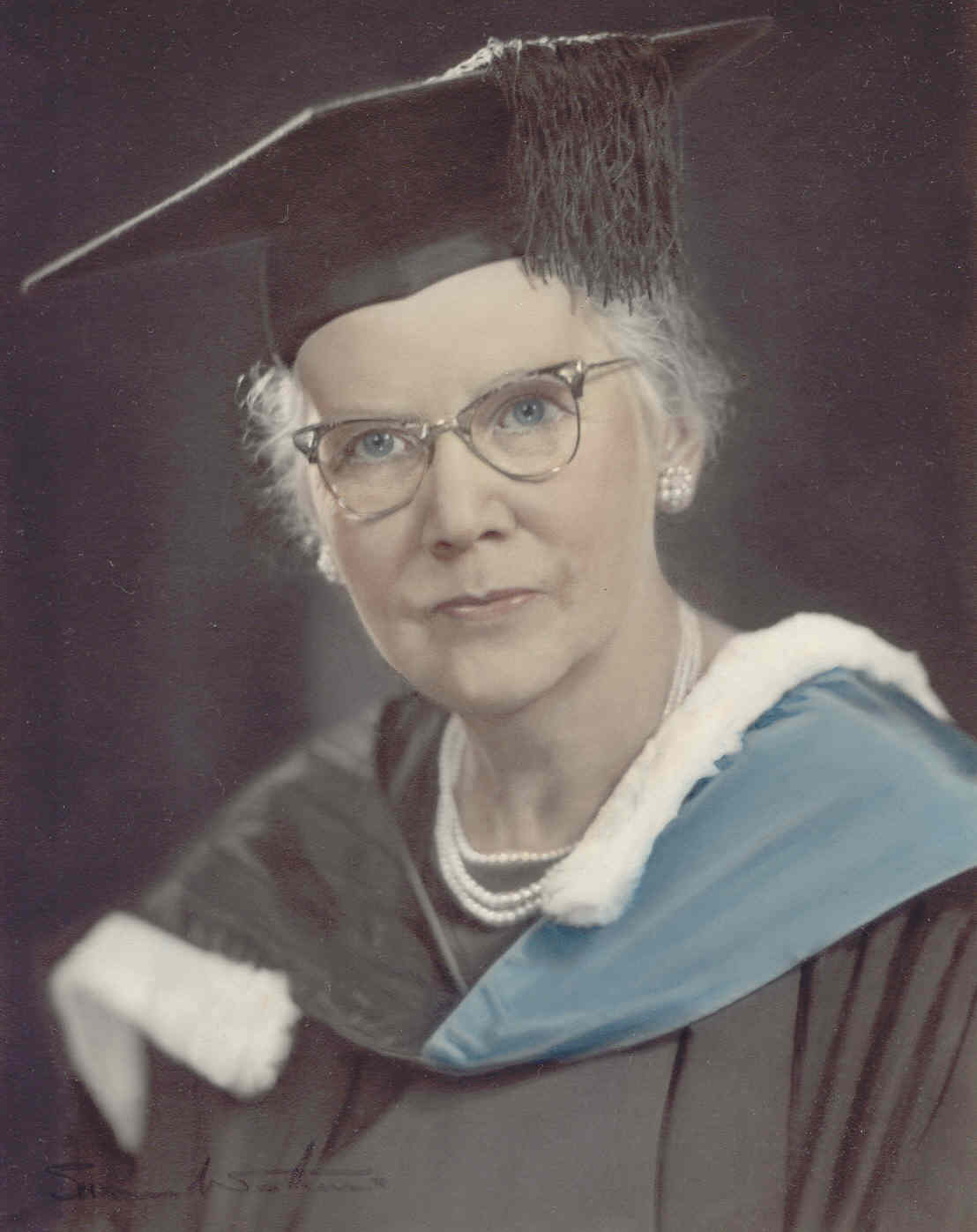
Isobel was awarded her
Provisional Matriculation Certificate
on 3rd March 1950
Isobel studied part time during
1950, 51, 52, 53, 54 and 55.
During which time she was employed as a teacher, first at Girdlestone High School and then at Perth College, Mt Lawley.
Isobel retired in 1963
Isobel was awarded her Degree of
Batchelor of Arts on 10th May 1956.
Both qualifications were received from the
University of West Australian.
Isobel’s Biography of her husband Neville.
Name: Neville William HICKMAN
Districts :Cue, Bunbury, Goomalling, Narrogin, Broomehill, Perth.
Neville William HICKMAN, born 13.10.1887 at Bundaberg, Queensland.
Third son of Rupert Dudley Hickman and wife Sarah of ‘Oberon’, Bundaberg, Queensland.
Living at South Perth W.A.
3. Married in 1921 at Perth.
To Isabella (known as Isobel) Elizabeth Crane, born 7.3.1896 at Geraldton W.A.
Her parents were Charles George and Mary Isabella Crane.
She is living at South Perth.W.A.
Children : One son , John Crane Hickman, born 26.10.1922 at Katanning; married in 1971 Dallas Elizabeth Millbank (one son) living in Darwin N.T.
Neville Hickman arrived in WA by ship, 1912 possibly S.S’Dimboola’ from Warwick, Q.
A bank officer, Union Bank transferred to Cue, then Bunbury and in 1914, Goomalling.
In 1915 he enlisted in the 16th Battalion A.I.F. and saw active service in Egypt and in France where he was severely wounded.
Returned to W.A. in 1919, discharged from the Army, resumed duty with Union Bank.
He was appointed first to Narrogin, then to Broomehill and in 1925 to Perth.
In 1926 he bought residential Lot 12, at 23 York Street, South Perth and in January 1927 moved into his own home where he still lives.
Well educated having completed upper primary level at Bundaberg Government School and Secondary level under the private tuition of his father, an English university graduate who had been principal of a school before becoming a cattle farmer.
Anglican.
The Liberal Party.
Photograph in possession of his wife, Isobel.
Is still living at home.
Family records held by himself and his niece, Mrs Olive Allen of Bundaberg Queensland.
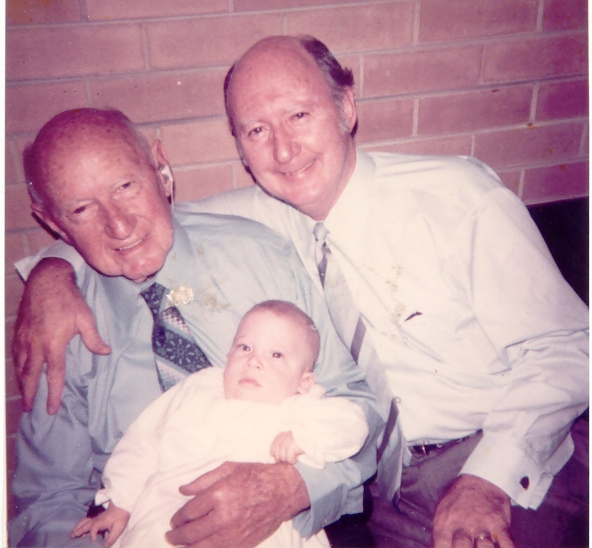
Three generations.
Neville, John and Alexander.
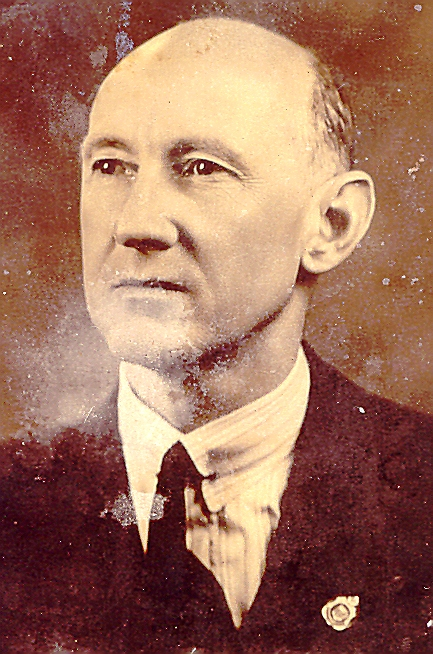
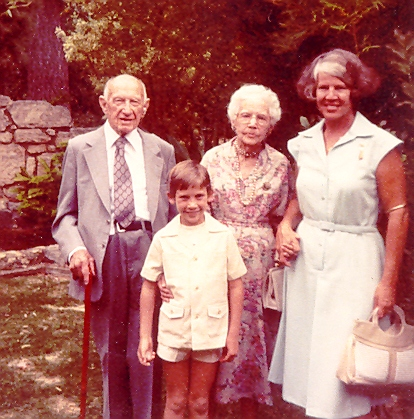
L to right: Neville, Alexander,
Isobel and Dallas.
Neville Hickman
Biography of John Alexander Crane as written by his sister Isobel Hickman.
John Alexander Crane
Born 11.3.1898 at Geraldton.
Eldest son of Charles and Isabella Crane.
Died at Messines, France,4.6.1917, First World War.
Unmarried.
Worked on father’s property at Kununoppin before enlistment in 44th Battalion A.I.F.
Well educated at Scotch College, Claremont W.A.
Anglican
Politically Conservative although not old enough to vote before his death.
Photograph in uniform taken Perth 1916 in possession of sister Isobel Hickman.
Sources of information , birth certificate, obituary in Scotch College yearly magazine 1917.
Isobel Hickman ,South Perth, sister; Wallace Crane ,Gosford N.S.W ,Brother.
These facts are compiled from the war records obtained from the National Archives in Canberra
Compiled by Isobel Hickman 28.6.78
John enlisted in the Australian Imperial Force on the 14th March 1916 at Merredin W.A. and was appointed to the 2/44th Battalion No 1809.
Age on Elistment: 18 YEARS
Religion: C of E
Postal Address on Application papers “Marlea” Kununoppin.W.A.
March 14th 1916 Enlisted
August 7 th Embarked at Fremantle H.M.A.T.Miltiades
September 25th Disembarked at Plymouth on
October 13th Marched out to unit England
November 21st Admitted to Hospital
December 1st Proceeded to join 44th Batt England.
16th Proceeded Overseas France
20th Princess Victoria.Folkstone
23rd Marched in from England. Etaples.
January 18th 1917 Admitted hospital. Etaples
20th To hospital Sick. Etaples
28th Discharged hospital to B.D. Etaples
29th Marched in from hospital. Etaples
February 11th Marched out to 44th Battalion
16th Taken on strength. Field
June 7th 1917 Killed in Action In the Field.
In the files now opened to research by ‘Australian Red Cross Wounded and Missing Enquiry Bureau’ there are eight pages of information, among which there is a handwritten account from Pte.A.L.Hewby.
France 22/9/17
The Secretary
Wounded and Missing Enquiry Bureau.
I received your letter of 12/9/17 enquiring about the death of 1809, Pte J.A.Crane, 44 Btn, A.I.F., a few days ago.
He and I with two others, were on guard in Ploegsteert Wood on June 3, and in the evening we went bacvk to what was known to us as the ‘Breastworks’, for a sleep. We could not go to sleep however, as the Germans were drenching the woods with gas. In the morning we were sitting about in the Breastworks, and at about 11 o’clock 4/6/17 a high explosive shell burst in the same bay that he was sitting in. He was killed instantly. He was buried in Ploegsteert Wood in the Soldiers’ Cemetery.
He was about 5’7” in height, rather dark and fairly good looking.
I will send a photo of him with this letter in case it should be of any use to you. I will be obliged to you, if you will post it back to me at the first opportunity, as it is the only one I have.
Yours sincerely,
Pte A.L.Hewby . A Coy.
A Memorial Plaque and Victory Medal were forwarded to his parents
AND THE INSCRIPTION.READS
CRANE, Pte. John Alexander.
44th Bn.
4th June, 1917 Age 19.
Son of Charles George and
Mary Isabella Crane
of Bellvue, Millie,
New South Wales.
Born at Geraldton,
Western Australia.
Charles Bean - Australian War Historian
wrote :
“ The ridge (Poziers) was more densely sown with Australian sacrifice than any other place on earth.”
VILLERS-BRETONNEUX
MEMORIAL, M.R.26.
PART 11. C-F
Lest We Forget
Three Generations:
Neville, John and Alexander Hickman
The death of John Alexander had a profound effect upon the whole family, Isabel still talked of this to her daughter-in-law Dallas, more than 60 years after the event.
Charles and Belle were heartbroken by the loss of their eldest son John, and his death was the reason for the family moving to Moree N.S.W. in 1919. The area Charles had left to move to W.A. in 1992.
Isabel was teaching and did not move with them. Presumably, she already knew Neville, and as they married in 1921, she never did follow them.
Belle returned here after Charles died and was resident in a flat in Mill Point Rd for some time. My mother remembers visiting Belle with her older sister Elsie, and Aunt Belle reading letters from long distant Beaton relatives in the East.
Wallace and Kenneth both married and remained settled in the eastern states.
Wallace married Dorothy Lysaght and they had two daughters.
Wallace, an electrical engineer, lived at Gosford, New South Wales.
Sadly this is the only family in the Beaton line that we have been unable to trace.
Kenneth married Marjorie Rendall in Newcastle in 1929 and had one son John, who was well known in acting circles. John never married and has now passed away.
Finley George Crane
Born on 12/7/1909 at Geraldton
To the extreme sorrow of his family, Finley was born with delayed learning ability and after moving with his family to NSW, was in 1923, tutored by a young English migrant William (Bill) Webb, who had very recently arrived from England via a Farm Scheme.
While Bill was working with Finley one of the Beaton cousins, Elsie Farrell-Beaton (step-daughter of James) arrived on holidays from W.A. This trip in 1925 to visit Aunt Belle was a 21st gift from her parents.
After Elsie’s return to W.A. they continued to correspond and Bill Webb journeyed to W.A. In 1933 Bill and Elsie married in Northam
Finley remained in Newcastle when his Mother, Belle, returned to Western Australia.
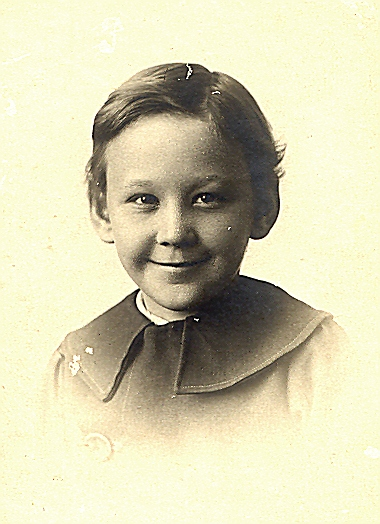
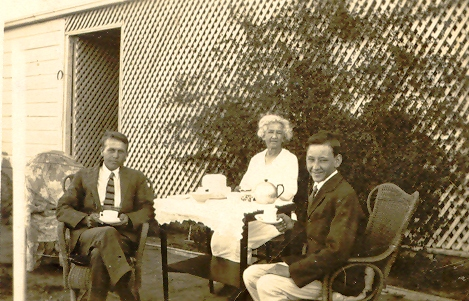
Moree N.S.W. 1924
Bill Webb, Belle and Finley
Finley George Crane
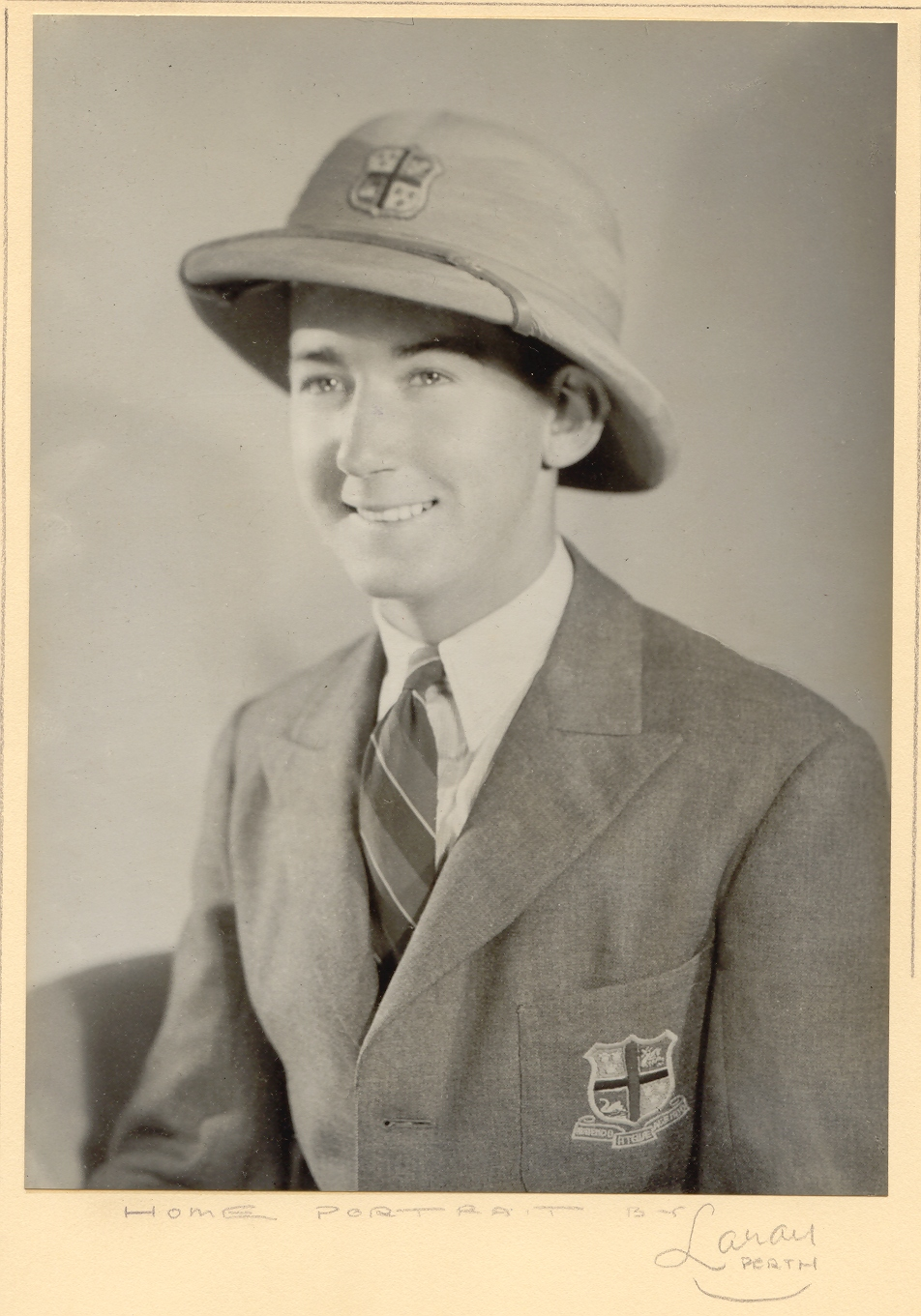
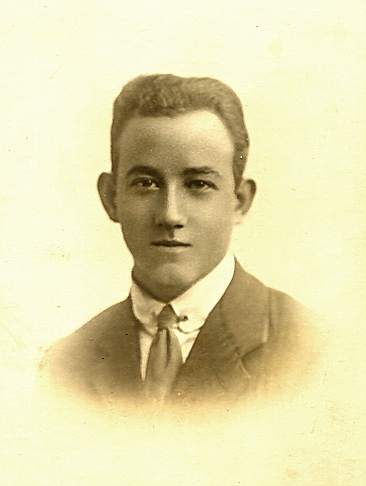
Wallace Crane
John Crane Hickman
Perth, January 1939
John Crane Hickman
John Crane Hickman was born on 26th October, 1922 to Neville and Isobel Hickman at Katanning.
The family moved to the metropolitan area when Neville was appointed to a Perth posting with the bank. Firstly living for a time at Darlington before moving to South Perth in 1927.
My mother remembers visiting her at Darlington and Isobel talking about neighbours ( a family with five young children between the ages of 14 and 5 ), who had sadly lost their mother under anaesthetic at the dentist. It was one of these children my mother married in 1935.
John is remembered by his cousins as very correct in dress and demeanour, as continually instructed by his mother and his Wesley College teachers.
What enormous change to find himself in the Royal Australian Engineers serving in New Guinea by the time he was twenty one years old. His service meant a great deal to him and Anzac Day Services, soldier mates and the Returned Services League remained important to John, always.
John’s Army Career.
As dictated to Dallas while John was ill and recorded in the back pages of an army history book which contains a photograph of John crossing a waterway in New Guinea.
August 1939 : aged 16 joined the Cadet Division of 13th Australian Field Co. R.A.E. Royal Australian Engineers.
September 1939 : As a cadet appointed Company Bugler, trained at night and at weekend as a field engineer.
October 1940 : on 18th Birthday transferred 26th to the Militia Division (full time) Army No W4115. Was released from Company Bugler after training another man to fill that position (Bill Cox). Trained in the bush together.
March 1941 : Entered full time army service and during that year joined Special Mobile Force which was an early Commando type strike force operating along the northern W.A. coastline.
September 1941: Transferred to Australian Imperial Force (A.I.F.) to qualify for all overseas service.
November 1941 : Entered School of Military Engineering (S.M.E. Field) graduated
May 1942 : Returned to Special Mobile Force in W.A. and was then posted as a Sergeant Instructor in Mines and Demolition to 13th Infantry Brigade.
July 1942 : Field Company was split up to form 2 / 6 Command Squadron and remained in the re-formed Field 60, to be posted to Darwin in August 1942
August 1942 : Posted to Darwin and undertook activities in sand mining and assisting the infantry in fortifying the Darwin peninsula. Camped in Stuart Park, then known as Bomb Alley, being a direct line between R.A.A.F. Airport and the harbour which were continually the target of Japanese Mitsubishi 693 Bombers, Dimah twin engine, low level bombers and straffing aircraft and zeros. Darwin was a fortress town with American / Australian personel defended by British Spitfires and pilots.
1943 /1944 / 1945 :
1943 - Embarked in Darwin for New Guinea and continued in New Guinea / New Britain / New Island area until the Armistice in September 1945.
John was on loan for attack on WAITAVALO Plantation.
Crossing of Henry Reid River (Wulwalt River )
Attack on Tol Plantation
Forward probing across the Moondi River and Bulus River.
There was a big (500 lb) bomb right beside the track earlier formed between Moondi and Bulus.
Colonel in charge of 10/48 asked C.O. Major Ballantyne . . . . . . . .
Arrived in Lae with 13th Field C.O. and went as forward elements for attack on New Britain.
Established a base and built an airfield MAL MAL MISSION Jaquoinot Bay. (Jaquoinot Bay 3rd December 1944)
Did a landing assault from American troop ship Jane Adams.
Lae - September 1945 – 48 Hours after the Armistice - joined occupation force in Rabaul.
John’s description of the method used by forward scouts over minefields : “To go into a minefield we dragged white tape behind and stabbed in front with a bayonet thereby creating a safe corridor to escape and finding a mine in front.”
The mines were Mark 2 Anti Personal / and Light Vehicle and contained, in the main charge 2lbs of T.N.T. Sometimes kangaroos let them off.
During Darwin service John led a team into a minefield to enable the exit of crew of a Beau Fighter which crash landed in the area now known as Bagot and in which the Observer / Bomb officer was Flying Officer Pat Delaney who subsequently settled in Darwin and became the Proprietor of Delaney’s Store at the entrance to the R.A.A.F Base. John and Pat were acquainted with each other and there was slight animosity between them, leading to Pat’s annoyance at needing John’s expertise to get back to safety.
John and Dallas Elizabeth Milbank married on 4th September 1971.
The Wedding service was at Christ Church ,Claremont and the reception at the Palace Hotel, Perth.
John and Dallas made their home in Darwin and their son Alexander John Milbank Hickman was born there on the 15th June, 1973.
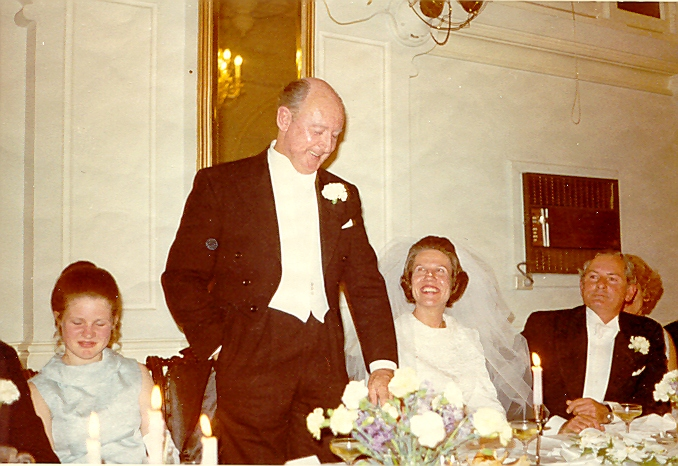
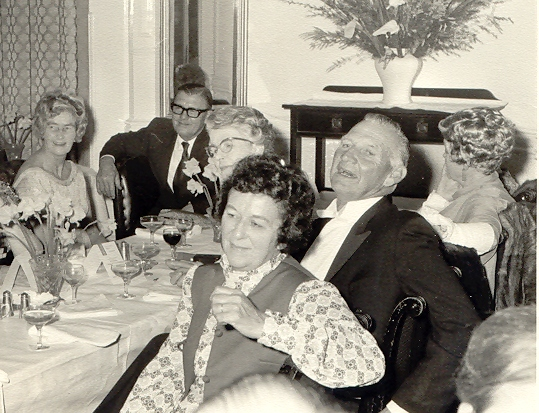
John and Dallas Hickman at their Wedding Reception
Across the table :
Joan Langdon next to Duncan Beaton.
Front: Micky Beaton, Jack Langdon and leaning
forward Ethel Beaton.
The remains of Dallas and John’s house after Cyclone Tracy, December 1975.
On Christmas Eve 1975, when Cyclone Tracy struck Darwin, their home was demolished.
John sustained multiple bruising, holding the toilet door closed for some considerable hours, while all three sheltered therein.
John, Dallas and Sir Charles Court
at the launching of a new ship.
In 1987 John became ill while on an overseas business trip.
The family returned to Perth where John saw his family settled into the home Dallas and
Alexander still retain, at Cottesloe, overlooking parks and the ocean.
John was nursed there by Dallas (herself a trained nurse) and passed away in June 1988.
The Memoriam Eulogy for John Hickman
Delivered by
His Honour the Administrator of the Northern Territory Commodore E.E.Johnston, AO, OBE.
It is my sad task today to deliver the Eulogy as we gather together to honour the late John Crane Hickman and to extend our sympathies to Dallas and Alexander.
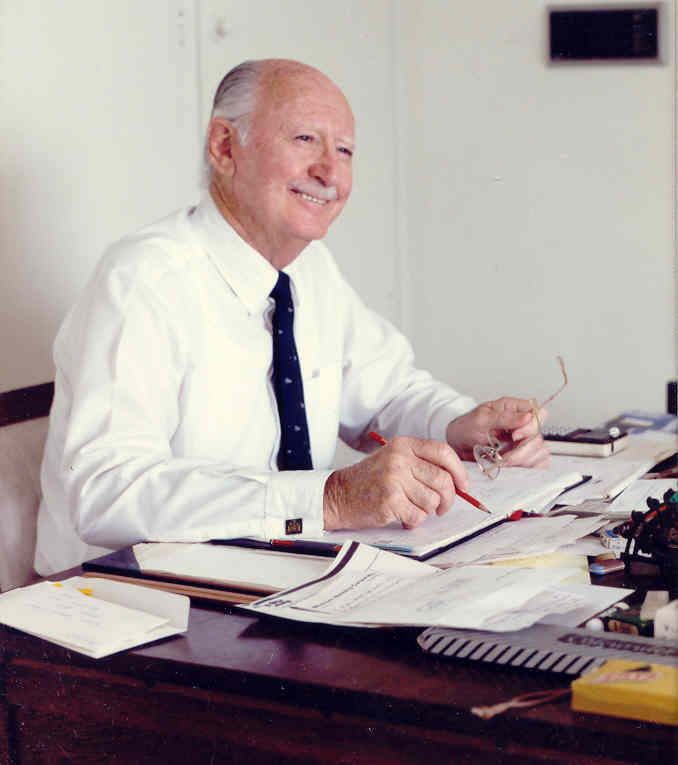
To adequately cover John’s life and many contributions to the community, while perfectly justifiable, would tax us all, I believe, quite unreasonably. I intend to give an overview of his life, an overview which I have no doubt will be augmented by your own memories of the man.
One thing is certain and that is that no person knows the full story of John Hickman. A shy and modest man, much of his good works are unknown to the community at large, being shared between John and the recipients of his generosity.
Quick to recognise the need to extend the Samaritan hand, John lifted many a person to their feet and having dusted them off pointed those feet upon the road to another chance for a better life. I know of no such example personally and even if I did I would not choose to specify it. I do know that there are people in this audience who will be well aware of what I speak.
People such as myself, who first met John in the early 70’s, might be unaware of his contribution to Australia during the Second World War. He was posted to Darwin in August 1942 working in the areas of land mining and fortification of the Darwin Peninsula. He formed part of the Second Sixth Commando Squadron and in 1943 embarked in Darwin for two years service in the New Guinea area of operations.
During his time in the New Guinea area John saw action in such places as Lae and a number of landing assaults on Japanese strongholds right around the New Guinea coast.
Forty eight hours after the Armistice John rejoined the Occupation Forces in Rabaul and while there he was offered a position in Japan with the Occupation Forces. However after two years of service in the New Guinea area, the combination of wounds and severe malaria saw him evacuated to Concord Military Hospital where it was six months before he was discharged.
John took up full time residency in the Northern Territory in 1958 and his involvement in the fields of commerce, industry and charitable works was outstanding. In turn, and sometimes concurrently, John was involved in the distribution of wholesale foods, fisheries, and the electronic media. He was some time Deputy Chairman of the Northern Territory Development Corporation, President and Chairman of the Northern Territory Fishing Industry Council, and a Member of the Northern Territory Port Authority.
In the field of community services John was the founding Chairman of Apex in Darwin and later became Northern Territory Governor. He was a member and at times Chairman of both Legacy and Red Cross in the Northern Territory and was also a Councillor of the St John Ambulance Service.
His standing in the community was recognised by foreign governments with his appointment at the Northern Territory Consul for Sweden and the Honorary Consul for Finland.
When one recounts John’s involvements and achievements it is surprising that he had any time for other activities but above all John was an outstanding family man and friend to any whose paths he crossed.
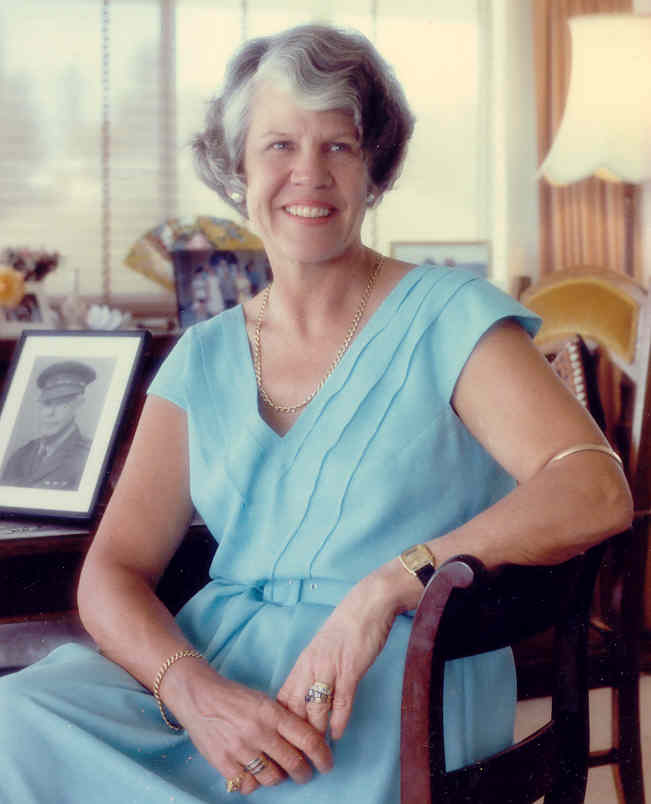
I extend the sympathies of the entire congregation to Dallas and Alexander in the firm and comforting knowledge that they have many happy memories of the years they shared with John. At this service I would merely like to ask you, the congregation, to remember with love John Crane Hickman, an outstanding Australian Quiet Achiever.
Obituary from a Darwin Newspaper.
From Suitcases To Success
The Bob Marshall Column
From sapper sergeant to solid success is the saga of John Crane Hickman - pillar of the Darwin business and social community for nigh on 40 years. A native of Western Australia, John was born at Broomhill, about 320 kilometres south of Perth in October, 1922. He was a junior clerk with the Commonwealth Bank before joining the Second AIF in 1939. He was drafted into the first group to be formed into the Special Mobile Force which was distinguished by the white diamond superimposed on the unit colour patch. The same colour patch is now worn by members of Norforce.
POSTED Proud of his WX - the prefix to the numerals emblematic of a AIF member, John was a sergeant with the Engineer Field Company. In 1943 the company was given the job of clearing a minefield between Frances Bay and Nightcliff without plans.
He was posted to New Guinea and then New Britain, later in that year and retains vivid memories of the garrison band playing Goodbye Forever as the U.S. troopship Jane Adams departed at night from what was left of the wharf after the Neptunia had blown up.
After five and a half years service, a still relatively young John Hickman was demobbed in Perth and found his way back to the Commonwealth Bank - experience that stood him in good stead in later life.
While with the Commonwealth Bank in Sydney he was hospitalised at Concord, the Military Hospital, for war disabilities. John was invalided to Perth where his mother and father lived, after his discharge.
In the early fifties a mate suggested John join him in a freelance sales organisation that promised freedom of choice and the chance to travel ….. and did they travel.
SAMPLES With 12 large suitcases full of samples, favoured by every storekeeper from Perth to Darwin and Adelaide they made their way. In Adelaide they refilled the giant sample cases and backtracked to Perth sending by post ,orders they had sold on commission, to the manufacturers.
In those days the population of the massive region between Geraldton and Wyndam was only 9000.
John travelled by every known means of transport - from the DC3’s and Avro Ansons of MacRobertson Millers Airlines to the back of trucks. It was hard going every kilometre of the longest sales route in the world.
In 1958 Bob Smyth and John realised that each would be better off if they handled their business separately.
This was the foundation of today’s multi - million dollar concern, Hickman Distributors Pty Ltd.
John rented a room in the Darwin Club and some of his neighbours were Dr Keith Duson, Gus Trippe and Felix Spain, the tonsorial artist who advertised : “ One chair, no waiting.”
A year later the Hickman Company moved to Finniss Street and used Commonwealth cold stores on Gardens Hill Rd.
POSITIONS Early “Hickmen” were Ron Dixon, who had been an electrician with Jim Henry, Charlie Bayley and Eric Lee, who had been proprietor of a fish shop at Parap; Bob McNaughton, from Alltrans, Fred Brown, one of the early managers of TNT; Ron McIntyre, from Victoria…. after all these years those same men are still in key positions with Hickmans.
The company is now situated in Winnellie with a host of subsidiaries.
FAMILY Son, Alexander was born to the attractive Dallas and John Hickman in Darwin Hospital in 1973. Dallas is presently in Perth settling Alexander into Christchurch Grammar School.
At the tender age of 10 Alexander shows no sign of developing into a captain of commerce .. his ambition is to emulate Fred Astaire and “tap” his way to the top.
TENNIS John, the way I see it, and I have known him for many years, is a workaholic - he puts in 10 hours a day at business six days a week and has had time only occasionally for an odd set of tennis.
If he had a real hobby it is fishing the way we did it for years - by angling from Stokes Hill Wharf. Yet he is Australian Fishing Industry Council N.T. Chairman.
In 1964 he linked with Paddy McLean of Townsville and that union bought the HMJ, a 10metre burramundi boat that was the forerunner of the 10.5 m Wongi, the captain of which was Ray Gibson. The McLean boys have made their respective marks in Darwin sports.
In 1966 whisper of prawns caused the partnership to convert the ‘HMJ’ into a prawn trawler.
After encouraging results, two Japanese companies approached the Hickman organisation with a joint - venture proposal for off-shore prawning.
So was born Northern Research, one of the Hickman subsidiaries. Mushroom - like, the venture blossomed to the extent $20 million was outlayed over eight years on the building of 22 long-range trawlers. The trawlers built in Australian shipyards, have all-Australian crews.
Other than journeys to Japan, John has been on a study tour of food factories on the U.S. west coast.
PALATIAL In 1958-59 John lived in a shack at Pee Wee Camp …. a far cry from his present palatial home at Nightcliff.
John was foundation president of the Apex Club and some of his contemporaries in that worthy organisation were Brian Fennellon, Alec Fong Lim, Jim McGilp, Dan Thomas, Keith and Pat Gable and Ron Dixon. John later founded Apex Clubs in Alice Springs and Katherine.
He was chairman of the NT Red Cross Society and it was during his tenure that the first proposal for a blood bank was made.
He was Legacy chairman for two years.
He was the original chairman of directors of NTD Channel 8. He resigned as a director in August last year.
John was deputy NT Development Corporation chairman when it was formed in 1978.
Ever-growing business caused John to relinquish many honorary posts and other professional appointments. However he is still honorary Territory consul for Finland and also other governments of the Scandinavian bloc.
John has seen many changes - many for the good - during his 40 years of experience of Darwin.
Self - government has been a great advance but he has never had any political aspirations and is in no way attached to any particular party.
“There has been a vast improvement in the road system in the NT,” he said. “The standard-gauge railway from South Australia to Alice Springs has proved of inestimable benefit to the Territory. I really feel that , no matter who wins the March 5th election, the promise of both the coalition government and the ALP to build the rail-link between Alice Springs and Darwin will be kept.
From a defence point of view, from a logistics angle, as a broad highway in and out of the NT and Australia it is vital that this enormous project goes through,” said John
In the early pioneer days of the U.S. the advice to young men was to “go west.”
In the case of this “true-blue Aussie” he couldn’t “go west” so the call to head north was answered and the Territory is all the better for the coming of John Crane Hickman - truly a man of worth with still no signs of girth.
West Australian Newspaper Article.
Territory honours WA man.
For nearly 40 years John Hickman made an enormous contribution to the business and social structure of the Northern Territory. Andre Malan reports. (Reprinted by the kind permission of Mr.Malan)
There is no shortage of West Australians who have made their mark in the eastern states. Bob Hawke, Nugget Coombes, Polly Farmer, John Stone, Mike Willesee, Michael Edgley, Geraldine Doogue…..
But there are others, who travelled north instead of east, to the dimmer lights of the Northern Territory, whose stories are less well known.
When cancer claimed the life of 66-year-old John Hickman at his home in Cottesloe last September, the passing did not even rate a paragraph in WA newspapers.
But it was a different story in Darwin, where the ex-Wesley College student had been, as the Darwin newspaper described him, “a pillar of the business and social community for almost 40 years”.
John Hickman was a pioneer of commercial television in Darwin, a member of countless local organisations, the consul for Finland and Sweden in the Northern Territory, and the man who was appointed by Major General Alan Stretton to be in sole control of food organisation and distribution following the devastation of Cyclone Tracy.
But he was best known as the leading identity in the Territory fishing industry.
The Territory Government has now recognised this contribution by naming a $20,000-a-year scholarship after him.
The John Hickman scholarship will enable Territorians planning to work in the local fishing industry to study at the Australian Maritime College in Tasmania.
Born at Broomehill, about 320 km south of Perth in October 1922, he worked briefly as a junior clerk with the Commonwealth Bank before enlisting in the AIF at the age of 17 and becoming a sergeant in the 2/13th Field Engineers.
He saw service in Darwin, New Guinea, New Britain and New Ireland.
After five years’ service he was demobbed and returned to the Commonwealth Bank.
But in the early 1950’s a friend, Robert Smyth, suggested he join him in a freelance sales organisation.
With 12 suitcases full of samples, the two men set out to cover all stores and mining offices between Geraldton and Darwin, Mt Isa, Cloncurry, Alice Springs. Oodnadatta and Adelaide - in all 14 weeks travelling by DC3 ,Avro Anson and, sometimes, tourist bus.
It is thought to have been the longest sales route in the world.
But the pressure of continuous travel and growth of the Darwin side of things persuaded the partners to divide the business, with Mr Hickman taking over the Darwin operation.
In the years that followed he built up the Hickman group of companies, which included food wholesaling, a partnership with a Japanese company in a prawning venture and a separate barramundi and prawning operation.
Mr Hickman was the original chairman of directors of Territory Television Pty Ltd, the founding chairman of the NT Development Corporation and the President of the NT Fishing Industry Council.
He was survived by his wife Dallas , and 15-year-old son Alexander.
Mary Isabella (Belle)was born on the 16th of August, 1867 at Copmanhurst, N.S.W
Married : Charles George CRANE, born 2nd June, 1869 at Warialda , N.S.W.
6th January, 1894 by official permission in home of Alexander Beaton.
Children : Euphemia, born 11th March,1895 Geraldton,died 17th March, 1898.
Isabella ( Isobel) Elizabeth born 7th March, 1896 at Geraldton,
John Alexander, born 11th March, 1898, Geraldton,
Killed in action at Messines, France on 4th June, 1917,unmarried.
Charles Kenneth, born 22nd March, 1901 at Arrino Station, Irwin
Wallace Donald, born in Subiaco 22nd April, 1903.
Finley George born 12th July, 1909 at Geraldton.
Died at Holmlea Rest Home, Rivervale,W.A. 9th April, 1942.
Buried in Karrakatta Cemetery.
Isabella ( Isobel) Elizabeth born 7th March, 1896 at Geraldton
Married: Neville William Hickman , 1921 at Perth,
Children:John Crane Hickman, born 26th October, 1922 at Katanning.
Married: Dallas Elizabeth Millbank in 1971
Children: Alexander John Milbank born 1973 in Darwin
Grad: B.A.L.L.B.Uni of W.A. 1996.
Charles Kenneth, born 22nd March,1901 at Arrino Station, Irwin region
Married: Marjorie Rendall, Newcastle about 1929,
Children: John
Wallace Donald, born in Subiaco 22nd April,1903
Married: Dorothy Lysaght in Sydney.
Children: two daughters. This is the only family I have been unable to trace.
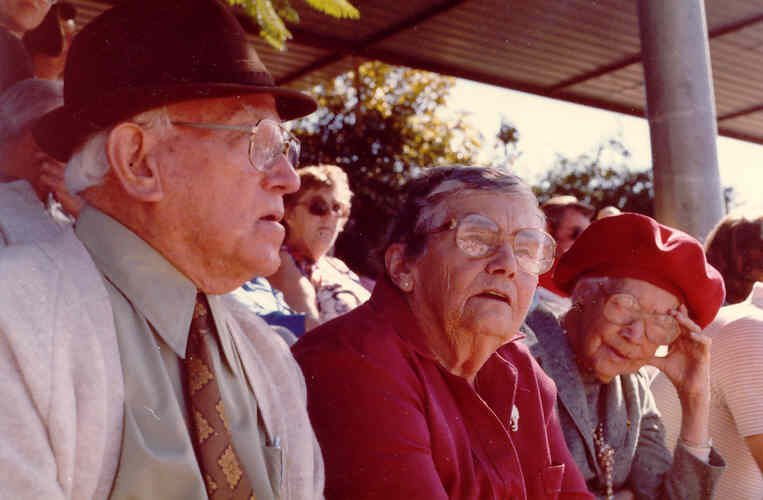
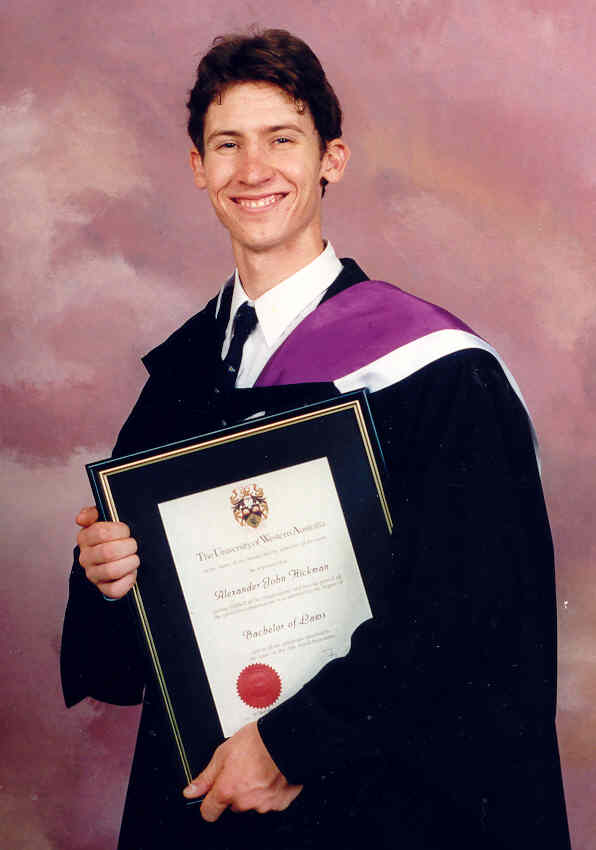
Cousins : Wallace Crane, Edith Fisher and Isobel Hickman.
Alexander Hickman
Finlay Beaton
Finlay (Fin) was born on 2nd of April 1867 at Copmanhurst in N.S.W. the third child and first son of Alexander (Sandy) and Euphemia Beaton.
He would have been around 12 years of age when the family moved to Adelaide S.A. after leaving Smith’s Flat and stayed there until his father sent for him from Nullagine, W.A. We have no record of his occupation during these years.
Fin journeyed to Western Australia with his brother Charles on the S.S.Flinders in October 1888 and presumably they went from there to either Roebourne, Cossack or Condon by coastal boat and thence inland to Nullagine to join their father, Sandy.
Finlay would have been 21 by that time.
There is a photo of Sandy and the boys working ‘Beatons Hill’ later on after they were joined by the next two younger boys, John and Ken.
Fin died on 29th October, 1907 in Northern Territory, maybe of Brights Disease (of the kidneys) There has been a mention of this having occurred in the family.
A small article appeared in Kalgoorlie Newspaper of the 4/11/1907
PROSPECTOR’S DEATH
Port Darwin, Nov.3.1907
A prospector named Finlay Beaton was admitted to the hospital on Monday in
a state of coma, and has since died.
It has been ascertained that he came from Port Hedland (West Australia).
For four months he had been suffering from Bright’s disease and treated himself.
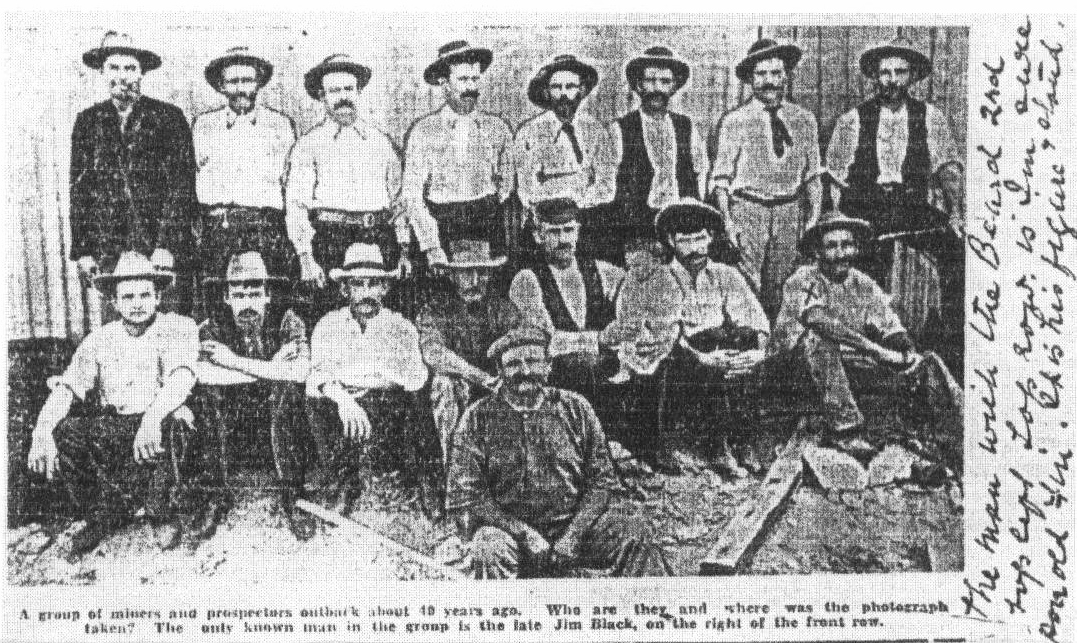
Ken Beaton kept an undated and unnamed newspaper photo of a group of men with the wording underneath which says:-
‘A group of miners and prospectors outback about forty years ago. Who are they and where was the photograph taken ? The only known man in the group is the late Jim Black, on the right of the front row.’
On the side Ken has written,
“The man with the beard 2nd top left Top row is I’m sure it’s poor old Fin. It is his figure and stand.”