
STANDING UP FOR WHAT’S RIGHT
There are times in life when you see something happening in front of you and have to decide whether you are prepared to stand up and say it is wrong. Eddie Hyland Park was one of those times for me.
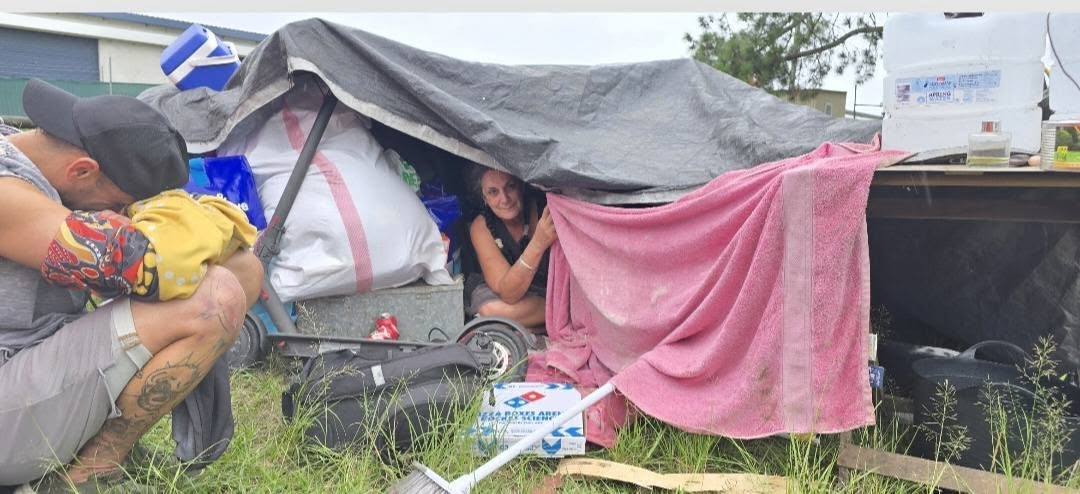
For several months I had been regularly visiting the park at Lawnton through Nourish Street. I knew many of the people living there. I had sat with them, listened to them, brought them food and supplies and watched their situations unfold. To someone driving past, it might have looked like a collection of tents scattered across a public park. Once you spent time there, it looked very different. Every tent had a person behind it, and every person had a reason they had ended up there.
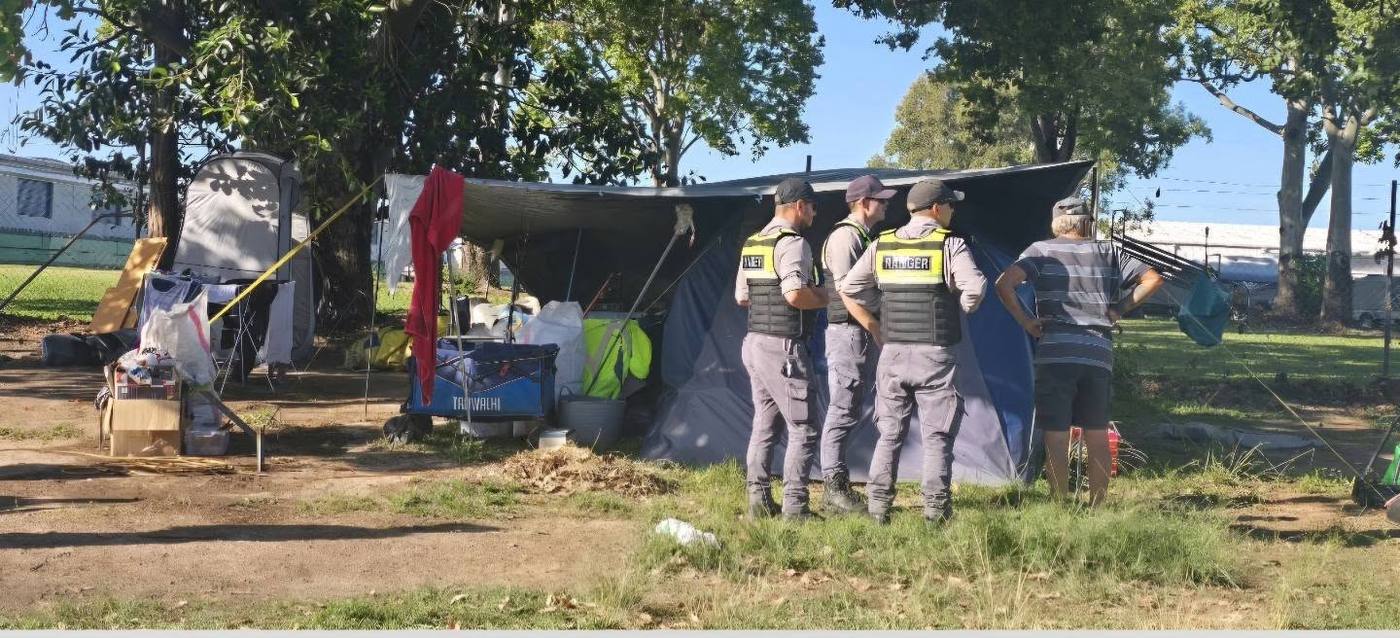
I have never believed that homelessness gives anybody an exemption from personal responsibility. Public spaces should be safe and clean, and people living in them have responsibilities just like everybody else. But what I was witnessing went beyond maintaining a park. People with nowhere suitable to live were being told they could no longer remain where they had found some form of shelter. The question that kept coming back to me was obvious. Where were they supposed to go?
Some had been waiting for housing for years. Others had circumstances that made temporary accommodation difficult or unsuitable. Pets, partners, mental health, physical health and countless other factors complicated what looked straightforward on paper. Referrals were being offered, but referrals were not houses. As I said publicly at the time, you can't sleep on a referral.
The City of Moreton Bay had previously operated a framework that allowed people experiencing homelessness to camp on Council land under certain conditions. In February 2025, Council announced that framework would be repealed, with the change taking effect on 12 March. What followed was a much harder approach to people sleeping rough on public land. Compliance notices were issued, with potential fines running into thousands of dollars for people who failed to comply. I watched people who were already living with enormous uncertainty become frightened about losing what little stability they had.
Having experienced homelessness myself, I understood something that can be difficult to explain to somebody who has always had a front door to lock at night. When you have almost nothing, the little you do have becomes incredibly important. A tent might not look like much to somebody passing by, but when it is the only thing separating you from the weather, losing it can mean losing the closest thing you have to a home.
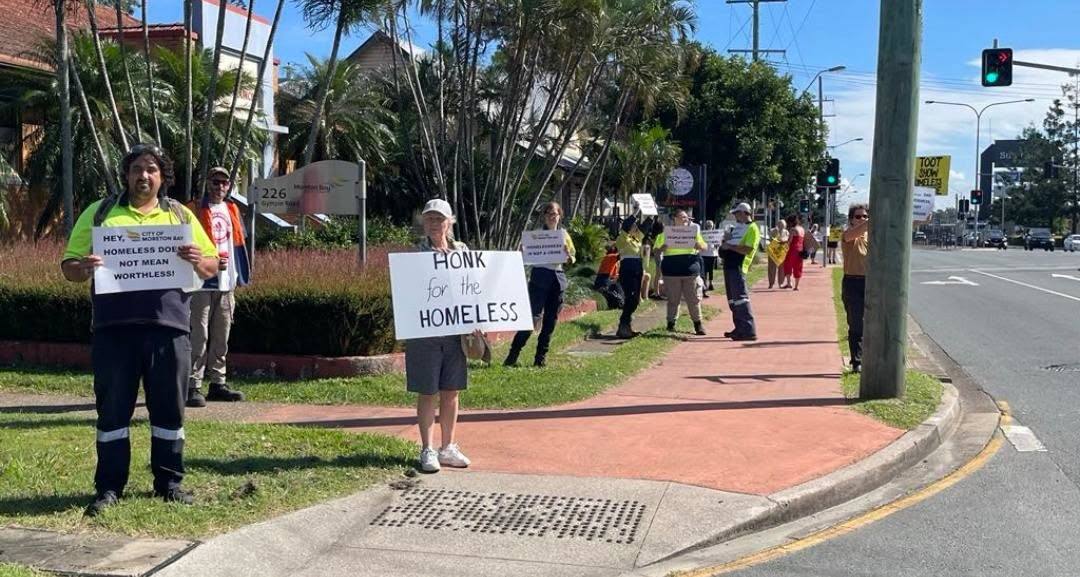
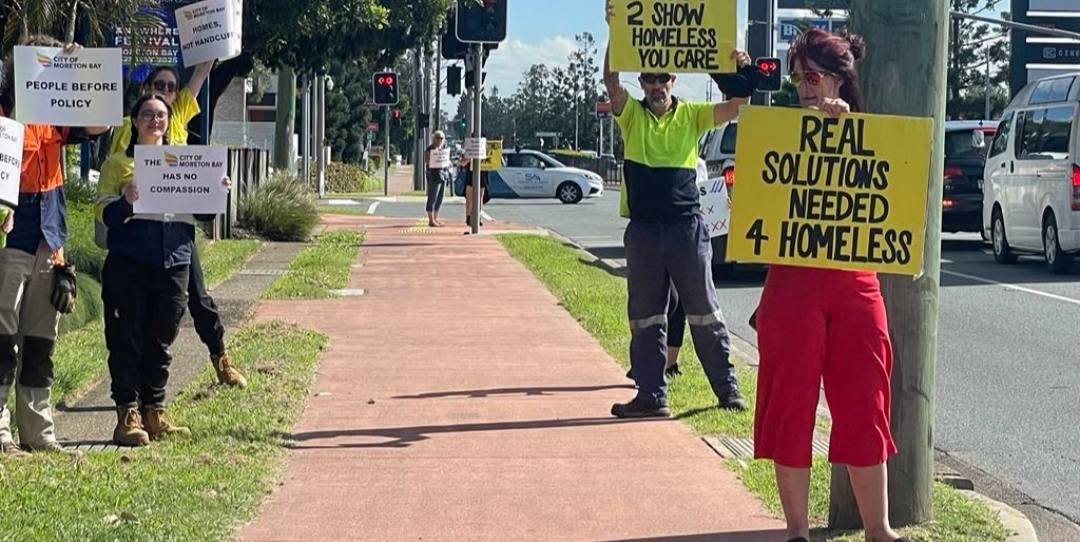
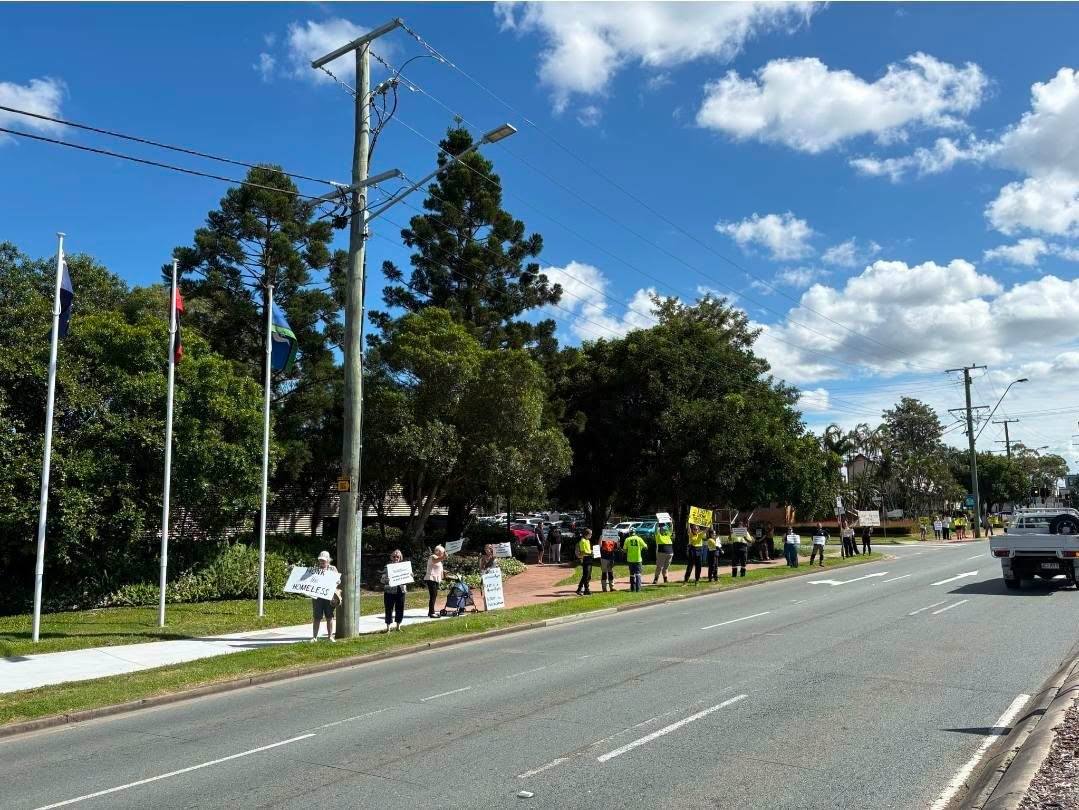
On 9 April 2025, Nourish Street held a peaceful protest outside the City of Moreton Bay council chambers at Strathpine. We stood beside Gympie Road holding signs and asking motorists to honk in support of people experiencing homelessness. Cars sounded their horns as they passed. I wanted Council and the wider community to understand what these policies looked like from the other side.
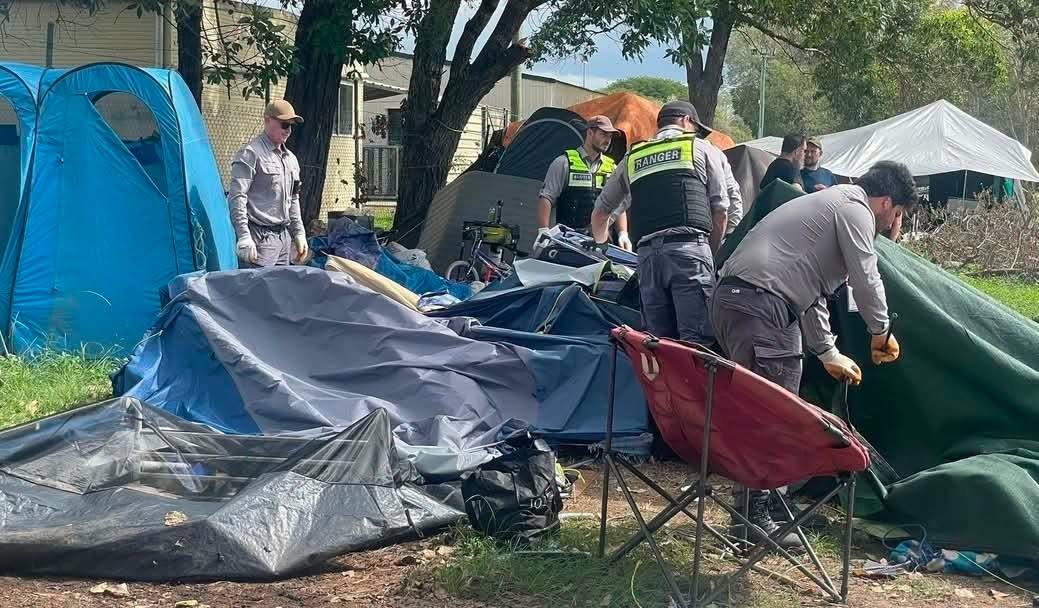
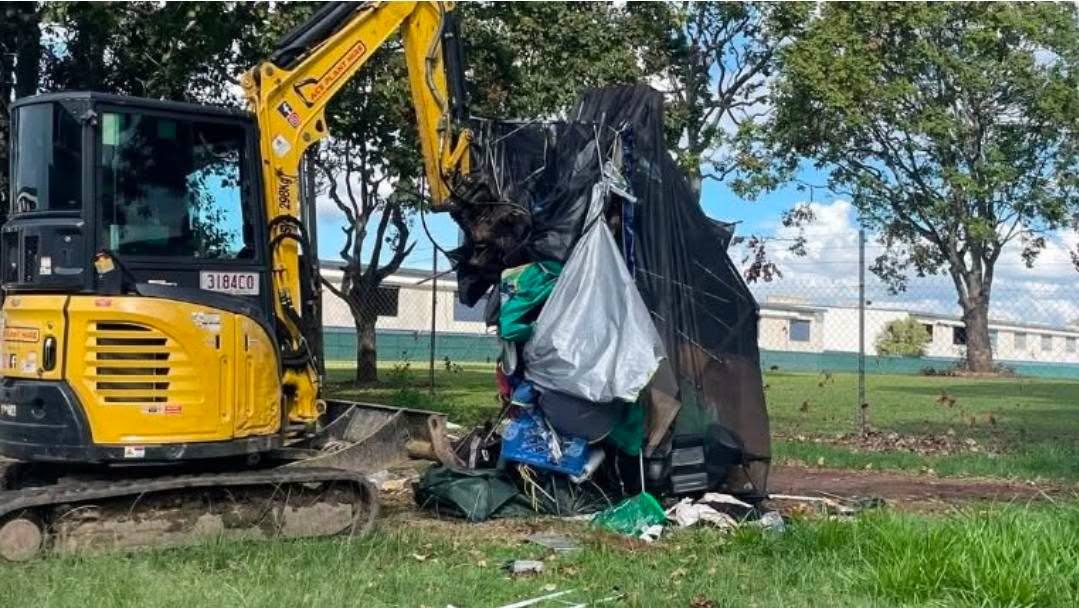
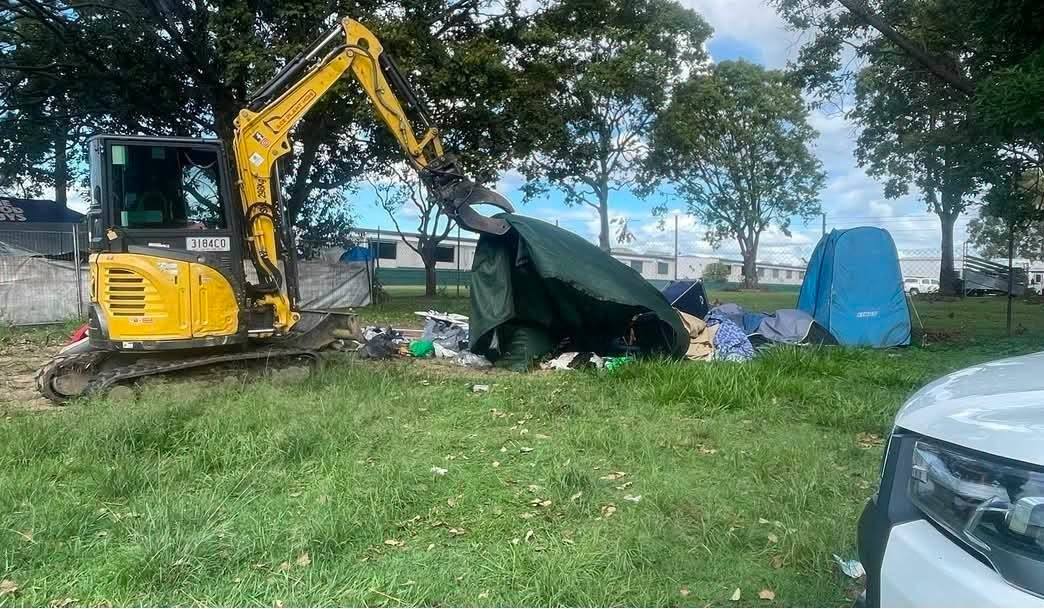
On that same day, less than four kilometres away, Council officers were carrying out enforcement at Eddie Hyland Park. While we were outside the council chambers protesting the treatment of people sleeping rough, Council officers, police, trucks and an excavator were at the park where many of those people were living. Contemporary reporting recorded about fifteen tents at the park when authorities arrived. Residents described being given an hour to remove their belongings once enforcement began, while Council maintained that eight of the people present had previously received compliance notices more than two weeks earlier.
When I saw what was unfolding, I could hardly believe it. People were trying to work out what they could take and, more importantly, where they were going to go. Whatever arguments existed about local laws and compliance notices, these were human beings facing the loss of their shelter without permanent homes waiting for them at the other end.
One man I knew from the park had been on the social housing waiting list for around two years. He had been offered temporary motel accommodation but said he had never been offered permanent social housing. Another woman explained that motel accommodation presented its own problem because she could not take her service dog. These were the realities hidden behind the word move.
Council returned to Eddie Hyland Park on 24 April and removed more property. Among the people caught up in what happened were Debbie and John Bobeldyk. Their story would become one of the most confronting parts of everything that followed.
Among their belongings was an urn containing the ashes of their deceased daughter. Debbie later described panicking as she and John tried to retrieve what they could. They said they had been given an hour to collect their belongings before the remainder was removed. Their tents, fridge and other possessions could eventually be replaced.
Their daughter's ashes could not.
They disappeared during the removal of their belongings and were never recovered. The following day was Anzac Day. Debbie and John were left sheltering beneath a tarp as rain came down around them.
I struggled to comprehend that this was happening in my own community. By then, my concern went beyond where somebody would sleep that night. I could see what the uncertainty and enforcement were doing to people who were already living under enormous pressure. Removing their shelter did nothing to address the circumstances that had put them there.
I knew we had to do more than protest.
Paul Slater, from what was then Northwest Community Group, was also advocating strongly for people sleeping rough. Between those directly affected, community advocates, Nourish Street and Northwest Community Group, we began looking at whether what was happening could be challenged legally. That eventually brought us into contact with Basic Rights Queensland.
I played a part in initiating the court case with Basic Rights Queensland. I wasn't a lawyer and I didn't pretend to understand every piece of legislation involved. My role came from being on the ground. I knew these people. I had witnessed what was happening, spoken publicly about it, organised protest action and challenged decisions I believed were wrong. I wanted those decisions properly examined through the legal system.
Basic Rights Queensland took on the legal fight alongside Hall & Wilcox, whose lawyers acted for the rough sleepers. Hall & Wilcox's involvement brought significant legal expertise and resources to a battle that people living in tents could never realistically have fought alone. The Queensland Human Rights Commission later intervened in the proceedings, providing submissions to assist the Court in considering how Queensland's Human Rights Act applied.
What had begun with people living in tents in a park at Lawnton was heading for the Supreme Court of Queensland.
The proceedings ultimately included Bobeldyk & Anor v Moreton Bay City Council; Eichin & Ors v Moreton Bay City Council. Behind those formal case names were people I knew. People whose tents I had walked past, whose stories I had heard and whose lives had been directly affected by the decisions now being examined by one of Queensland's highest courts.
The legal battle continued for months. In August 2025, Justice Paul Smith granted an injunction restraining further enforcement against applicants while the challenge proceeded. Then came 6 March 2026, when the Supreme Court of Queensland handed down its decision.
The Court found that Council officers had discretion about whether and how the relevant local laws were enforced. Because that discretion existed, officers were required to properly consider the human rights and individual circumstances of the people affected. The Court found they had failed to do so.
The judgment dealt with rights including protection from cruel, inhuman or degrading treatment, privacy and home, protection of families and property rights. Importantly, the Court recognised that it had been open to Council to wait until alternative accommodation became available, or until a person had unreasonably refused an offer of accommodation, before taking enforcement action.
That brought everything back to the question I had been asking from the beginning.
Where were they supposed to go?
The decision also recognised something incredibly important. For the purposes of human rights law, the concept of a person's home could extend to the place where somebody experiencing homelessness was actually living. A tent might not have bricks, a letterbox or a title deed, but the human being living inside it still had rights.
There was satisfaction in knowing that what happened had finally been examined by the Court and that accountability had followed, but I couldn't celebrate what people had endured to get us there. Debbie and John still didn't have their daughter's ashes. Others had spent months living with uncertainty and distress. A Supreme Court judgment could establish rights and responsibilities, but it couldn't hand somebody the keys to a home.
Standing up also came with a personal cost. By putting my name and face behind the issue, speaking publicly, protesting and helping push the matter towards a legal challenge, I became unpopular with some people. I read comments suggesting that because Nourish Street fed people, supplied tents and advocated for rough sleepers, we were somehow contributing to homelessness. At times you would think I had personally caused the housing crisis, the shortage of affordable rentals and the rising cost of living.
I understand why residents become frustrated when they see rubbish, damaged public spaces or antisocial behaviour. I don't defend those things, and supporting somebody experiencing homelessness does not mean excusing everything they do. Public spaces belong to the whole community. But providing somebody with a meal or shelter from the rain does not create homelessness. Nourish Street was responding to a crisis that was already unfolding in front of us.
I didn't stand up because I wanted people permanently living in parks. I didn't. Public parks cannot become Australia's answer to a shortage of housing. I stood up because forcing somebody from one patch of grass to another without addressing why they were homeless wasn't a solution. If someone leaves a park only to sleep behind a building, beside a railway line, in another reserve or underneath a bridge, their homelessness has not disappeared. It has only moved.
Eddie Hyland Park also changed my understanding of what Nourish Street could be. Food mattered. Tents mattered. Sleeping bags mattered. Sitting down and listening mattered. But sometimes the problem was bigger than anything we could carry in the back of an outreach vehicle. Sometimes helping people meant being prepared to speak publicly, challenge decisions and accept that doing so might make you unpopular.
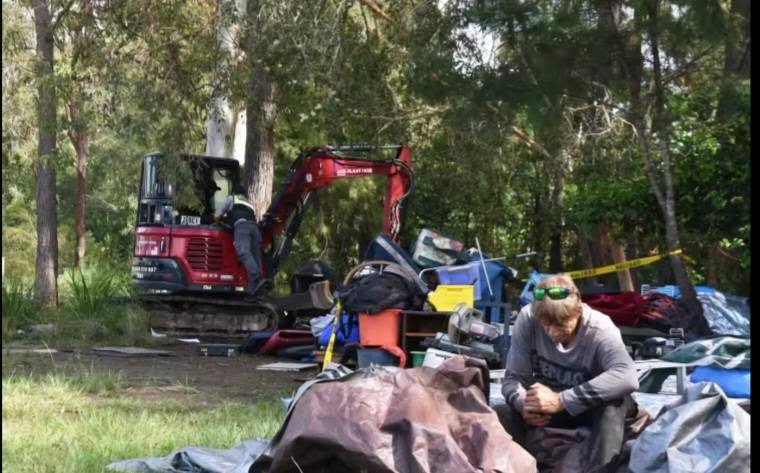
When I think back to Eddie Hyland Park, I don't think first about the courtroom, the lawyers, the media interviews or even the judgment. I think about people standing beside the few possessions they had, trying to work out where they were supposed to go. I think about Debbie and John, and something precious that no court decision could ever return to them.
Public parks were never the answer to homelessness, and I never pretended they were. But neither was pushing people from one place to another without somewhere suitable for them to live.
That fight began for me in a park at Lawnton.
It began with people.