
THE PURPLE CIRCLE
After losing Jenny from my life and learning a pretty big lesson from my time working out west, I decided I’d had enough. I threw in the job and returned to Brisbane. Working away had given me good money and plenty of experience, but I was tired of spending huge chunks of my life away from my boys, living out of bags and counting down the days until I could get home again. I wanted to be present in their lives and have a job where I could actually go home at the end of the day.
It didn’t take long before I found work with a great company carrying out maintenance on Brisbane’s enormous fresh-water pipeline network. There were around 700 kilometres of pipes beneath Brisbane, much of it ageing infrastructure that most people would never see or think about. You turned on a tap and clean water came out. Behind that everyday action was an entire world of pipes, valves, reservoirs, pumps and equipment that needed constant maintenance.
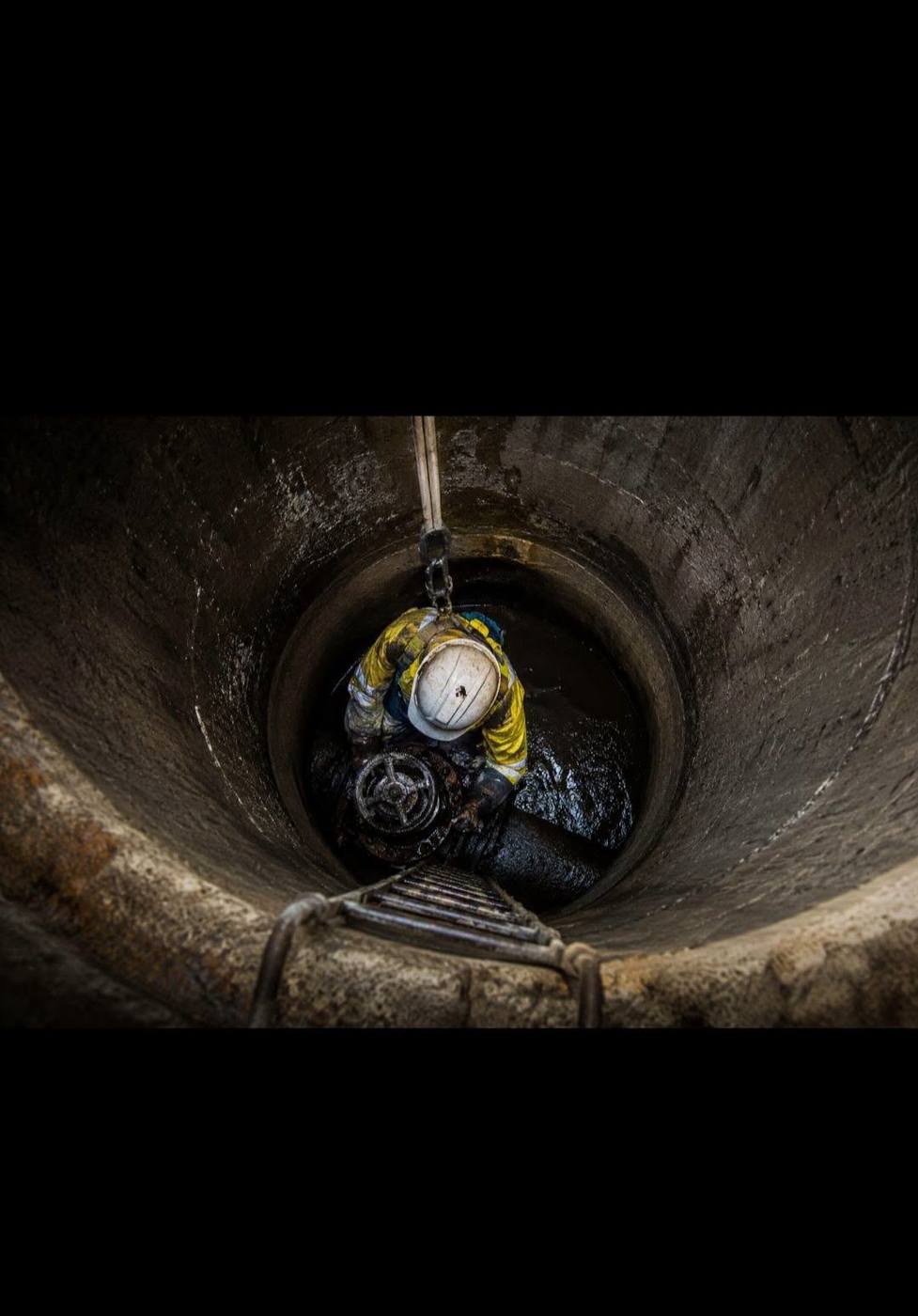
A lot of my work involved confined spaces. I would be harnessed up and sent down deep manholes to repair valves, replace rusted bolts and maintain infrastructure that had sometimes been sitting beneath Brisbane for decades. It could be wet, filthy and bloody uncomfortable. Confined-space work came with serious risks, so atmospheric testing, ventilation, communication, harnesses and rescue procedures were all part of the job.
Strangely enough, I loved it. There was something satisfying about disappearing underground knowing there was a problem and eventually climbing back out knowing I had fixed it. More importantly, the company appreciated me. They respected me, listened when I had something to say and valued what I could do.
Unfortunately, they eventually lost the contract.
If I wanted to continue doing the work I had come to enjoy, I had little choice but to move across to the much larger company that had taken over. That company subcontracted into one of the major players in Brisbane’s water industry, and for roughly the next five years I worked across some incredible infrastructure while experiencing what, from my perspective, was a bloody toxic workplace culture.
Bullying and favouritism were rife. There was what we jokingly referred to as the “purple circle.” If you were inside it, things seemed to go your way. If you weren’t, you could expect the jobs nobody else wanted.
I definitely wasn’t in the purple circle.
I regularly felt like I was being handed the shit jobs and menial tasks everyone else managed to avoid. Maybe some of that was perception. By then I had developed a bit of a chip on my shoulder, and I can admit that now. But at the time, I genuinely felt singled out and undervalued.
The culture felt like something left over from the 1980s. It slowly improved during my years there, but the environment still took its toll on my confidence and mental health. I became resentful and increasingly disengaged. I probably should have left, but there were plenty of reasons to stay.
The job was local, which meant far more time with my boys. I had a company ute, tools, a great hourly rate and plenty of overtime. I travelled all over Brisbane, moving between different sites without having to disappear interstate for months at a time. Financially, I was doing well, and technically the work itself was bloody interesting.
I worked across dams, water filtration plants, chemical dosing systems, pumps, valves, pipework, reservoirs and the wider water network. Some days involved maintaining equipment that had been operating for decades; others involved installing new equipment or solving breakdowns. There was always something different to do, and I loved the variety.
My workmates were fantastic blokes too. We laughed, gave each other shit, worked hard and looked after one another. If it hadn’t been for my issues with management, it probably would have been the perfect job for me.
But I won’t pretend I was some innocent victim in all of this. I wasn’t the perfect employee.
As my resentment towards the workplace grew, my reliability started going downhill. There were mornings when I knew what job had been put aside for me and I just couldn’t face going in. I would call in sick rather than deal with management or another day feeling like I was being deliberately given work nobody else wanted.
At the time, I blamed the workplace culture for a lot of it. Looking back, that was only part of the story.
The other part was me.
And addiction.
By this stage my drug use was no longer something I could genuinely describe as recreational. Daily use had become normal, and sometimes it was twice a day. The frightening thing was that I could still function well enough to convince myself I didn’t have a serious problem.
I had a skilled job, earned good money, drove a company ute, paid my bills and had my boys in my life. I could walk onto major infrastructure sites carrying responsibility, and from the outside there was little to suggest what was happening underneath it all.
That became one of the greatest lies I ever told myself.
I thought because I was functioning, I was in control.
I wasn’t.
While my addiction was growing, Jenny and I continued our painful cycle of finding each other, losing each other and somehow finding our way back again.
Jenny had tried to escape my world of lies, deceit and broken promises, and she had every reason to. Yet somehow I would find my way back into her life with another promise.
I’ll change. I’ll stop. I’ll get clean. This time will be different.
The hardest thing to explain is that when I said those things, I often meant every word. I wasn’t always deliberately lying to her. In those moments, I genuinely believed I was going to change. I could picture the man I wanted to become and convince myself that tomorrow would be different.
But promises mean nothing when you keep breaking them.
Jenny didn’t need me to keep telling her I loved her. She needed me to prove it.
And I kept failing.
Our relationship became a revolving door. I would move in, things would be good for a while, then the cracks would appear and eventually everything would fall apart. Sometimes we were separated for six months, sometimes a year or even longer. She would try to rebuild her life and meet other people, and I would do the same.
I met other women during those years, many of them genuinely good people. Sometimes they ended the relationship; other times I walked away. There were occasions when guilt played a part because I knew what I was hiding and the chaos I was capable of bringing into somebody else’s life.
But there was another truth.
None of them were Jenny.
I thought meeting somebody else might eventually make those feelings disappear, but it never happened. No matter how far apart our lives became, part of me always went back to her. As heartless, soulless and broken as I sometimes felt I had become, there was something about Jenny that could still reach a part of me nobody else could.
Eventually, somehow, we found ourselves in each other’s lives again.
We rented a place together in Petrie. It had a garage where I could work on my cars, a yard for my boys and enough room for us to try building a proper life together. I could work locally, come home at night, spend time with my children and have Jenny beside me.
On paper, I had everything I kept saying I wanted.
A good job, good money, my boys close, a home and Jenny.
Yet I continued taking her for granted.
That is difficult to admit because I can see it so clearly now. Jenny loved me, and instead of protecting that love, I treated it like a safety net. Somewhere inside me, I think I believed she would always forgive me because she had forgiven me before.
She wanted me to become the man she knew I could be. I kept telling her that man was coming, while giving her more bullcrap and empty words.
Eventually, Jenny had enough.
She moved out.
This time I reacted terribly. I was angry, hurt, obsessive and unable to accept that my own behaviour had brought us back to exactly the same place. Instead of accepting responsibility and allowing her to leave with dignity, I reacted from a place of desperation and anger.
I said things I regret. I did things I regret. There are parts of that period I’m deeply ashamed of and details that don’t need to be dragged back into the light. What matters is that Jenny had reached her limit, and instead of respecting that, I made an already painful situation worse.
We parted in probably the worst way we possibly could have.
Once again, I had let her down.
When the anger faded, I wanted to make amends. I wanted to apologise, explain myself and somehow convince her there was still something worth saving.
Jenny wasn’t having a bar of it.
Authorities became involved and court orders were put in place. Whatever I wanted no longer mattered. I had to stay away. For someone who had spent years believing he could somehow talk his way back into Jenny’s life, that was incredibly difficult to accept.
But I had created the situation.
There was nobody else to blame.
I remained in the Petrie house for around another nine months after Jenny left. The place that had once represented a fresh start became a constant reminder of what I had lost. The garage was still there, the yard was still there and my possessions were still there, but the future I had pictured when we moved in had disappeared.
I tried dating again. I tried telling myself there were other women and another life waiting for me somewhere.
But I compared everyone to Jenny.
Nobody stood a chance.
Looking back, that wasn’t fair on them either. They weren’t inferior people. The problem was that I was trying to use other people to fill a hole inside me that I had helped create.
Eventually, I knew I needed to get out of that house. Apart from the memories, I needed somewhere more affordable, but whatever came next also had to allow me to have my boys stay regularly. I needed somewhere they could spend weekends with me and still feel like they had a home with Dad.
Renting another normal house didn’t feel like the answer.
So I started looking at other options.
One idea kept coming back to me. The more I thought about it, the more sense it seemed to make. It could give me somewhere to live, room for my boys and dramatically reduce my living costs.
I thought changing my surroundings might finally give me the fresh start I desperately needed.
What I didn’t understand yet was that wherever I went, I was taking the real problem with me.
But at the time, I thought I had come up with the answer.
I was about to make a fairly drastic decision.
And that decision would eventually take my life somewhere I could never have imagined.