
“F#CK BEAU, YOU K1LL US ALL!”
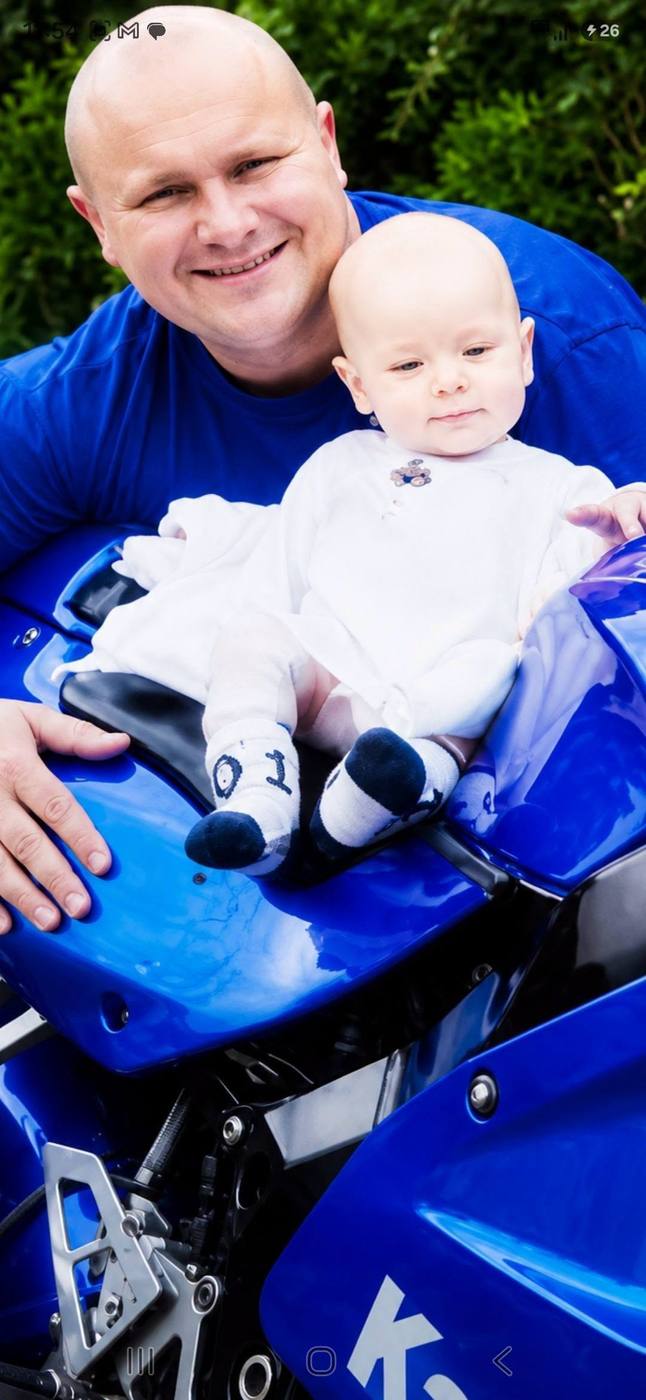
On 19 June 2005, my life changed forever. My firstborn son, Kane Haywood, was born at Lower Hutt Hospital. I was 26 years old, and I was there for his birth. I cut the umbilical cord, and not long afterwards he was passed into my arms. I can still remember looking down at him as he opened his eyes and seemed to look straight into mine. I remember thinking to myself, We are going to be best friends forever. There are certain moments in life that become permanently etched into your memory, and holding my firstborn son for the first time was one of them. It was, without question, one of the happiest days of my life.
By then, I had been working at the Petone holiday park for around six years. It had been a significant chapter of my life, but I was beginning to feel that it was time for a change. The old Bedford bus that I had once called home had remained in the storage yard beside the house for years, but eventually I sold it. That bus had carried me through a completely different period of my life, and watching it finally leave felt like another small sign that things were moving forward.
The storage yard itself was full of forgotten projects. There were old caravans, cars and all sorts of other things people had left behind over the years. Among them was an old boat that had caught my attention. It had been sitting there for around five years without anyone coming near it or paying any storage fees, so eventually I decided to see if I could track down its owner.
I went to see some friends at NZ Post, who helped me obtain the details of the last registered owner, and I called around to the address. The gentleman who answered the door was shocked when I explained why I was there. He told me that around six years earlier, somebody had been interested in buying the boat and had taken it away as part of the potential sale. The prospective buyer had never returned it. As far as he knew, his boat had disappeared years earlier. Now I was standing at his door telling him not only that I knew exactly where it was, but that it had also potentially accumulated a rather impressive storage bill.
We quickly came to an arrangement. If he didn't want the boat back, I would forget about the storage fees. That agreement worked pretty well for both of us, and just like that, the boat was mine. After sitting around for so long, it needed some attention. I did some work on the engine, repaired some of the fibreglass and eventually got it back into reasonable condition. Then it was time to launch my newest toy into Wellington Harbour.
For the first half-dozen trips or so, the boat was actually pretty reliable. My mates and I had plenty of fun with it, although our interpretation of responsible boating probably differed considerably from that of the average Coastguard volunteer. One of our favourite activities involved getting the boat up to full speed and then jumping off it at the same time, because apparently simply sitting inside a perfectly functional boat wasn't entertaining enough. Nevertheless, it kept running, nobody died, and my confidence in my bargain boat continued to grow.
Then came one beautiful summer's day when my older brother and I decided to head out onto Wellington Harbour. It was one of those stunning days where the water was alive with activity. Yachts were everywhere, boats were moving around the harbour and people were out enjoying the sunshine. We decided to head towards one of the islands near the harbour entrance, out towards Cook Strait. The plan was simple: find somewhere to stop, have a barbecue, lie in the sun and enjoy the afternoon.
We found our spot, fired up the barbecue and settled in. At some point, apparently feeling completely confident in both the weather and my boating abilities, I fell asleep. A couple of hours later I woke up, looked around and immediately realised something had changed. The harbour was empty. The yachts were gone, the boats were gone, and everybody who had been enjoying the water earlier seemed to have disappeared.
Then I looked south.
Coming towards us was the biggest, blackest and meanest-looking weather front I had ever seen in my life. We didn't need a weather forecast to tell us what was about to happen. We threw everything into the boat, fired it up and headed towards Petone as quickly as we could.
Wellington Harbour might look relatively small when you're standing safely on land looking across it, but when you're sitting in a small boat in the middle of it with a massive storm chasing you, it suddenly becomes very, very large. We hadn't travelled far when the engine began to splutter. Then it started running on what sounded like one cylinder, and we rapidly lost power.
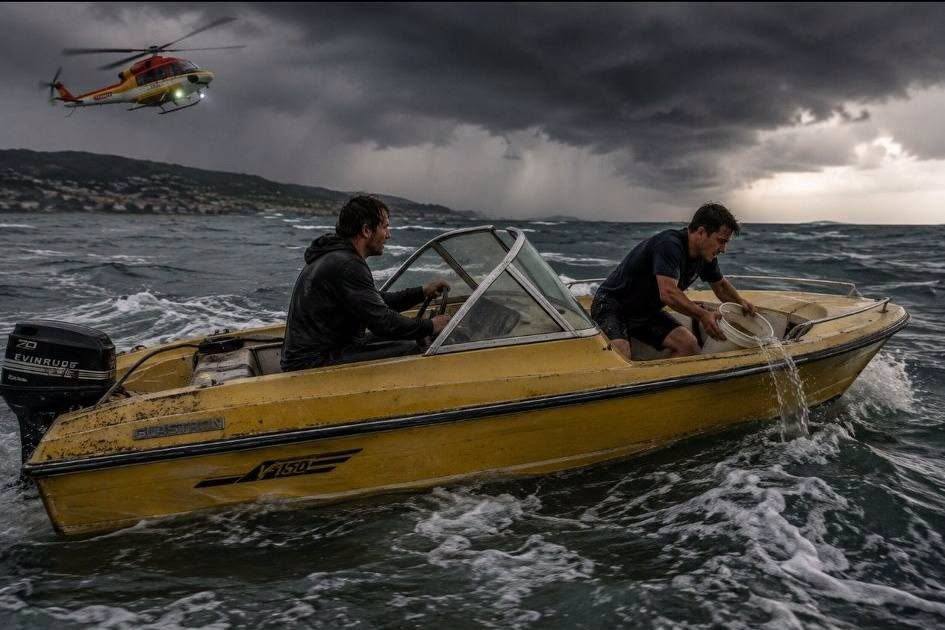
Without enough power, the boat couldn't properly ride the increasingly rough waves. The bow would rise and fall, and then another wave would come crashing over us. Water began pouring into the boat. My brother grabbed a bucket and started bailing, but every time he managed to throw some water out, another wave seemed determined to put twice as much back in.
The storm had caught us. Wave after wave dumped more water into the boat while the engine struggled to keep us moving. My brother was bailing as fast as he could when he finally turned towards me, bucket in hand, and yelled over the wind and waves, “F#ck Beau, you k1ll us all!”
I couldn't exactly argue with his assessment.
Things were starting to look pretty bloody serious. For the first time, I began genuinely wondering whether we were going to make it back. Then, through the noise of the storm and the struggling engine, I heard something above us. It was a helicopter. I looked up and saw the Westpac Trust Rescue Helicopter hovering overhead.
You would think seeing a rescue helicopter while your boat was filling with water would bring an overwhelming feeling of relief. Not me. My heart sank. Back in those days, if the rescue helicopter had to pluck two idiots out of Wellington Harbour during a storm, there was a pretty good chance those same two idiots were going to appear on the six o'clock news. I remember looking up at that helicopter and thinking, Just sink me now. At that particular moment, I genuinely wasn't sure what concerned me more — drowning in Wellington Harbour or surviving and having everyone I knew watch the rescue on television that night.
Fortunately, somehow, the old boat kept going. That struggling engine continued doing just enough to keep us moving while my brother desperately bailed water. Slowly and painfully, we made our way back across the harbour until eventually we reached Petone, where our car and trailer were still sitting waiting for us.
The boat was absolutely full of water, and it took what felt like forever to drain it before we could finally get it onto the trailer. But we were alive, the boat was still in one piece and, perhaps most importantly to my wounded pride, I didn't make the six o'clock news.
After surviving that little adventure, I decided boating might not be for me. I had owned more than a hundred motorcycles, survived an electric shock that probably should have killed me, lived in a bus beside an old morgue and made more questionable decisions than I could possibly count, but Wellington Harbour had taught me something important.
I belonged on land.
That was the last boat I would ever own.