
THE MORGUE
Finding somewhere to park the old Bedford was proving more difficult than I had expected, and time was running out. Buying the bus had been the easy part. Now I needed somewhere I could actually live in it. I needed access to power and water, somewhere reasonably secure, and most importantly, somewhere that wasn't going to cost me more money than I had.
Then I remembered Silverstream. Not far away was an old Christian camp centre situated amongst the buildings of the former Silverstream Hospital. I knew the place existed and knew it had some connection to the Second World War, but at the time I had absolutely no idea just how much history was sitting behind those old walls.
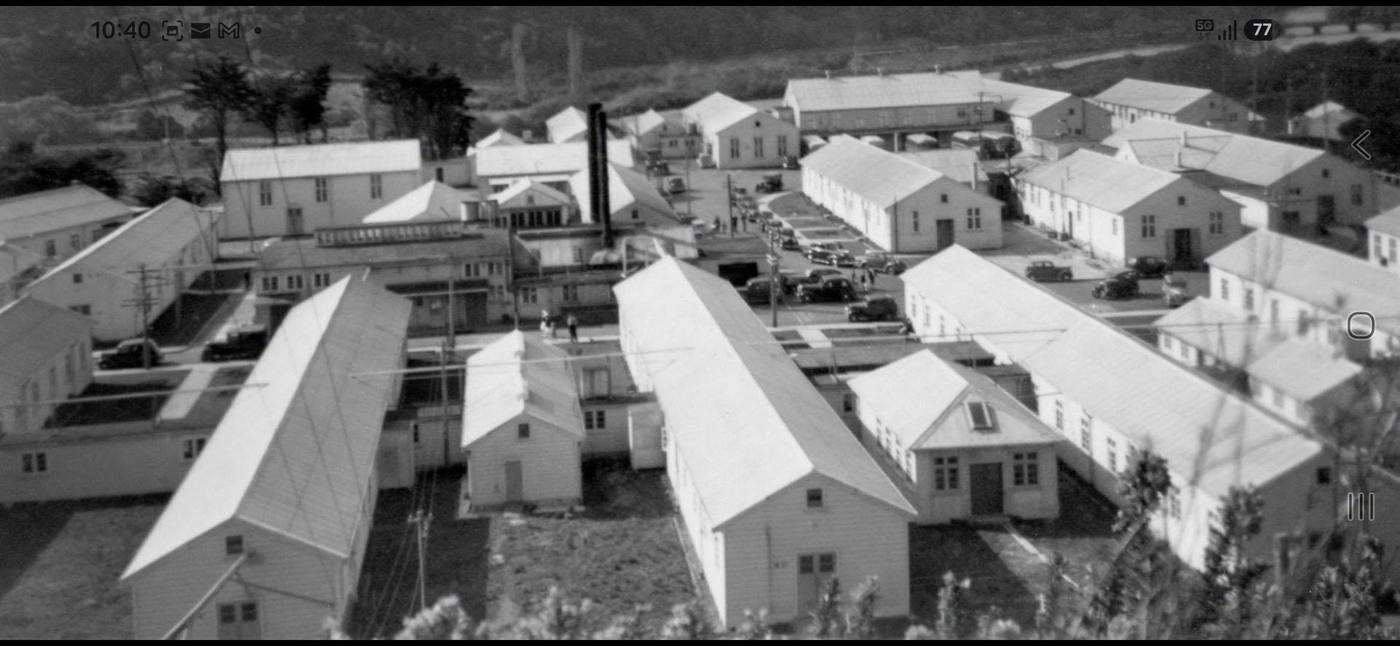
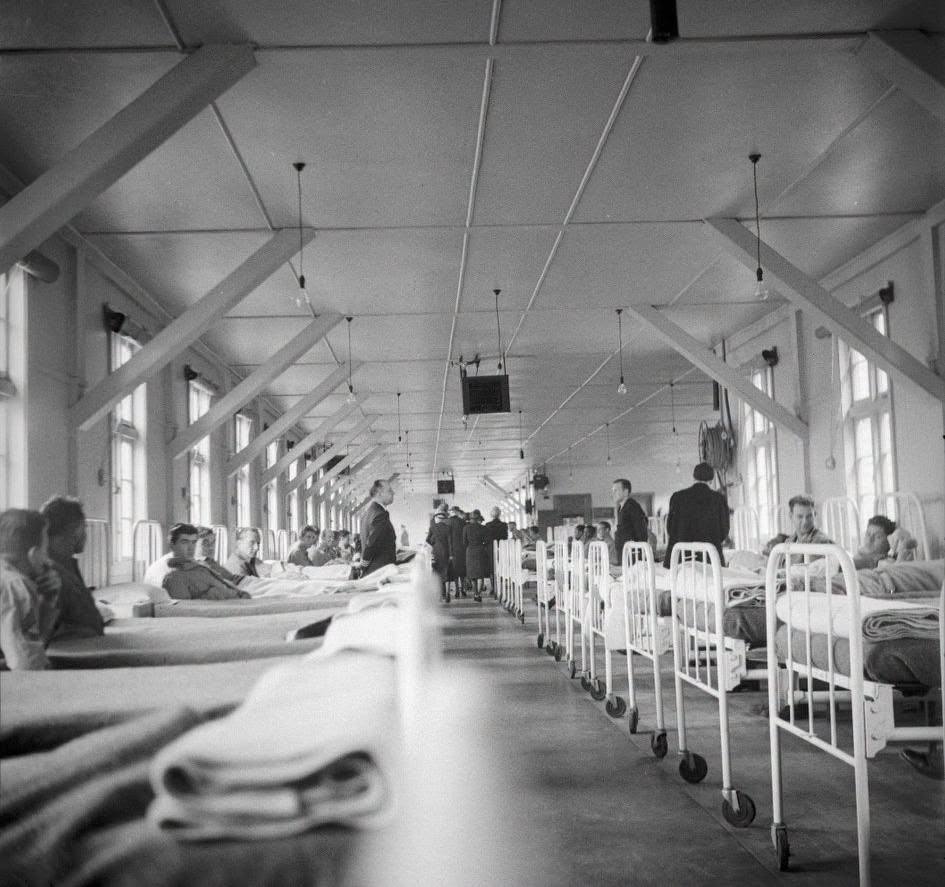
Construction of Silverstream Hospital had begun in September 1941. It was originally intended as a much smaller facility of around 450 beds, designed to serve New Zealand troops stationed at nearby Trentham Military Camp. Following America's entry into the Second World War and the arrival of large numbers of American servicemen in New Zealand, however, the plans changed dramatically. Silverstream was handed over to the United States Navy, and what had originally been planned as a relatively modest New Zealand military hospital rapidly grew into an enormous American medical complex.
Eventually, there were 46 buildings covering around 143,000 square feet, with enough beds for approximately 1,600 patients. From August 1942, the facility became known as United States Navy Mobile Hospital No. 6, later becoming a naval base hospital. Thousands of American servicemen would eventually pass through the place.
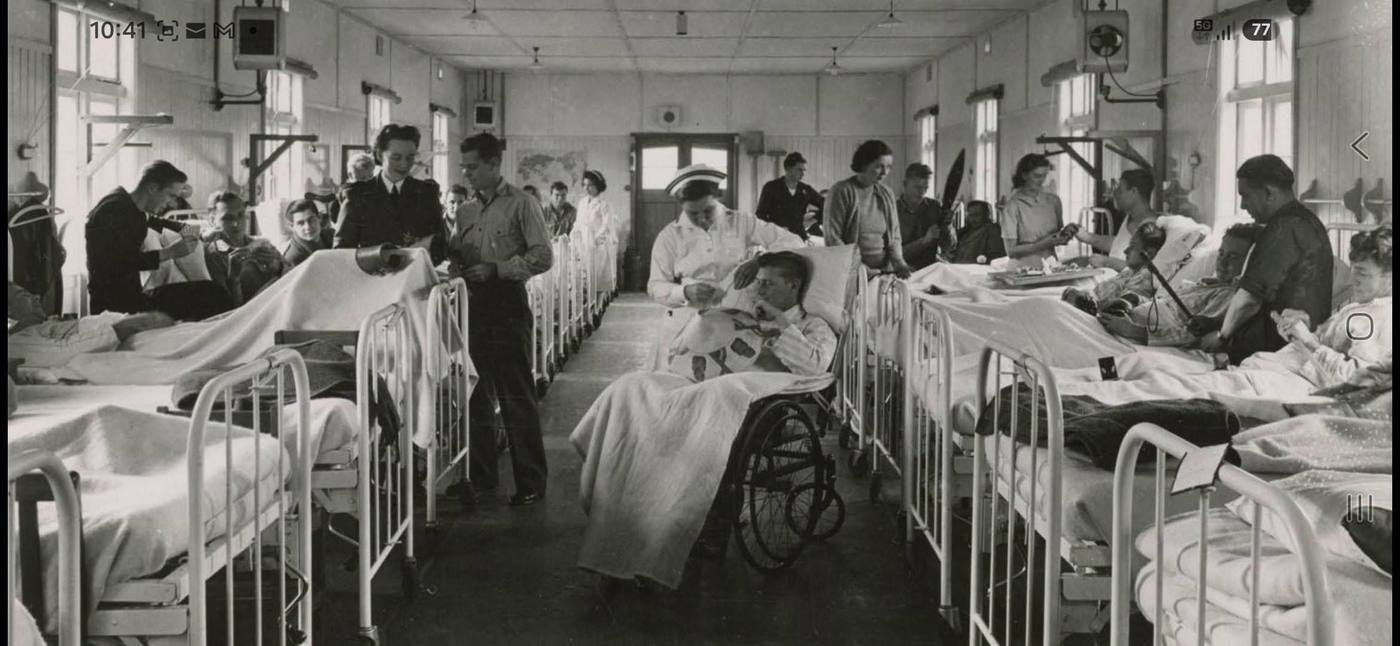
Many of the men arriving at Silverstream had come from the war in the Pacific. Some carried wounds from fighting in places such as Guadalcanal and the Solomon Islands, while others were suffering from tropical diseases, particularly malaria. At one point in March 1943, around three quarters of the patients at Silverstream were suffering from malaria. During the roughly twenty-one months the Americans operated the hospital, approximately 20,000 patients passed through its wards.
At times, there were so many patients that the ordinary hospital wards weren't enough. Parts of the staff quarters were turned into temporary wards, the gymnasium was used to accommodate patients, and even part of the hospital's theatre block had to be converted into additional ward space. For servicemen who had recently been fighting in the heat, mud and disease of the Pacific, waking up in a hospital bed in a quiet New Zealand valley must have felt like being transported to another world.
The American operation also brought some of the attitudes and policies of the United States military with it. The hospital was racially segregated. Black American personnel were housed separately from white personnel, with historical accounts describing accommodation for Black staff as being situated on the flats below the main hospital complex. Even thousands of kilometres from America, racial segregation followed the servicemen through the gates of Silverstream.
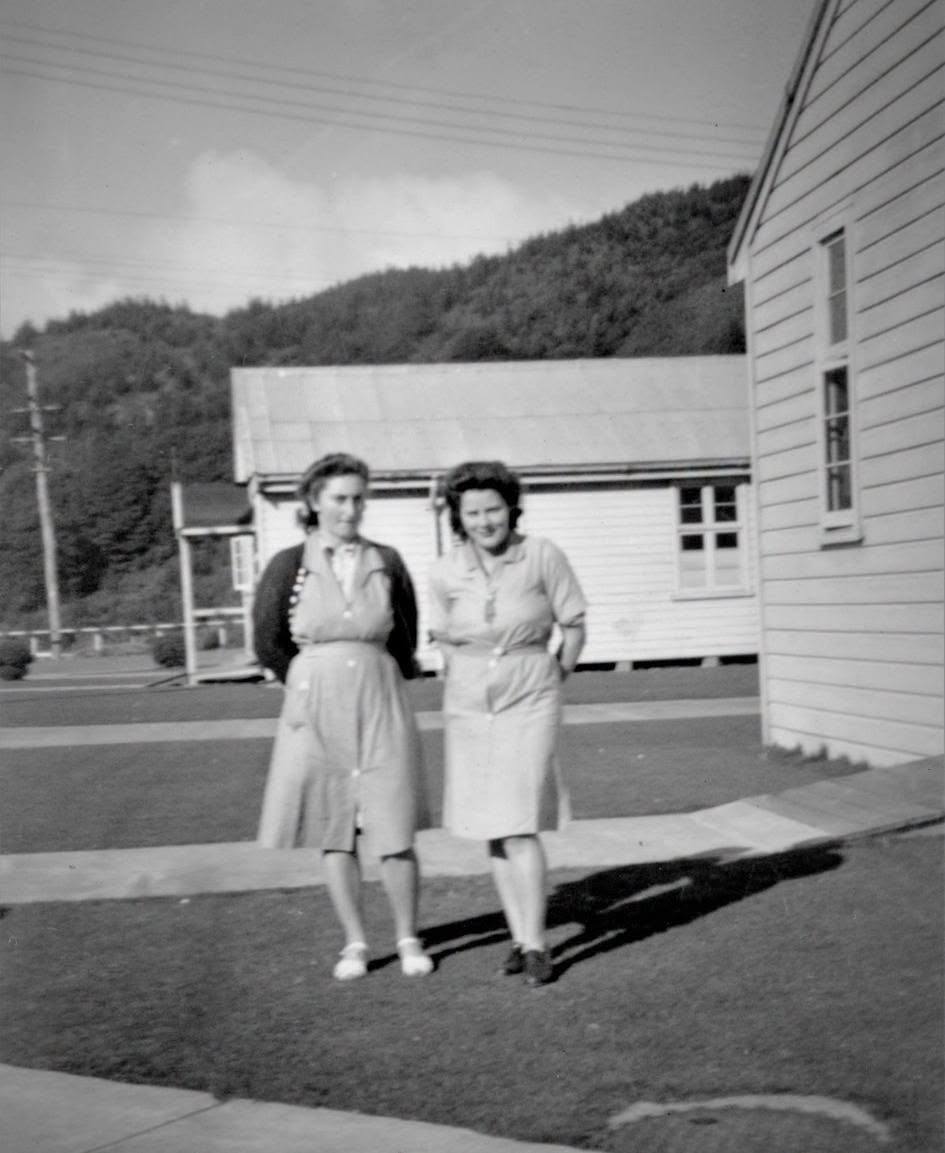
The American nurses lived under unusual conditions as well. Their nurses' home sat higher on the property and was reportedly heavily guarded and surrounded by barbed wire. Around forty American nurses arrived during 1943 to work amongst the hundreds of military personnel caring for the sick and wounded. New Zealanders also worked alongside the Americans, while local Red Cross workers assisted at the hospital and Māori cultural groups visited to entertain recovering servicemen. Some wounded Marines even learned Māori carving as part of their rehabilitation.
By 1944, the American military presence in New Zealand was winding down and Silverstream was handed back. The Wellington Hospital Board went on to use the sprawling complex for geriatric, convalescent, rehabilitation and long-term patients. It remained connected with hospital care for decades, long after the American servicemen and nurses had disappeared from the valley.
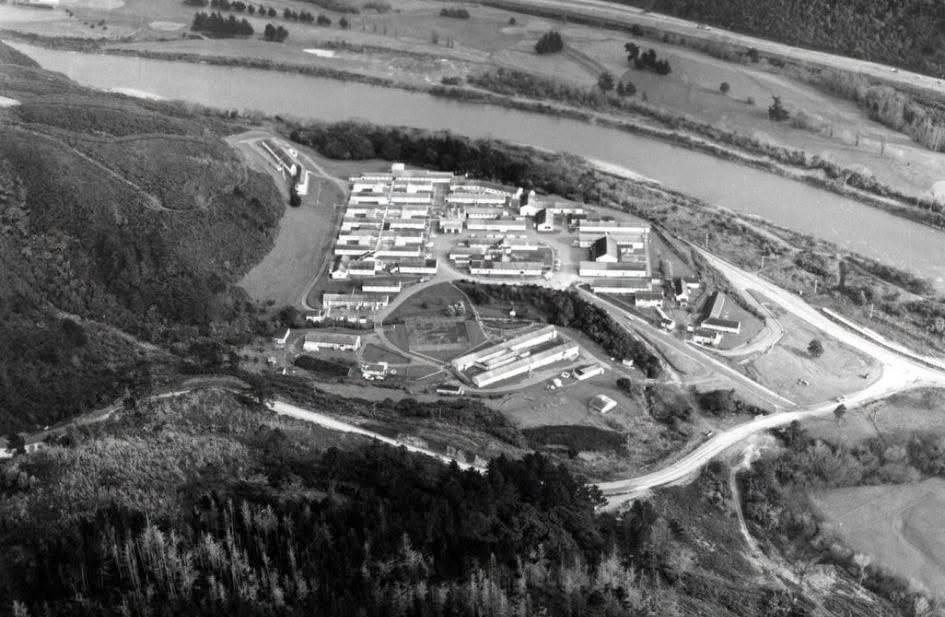
By the time I arrived with my old Bedford, those days were over. The soldiers were gone, the nurses were gone and the hospital wards were silent, but many of the buildings remained. Silverstream sat amongst the hills, and the valley had a habit of filling with thick fog. On certain mornings, the mist would settle between the old buildings and hide entire sections of the property. As you walked through it, buildings would slowly emerge from the fog ahead of you. Even during the day, the place could give you the spooks.
Long, dilapidated buildings stretched across different parts of the property. Some still carried the unmistakable appearance of old hospital wards, while others looked as though they had simply been abandoned and forgotten. Higher up on the property stood the old nurses' quarters. By the time I arrived, part of that area was being used as accommodation for people from all sorts of backgrounds and histories. I had no idea then about the American nurses who had once lived there, or that the building had reportedly been guarded behind barbed wire. To me, it was simply another strange old building on an already strange property.
It certainly wasn't where I had imagined myself ending up, but I was quickly running out of options. I drove the Bedford into the property and met the caretaker. After explaining my situation, we managed to come to an arrangement. For fifty dollars a week, I could park the bus there and have access to power, water and a building I could use for storage. Considering my financial position, fifty dollars a week sounded pretty good to me.
The caretaker explained where I needed to go, handed me some keys to the storage building and gave me directions to my allocated parking spot. I climbed back into the Bedford and headed down through the property. The old bus creaked and groaned its way along the road until eventually I found the area he had described. I manoeuvred it into position, switched off the engine and sat there for a moment looking around. I'd done it. I finally had somewhere to park my home, and for the first time since buying the bus, I felt like the plan might actually work.
Then I decided to inspect my new storage building.
On one side of the small standalone building was what appeared to be a disused shower and toilet area. I opened the rickety door and immediately discovered that "disused" didn't quite describe it. The toilet had obviously been used many times over the decades, but apparently nobody had felt the need to flush it. Old faeces and crusted toilet paper covered the toilet and parts of the floor. I took one look, pulled the door closed again and decided that whatever facilities I eventually used while living there, that toilet wasn't going to be one of them.
I walked around to the main entrance of the building and tried the key the caretaker had given me. The lock turned, but the door wouldn't move. I pushed harder, but it was jammed solid. Judging by the condition of everything around it, nobody had been inside for years. I worked the lock backwards and forwards, pulled at the handle and eventually started shoulder-barging the door. After several attempts, something finally gave way and the old door slowly creaked open.
Inside was absolute chaos. The building was packed with so much old junk that I could barely move through it, but there was something else I noticed almost immediately. It was cold. Not just slightly cooler than outside, but noticeably cold. There was a distinct chill inside that little building, enough that I became aware of it the moment I stepped through the doorway.
As I started looking around, the first thing that struck me was the size of the doorways. They were unusually wide, far wider than I would have expected in such a small building. Then I began noticing what was sitting on the shelves around me. There were old hoses, pieces of medical equipment and strange contraptions and fittings that clearly belonged to another era. Some of it looked as though it had been sitting exactly where somebody had left it decades earlier.
I moved further into the room and noticed a large stainless-steel bench sitting in the centre. It was unusually wide and had a drain positioned directly in the middle of it. I stood there staring at it for a moment, then looked back at the oversized doorways, the old hoses and the medical equipment scattered around the room.
Suddenly, everything came together.
I realised I was standing inside a morgue.
Whatever excitement I'd had about my fantastic new storage building disappeared instantly. Death and anything associated with it had never been a friend of mine. I'd already experienced enough of that in my life, and there was absolutely no part of me interested in spending my evenings rummaging around inside an abandoned hospital morgue. I turned around and got out of there with considerably more haste than I had entered.
I walked straight back up the property and found the caretaker. I said to him, "Hey, that old building you've got me parked next to..." Before I could really explain what I had discovered, he casually replied, "Oh, the old morgue?" Well, that confirmed my suspicions.
I politely asked whether there might be somewhere else on the property where I could park the Bedford. Thankfully, he gave me another option and explained how to get there. I headed back to the bus feeling considerably happier about my prospects, started the Bedford and drove over to investigate my alternative home.
Unfortunately, there was one fairly significant problem. The new parking area was tight. Very tight. I tried approaching it from one direction, backed up and tried another angle, then manoeuvred forwards, backwards and sideways while turning that enormous steering wheel and trying everything I could think of to squeeze the Bedford into the space. It was no use. The bus simply wasn't going to fit.
Eventually, I stopped trying and sat behind the wheel for a moment, accepting the reality of the situation. There was only one place on the property where the Bedford was going to fit, and unfortunately it came with a rather unusual neighbour.
I drove back through the old hospital grounds, past the ageing buildings and down to my original parking spot. I manoeuvred the Bedford back into position, switched off the engine and looked through the window at the little building sitting beside me.
Of all the places I could have ended up living, somehow I'd managed to park my home beside an old hospital morgue. Still, it was fifty dollars a week, with power and water included.
And I certainly wasn't going to have any trouble with noisy neighbours.
I was staying.