
THE BUS
With my financial future becoming increasingly uncertain, I knew I was going to have to start thinking differently about where I lived. My medical condition wasn't going anywhere, my ability to work was uncertain, and there was no guarantee I would be able to keep paying for a normal place to live.
I had already stretched things as far as I could financially. There wasn't some magical reserve of money sitting there waiting for me, and I couldn't keep pretending everything was going to sort itself out. I needed another option.
Being the person I was, I came up with what seemed like a perfectly reasonable solution at the time. I would buy an old bus and live in it.
It probably wouldn't have appeared particularly reasonable to most people, but to me it made perfect sense. If I owned the bus outright, I wouldn't have rent hanging over my head every week, and I could slowly turn it into somewhere comfortable to live. There were a few fairly obvious details missing from this brilliant plan, but I would worry about those later.
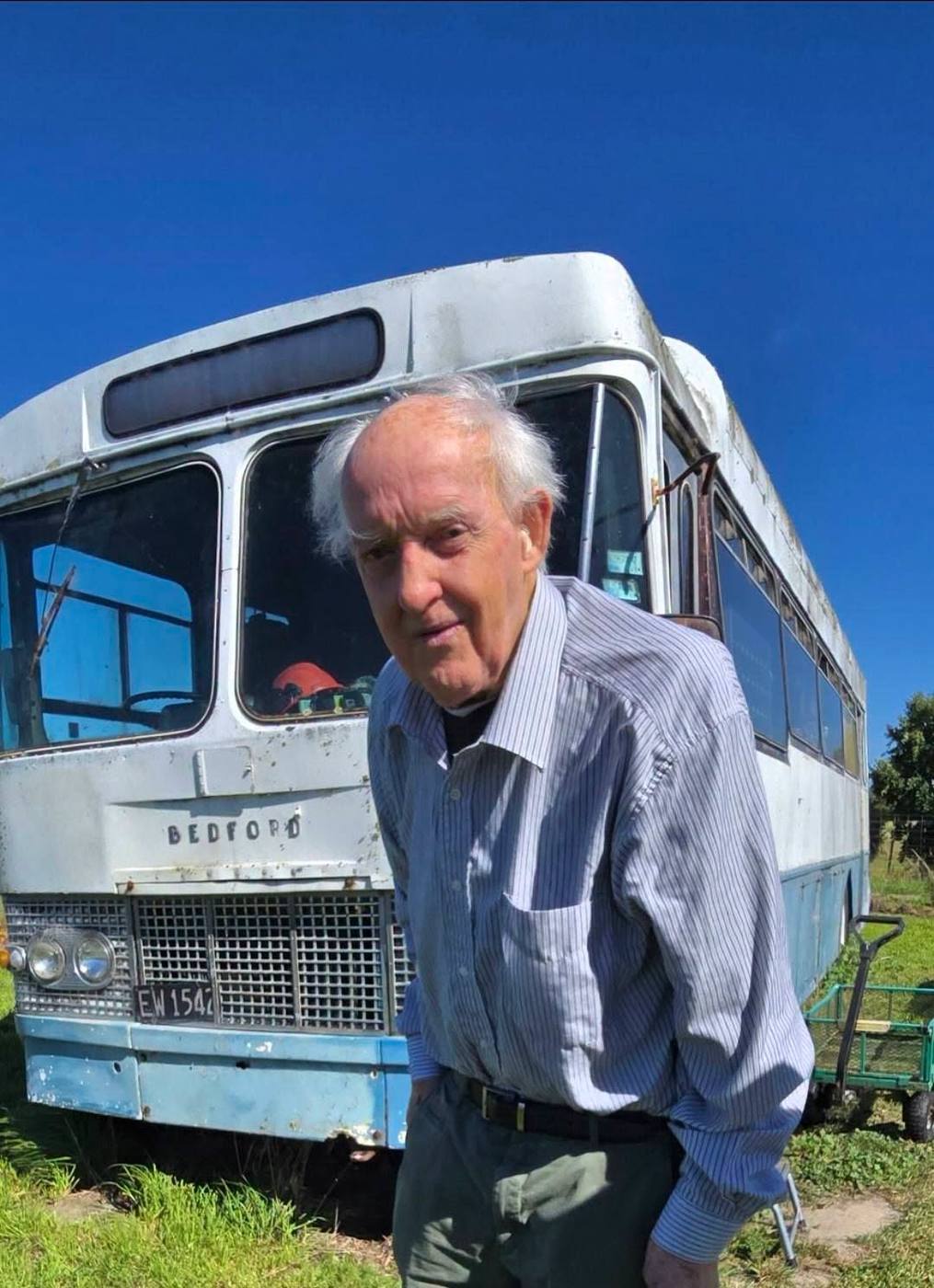
I knew absolutely nothing about buses, but luckily, I knew someone who did. My stepfather, Des.
Des had married Mum a few years before she died and had been a huge part of my teenage years. Although he and Mum lived separately during their marriage, Des lived in Tauranga, where he ran an engineering workshop from a converted cowshed.
That old cowshed was where Des taught me some genuinely useful skills. He taught me how to drive, weld, use machinery, fix engines and make things with my hands. I loved spending time in the workshop with him. There was always something being repaired, fabricated, pulled apart or put back together, and I was usually allowed to get involved.
More importantly, Des allowed me to be a kid. There weren't many adults during my teenage years who managed to do that.
Life around Mum and the religion had often been serious, with rules and restrictions surrounding almost everything. Des was different. Around him, I could laugh, muck around, learn things and make mistakes without feeling as though I had committed some terrible offence.
He had time for me. If I didn't understand something, he showed me again. He taught me without making me feel stupid, and I always knew that if I genuinely needed his help, I could count on him.
Looking back over my life and the different people who played the role of a father at one time or another, Des was hands down the best dad I ever had.
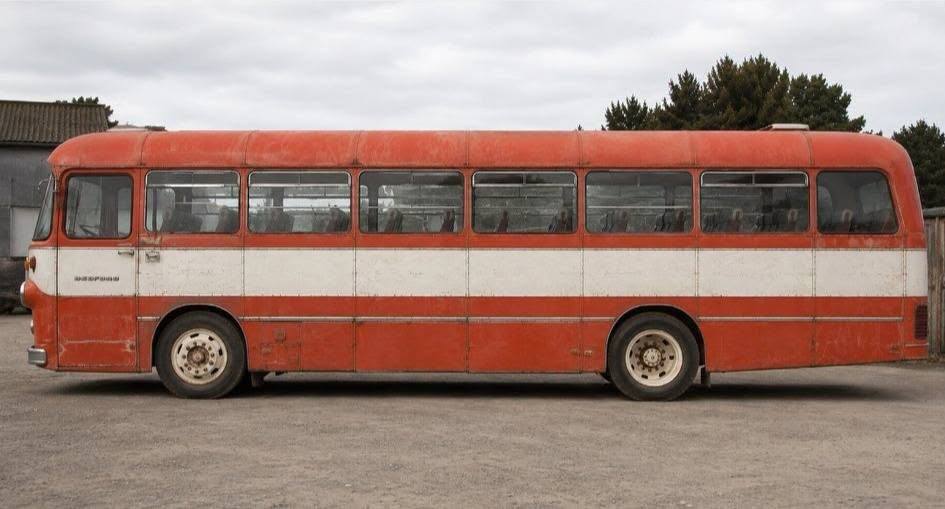
By this stage, Des was living in a bus himself. He had bought it after Mum died and converted it into a basic but cosy bachelor pad. It wasn't exactly luxury accommodation, but it worked. He had managed to take something originally designed to carry passengers and turn it into a perfectly functional little home.
Seeing what he had done planted the idea firmly in my head. If Des could live in a bus, why couldn't I?
I told him about my plan and asked if he could help me find something suitable. I didn't have much money, so whatever we found needed to be cheap, mechanically sound enough to keep moving, and big enough for me to eventually turn into some sort of home.
As always, Des was happy to help.
We didn't have to look for long. Before the internet became the place where everyone bought and sold everything, there was the Trade & Exchange magazine. You could find just about anything in there if you looked hard enough. Cars, motorbikes, tools, machinery, furniture and, apparently, old buses that nobody quite knew what to do with anymore.
Somewhere amongst its pages, we found an old Bedford bus for sale locally. It ran, which was a promising start, and more importantly, I could afford it.
For the money I had, it was a steal.
We went out to have a look at it. The Bedford was sitting in a paddock where it had clearly been left to rest for quite some time. It was an old school bus and there was absolutely nothing glamorous about it. The paint was faded, it looked tired, and it certainly wasn't going to win any beauty competitions.
But I wasn't looking for beautiful. I was looking for somewhere to live.
Standing there looking at it, I could already picture what I might do with the inside. I could build a bed down one end, put in somewhere to cook, make some cupboards and eventually turn the rest into a small living area. I had enough practical skills to do most of the work myself, and anything I couldn't figure out, Des probably could.
So, I bought it.
Getting it home was the next problem. The bus wasn't registered, it didn't have a roadworthy certificate, and I had a neurological condition that could send sudden, violent jerks through my body without warning. The myoclonus was still causing painful jolts through my body every few seconds, and they were impossible for anyone around me not to notice.
Any sensible person might have looked at that combination of circumstances and reconsidered the plan. I wasn't particularly good at reconsidering plans.
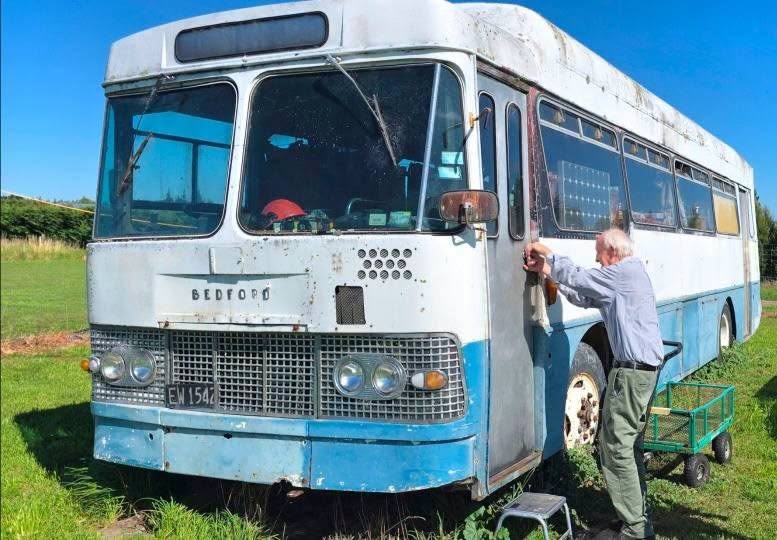
I drove it home.
It sounds ridiculous looking back, but that was simply how I approached things in those days. There was a problem in front of me, so I dealt with it and worried about the consequences later.
I had also discovered something strange about the myoclonus. When I was concentrating hard on something, particularly driving or keeping myself physically occupied, the jerks seemed to settle down. They didn't disappear completely, but staying busy appeared to make them much less noticeable.
Sitting still was often worse. The more I focused on the jolts and waited for the next one to arrive, the more impossible they became to ignore.
Driving an old Bedford bus certainly gave me something else to concentrate on.
I climbed behind the enormous steering wheel, started it up and prepared to drive my newly purchased home out of the paddock.
It was very different from driving a car. I suddenly had a lot more vehicle behind me than I was used to. Everything felt bigger, heavier and slower. The steering required some commitment, the brakes weren't exactly confidence inspiring, and every strange noise coming from underneath me made me wonder whether something important was about to fall off.
Still, it moved. That was good enough for me.
I eased the old Bedford out of the paddock and onto the road.
There was something strangely exciting about driving it. My life might have been uncertain, my body might have been doing things I couldn't control, and financially I had no idea what the future held, but I now had something tangible I could work with.
Eventually, the old Bedford came rumbling down the road and pulled up outside my place.
Calling it a home at that point was probably being generous. The passenger seats had been removed, leaving behind a large, mostly empty shell. There was no toilet, no shower, no proper kitchen and certainly no comfortable bedroom waiting for me at the back.
It was just an empty old school bus.
But standing inside it, I started mentally dividing the space into rooms. I knew how to weld, build and fabricate things, and I wasn't afraid of getting my hands dirty. After everything Des had taught me over the years, turning an empty bus into somewhere I could live seemed completely achievable.
For the first time since the myoclonus had begun, I also had a proper project to focus on. And projects were something I understood.
At the time, I was actually quite proud of my solution. I didn't see myself as someone whose housing situation was falling apart. In my mind, I had simply adapted to what life had thrown at me.
Looking back now, with everything I know through my own experiences and the work I do today with people experiencing homelessness, I see that moment very differently.
That old Bedford was probably my first real experience of homelessness, other than stays in domestic violence shelters as a child.
I just didn't recognise it as homelessness.
Back then, my idea of homelessness was someone sleeping on a park bench, in a doorway or underneath a bridge. I didn't see myself that way. I owned the bus. I could lock the door, put my belongings inside it and sleep there.
As far as I was concerned, I had simply found an unconventional solution to a financial problem.
It would take me many years to understand that homelessness doesn't always look the way people imagine it does. Sometimes it is obvious. Other times, it is someone living in a vehicle, moving from place to place and trying to remain unseen.
There was just one fairly significant flaw in my brilliant plan. I now owned a large, unregistered old school bus. I still needed somewhere to park it.
A bus isn't exactly something you can quietly slip into a spare corner and hope nobody notices. And finding somewhere I could actually live in this monstrosity was going to prove considerably harder than finding the bus itself.