
MY EVERYTHING
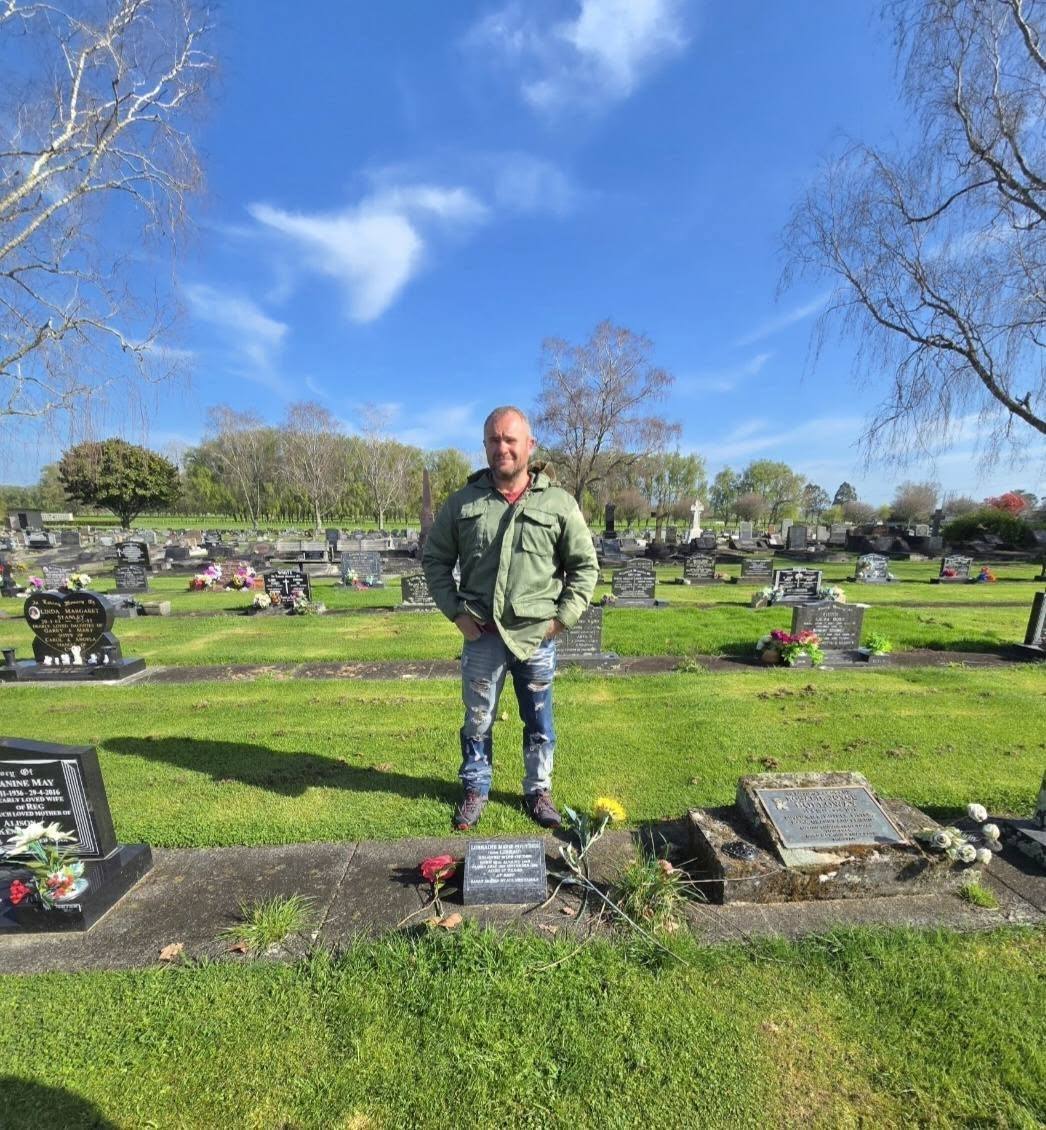
Over the following months, Mum's health continued to deteriorate. Eventually, she went to see a doctor, which in itself was a big step for her. Mum had always been against what she called "Western medicine", so seeking medical help was not something that came naturally to her.
The diagnosis was devastating. Mum had lung cancer, and by the time it was discovered, it had already spread throughout much of her body. I don't think I fully understood what those words meant at fifteen. I knew cancer was serious, of course, but understanding that your mother is sick and accepting that she might actually die are two very different things. Somewhere in my mind, I still believed there would be a treatment, a miracle, or something that would turn everything around.
As her condition worsened, it became clear that Mum needed far more care than any of us could provide at home. Eventually, she needed hospice care. Even then, we held onto hope, or at least the hope we had been given. The church convinced Mum, and us kids, that natural remedies could heal her. Things like apricot kernels, royal jelly and other natural treatments were put forward as the answer.
Prayer had always been a huge part of our lives, but now it became even more important. We prayed for Mum to be healed. We prayed for the cancer to leave her body, and we prayed for a miracle. The belief was that the more we prayed, the more we would be heard, so we prayed harder. When Mum didn't get better, we didn't stop. We prayed more because we believed that somewhere, somehow, God was listening and that if our faith was strong enough, He could still save her.
Sadly, we believed it because we desperately wanted to believe that Mum was going to get better. When someone you love is dying, hope can be incredibly powerful. You grab onto anything that tells you there might still be a chance.
My younger siblings were placed into the care of people within the church. In time, that would prove to be even more damaging for them. There is much more I could say about what happened after they were placed in that environment, but those experiences belong to them, not me. This is my story to tell, and theirs is theirs.
There had also been discussions among the church elders about what was going to happen to me. These were some of the same people who had previously told my mother that I was "from the devil", so I had very little trust in whatever plans were being made for my future.
By that stage, I had already spent much of my young life having decisions made for me. Where I lived, what I was taught, what I was allowed to believe and what sort of future I was supposed to have had largely been decided by other people. This time, I refused. Whatever the church elders were planning for me, I wanted no part of it, and I made the decision that from that point forward, I would pretty much go it alone.
Looking back, that's an enormous decision for a fifteen-year-old to make. At the time, though, it didn't feel brave or dramatic. It simply felt like the only option I was prepared to accept.
So, while my younger siblings went into the care of people within the church, I moved yet again. This time, I went back to Mum's rented farmhouse, where I lived alone and safeguarded what few possessions she owned until she was well enough to return home. At least, that was what I believed would happen.
I didn't see myself as packing away the belongings of someone who was dying. In my fifteen-year-old mind, I was looking after Mum's home for her. Her things were still there, and her life was still there. I was simply keeping everything safe until she was strong enough to walk back through the door, but that day never came.
Looking back now, it seems almost impossible that I was only fifteen. I was living alone, trying to continue with my own life while watching my mother's life slowly disappear. There was no instruction manual for any of it. I was still a kid trying to deal with something that would have been overwhelming for most adults.
I would travel from the farmhouse near Matamata, across the Kaimai Range to Tauranga, to visit her. I usually managed to make the trip about once a week, depending on whether I could afford the fuel. Every time I saw Mum, there seemed to be a little less of her. She was getting thinner and weaker with every visit. The woman who had raised me, who had always been such a huge presence in my life, was slowly disappearing in front of me, and there was absolutely nothing I could do to stop it.
I remember one visit in particular when Mum hugged me and apologised for giving me what she described as a "shit life". Those words have stayed with me. Whatever had happened between us, whatever mistakes had been made and whatever difficulties we had lived through, she was still my mum. At fifteen, I wasn't standing there analysing my childhood or thinking about blame. I was watching the person who had been at the centre of my entire world slipping away.
She then asked me to make her a promise. She wanted me to promise that I would honour God. I made that promise to my dying mother, but it is a promise I have struggled with throughout my life.
Faith had shaped almost every part of my childhood. God had been presented to me as all-loving, all-seeing and all-powerful. Yet here was my mother, a woman who had devoted her life and soul to Him, dying painfully from cancer. I couldn't reconcile those two things.
I couldn't understand why a God capable of answering prayers wouldn't answer hers. We had prayed, we had prayed harder, and we had believed that if we kept praying, eventually we would be heard, but Mum kept getting sicker. I couldn't understand why someone who believed so completely could suffer so much. Those were enormous questions for a fifteen-year-old boy, and I didn't have the answers then. I'm not sure I've ever really found them.
One day, I received another phone call telling me that Mum wasn't doing well. I had received calls like that many times during the previous months, so although I was worried, I had no way of knowing that this time would be different.
I checked the fuel gauge in my car, and it was on empty. Payday was still three days away, and Tauranga was about 75 kilometres away, on the other side of the Kaimai Range. I looked at that gauge and tried to make what seemed like the sensible decision. I didn't believe there was any chance the car would make it there, so I decided not to go.
It was a simple decision made by a fifteen-year-old kid who had no money and an almost empty fuel tank. I had no idea how much that decision would follow me.
Then came another phone call telling me that my mother had died.
Everything changed in that moment. Suddenly, the amount of fuel in the tank didn't matter. Whether the car made it didn't matter, and whether I ended up stranded halfway across the Kaimais didn't matter. I jumped into the car and drove.
Tears streamed down my face as I headed across the Kaimai Range. I knew where I was going, but I also knew what was waiting for me when I got there. When I reached the top of the range, the sun was setting, and I can still picture that sky today. Against the colours of the sunset, the clouds formed what looked to me like an eagle. I don't know whether there was any meaning behind it. Maybe it was simply a grieving fifteen-year-old trying to make sense of something that didn't make sense, but I saw an eagle, and for whatever reason, that image has never left me.
I kept driving, and somehow, despite the fuel gauge telling me that I wouldn't make it, the car carried me all the way to Tauranga.
When I arrived, Mum was still lying in the bed. I remember looking at her face and, for the first time in well over a year, she looked peaceful. The pain was gone. The struggle to breathe was gone. The sickness and exhaustion that had slowly taken over her body were finally gone. She was my mum again, but she wasn't there anymore.
Mum died on 13 September 1995, exactly one year to the day after receiving her cancer diagnosis. She was only 47 years old.
As I write this, I am now 47 myself, the same age my mother was when she died. There is something confronting about reaching the age your parent never lived beyond. At fifteen, 47 seemed a lifetime away. Now that I am here, I realise just how young she really was and how much life she should still have had ahead of her.
There is something about that day that I have carried with me ever since: the car made it. That is the part I have replayed in my head more times than I could ever count.
When I received that first phone call, I looked at the fuel gauge and decided that I couldn't risk the drive. A few hours later, after being told Mum had died, I got into that exact same car, with that exact same amount of fuel, and took the gamble anyway. Somehow, I made it all the way to Tauranga.
For years, I have wondered what would have happened if I had just got into the car the first time. Maybe I would have made it, and maybe I wouldn't have. I will never know. What I do know is that I missed those final hours with the woman who bore me, raised me and, despite everything we had been through, was still my mum.
There are things in life you can go back and fix. There are apologies you can make, relationships you can repair and mistakes you can try to put right. This wasn't one of them. There would be no next visit, no next phone call, no chance to tell her one more thing or ask her one more question, and no opportunity to sit beside her one last time. For most of my life, I have had to live with that.
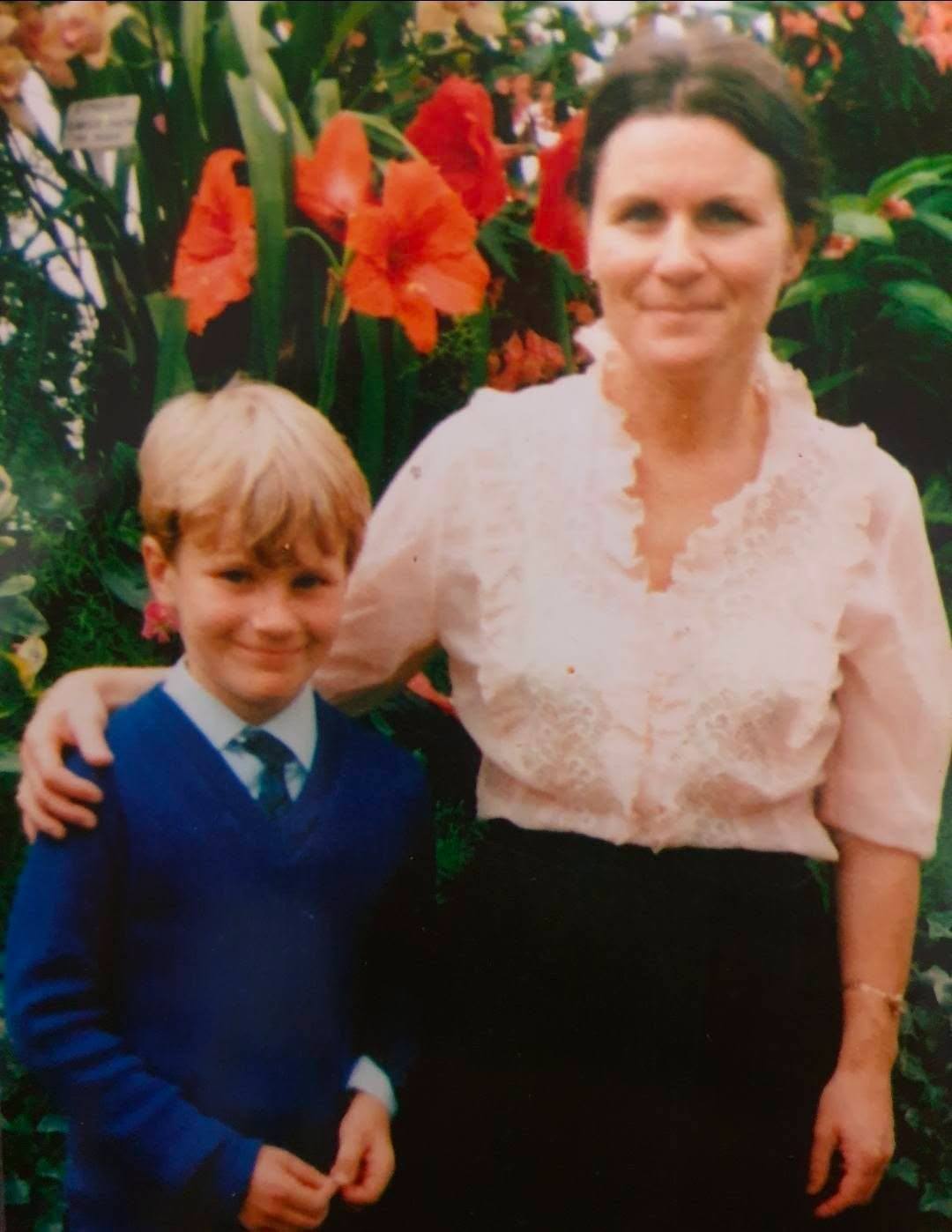
Today, as an adult, I can look back and see a fifteen-year-old boy with almost no money trying to make a decision based on an empty fuel gauge. I understand that boy better now than I did for many years, but understanding something doesn't necessarily make the pain disappear.
Mum was complicated, and our life together had been complicated. There had been religion, isolation, arguments and things I couldn't understand as a child, but love doesn't disappear just because life is complicated. She was still Mum, and now she was gone.
I was fifteen years old, living in a world I was only just beginning to understand. My younger siblings had been placed in the care of others, I had chosen to go my own way, and the person who had been at the centre of my life was gone.
I had just lost my everything.